Google Ads can generate steady, high-intent Window Companies Leads across the United States. However, many contractors lose money through weak targeting and poor tracking. A focused campaign can reach homeowners ready to request an estimate.
I’ve seen window contractors spend heavily without knowing which leads produced sales. Their campaigns targeted broad searches and sent visitors to generic homepages. Better structure can turn that wasted spend into booked appointments.
This guide explains keywords, budgets, bidding, landing pages, and lead tracking. You’ll also learn how to improve lead quality and control costs. Keep reading to build a campaign focused on profitable window projects.
Google Ads helps window companies reach homeowners actively searching for replacement, repair, and installation services. Strong campaigns use focused keywords, precise location targeting, dedicated landing pages, and complete conversion tracking. Most companies should also review Local Services Ads before launching standard search campaigns.
Why Google Ads Matter for Window Companies in the United States
Google Ads matters because it captures homeowners with immediate service needs. These people already search for local window companies, estimates, financing, or replacement options.
Window projects may range from $5,000 to $20,000 or more. Therefore, several qualified leads can create meaningful revenue. Success depends on lead quality, not total click volume.
Understanding the U.S. Window Replacement Buyer
U.S. window buyers want clear pricing, local proof, and fast responses. Their needs change based on urgency, home condition, climate, and available financing.
Search Intent Across the Window Buyer Journey
Search intent moves from early research toward contractor selection. Campaigns should focus most spending on estimate and hiring searches.
Emergency Window Repair vs. Planned Replacement Leads
Emergency repair leads need immediate help and fast phone contact. Planned replacement leads need education, financing, warranties, and project proof.
Trust, Pricing, and Financing Considerations
Homeowners compare reviews, prices, warranties, and payment options. Clear financing terms can make larger replacement projects feel manageable.
Building the Google Ads Foundation for a U.S. Window Company
A strong foundation connects each advertisement with a clear business goal. It also limits traffic to useful services and locations.

Defining Conversion Goals and Qualified Leads
Conversion goals should represent real sales opportunities. Track calls, estimate requests, booked visits, and qualified form submissions.
Precise Service-Area and Location Targeting
Location targeting should cover only areas your crews can serve profitably. Choose people physically present within those targeted locations whenever possible.
Campaign, Ad Group, and Keyword Structure
Separate campaigns by service, location, and customer intent. Build tight ad groups around closely related search terms.
Dedicated Service and Location Landing Pages
A dedicated landing page should match each advertisement and keyword group. Include local reviews, project photos, financing, warranties, and simple contact options.
Call, Form, and CRM Tracking Setup
Complete conversion tracking shows which campaigns generate valuable leads. Connect calls and forms with your customer relationship management system.
Local Services Ads for U.S. Window Companies
Google Local Services Ads can place qualified providers above standard search advertisements. They charge for customer contacts instead of website clicks.
Google is transitioning this system into specialized Performance Max pay-per-lead campaigns. Search and Maps placements remain part of the updated model.
How the Pay-per-Lead System Works
The system charges when a potential customer contacts the business. Costs depend on service, location, competition, and bidding settings.
Google Guaranteed Badge and Eligibility
The Google Guaranteed badge requires applicable screening and verification. Eligibility can vary by service category and local market.
Reviews, Responsiveness, and Lead Ranking
Reviews, profile quality, and responsiveness can affect advertisement ranking. Missed calls may reduce the account’s responsiveness signal.
When to Run Local Services Ads Before Search Campaigns
Test eligible Local Services Ads before traditional search campaigns. Their strong placement and pay-per-lead model can reduce early risk.
High-Intent Keyword Strategy for Window Companies
A strong keyword strategy targets searches showing clear buying intent. Avoid broad terms attracting shoppers, students, and DIY visitors.
Bottom-of-Funnel Window Replacement Keywords
High-intent keywords include “window replacement estimate” and “window replacement company near me.” These searches suggest the homeowner wants quotes or contractor help.
Window Repair and Emergency-Service Keywords
Repair keywords need separate ads, budgets, and landing pages. This protects replacement campaigns from lower-value or mismatched inquiries.
Local and Near Me Keywords
Local keywords connect services with cities, ZIP codes, and nearby searches. Examples include “window replacement near me” and city-based contractor terms.
Keyword Match Types and Search Term Control
Use exact and phrase match for stronger control. Review actual search terms often before expanding reach.
Building a Strict Negative Keyword List
Negative keywords block irrelevant searches and protect the budget. Consider DIY, jobs, careers, parts, windshield, automobile, and how-to terms.
Google Ads Campaign Types for U.S. Window Companies
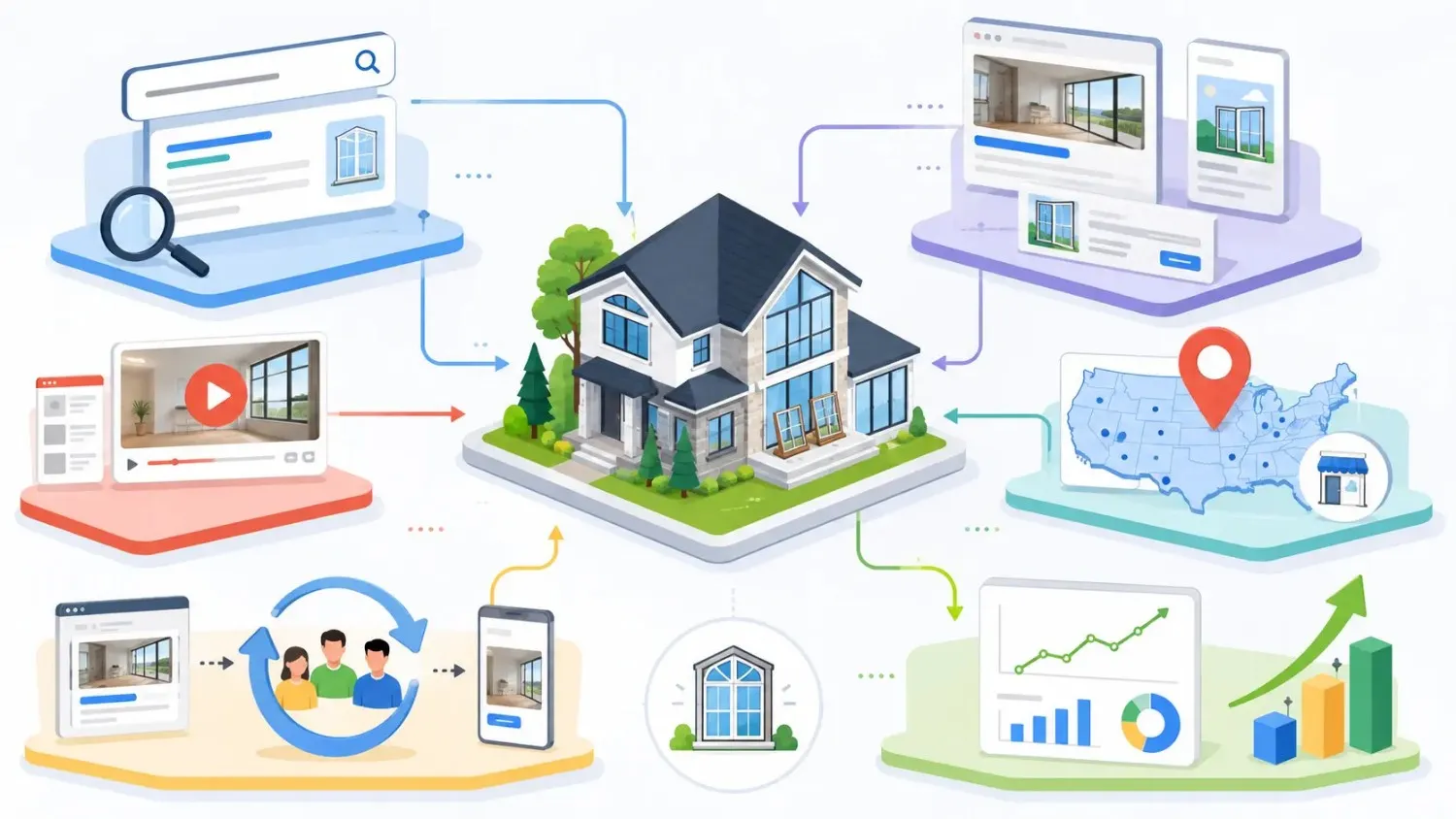
Campaign types should match the customer’s urgency and buying stage. Search campaigns usually provide the strongest starting point.
Standard Search Campaigns
Search campaigns reach homeowners who actively request window services. Separate replacement, repair, installation, and door campaigns.
Call-Focused Campaigns
Call-focused campaigns make phone contact the main action. Run them during hours when trained staff can answer.
Display and Video Campaigns
Display and video ads support awareness and remarketing. They rarely match the immediate intent of focused search advertisements.
Choosing Campaign Types by Customer Intent
Use search for urgent demand and remarketing for follow-up. Use video for education, proof, and brand recognition.
Best Google Ads Bidding Strategies for Window Companies
The best bidding strategy depends on tracking accuracy and conversion volume. Automation cannot fix poor data or weak lead definitions.
Maximize Conversions vs. Target CPA
Maximize Conversions seeks the most conversions within the available budget. Target CPA aims toward an average conversion cost.
When to Use Manual CPC
Manual cost-per-click bidding can help during controlled campaign testing. It gives advertisers direct bid control before enough data develops.
Smart Bidding for Qualified Window Leads
Smart Bidding works best when qualified leads become primary conversion goals. Google uses auction-time signals to adjust each bid.
Data Requirements Before Automating Bids
Build dependable conversion history before using strict automated targets. Limited or inaccurate data can guide bidding toward poor leads.
How to Set a Google Ads Budget for a U.S. Window Company
A useful budget must purchase enough clicks for meaningful testing. Starting too low can prevent reliable learning and lead flow.
Estimating Budget Based on Service Area
Service-area size and local competition affect the required budget. Dense metropolitan markets usually need more spending than smaller areas.
Allocating Budget by Service Category
Give replacement services more budget when projects offer greater value. Keep window repair and door installation spending separate.
Balancing Daily Budget and Lead Volume
Daily budgets should support several qualified opportunities each month. Match spending with the sales team’s response capacity.
Preventing Limited-Budget Campaigns
Remove weak keywords before increasing the campaign budget. Concentrate spending on profitable services, locations, and hours.
Writing High-Converting Google Ads for U.S. Window Installers
Strong advertisement copy connects the homeowner’s need with a clear solution. It should also explain why your company deserves attention.
Headlines That Improve Click-Through Rate
Effective headlines mention the service, location, and desired action. Use phrases like “Get a Free Window Replacement Estimate.”
Trust Signals That Increase Response
Trust signals include local reviews, warranties, licensing, and installation experience. Use only claims your business can verify.
Offers, Financing, and Warranty Messaging
Clear offers can reduce hesitation and increase response. State financing and warranty terms honestly without hiding important limits.
Strong Calls-to-Action
Calls-to-action should describe the homeowner’s next step. Use “Request an Estimate,” “Call Today,” or “Schedule an Inspection.”
Essential Google Ads Assets for U.S. Window Contractors
Google Ads assets add useful details around the main advertisement. They can improve visibility and provide more response options.
Call Assets for U.S. Window Company Google Ads
Call assets let mobile users contact the company quickly. Schedule them during staffed business hours.
Location Assets for Local Window Contractors
Location assets connect advertisements with verified business information. They can support nearby searches on Google Search and Maps.
Sitelink Assets for Window Installation and Replacement Services
Sitelinks send users toward specific services or resources. Link to replacement, financing, reviews, galleries, and service-area pages.
Structured Snippet and Callout Assets for Window Companies
Callouts highlight short benefits like free estimates or strong warranties. Structured snippets can list services, materials, or window types.
Lead Form Assets for Generating Window Replacement Leads
Lead form assets collect contact details directly from advertisements. Google requires a linked privacy policy for these forms.
How to Improve Google Ads Quality Score for Window Companies
Improve Quality Score through relevance, useful advertisements, and strong landing pages. Google evaluates expected click-through rate, relevance, and landing page experience.
Improving Keyword and Ad Relevance
Use closely related keywords within each ad group. Match advertisement wording with the searcher’s requested service.
Increasing Expected Click-Through Rate
Write specific headlines that clearly match the search. Remove weak advertisements and test stronger offers.
Improving Landing Page Experience
Landing pages should load quickly and work well on mobile. They must provide the information promised within the advertisement.
Aligning Search Intent With Page Content
Replacement searches should reach replacement pages. Repair, door, and commercial window searches need separate content.
Conversion Rate Optimization for Window Company Google Ads
Conversion rate optimization turns more paid visitors into genuine inquiries. It reduces the cost per lead without requiring more clicks.
Reducing Landing Page Form Abandonment
Use a short form with only essential fields. Ask for name, phone, ZIP code, service, and project timing.
Increasing Phone Call Conversions
Place a clickable phone number near the page’s top. Explain calling hours and expected response times.
Improving Mobile Conversion Rates
Mobile pages need fast loading and large buttons. Keep forms, reviews, and offers easy to scan.
A/B Testing Offers and Page Elements
Test one major element at a time. Compare headlines, forms, photos, financing messages, and calls-to-action.
Audience Segmentation for Window Replacement and Repair Campaigns
Audience segmentation helps align messages with each service need. It also supports smarter reporting and budget decisions.
Segmenting Replacement, Repair, and Installation Prospects
Create separate paths for replacement, repair, and new installation. Each group has different urgency, value, and sales needs.
Homeowner and In-Market Audience Signals
Homeowner and in-market signals can support campaign learning. Never use them as substitutes for strong search intent.
Geographic and Demographic Observations
Review performance by ZIP code, device, age range, and household income. Google supports selected demographic targeting options.
Excluding Low-Value and Existing-Customer Audiences
Exclude audiences that repeatedly produce weak inquiries. Existing customers may need separate retention or referral campaigns.
Remarketing Strategies for U.S. Window Company Leads
Remarketing reconnects with homeowners who visited but did not contact you. It works well for longer replacement decisions.
Display Remarketing
Display remarketing keeps the company visible during comparison shopping. Use project images, reviews, and financing messages.
Remarketing Lists for Search Ads
Search remarketing can adjust bids for previous website visitors. These users may show stronger trust and purchase intent.
Customer Match Campaigns
Customer Match uses approved first-party customer information. Use it for past prospects, referrals, and additional services.
Remarketing by Service and Funnel Stage
Build separate audiences for replacement, repair, financing, and gallery visitors. Tailor each advertisement to their previous interest.
Using Performance Max for U.S. Window Companies
Performance Max can expand reach after tracking and creative assets become reliable. It should support strong search campaigns, not hide weak foundations.
When Performance Max Works Best
Performance Max works best with accurate goals and useful conversion values. It can reach customers across several Google channels.
Asset Group Structure and Best Practices
Build asset groups around services or locations. Provide relevant headlines, descriptions, photos, logos, and videos.
Audience Signals and Search Themes
Audience signals help Google understand likely prospects. Search themes provide extra context about valuable service demand.
Measuring Lead Quality From Performance Max
Measure appointments and sales, not form totals alone. Compare qualified lead rates against standard search campaigns.
Google Ads Attribution and Lead Quality Tracking
Attribution should connect each advertisement with qualified leads and revenue. Clicks alone cannot show true campaign value.
Offline Conversion Import
Offline conversion imports send later sales outcomes back into Google Ads. This helps bidding learn which inquiries became valuable customers.
CRM Integration
CRM integration connects campaign data with the sales process. Track contact, qualification, appointment, quote, and closed-sale stages.
Call Recording and Lead Qualification
Call recording can reveal lead quality and staff performance. Follow applicable recording and consent laws.
Measuring Qualified Leads Instead of Clicks
Create clear standards for a qualified window lead. Consider location, ownership, service need, timeline, and project scope.
Connecting Ad Spend to Closed Revenue
Calculate revenue and gross profit from every campaign. This reveals which keywords create sustainable returns.
Google Ads Cost and Performance Benchmarks for U.S. Window Companies
Costs vary by market, competition, targeting, and campaign quality. Use benchmark ranges for planning, not guaranteed results.
Average Cost per Click
Window-related clicks often cost between $10 and $40. Competitive cities and valuable keywords may cost more.
Average Cost per Lead
A qualified replacement lead may cost between $60 and $180. Better targeting and landing pages can lower wasted spend.
Qualified Lead and Appointment Rates
Qualified lead rates depend on targeting and screening. Appointment rates also depend on response speed and sales skills.
Recommended Starting Budget
A practical starting budget ranges from $1,500 to $3,000 monthly. This amount supports useful testing in many local markets.
Factors That Affect Costs Across U.S. Markets
Competition, population, home age, season, and service value affect costs. Lead quality also changes between cities and ZIP codes.
Seasonal Google Ads Strategies for U.S. Window Companies
Seasonal campaigns should match local climate and homeowner priorities. Demand does not rise equally across every U.S. market.
Spring and Summer Home Improvement Campaigns
Spring and summer campaigns can focus on planned home upgrades. Increase budgets where demand and installation capacity rise.
Winter Energy-Efficiency Campaigns
Winter advertisements should highlight comfort, drafts, and energy efficiency. Avoid savings claims that your company cannot prove.
Storm and Hurricane Recovery Campaigns
Storm campaigns should target affected locations and urgent needs. Keep replacement and glass-only repair intent separate.
Adjusting Budgets During Seasonal Demand Changes
Shift budgets using real lead and sales data. Do not increase spending only because search volume rises.
Competitor Campaign Strategies for U.S. Window Contractors
Competitor campaigns target homeowners searching for another window company. These searches can cost more and convert less consistently.
Bidding on Competitor Brand Keywords
Competitor keywords may reach comparison-stage homeowners. Keep bids controlled and measure qualified leads carefully.
Building Competitor Comparison Landing Pages
Comparison pages should explain clear and honest differences. Never publish unsupported claims about another contractor.
When to Avoid Competitor Bidding
Avoid competitor bidding when core campaigns lack budget. Strong service keywords usually deserve funding first.
Trademark and Advertising Considerations
Follow advertising and trademark rules within advertisement copy. Request legal advice before making aggressive comparison claims.
Scaling Google Ads for Multi-City Window Companies
Multi-city growth requires separate control over location, budget, and messaging. Copying one campaign nationwide often hides local performance problems.
Expanding Into New Service Areas
Enter new areas only after checking crew capacity and project value. Start with a focused location test.
Creating City-Specific Campaigns and Landing Pages
Create campaigns and pages for each important city. Add local reviews, service details, and relevant project examples.
Increasing Budget Without Raising Cost per Lead
Raise budgets gradually on proven campaigns. Watch search terms, impression share, lead quality, and sales capacity.
Launching Additional Campaign Types
Add remarketing or Performance Max after search campaigns become stable. New campaign types need separate performance goals.
Preventing Geographic Campaign Overlap
Use clear location boundaries and exclusions. Overlap can cause campaigns to compete for the same searches.
Google Ads Compliance for U.S. Home Improvement Contractors
Compliance protects the company, customer, and advertising account. Requirements may differ across states and advertising products.
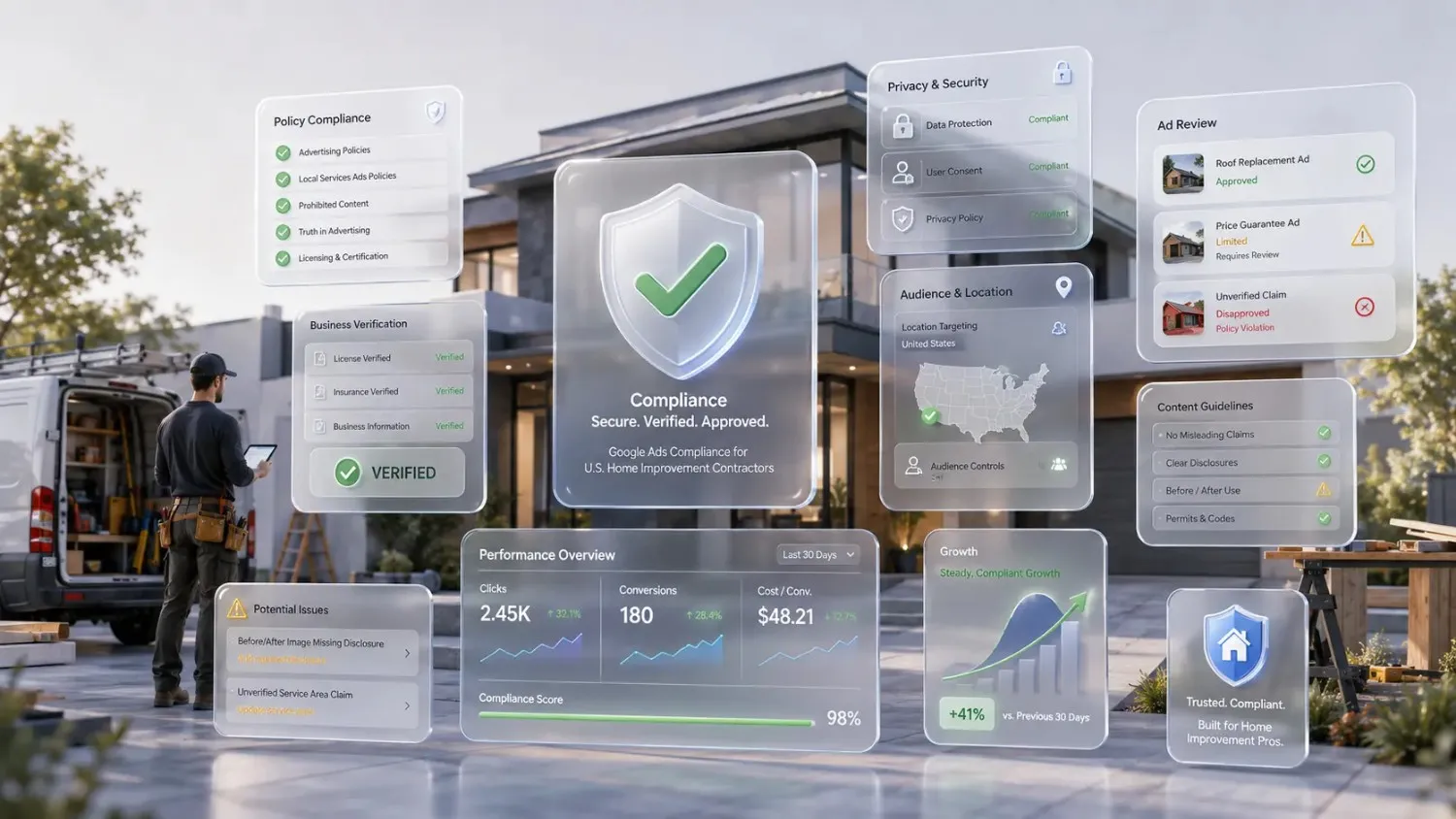
Google Advertising Policies
Advertisements and landing pages must follow Google’s current policies. Review account notices and fix disapproved claims promptly.
State Contractor Licensing Requirements
Display required contractor details where state law demands them. Confirm requirements with qualified local counsel or regulators.
Advertising Financing and Promotional Offers
Financing and promotional claims need clear, truthful terms. Avoid hiding eligibility rules, fees, deadlines, or payment conditions.
Consumer Privacy, Call Recording, and Consent
Publish a clear privacy policy and protect collected information. Follow federal and state rules for consent and call recording.
Why U.S. Window Companies Waste Money on Google Ads
Window companies waste money through poor targeting, weak pages, and bad tracking. Most losses come from preventable campaign setup mistakes.
Targeting Locations Outside the Service Area
Outside-area clicks create leads your team cannot serve. Use presence targeting and review user-location reports.
Mixing Window Repair and Replacement Intent
Mixed campaigns hide service performance and reduce message relevance. Separate repair, replacement, doors, and commercial windows.
Ignoring Negative Keywords and Search Terms
Ignored search terms allow irrelevant traffic to continue. Review them weekly during early campaign development.
Sending Traffic to Generic Website Pages
Generic homepages force homeowners to find the needed information. Dedicated pages create clearer paths toward contact.
Optimizing for Clicks Instead of Qualified Leads
Click optimization can attract cheap but weak traffic. Optimize toward qualified calls, appointments, and closed projects.

Google Ads vs. Facebook Ads for U.S. Window Companies
Google captures existing demand, while Facebook often creates or renews interest. Google usually provides stronger immediate buying intent.
| Factor | Google Ads | Facebook Ads |
| Main intent | Active service search | Passive discovery |
| Lead urgency | Usually higher | Usually lower |
| Best use | Estimates and urgent needs | Awareness and remarketing |
| Targeting focus | Keywords and search behavior | Audiences and creative |
| Starting priority | Often first | Usually supporting |
Comparing Search Intent and Lead Urgency
Google users actively search for window services. Facebook users may not currently plan a project.
Comparing Lead Cost and Lead Quality
Facebook may produce cheaper form leads. Google often produces stronger intent and faster sales conversations.
When Window Companies Should Use Google Ads First
Use Google first when homeowners already search within your market. It works well for estimate and urgent service demand.
When a Combined Advertising Strategy Works Better
A combined strategy supports both demand capture and awareness. Use Google for intent and Facebook for follow-up.
Our Google Ads Framework for U.S. Window and Door Installers
TOP7SEVEN’s framework focuses on qualified opportunities and closed revenue. It connects targeting, landing pages, tracking, and sales fee dback.
How Home Service Direct Structures Window Campaigns
TOP7SEVEN structures campaigns by service, intent, and location. This approach protects budgets and improves reporting clarity.
Budget Allocation Across Campaign Types
Core search campaigns receive the first budget allocation. Proven Local Services Ads and remarketing receive additional funding.
Lead Quality and Sales Team Feedback Loops
Sales teams should label every inquiry by quality and outcome. Campaign managers can then remove weak traffic sources.
Ongoing Optimization and Performance Reporting
Reporting should cover costs, qualified leads, appointments, and sales. Regular optimization improves search terms, ads, bids, and landing pages.
Frequently Asked Questions
How Long Does It Take for Google Ads to Generate Window Leads?
Google Ads can begin producing traffic soon after approval. Reliable optimization needs enough qualified lead and sales data.
Is Google Ads Better Than SEO for Window Companies?
Google Ads provides faster visibility, while SEO builds long-term organic reach. Many companies benefit from using both channels.
Should Small Window Companies Run Google Ads?
Small companies can run Google Ads with focused locations and services. They must answer leads quickly and track results carefully.
How Much Should a Window Company Spend on Google Ads?
Many companies can start between $1,500 and $3,000 monthly. Competitive markets may require larger testing budgets.
Are Local Services Ads Better Than Standard Search Ads?
Local Services Ads may offer stronger placement and simpler lead pricing. Standard search offers greater keyword, message, and landing-page control.
Key Takeaways
- Target high-intent replacement and estimate searches.
- Separate repair, replacement, door, and commercial campaigns.
- Send every paid click to a focused landing page.
- Track qualified leads, appointments, sales, and revenue.
- Scale only after lead quality becomes consistent.
Final Thoughts
Google Ads can produce valuable window company leads across the United States. Success requires tight targeting, useful pages, and accurate tracking. Campaigns should optimize for qualified projects instead of cheap clicks.
Start with search intent, Local Services Ads eligibility, and clear conversion goals. Then build separate campaigns for each service and location. Use sales feedback to guide every budget decision.
Top7seven is a trusted lead generation provider at 4878 Nickel Road, El Monte, CA 91731. Call (209)-655-3042 or email contact@top7seven.com. We can help you build campaigns that drive more qualified leads. Contact us today to get started.