Your phone stays quiet, and every day without a call costs you money. That’s the reality for many pest control owners chasing pest control leads across a crowded market. Whether you run a small local crew or a multi-state operation, steady lead flow decides if you grow or just survive.
This problem hits harder because homeowners now search online before they call anyone. A missed lead today means a competitor answers the call instead. That’s why smart lead generation for pest control companies blends local search, paid ads, and fast follow-up into one system.
In this guide, you’ll learn what pest control leads really cost, how to generate them organically, and when paid or third-party leads make sense. We’ll also cover legal rules, ROI benchmarks, and the mistakes that quietly drain your ad budget. Keep reading to build a lead pipeline you can actually count on.
Quick Answer
Pest control leads come from three main sources: organic search (SEO and Google Business Profile), paid ads (Google Ads and Local Services Ads), and third-party lead generation companies. Costs range from $20 for shared general pest calls to $300 for exclusive termite or bed bug leads. The best results come from combining all three with fast, automated follow-up.
Cost of Pest Control Leads
Pest control lead costs depend on the service type, lead exclusivity, and your region. Prices swing widely because a termite job pays far more than a one-time ant spray. Understanding these numbers helps you set a realistic marketing budget. Let’s break down the real costs by category.
General Pest Calls
General pest calls usually cost between $20 and $50 per shared lead. This price covers common jobs like ants, spiders, and roaches. Shared leads cost less because multiple companies get the same contact at once. You can solve this by pairing shared leads with fast callback speed to win the job first.
High-Value Services (Termites/Bed Bugs)
High-value services like termite and bed bug jobs cost $100 to $300 per lead. This problem happens because these treatments require specialized equipment and licensed technicians. The job value is much higher, so lead generation companies charge more for them. Many pest control companies find these leads worth the premium since one termite contract can cover several ad campaigns.
Exclusive vs. Shared Lead Pricing
Exclusive leads cost more, but shared leads mean more competition per call. For general pest control, exclusive pay-per-lead pricing runs $45 to $120, compared to $20 to $50 for shared calls. Exclusive leads go only to your company, giving you more time to close the sale. Shared leads get sent to three or four competitors at once, so speed becomes everything.
Regional Cost Variance by U.S. Region (Northeast, South, Midwest, West)
Lead costs shift across the Northeast, South, Midwest, and West due to demand and competition. Dense metro areas in the Northeast and West often see higher costs per click and per lead. The South sees strong demand tied to termite season and year-round pest pressure. The Midwest typically runs lower ad costs but still spikes during summer pest surges. Business owners should budget by region rather than applying one national number everywhere.
Lead Generation Overview: Organic vs. Paid vs. Third-Party Leads
Pest control companies get leads from three channels: organic search, paid advertising, and third-party lead sources. Organic leads come from your website, Google Business Profile, and local SEO efforts. Paid leads come from Google Ads and Local Services Ads, where you pay per click or per lead. Third-party leads come from outside companies that sell you contacts they generated themselves. Most successful pest control businesses use all three together for consistent lead flow.

Organic Lead Generation
Organic lead generation brings in leads without paying per click, though it takes time and consistent effort. This channel builds long-term value because rankings and reviews compound over months. Customers trust organic results more than ads in many cases. Below are the building blocks that drive real organic lead flow.
Google Business Profile
Your Google Business Profile is often the first thing a homeowner sees when they search for pest control near them. This free listing shows your reviews, hours, photos, and service area on Google Maps. Customers struggle to trust a profile with no photos or outdated information. A simple solution is uploading real photos of your trucks, team, and completed jobs weekly.
Review Velocity
Review velocity means how steadily new reviews come in, not just your total count. Customers notice when a business has 200 reviews but nothing new in a year. Fresh reviews signal that you’re active and reliable right now. Set up automated review requests after every job to keep this pipeline steady.
Social Proof Beyond Reviews (Before/After Photos, Video Testimonials)
Social proof beyond reviews includes before/after photos and video testimonials that build extra trust. Many homeowners want visual proof that your treatments actually work. A photo of a termite-damaged beam next to a repaired one tells a powerful story. Video testimonials from real customers add a personal layer reviews alone can’t match.
Local SEO
Local SEO helps your website rank when people search for pest control in your service area. This involves optimizing your site, citations, and content around local search terms. Most people find local businesses through Google’s map pack before scrolling to regular results. Ranking there consistently drives free, high-intent traffic month after month.
Local Citations & NAP Consistency
Local citations are online listings of your business name, address, and phone number, known as NAP. Consistency across every citation tells Google your business is legitimate and trustworthy. This problem happens when your address is listed differently on Yelp, Facebook, and your website. A simple solution is auditing your citations quarterly and fixing any mismatches.
Location Pages for Multi-Service-Area Companies
Location pages help companies serving multiple cities rank in each specific area. Each page should target one city or region with unique, relevant content. Customers struggle to find local providers when a website only has one generic “service area” page. Building dedicated pages for each city improves rankings and shows real local presence.
Structural Keyword Targeting
Structural keyword targeting means organizing your site around how customers actually search. This includes terms like “termite control,” “rodent control,” and “mosquito control” as separate pages. Search engines reward sites that clearly separate services instead of cramming everything onto one page. This structure also helps customers find exactly what they need faster.
Website Speed
Website speed directly affects how many visitors turn into leads. A slow-loading site frustrates mobile users who are often searching during a pest emergency. Most people abandon a page that takes more than a few seconds to load. Compressing images and using reliable hosting are simple fixes that pay off quickly.
Clear Call-to-Actions
Clear call-to-actions tell visitors exactly what to do next. Every page should have a visible phone number and a “Get a Free Quote” button. Customers struggle when they have to hunt for contact information on a cluttered page. Placing your CTA above the fold increases your conversion rate significantly.
Build Conversion-Focused Landing Pages
Conversion-focused landing pages are built to turn visitors into leads, not just inform them. These pages should have one clear goal, one CTA, and minimal distractions. A better approach is creating separate landing pages for termite control, general pest, and emergency services. This focused structure improves results for both organic traffic and paid ads.
Referral & Partner Programs (Realtors, Property Managers)
Referral and partner programs with realtors and property managers create a steady stream of warm leads. These professionals regularly need pest inspections and ongoing treatments for their properties. You can solve this by offering a simple referral fee or priority scheduling for partners. This lead source often converts faster since trust is already established.
Paid Advertising Strategies
Paid advertising gets your pest control business in front of homeowners actively searching right now. This channel works fast, unlike organic SEO, which takes months to build momentum. Google Ads and Local Services Ads are the two main paid options worth your budget. The sections below explain how each one works and where they fit.
Google Local Services Ads (LSAs)
Google Local Services Ads put your business at the very top of search results with a “Google Screened” badge. This ad format charges you per lead, not per click, making budgets more predictable. LSAs work especially well for emergency pest control searches where speed matters most. Many pest control companies see strong ROI here because intent is extremely high.
Pay-Per-Lead Model
The pay-per-lead model means you only pay when someone actually contacts you through the ad. This differs from standard PPC, where you pay for every click regardless of outcome. Customers struggle to justify budgets on clicks that never convert. LSAs remove that risk by charging only for real leads.
Google Screened Badge
The Google Screened badge shows customers that Google verified your business license and background. This badge builds instant trust with homeowners comparing several pest control providers. Most people feel safer clicking a screened business over an unverified one. Getting screened requires background checks and proof of insurance and licensing.
Dispute Process
The dispute process lets you request refunds for invalid or low-quality leads. This matters because not every lead that comes through is a genuine, qualified prospect. You can solve this by disputing leads that are spam calls, wrong numbers, or outside your service area. Google typically reviews these requests within a few business days.
Google Search Ads (PPC)
Google Search Ads, or PPC, place your ad above organic results for specific search terms. This channel gives you full control over budget, targeting, and messaging. Unlike LSAs, you pay per click whether or not the visitor calls you. PPC works best when paired with a strong landing page and clear CTA.
High-Intent Bidding
High-intent bidding focuses your budget on searches like “exterminator near me” or “need pest control today.” These searchers are ready to book, not just browsing information. A simple solution is bidding higher on emergency and same-day service terms. This approach improves your cost per lead by targeting people closest to booking.
Negative Keywords
Negative keywords stop your ads from showing on irrelevant searches. This includes terms like “pest control jobs” or “DIY pest control” that won’t convert to customers. Customers struggle with wasted budget when ads show for job seekers instead of buyers. Reviewing your search terms report weekly helps catch these issues early.
Ad Assets
Ad assets are extra details like call buttons, location info, and site links added to your ads. These make your ad bigger and more clickable on the search results page. Most people prefer ads with a visible phone number they can tap immediately. Adding these assets typically improves click-through rate without extra cost.
Why Traditional Clicks Fall Short
Traditional clicks fall short because a click doesn’t guarantee a phone call or booked job. This problem happens when visitors land on your site but leave without taking action. Customers struggle with confusing forms, slow pages, or missing phone numbers. A better approach is tracking actual conversions, not just clicks, to measure real marketing efforts.
Buying Third-Party Leads
Buying third-party leads means purchasing contacts from an outside pest control lead generation company instead of generating them yourself. This option works well for companies that want fast lead flow without building an in-house marketing team. Third-party leads can be exclusive or shared, and pricing varies based on that choice. This approach works best as a supplement to your organic and paid efforts, not a replacement.
How the Model Actually Works
Lead generation companies run their own ads and websites, then sell the resulting contacts to pest control businesses. These companies invest heavily in SEO and PPC to attract homeowners searching for pest help. When a lead comes in, it’s either sent to one company or split between several. Understanding this model helps you know exactly what you’re paying for.
Real-Time Web Leads
Real-time web leads are sent to you the moment a homeowner fills out a form online. Speed matters enormously here since customers often fill out several forms at once. Most people book with whichever company calls back first. This makes fast response systems a must-have, not a nice-to-have.
Exclusive Leads: Pros & Cons
Exclusive leads go only to your company, giving you time to follow up without racing competitors. The downside is a higher cost per lead compared to shared options. In my 20+ years of experience, exclusive leads convert better because there’s no rush or pressure war. This makes them worth it for high-value jobs like termite treatments.
Shared Leads: Pros & Cons
Shared leads cost less but get sent to multiple pest control companies at once. The advantage is a lower cost per lead, which helps smaller budgets get started. The downside is a lower lead quality experience, since speed becomes the deciding factor. Shared leads work best when paired with instant automated response systems.
Pay-Per-Call (Inbound Calls)
Pay-per-call leads connect homeowners directly to your phone instead of a web form. This model often produces higher-converting leads since the customer is already talking to a real person. You pay based on call duration or qualified call criteria. Pay-per-call works especially well for emergency pest control and same-day service requests.
Live Transfers
Live transfers connect a pre-qualified caller straight to your team in real time. This problem happens less often with live transfers since the caller has already confirmed interest. Customers struggle less with live transfers because there’s no waiting or callback delay. This method typically produces some of the highest-converting leads available.
Buffer Times
Buffer times are set windows during which you won’t be charged for duplicate or repeat calls. This protects you from paying twice for the same customer calling back. A simple solution is confirming your buffer time policy before signing any contract. Most reputable providers offer buffer windows between 24 and 90 days.
How to Vet a Pest Control Lead Generation Company
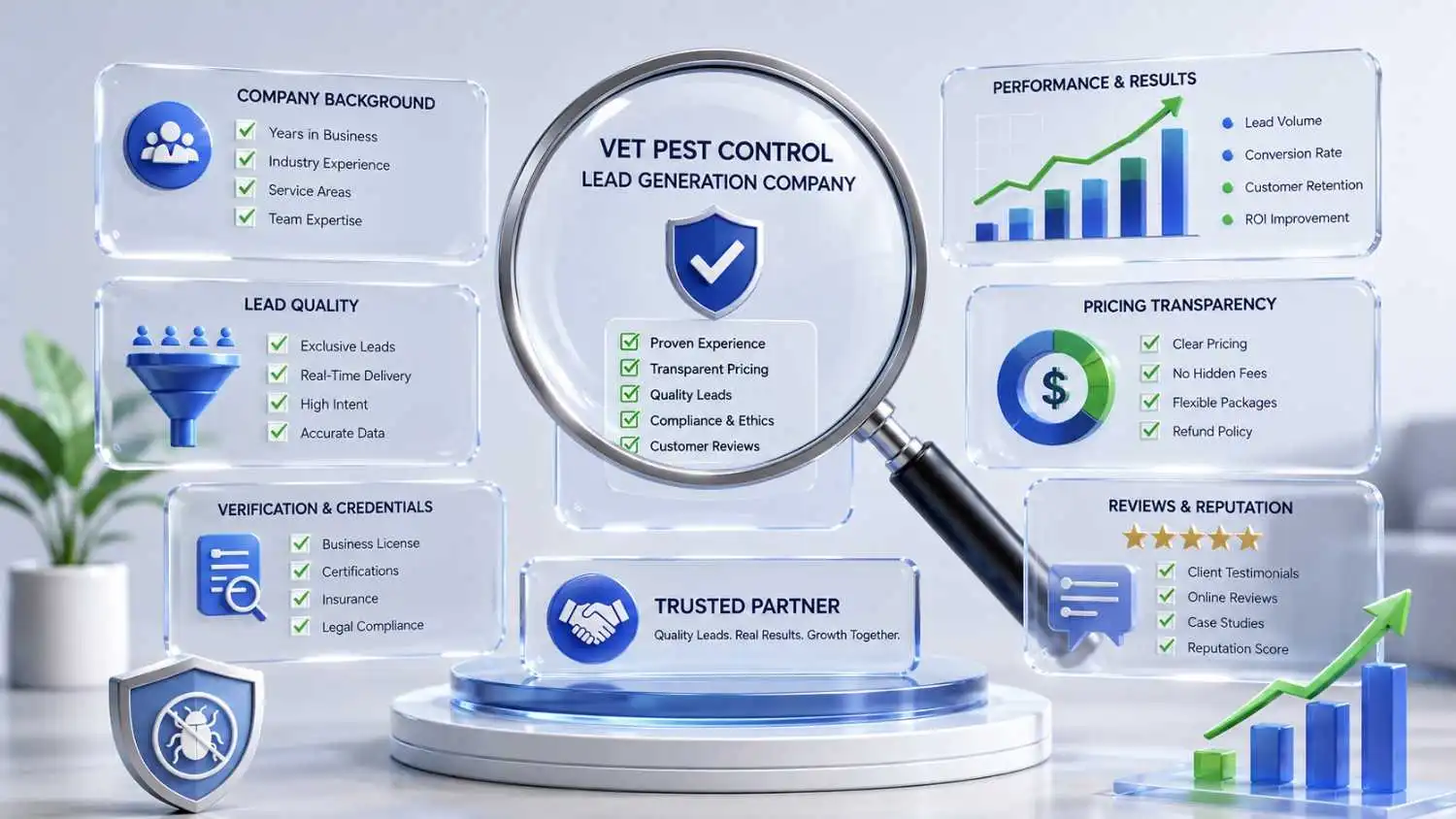
Vetting a pest control lead generation service means checking their lead sources, pricing, and refund policies before signing anything. This step protects you from wasting money on recycled or fake leads. Many pest control business owners skip this step and regret it later. The questions below help you separate reliable providers from risky ones.
Questions to Ask Before Signing a Contract
Ask where leads come from, how exclusivity works, and what the refund policy covers. Also ask about average response time expectations and contract length. Customers struggle when they sign long contracts without a clear exit option. A better approach is starting with a short trial period before committing long-term.
Red Flags of Low-Quality or Recycled Leads
Red flags include vague answers about lead sources and no dispute or refund process. Recycled leads are old contacts resold to multiple companies over time, wasting your budget. You can solve this by asking for a sample lead report before signing. If a company won’t share this, treat it as a warning sign.
Legal & Compliance for Pest Control Marketing in the U.S.
Legal compliance protects your pest control business from fines and lawsuits tied to marketing practices. This matters most for call-based lead generation and licensing claims in ads. Many pest control companies overlook these rules until a complaint forces attention. The next sections cover the two biggest compliance areas.
TCPA and Do-Not-Call Rules for Pay-Per-Call Leads
The TCPA regulates how businesses can call or text consumers, including pest control leads. This law requires proper consent before contacting someone by phone or text message. Customers struggle with unwanted spam calls, which is exactly what TCPA aims to prevent. A simple solution is working only with lead providers who document proper consumer consent.
State-by-State Pest Control Licensing & Advertising Rules
Pest control licensing and advertising rules vary by state across the U.S. Some states require your license number to appear directly in ads and on your website. This problem happens when companies expand into new states without checking local rules first. Always confirm requirements with your state’s pest control regulatory board before launching ads there.
Lead Cost and ROI Benchmarks
Lead cost and ROI benchmarks help you judge if your marketing efforts are actually paying off. This table compares average costs and typical value across common pest control lead types.
| Lead Type | Typical Cost | Best For |
| Shared General Pest Lead | $20 – $50 | Budget-conscious growth, high call volume |
| Exclusive General Pest Lead | $45 – $120 | Higher close rates, less competition |
| Termite/Bed Bug Lead | $100 – $300 | High-value contracts, specialized services |
| Google LSA Lead | Varies by market | Emergency and same-day service searches |
| PPC Click (Google Ads) | Varies by keyword | Full budget control, custom targeting |
Maximizing Lead Conversion
Maximizing lead conversion means turning more of your leads into booked jobs. This step matters just as much as generating the lead in the first place. Many pest control companies spend heavily on leads but lose them to slow follow-up. The strategies below help you close more of what you already have.
The 5-Minute Rule
The 5-Minute Rule means calling back a new lead within five minutes of receiving it. Response speed dramatically affects whether a customer picks you or a competitor. Customers struggle to wait, especially when dealing with an active pest problem. A simple solution is setting phone alerts so no lead sits untouched.
Automated Follow-Up & SMS
Automated follow-up and SMS keep leads engaged even outside business hours. This system sends instant text replies when someone fills out a form after hours. Most people respond faster to a text than an email. This tool alone can rescue leads that would otherwise go cold overnight.
Dedicated Intake Staffing
Dedicated intake staffing means having a person whose main job is answering and booking new leads. This problem happens often when technicians try to answer calls between jobs. Customers struggle to book when calls go to voicemail during busy hours. A dedicated intake role keeps your lead flow moving smoothly all day.
CRM & Call-Tracking Software for Attribution
CRM and call-tracking software show exactly which marketing channel brought in each lead. This data helps you see your true return on investment by source. Without this, business owners are often guessing which campaigns actually work. Setting up tracking numbers for each channel makes this data crystal clear.
Seasonal Pest Control Marketing Strategies for More Predictable Growth
Seasonal marketing means adjusting your campaigns around seasonal pest patterns throughout the year. This matters because pest problems shift with weather, from spring ants to fall rodents. Customers struggle with different pests at different times of year. A better approach is increasing ad spend right before each pest’s peak season, based on your local climate and past call data.
In-House Marketing Team vs. Outsourcing to an Agency
Choosing between an in-house team and an agency depends on your budget and growth stage. In-house teams offer more control but require salaries, training, and specialized tools. Outsourcing to a pest control lead generation agency gives you expert-level campaigns without hiring full-time staff. Many smaller pest control businesses start with an agency, then build in-house capacity as they scale.
Common Mistakes Pest Control Companies Make with Lead Generation
Common mistakes include slow follow-up, ignoring reviews, and running ads without proper tracking. One mistake people make is buying leads without vetting the provider’s exclusivity and refund policies. Another is neglecting Google Business Profile updates for months at a time. These gaps quietly cost pest control companies thousands in lost jobs every year.

Frequently Asked Questions
How much do pest control leads cost?
General pest leads cost $20 to $50 shared, or $45 to $120 exclusive. Termite and bed bug leads run $100 to $300 due to higher job value.
What’s the fastest way to get pest control leads?
Google Local Services Ads and Google Search Ads generate leads the fastest. Organic SEO takes longer but produces lower-cost leads over time.
Are exclusive or shared leads better?
Exclusive leads usually convert better since you’re not racing other companies. Shared leads cost less but require faster response times to win the job.
Is buying third-party leads worth it?
Yes, when paired with a fast follow-up system and a vetted, reputable provider. Third-party leads work best as a supplement to your own organic and paid efforts.
Key Takeaways: Building a Predictable Lead Pipeline
- Combine organic SEO, paid ads, and third-party leads for the most consistent lead flow.
- Exclusive leads cost more but typically convert better than shared leads.
- Respond within 5 minutes to dramatically improve your close rate.
- Vet every lead generation company before signing a contract.
- Track every lead source with CRM and call-tracking software to measure real ROI.
Conclusion
Building steady pest control leads takes more than one tactic working alone. The strongest pest control companies blend local SEO, Google Ads, Local Services Ads, and smart use of third-party leads. Each channel plays a different role, and together they create a pipeline that doesn’t depend on luck.
Cost matters, but conversion matters more. A cheap lead that never gets a callback is worse than an exclusive lead closed the same day. Fast follow-up, automated systems, and proper tracking turn average lead flow into real, measurable growth for your pest control business.
If you’re ready to stop guessing and start growing, Top7seven is here to help. Reach us at 4878 Nickel Road, El Monte, CA 91731, call (209)-655-3042, or email contact@top7seven.com. We can help you build a reliable pest control lead generation system. Contact us today to get started.