Car shipping companies often waste money chasing leads that never book. Car Shipping PPC Leads solve this problem by targeting people actively searching for transport.
Paid search reaches customers while they compare prices, routes, carriers, and pickup dates. I focus campaigns around that buying moment. That approach produces stronger high-intent leads than broad awareness traffic.
This guide explains keywords, targeting, landing pages, tracking, follow-up, and campaign structure. You will also learn how to protect PPC budgets across the USA.
Quick Answer
Car Shipping PPC Leads come from paid search ads targeting people actively needing vehicle transport. Strong campaigns use high-intent keywords, route targeting, focused landing pages, and fast follow-up. They also track qualified leads, booked shipments, and revenue. This approach helps U.S. auto transport companies capture demand before competitors do.
How Car Shipping PPC Generates Leads Across the USA
Car shipping PPC generates leads by reaching customers during active vehicle transport searches.
Customers search because they already need help. That makes paid search different from many passive advertising channels.
The system connects a search, an advertisement, and a focused quote page. Each part must match.
Targeting High-Intent U.S. Car Shipping Keywords
High-intent keywords show clear signs that customers want quotes or bookings.
I prioritize terms like car shipping quotes, auto transport leads, and route-based searches. Service modifiers also reveal stronger buying intent.
A search like “ship car from Chicago to Miami” gives clear location signals.
Matching Search Intent of U.S. Auto Transport Customers
Search intent tells us what the customer wants right now.
Customers searching prices need different messaging from customers seeking enclosed transport. I separate these needs inside search campaigns.
This improves relevance and protects ad spend.
Aligning U.S. PPC Ads With Car Shipping Landing Pages
The landing page should continue the exact promise shown inside the PPC ad.
Customers leave when advertisements and pages feel disconnected. I match routes, services, headlines, and calls to action.
That creates a smoother funnel.
Why Car Shipping PPC Attracts High-Intent Prospects in the USA
Car shipping PPC attracts high-intent prospects because search captures active demand.
Customers usually search after deciding they need vehicle transport. Many already know their route and schedule.
That makes Google Ads useful for direct lead generation.
Immediate Vehicle Shipping Needs Across the United States
Urgent shipping searches often carry strong booking intent.
Customers may need relocation, dealership transport, auction delivery, or family vehicle moves. Urgency terms help identify these prospects.
Examples include expedited car shipping and fast pickup searches.
State-to-State Route and Location Relevance
Route searches connect the campaign with a specific shipping need.
I build campaigns around shipping cars from state to state. This creates stronger message relevance.
Customers see their origin and destination reflected inside the advertisement.
Budget and Campaign Control Across U.S. Markets
PPC lets marketers control spending by service, market, route, and campaign.
The company can separate profitable regions from expensive ones. Budget shifts become easier after enough conversion data appears.
That control supports better ROI decisions.
Car Shipping PPC Keyword Strategy for the U.S. Market
A strong keyword strategy separates buying searches from weak or unrelated searches.
I avoid treating every transport phrase equally. Search wording often reveals urgency, route, vehicle type, and buying stage.
That makes keyword structure critical.
Transactional Car Shipping Keywords in the USA
Transactional keywords show customers moving closer to a quote or booking.
Useful examples include car shipping cost, “door-to-door auto transport,” and “book open carrier.”
These searches support stronger qualified leads.
Commercial Investigation Keywords for U.S. Auto Transport
Commercial searches come from customers comparing providers, prices, reviews, or services.
Terms may include auto transport leads reviews, transport company comparisons, and quote searches.
These prospects often need more trust before submitting details.
Negative Keywords for Filtering Unqualified U.S. Traffic
Negative keywords stop irrelevant searches from wasting paid traffic budgets.
I regularly review search term reports for unwanted intent. Words involving jobs, DIY transport, or unrelated services often deserve exclusions.
Negative lists need ongoing updates.
Geo-Targeting for U.S. Auto Transport Campaigns
Geo-targeting helps campaigns focus spending around useful U.S. markets and transport routes.
Google Ads supports country, city, regional, and radius targeting options.
I combine location data with route demand and lead quality.
Origin-and-Destination Lane Targeting Across U.S. States
Lane targeting builds campaigns around exact pickup and delivery markets.
I may separate Florida-to-New York traffic from California-to-Texas traffic. Each route gets relevant keywords and ad copy.
This also improves reporting clarity.
Local, City, Metro, and Regional Radius Targeting
Local targeting helps advertisers focus on cities and metros producing valuable demand.
The company can target selected geographic areas through Google Ads.
This matters around major population and vehicle shipping centers.
Location Bid Adjustments Across U.S. Markets
Location performance should guide spending decisions across different U.S. markets.
I compare leads, bookings, and revenue by area. Strong markets can earn more budget.
Weak markets need tighter targeting or reduced spending.
Landing Pages That Convert U.S. Car Shipping PPC Traffic
Strong landing pages make quoting easy, clear, fast, and trustworthy.
Customers want answers without fighting complicated forms. The page should collect enough information for accurate follow-up.
Extra friction usually hurts results.
Fast Vehicle Shipping Quote Forms
A strong quote form collects essential transport details without overwhelming prospects.
I usually collect these details:
- Origin ZIP code
- Destination ZIP code
- Vehicle year, make, and model
- Transport type
- Pickup timing
- Contact details
This gives sales teams useful context.
Mobile-First Experience for U.S. Car Shipping Customers
Mobile pages need fast loading, large fields, and easy click-to-call buttons.
Your supplied campaign data shows 60%+ of these searches may come from mobile.
That makes mobile form design a core conversion issue.
Clear Calls to Action for Auto Transport Quotes
Calls to action should tell customers exactly what happens next.
Useful examples include Get My Car Shipping Quote or Check My Route Price.
Clear wording beats vague buttons like “Submit.”
U.S. Auto Transport PPC Best Practices
Strong PPC campaigns combine relevance, tracking, search control, and regular optimization.
I focus on actions tied closely to real business results. Clicks alone never tell the full story.
Bookings matter more.
Google Ads Assets for Car Shipping Campaigns
Google Ads assets can add useful information beside search advertisements.
I use relevant call, location, and service information where suitable.
Each asset should help the customer take a useful next step.
Conversion Tracking for U.S. Auto Transport Leads
Conversion tracking shows which ads create valuable customer actions.
Google supports website conversion measurement after users interact with advertisements.
I track forms, calls, qualified leads, deposits, and booked shipments.
Search-Term Optimization for Car Shipping Traffic
Search-term reviews reveal where money actually goes after campaigns start running.
I compare real search queries against keyword intent. Poor matches become negatives.
Strong search terms may become dedicated keywords.
U.S. Car Shipping PPC Performance Benchmarks
Performance benchmarks help teams spot weak areas inside the lead generation funnel.
The ranges below come from your supplied background data. They work as planning references, not guaranteed results.
| PPC Metric | Working Benchmark | What It Shows |
| Average cost per lead | $15–$25 | Search lead acquisition efficiency |
| Landing page conversion rate | 20%–40% | Quote-form performance |
| Quote-to-close ratio | 18%–22% | Sales and pricing effectiveness |
| Cost per booked order | Ad spend ÷ booked orders | True acquisition cost |
| ROAS | Revenue ÷ ad spend | Campaign revenue efficiency |
Different routes and seasons can create very different results.
Speed-to-Lead: Turning U.S. Car Shipping PPC Leads Into Sales
Fast responses help teams contact high-intent prospects while their shipping need stays active.
Customers often request several quotes. Delayed replies give competitors more opportunities.
Your background data recommends 3–5 minute automated responses.
Immediate Call Response for New Car Shipping Leads
New car shipping leads deserve immediate attention from the sales team.
The CRM should alert agents after a quote arrives. A quick call creates direct human contact.
That also confirms important route details.
Lead Follow-Up Timing for U.S. Prospects
Follow-up should continue beyond the first unanswered call.
I prefer organized phone, email, and approved text follow-up. Each contact should add useful information.
Repeated empty messages create frustration.
Measuring Contact and Booking Conversion Rates
Teams should measure contact rates and bookings beside basic form conversions.
A cheap cost per lead can hide poor sales results.
I care more about qualified contacts and paid bookings.
How to Structure a Car Shipping PPC Campaign Across the USA
Campaign structure should separate services, search themes, markets, and budgets clearly.
Messy accounts make optimization harder. Clear groups show where money produces results.
That makes scaling safer.
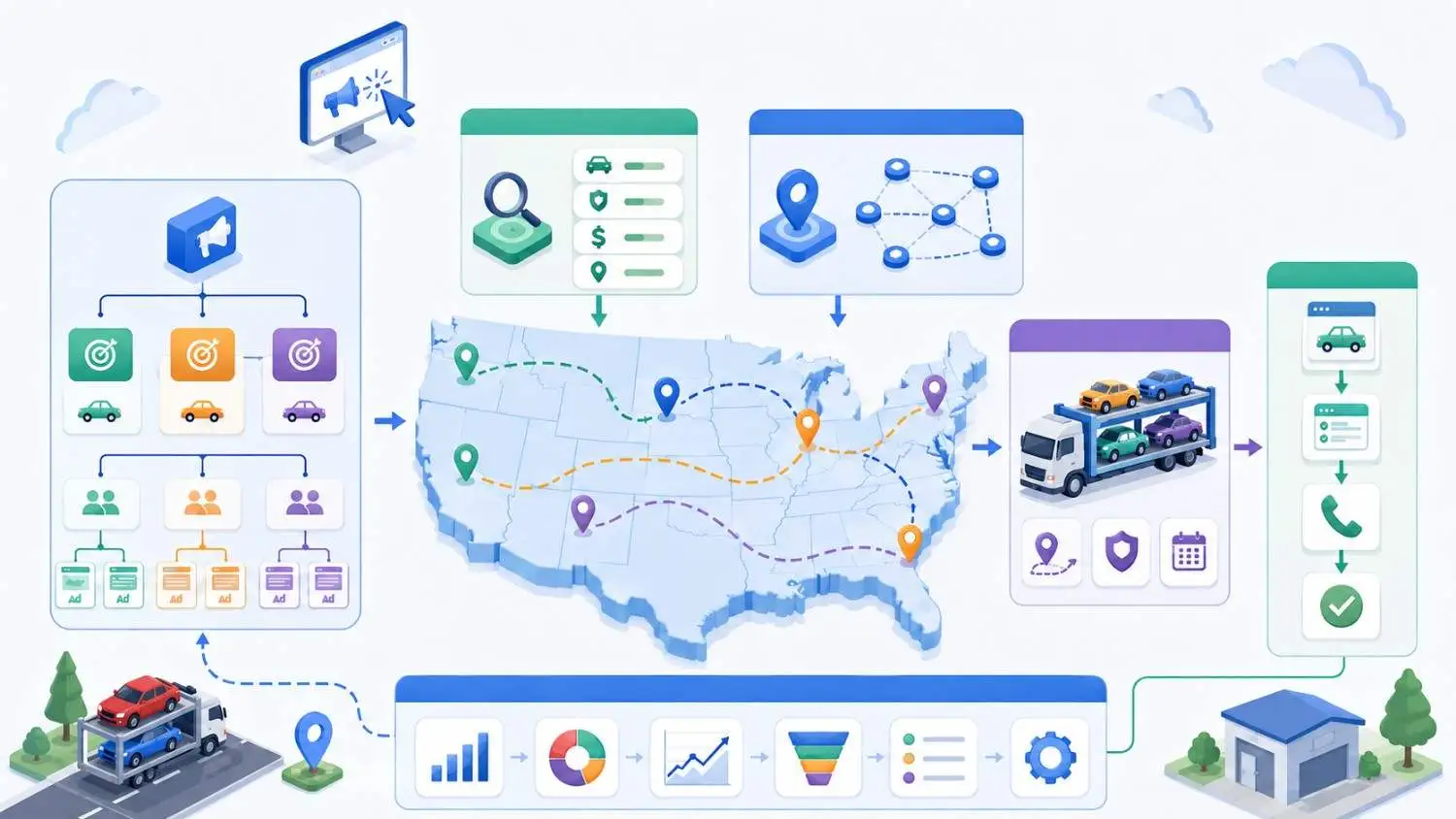
Separate Campaigns by Auto Transport Service
Different transport services deserve separate campaign controls.
I separate open transport car shipping, enclosed transport, expedited service, and special vehicle needs.
Each service may carry different economics.
Organize Ad Groups Around U.S. Search Themes
Ad groups should organize closely related customer searches.
Route terms should not mix randomly with enclosed transport terms. Clear themes support better ad copy.
They also simplify negative keyword control.
Control PPC Budget by Campaign and Market
Separate budgets protect strong campaigns from weaker markets.
I compare spending against qualified leads and bookings. That reveals which markets deserve expansion.
Budget follows business outcomes.
Car Shipping Ad Copy That Drives Qualified U.S. Inquiries
Strong car shipping ads match customer needs while setting clear expectations.
I avoid empty hype. Customers care about routes, timing, transport type, price process, and trust.
Good advertisements answer those concerns quickly.
Match Ads to U.S. Customer Shipping Needs
Ad messaging should reflect the searcher’s exact transport problem.
A route search deserves route-focused wording. An enclosed search deserves protection-focused wording.
Specific messaging produces better-fit inquiries.
Highlight Trust and Auto Transport Service Differentiators
Trust elements help customers feel safer sharing vehicle and contact information.
Registered brokers should present accurate authority information. FMCSA requires broker registration and financial responsibility.
Never invent licenses, insurance, or safety claims.
Use Qualification-Focused Calls to Action
Qualification-focused calls to action attract people ready to discuss real shipping details.
I prefer Get a Vehicle Shipping Quote over broad curiosity-driven wording.
Clear CTAs improve lead context.
Route-Specific PPC Campaigns for U.S. Auto Transport
Route-specific campaigns connect advertisements with precise vehicle shipping demand.
These campaigns can capture valuable searches missed by broad national structures.
They also reveal route-level economics.
State-to-State Car Shipping Campaigns
State campaigns target customers searching specific origin and destination combinations.
Examples include Texas-to-Florida and California-to-Arizona searches.
I measure each lane separately.
Major U.S. City and Metro Shipping Routes
City-focused campaigns can capture customers using familiar metro names instead of states.
Examples may include Los Angeles, Miami, Dallas, Chicago, and New York.
Search data should decide expansion.
Seasonal and High-Demand U.S. Auto Transport Routes
Seasonal routes need separate planning because customer demand changes during the year.
I watch search volume, lead quality, pricing, and booking rates.
Seasonal campaigns should start before demand peaks.
Qualifying U.S. Car Shipping PPC Leads Before Sales Follow-Up
Lead qualification gives sales teams the information needed for useful conversations.
Poor forms create vague transport leads. Better forms collect details that support pricing and scheduling.
That saves wasted calls.
Vehicle Type and Transport Service Details
Vehicle details help determine equipment needs and transport options.
The form should capture vehicle type and chosen service.
Modified or unusual vehicles may need extra information.
U.S. Pickup and Delivery Location Information
Pickup and delivery information gives the sales team immediate route context.
ZIP codes usually provide enough detail for an initial quote workflow.
Exact addresses can come later.
Shipping Timeline and Customer Purchase Readiness
Timeline questions help separate active buyers from early researchers.
I use simple choices like flexible, soon, or specific date.
The answer helps sales prioritize follow-up.
Measuring the Profitability of U.S. Car Shipping PPC Leads
Profitability should be measured from advertising cost through the final booked shipment.
I never stop at clicks or raw leads. Revenue creates the clearest business view.
That requires connected tracking.
Cost Per Qualified Car Shipping Lead
Cost per qualified lead measures spending against prospects meeting real sales standards.
This number is stronger than raw PPC leads.
Lead scoring can support consistent qualification.
Cost Per Booked Auto Transport Shipment
Cost per booking shows the true advertising cost behind completed sales.
Calculate it with:
Total PPC Ad Spend ÷ Booked Shipments = Cost Per Booked Shipment
This exposes weak sales funnels quickly.
Revenue and Return on Ad Spend Across U.S. Campaigns
ROAS compares campaign revenue against paid advertising spend.
I review it by service, market, route, and campaign.
National totals can hide profitable lanes.
A/B Testing for U.S. Auto Transport PPC Campaigns
A/B testing helps identify messaging and page changes that improve real results.
I test one meaningful variable at a time. That makes results easier to understand.
Booking quality still matters.

Testing Car Shipping Ad Messaging
Ad tests should compare different customer benefits or search-intent angles.
One version may focus on route convenience. Another may focus on enclosed transport.
Qualified conversions decide the winner.
Testing Calls to Action for U.S. Prospects
CTA tests reveal which next-step wording creates stronger action.
I compare quote-focused wording against call-focused wording.
The sales process influences the best choice.
Testing Auto Transport Landing Page Offers
Landing page tests should target friction inside the quote process.
I test form length, trust placement, headlines, and step order.
Large redesigns make results harder to explain.
Seasonal Factors That Affect Car Shipping PPC in the USA
Seasonal movement changes search demand, competition, routes, and customer urgency.
Campaign budgets should reflect those shifts.
I watch route trends instead of using one annual setup.
Snowbird and Seasonal Relocation Demand
Snowbird travel can create repeat vehicle shipping demand across seasonal routes.
Past customer lists can support timely remarketing.
Messages should focus on scheduling and route availability.
College Student Vehicle Shipping Across the USA
Student moves can create transport demand around school start and closing periods.
Parents and students may search differently.
Separate messaging can improve relevance.
Holiday and Peak U.S. Moving Periods
Busy moving periods can change lead volume and customer timing needs.
I adjust budgets based on profitable demand.
I avoid scaling from traffic alone.
U.S. PPC Compliance and Lead Quality Considerations
Compliance protects customers, lead quality, and the long-term health of advertising campaigns.
Claims, forms, calls, and texts need clear processes.
Teams should document consent and review current legal requirements.
Accurate Auto Transport Pricing and Service Claims
Transport advertisements should use accurate pricing, service, license, and availability claims.
FMCSA updated broker financial-responsibility requirements effective January 16, 2026.
The company should keep public trust information current.
Transparent Car Shipping Lead Capture
Lead forms should clearly explain what customers submit and who may contact them.
Hidden lead sharing damages trust.
I prefer direct, clear disclosure near contact fields.
U.S. Call, Text, and Form Consent Requirements
Marketing calls and texts need careful consent practices and current legal review.
FCC guidance states commercial texts require written consent.
FTC rules also restrict certain telemarketing and prerecorded sales calls.
I recommend clear written consent records and qualified legal review.
Common PPC Pitfalls for U.S. Logistics Companies
Most PPC waste comes from weak qualification, poor targeting, and incomplete revenue tracking.
These problems often look small inside Google Ads.
They become expensive after weeks of uncontrolled spending.

Poor Car Shipping Traffic Qualification
Poor qualification fills sales pipelines with people unlikely to book.
Broad keywords and vague CTAs often cause this problem.
Search-term reviews can expose the source.
Inaccurate U.S. Geographic Targeting
Bad geographic settings can send advertising spend toward unwanted locations.
Google provides detailed location targeting controls for campaigns.
I review location reports regularly.
Weak Lead and Booking Attribution
Weak attribution hides which campaigns actually create revenue.
Forms alone give an incomplete picture.
I connect Google Analytics 4, advertising data, CRM stages, and booked orders.
When U.S. Auto Transport Companies Should Consider Outsourcing PPC
Outsourcing makes sense when campaign complexity exceeds the team’s available PPC skills and time.
Large accounts need constant keyword, tracking, landing page, and budget work.
Poor management can become expensive quickly.

Managing Complex Multi-State Auto Transport Campaigns
Multi-state campaigns become harder as routes, services, budgets, and sales data grow.
I separate account structure before scaling.
That prevents national campaigns from becoming impossible to read.
Scaling Car Shipping PPC Across Multiple U.S. Markets
Scaling should follow profitable booking data instead of raw lead volume.
I expand markets showing strong qualified lead and order economics.
New markets start with controlled budgets.
Evaluating Car Shipping PPC Agency Performance
A good PPC partner should report business outcomes beyond clicks and impressions.
Ask about cost per qualified lead, bookings, revenue, and attribution.
Clear reporting protects your budget.
U.S. Car Shipping PPC Campaign Launch Checklist
A strong launch checks targeting, tracking, messaging, forms, and sales workflows before spending begins.
I use a simple checklist to prevent expensive setup errors.
Pre-Launch Campaign Setup
- Confirm high-intent keywords
- Build negative keyword lists
- Set U.S. market targeting
- Create route-focused ads
- Check landing page forms
- Confirm mobile usability
Campaign, Conversion, and Tracking Verification
- Test quote submissions
- Test call tracking
- Check conversion actions
- Confirm CRM delivery
- Verify source attribution
- Check consent language
Post-Launch Optimization Across U.S. Markets
- Review search terms
- Track qualified leads
- Measure booked shipments
- Compare route performance
- Adjust negative keywords
- Move budget toward stronger campaigns
Key Takeaways
- Use paid search to capture customers already looking for vehicle transport.
- Target high-intent keywords, routes, cities, and specific auto transport services.
- Measure qualified leads, booked shipments, costs, revenue, and ROAS.
- Respond to new PPC leads quickly and continue useful follow-up.
- Protect campaigns with tracking, negatives, accurate claims, and clear consent.
Final Thoughts
Car Shipping PPC Leads work best when search intent connects directly with sales results. Strong keywords alone cannot carry weak landing pages or poor follow-up. Good tracking shows which routes actually create revenue. That insight helps teams scale with more control.
Top7seven United states Performance Marketing Services can serve as your trusted performance marketing partner. We focus on paid search, lead quality, conversions, and profitable growth. We build strategies around real U.S. customer demand. Contact us today, and we can build your next high-intent PPC campaign.