Your phone stays quiet while competitors book loads all day long. You paid for leads. You waited by the CRM. Nothing rang. That is the real cost of cheap, shared web leads in the auto transport business.
I have spent 20+ years in performance marketing, watching brokers burn ad spend on leads that never convert. The fix is not “more leads.” The fix is better leads — the kind that call you first, ready to book. That is what pay per call auto transport leads deliver.
In this article, you will learn what pay per call leads cost, how they beat shared leads on ROI, and how to pick a lead provider who will not waste your budget. Stick around. This is field-tested, not textbook theory.
Quick Answer
Pay per call auto transport leads connect brokers directly with shippers who are calling right now, ready to book. Pricing runs $35–$120 per call based on vehicle type, while shared leads cost $4–$12 but convert far worse. Live calls close at 25–40%, versus 2–5% for web leads — making pay per call the stronger long-term investment for auto transport lead generation.
What Are Pay Per Call Auto Transport Leads?
Pay per call auto transport leads are live phone calls from shippers who want a quote right now. You are not chasing a form fill. You are answering a ringing phone. The customer already decided to call.
This problem happens with old-school lead gen: a shipper fills out a form, five brokers get the same data, and everyone races to dial first. Whoever answers fastest wins. Pay per call auto transport leads flip that model. The shipper dials your number directly. No race. No wasted callbacks. No chasing voicemail.
I have watched brokers double their close rate just by switching channels. Customers struggle with dead-end web leads that go cold in minutes. A live call never goes cold — the person is on the line, engine running, ready to talk price and pickup date.
We Are Your #1 Choice for Auto Transport Leads in the United States
Top7seven builds pay per call campaigns that put your phone in front of ready-to-book shippers, not tire kickers. We run performance marketing for auto transport brokers across the entire United States.
Our team filters bad calls before they ever hit your desk. We use call tracking, IVR screening, and lead scoring to keep spam off your line. You get high-intent leads — real shippers, real vehicles, real routes.
We do not sell you a list. We build you a pipeline. That difference shows up in your conversion rate within the first week.

Pay Per Call Auto Transport Lead Pricing for the U.S
Pay per call pricing depends on vehicle type, shipping method, and exclusivity. Prices are not one flat number. They shift based on what the shipper is moving and how badly they need it moved.
Here is the current pricing breakdown for the U.S. auto transport market:
| Lead Type | Price Per Call | Exclusivity |
| Standard Open Carrier (sedans, SUVs, trucks) | $35–$65 | Exclusive, real-time |
| Enclosed & Luxury (exotics, classics, high-value) | $75–$120 | Exclusive, real-time |
| Inoperable & Heavy Haul (non-running, winch/forklift) | $55–$90 | Exclusive, real-time |
| Shared Data Leads (general inquiries) | $4–$12 | Shared with up to 5 brokers |
Shared Lead Pricing
Shared leads cost the least, but you split every customer with rivals. They run $4 to $12 per lead. The company that answers fastest usually wins the job. This is why shared leads convert at only 2–5%.
Semi-Exclusive Lead Pricing
Semi-exclusive leads sit between shared and fully exclusive pricing. They get routed to two or three brokers instead of five. This problem happens less often here, but you still compete for the sale.
Exclusive Live Transfer Pricing
Exclusive live transfer leads cost the most because you get the whole call. Standard vehicles run $35–$65. Enclosed and luxury shipments run $75–$120. Heavy haul and inoperable units run $55–$90. No other broker hears that call.
Pay Per Call Billing Models
You only pay for calls that meet a minimum duration. Most networks use a 60 to 90 second billable buffer window. If the caller hangs up before that, you owe nothing. This protects your ad spend from spam calls and wrong numbers.
Auto Transport Lead Quality and Buyer Intent
Lead quality comes down to one thing: how ready is this shipper to book today? A phone call carries more buyer intent than any form fill ever will. The person dialing wants an answer now, not next week.

Live Call Intent Signals
Live calls show buyer intent through urgency and specific questions. The caller asks about pickup dates. They ask about price. They mention a ship date already set. Customers who call rarely shop five other quotes at once — they want to move fast.
Caller Qualification Criteria
Good lead providers screen calls before your team ever answers. IVR systems weed out spambots, wrong numbers, and job seekers. They also catch existing customers with service issues, so your sales line stays clean. This filtering step saves your agents hours every week.
Route and Shipment Specificity
Specific routes and vehicle details signal a serious shipper. A caller who names the exact pickup city, drop-off city, and car model has already thought this through. Vague callers asking general questions convert far less often. Route specificity is one of the strongest high-intent signals in this industry.
Exclusive Call Advantage
Exclusive calls give you the entire conversation, start to finish. No other broker is racing you to the phone. You control the pitch, the pricing, and the follow-up. This is why exclusive pay per call leads consistently beat shared leads on customer lifetime value.
Pay Per Call ROI and Acquisition Economics
Pay per call leads cost more upfront but deliver stronger ROI through faster closes. The math is not complicated once you break it into pieces. Let’s walk through it.
Conversion Rate
Live inbound calls close at 25–40%. Standard web leads close at only 2–5%. This gap alone explains why brokers pay a premium for the phone to ring.
Leads Needed for One Booking
You need far fewer pay per call leads to land one booking. At a 30% close rate, three calls out of ten become bookings. At a 3% close rate on shared leads, you need over 30 leads for the same result.
Cost Per Order (CPO)
Cost per order measures your total spend divided by bookings won. Even at $50 per call, three calls (roughly $150) can produce one booking. Compare that to 30+ shared leads at $8 each — that’s $240 or more, often for the same single sale.
Net Profit Margin
Pay per call leads shrink your labor overhead, which protects your profit margin. Fewer wasted dials mean less time paying agents to chase dead leads. Lower CRM seat costs and dialer fees add up fast across a full sales team.
Campaign ROI
Campaign ROI improves when close speed goes up and chase time goes down. This problem happens less with pay per call: agents spend their day talking to real, ready buyers instead of leaving voicemails. That shift alone changes your bottom line.
Pay Per Call vs. Shared Lead ROI Comparison in the United States
Pay per call leads cost more per unit but win on total cost per booking. Numbers tell this story better than opinions. Here is a real side-by-side comparison.
Scenario A: Pay Per Call Leads at $25 CPL
Ten calls at $25 each equal $250 in ad spend. At a 30% close rate, you land 3 bookings. Cost per booking lands around $83.
Scenario B: Standard Shared Leads at $2.50 CPL
One hundred shared leads at $2.50 equal $250 in ad spend. At a 3% close rate, you land 3 bookings. Cost per booking also lands around $83 — but you burned 10x the labor hours dialing and chasing.
Cost Per Booking Comparison
| Metric | Pay Per Call | Shared Leads |
| Cost per lead | $25 | $2.50 |
| Leads purchased | 10 | 100 |
| Close rate | 30% | 3% |
| Bookings | 3 | 3 |
| Labor hours spent dialing | Low | High |
Revenue and Profit Comparison
Same ad spend, same bookings, but very different labor cost. Shared leads force your team to dial 100 times to reach three sales. Pay per call gets you there with 10 live conversations. Time saved is money earned — fewer wasted hours means lower true acquisition cost.
Maximizing Pay Per Call Auto Transport Lead Performance
You can boost lead performance by controlling call quality at every step. This is not passive — you have to manage the campaign daily. Here’s how top brokers do it.
Enforce Call Buffer Times
You can solve short, wasted calls by enforcing a billable buffer window. Set your minimum call duration at 60–90 seconds. Any call shorter than that should not count against your budget.
Match Lead Delivery to Operating Hours
Match your call delivery schedule to your actual business hours. Customers struggle to reach brokers who are not staffed for after-hours calls. Route calls only during hours your team can answer live.
Filter Calls by Route and Cargo Size
You can raise close rates by filtering calls to routes you actually service. A broker who only handles standard sedans should not pay for inoperable heavy haul calls. Match your filters to your real operating strengths.
Track Call Quality and Booking Outcomes
Track every call from ring to booking using call tracking software. This shows which campaigns, times of day, and vehicle types convert best. Without tracking, you are guessing — and guessing wastes ad spend.
How to Choose a Pay Per Call Auto Transport Lead Provider
Choose a provider based on exclusivity terms, filtering, and transparent reporting. Not every “lead provider” plays fair. I’ve seen brokers get burned by vague contracts and recycled call lists.

Lead Exclusivity Terms
Confirm in writing whether your calls are truly exclusive. Some providers say “exclusive” but still route the same shipper to a second buyer. Ask for the contract language, not just a sales pitch.
Minimum Call Duration Requirements
Check the billable buffer window before you sign anything. A fair provider will not bill you for a 10-second hang-up call. This detail alone can save you hundreds each month.
Geographic and Service Filters
Set clear geographic and service filters before your campaign launches. You want calls from routes you actually cover, not random states outside your service area. This keeps your CPO lower and your team focused.
Replacement and Refund Policies
A trustworthy provider replaces bad calls or refunds you outright. Ask what counts as a “bad call” in their policy. Wrong numbers, spam, and disconnected calls should never come out of your pocket.
Vendor Reporting and Call Records
Good vendors give you recorded calls and full reporting, not just a summary email. You should be able to listen to any call you were billed for. This transparency builds trust and protects your ad spend.
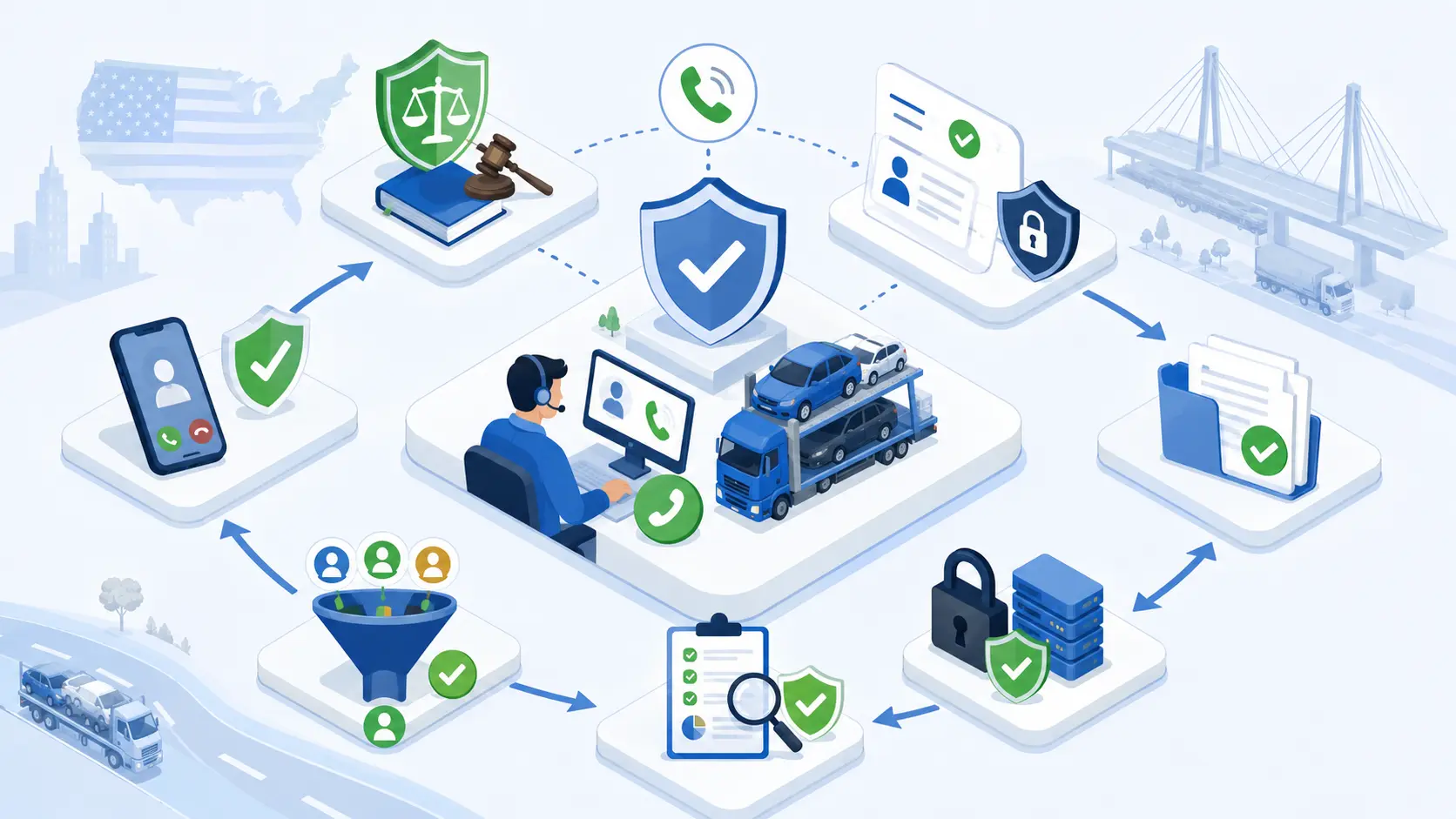
Compliance Requirements for U.S. Auto Transport Call Leads
Compliance protects your brokerage from fines and keeps your campaigns running long-term. This is not optional paperwork — it is part of running a real business.
Consent and Lead Generation Practices
Every lead source must collect proper consent before generating a call. Since the shipper initiates the call themselves, TCPA risk drops sharply compared to cold outbound dialing. This is one more reason inbound calls beat outbound chasing.
Call Recording and Disclosure Policies
Call recording requires clear disclosure to the caller at the start of the conversation. Most states allow recording with at least one party’s consent, but some require both. Check your state’s specific rule before recording any call.
Do-Not-Call Considerations
Do-Not-Call rules matter far less for inbound pay per call leads. The shipper is calling you — you are not cold-calling them. This is a major compliance advantage over traditional outbound lead gen.
Handling Calls Across U.S. Time Zones
Schedule your call routing around U.S. time zones to avoid missed bookings. A shipper in California calling at 6 PM local time is 9 PM on the East Coast. Route calls to agents who are actually awake and staffed.
Geographic Factors That Affect Auto Transport Lead Value
Lead value shifts by state based on shipping demand and seasonal migration patterns. Snowbird routes to Florida and Arizona spike every fall. Military relocation hubs near bases create steady year-round demand.
Auto Transport Call Demand Across the United States
Demand clusters around a few key patterns. Coastal-to-coastal routes (California to Florida, New York to Texas) stay busy year-round. College towns spike every May and August during move-in and move-out season. Snowbird corridors heading south spike every October through December.
Frequently Asked Questions
What is a good price for auto transport leads?
Standard vehicle pay per call leads run $35–$65. Shared leads run $4–$12 but convert far lower.
Are pay per call leads worth the higher cost?
Yes. Live calls close at 25–40%, compared to 2–5% for shared web leads.
How long must a call last to count as billable?
Most networks require a 60–90 second minimum, known as the billable buffer window.
Do pay per call leads reduce TCPA risk?
Yes. Since the shipper initiates the call, TCPA compliance risk drops compared to outbound cold calling.
Can I filter leads by vehicle type?
Yes. Top providers let you filter by route, cargo size, and vehicle classification.
Key Takeaways
- Pay per call leads cost $35–$120 but close at 25–40%, far above shared leads.
- Shared leads cost $4–$12 but convert at only 2–5%, raising your true cost per booking.
- Billable buffer windows (60–90 seconds) protect you from paying for spam or hang-up calls.
- Exclusive calls give you the full conversation with zero competing brokers.
- Compliance risk drops with inbound calls since the shipper initiates contact.
Final Thoughts
Pay per call auto transport leads cost more upfront, but they win on real numbers. Faster closes, lower labor overhead, and stronger ROI make them the smarter long-term investment. The brokers who scale fastest are the ones who stop chasing cold leads and start answering ready-to-book calls.
Top7seven has spent years building performance marketing campaigns for auto transport brokers across the United States. We know which routes convert, which filters matter, and which providers actually deliver. If you are tired of paying for leads that never pick up, we can build you a call pipeline that actually rings. Reach out to us today and let’s get your phone working for you.