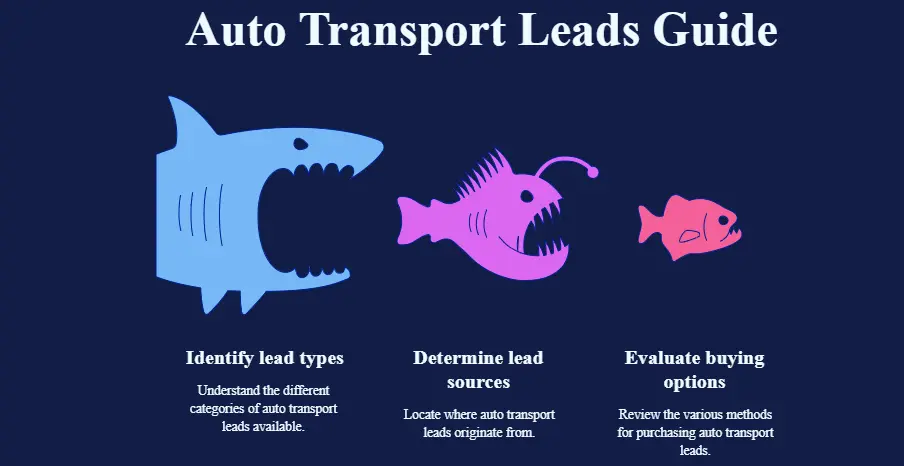
Auto transport leads are potential customers who want to ship a car. They fill out a quote form or call a broker. You get their name, contact info, and shipping details. But not all leads are equal, and buying the wrong kind wastes your money fast.
I’ve spent over 20 years in performance marketing, and I’ve watched brokers burn thousands on auto transport leads that never convert. The problem is not the lead itself. The problem is picking the wrong type, source, or pricing model for your business. This guide breaks down what actually works.
By the end, you’ll know the difference between shared leads and exclusive leads. You’ll understand pricing, targeting, and how to calculate real ROI. You’ll also learn the mistakes that cost brokers the most money.
Quick Answer
Auto transport leads are car shipping quote requests sold to brokers and carriers. They come as shared web leads ($1.50–$4.00, 2%–5% close rate), exclusive leads ($15–$35, 10%–18% close rate), or live call transfers ($45–$90, 20%–35% close rate). The best choice depends on your budget, speed-to-lead process, and CRM setup. Exclusive and live leads convert higher but cost more upfront.
Types of Auto Transport Leads
Auto transport leads come in five main types, each with different cost and conversion rates. Shared leads cost less but face heavy competition. Exclusive and live call leads cost more but close faster. Picking the right mix depends on your sales team’s speed and follow-up process.
Most brokers start with shared leads because they’re cheap. Then they realize their close rate stays stuck at 2%. That’s when smart shops start blending lead types instead of relying on one source.
Shared Auto Transport Leads
Shared leads get sold to multiple brokers at once. A single shared lead often goes out to 3 to 10 brokers simultaneously. This creates a race. Whoever calls first usually wins the job.
Customers struggle with shared leads because everyone is fighting for the same prospect. You need auto-dialers and instant SMS to have a shot. Prices run $1.50 to $4.00 per lead, with conversion rates between 2% and 5%.
Semi Exclusive Auto Transport Leads
Semi exclusive leads get sold to a smaller group, usually 2 to 3 brokers. This cuts down the competition compared to shared leads. You still need to move fast, but you’re not fighting ten other companies.
This option sits between shared and exclusive pricing. It’s a good middle ground if your budget can’t stretch to full exclusivity yet.
Exclusive Auto Transport Leads
Exclusive leads belong to one broker only. No price-cutting race. No ten other calls hitting the customer’s phone at once. This is why exclusive leads convert so much higher.
The company captures these through dedicated landing pages, paid search, or social ads. Cost runs $15.00 to $35.00 per lead. Conversion rates hit 10% to 18%, which is three to four times higher than shared leads.
I’ve seen brokers switch from shared to exclusive and cut their sales team size in half. Fewer leads, but way less wasted dial time.
Live Transfer and Call Leads
Live transfer leads connect you straight to a customer on the phone. This is the highest-intent lead format in the industry. No text delays, no missed calls, no cold outreach.
These come from click-to-call search ads or warm transfers through filtering call centers. Pricing runs $45.00 to $90.00 per lead. Close rates reach 20% to 35%, the best in the business.
Data and Database Leads
Data leads are older contact records sold in bulk. They’re not fresh quote requests. Customers may have inquired weeks or months ago.
You can solve stale data problems by pairing these leads with email and SMS nurture sequences. Don’t expect quick closes here. This lead type works best for long-term pipeline building, not immediate bookings.
Sources of Auto Transport Leads
Auto transport leads come from six major sources, and each one delivers a different quality level. Some sources bring instant volume. Others build slower but give you full data ownership. The smartest brokers use more than one source at a time.
Third Party Lead Aggregators
Aggregators sell data feeds pulled from multiple websites and forms. This is the fastest way to get lead volume flowing. You plug in, pay per lead, and leads start arriving.
The hurdle is quality control. Shared leads from aggregators require rapid dialers and aggressive pricing to win the job before competitors do.
Search Engine Optimization Leads
SEO leads come from customers who found your website through organic search. This problem happens when brokers ignore SEO because it takes time to build.
But SEO delivers the lowest cost per acquisition long-term. Once your site ranks for terms like “car shipping leads” or “auto transport quote,” you get free, steady lead flow. It just takes months, not days, to build.
Google Ads and PPC Leads
PPC leads come from paid search campaigns. This source gives you instant volume and full control over targeting. You choose the keywords, the location, and the ad copy.
The downside is cost per click keeps climbing in competitive markets. Auto transport is a pricey niche to bid on. Still, PPC scales fast when you need leads right now.
Paid Social Media Leads
Social ads capture leads through platforms like Facebook and Instagram. These leads often come from people who weren’t actively searching yet.
You can solve low intent by pairing social leads with strong nurture sequences. They need more follow-up touches than search-based leads. But cost per lead often runs lower than PPC.
Direct and Organic Lead Channels
Direct leads come straight to your website without an ad or search click. This means customers already know your brand name. It’s the highest-trust traffic you’ll get.
Building this channel takes time through branding, reviews, and word of mouth. But once it’s flowing, these leads convert well above average.
Referral and Repeat Customer Leads
Referral leads come from past customers sending friends and family your way. These convert the highest of any source because trust is already built.
The company should ask every satisfied customer for a referral. A simple follow-up email or text after delivery works well. This channel costs almost nothing and pays off for years.
Auto Transport Lead Buying Options
Brokers can buy auto transport leads through six pricing models, each fitting a different budget and strategy. Pay per lead works for testing new sources. Subscriptions work for steady volume. Your choice should match your sales team’s capacity.
Choosing the wrong model wastes cash fast. I’ve watched brokers commit to big subscription packages before they even had a working follow-up process. That’s backwards. Test small, then scale.
Pay Per Lead
Pay per lead means you pay only for leads delivered, one at a time. This gives you full control over daily spend. No contracts, no minimums, no surprises.
This model works best for brokers just starting out or testing a new lead provider.
Subscription Lead Packages
Subscription packages deliver a set number of leads each week or month for a flat fee. This helps with budget planning and predictable pipeline flow. The company should confirm the package includes caps on shared lead distribution.
Shared Lead Pricing
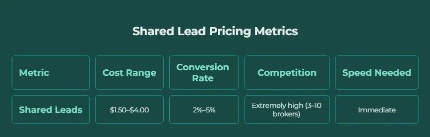
Shared leads run $1.50 to $4.00 per lead, the cheapest option on the market. But remember, cheap leads mean heavy competition and low close rates.
| Metric | Shared Leads |
| Cost Range | $1.50–$4.00 |
| Conversion Rate | 2%–5% |
| Competition | Extremely high (3–10 brokers) |
Exclusive Lead Pricing
Exclusive leads run $15.00 to $35.00 per lead. You pay more upfront, but you own the entire prospect relationship. No competing brokers, no split attention.
Live Call Lead Pricing
Live call leads cost $45.00 to $90.00 per lead, the highest price point. But close rates between 20% and 35% often make this the best cost per booked job, not just cost per lead.
Volume Based Pricing
Volume pricing lowers your per-lead cost as your order size grows. Larger brokers with bigger sales teams benefit most from this model. Small shops should stick with pay per lead until volume justifies the jump.
Auto Transport Lead Targeting Options in the United States
You can target auto transport leads by location, vehicle type, transport method, and shipping route. Tight targeting means fewer wasted leads. It matches your carrier network’s actual coverage area.
U.S. Geographic Targeting
Geographic targeting lets you pull leads from specific states, cities, or zip codes. This matters because carriers only run certain lanes. A lead from a route your carriers don’t cover is a wasted dollar.
Vehicle Type Targeting
Vehicle type targeting filters leads by car, truck, motorcycle, or oversized vehicle. Different vehicles need different carrier equipment. Matching leads to your fleet capacity avoids booking jobs you can’t fulfill.
Open and Enclosed Transport Targeting
Customers request either open or enclosed transport. Enclosed transport leads pay higher tariffs but appear less often. The company should set targeting rules based on which service type it offers most.
Shipping Route and Lane Targeting
Lane targeting focuses on specific origin-destination pairs. This helps brokers who specialize in certain corridors, like coast-to-coast or snowbird routes. Matching leads to known lanes speeds up carrier assignment.
Lead Volume and Delivery Scheduling
You can schedule how many leads arrive per day or per hour. This prevents your sales team from getting overwhelmed during peak shipping season. Spreading delivery out also improves speed-to-lead consistency.
What Information Is Included in an Auto Transport Lead
A quality auto transport lead includes contact details, locations, vehicle info, and shipping preferences. Missing data fields signal a low-quality lead. Always check what fields a provider guarantees before buying.
Customer Contact Information
Every lead should include a name, phone number, and email address. This problem happens when leads arrive with fake or disconnected numbers. Always ask providers about their contact verification process.
Pickup and Delivery Locations
Leads need full pickup and delivery addresses or at least zip codes. This data determines which carriers can handle the job. Incomplete location data slows down your dispatch process.
Vehicle Make Model and Type
The lead should list the vehicle’s make, model, and year. Carriers need this to calculate space and weight on the trailer. A running or non-running status also matters here.
Shipping Method and Timeline
Customers indicate open or enclosed transport and their desired ship date. This helps brokers quote accurately and match the right carrier fast.
Quote Request Details
The best leads include the original quote amount the customer saw online. This gives your sales team a starting point for negotiation. It also shows what price range the customer already expects.
How Auto Transport Leads Are Generated and Delivered
Leads get generated when a customer submits a quote request, then get routed to brokers through automated systems. The process moves fast, often within seconds of form submission.
Consumer Quote Request
The journey starts when a customer fills out an online quote calculator. They enter vehicle and route details, hoping for pricing. This single action triggers the entire lead generation chain.
Lead Qualification and Validation
Providers run leads through validation checks before selling them. This includes phone number verification and duplicate detection. Skipping this step leads to wasted broker dollars on fake data.
Lead Routing and Distribution
Validated leads get routed to broker accounts based on location, vehicle type, and package agreements. Shared leads route to multiple brokers at once, while exclusive leads go to just one.
Real Time Lead Delivery
Real-time delivery pushes leads into your system the moment they’re generated. This matters because speed-to-lead directly impacts your close rate. Delayed delivery kills your chances against faster competitors.
CRM API and Webhook Delivery
Most providers offer API or webhook integration straight into your CRM. This automates the entire intake process without manual data entry. The company should confirm integration works with its specific CRM before signing up.
How to Evaluate Auto Transport Lead Quality
You evaluate lead quality by checking intent, freshness, accuracy, and how many brokers received the same lead. Skipping this step is the fastest way to waste your marketing budget.
Lead quality isn’t just a checkbox. I’ve reviewed hundreds of lead batches over the years, and the difference between a good batch and a bad one usually comes down to freshness and duplication rate. A lead that’s three days old with a disconnected number isn’t worth the paper it’s printed on.
Lead Intent and Purchase Readiness
High-intent leads come from customers actively requesting a quote right now. Low-intent leads might be browsing or comparing prices for a future move. Ask providers what triggers count as a “qualified” lead.
Lead Freshness and Contact Accuracy
Fresh leads convert better than aged ones. A lead older than 24 hours loses much of its value. Contact accuracy matters just as much. Bad phone numbers waste your team’s calling time.
Duplicate and Invalid Lead Detection
Duplicate leads happen when the same customer submits multiple forms. Invalid leads include fake names, spam entries, or test submissions. Good providers filter these out before delivery.
Lead Distribution and Competition
Ask exactly how many brokers receive each shared lead. Some providers oversell leads to boost profit, hurting your close rate. Transparency here separates trustworthy vendors from bad ones.
Consent and Lead Source Transparency
Providers should disclose where every lead originated and what consent language the customer agreed to. This protects you legally and helps you judge lead quality by source.
How Much Do Auto Transport Leads Cost in the United States
Auto transport leads cost between $1.50 and $90.00 depending on the type you buy. Shared leads sit at the low end. Live call transfers sit at the high end. Your total cost depends on volume, exclusivity, and targeting.
Factors That Affect Lead Pricing
Pricing shifts based on exclusivity, vehicle type, route demand, and season. Summer months often see higher lead costs due to peak shipping demand. Enclosed transport leads also cost more than open transport leads.
Shared Lead Cost
Shared leads run $1.50 to $4.00 each. This is the cheapest entry point, but factor in your close rate before comparing true cost.
Exclusive Lead Cost
Exclusive leads run $15.00 to $35.00 each. Higher upfront cost, but higher close rate often makes this the smarter long-term buy.
Live Call Lead Cost
Live call leads run $45.00 to $90.00 each. This is the priciest option, but the highest close rate too, often making cost per booking the lowest overall.
Cost Per Qualified Lead
Cost per qualified lead measures spend divided by leads that actually meet your criteria. This number matters more than raw lead price. A cheap lead that never qualifies isn’t actually cheap.
Cost Per Booked Shipment
This is the number that really matters. Divide your total lead spend by the number of jobs you actually booked. Live call leads often win here despite their higher sticker price.
Measuring Auto Transport Lead ROI
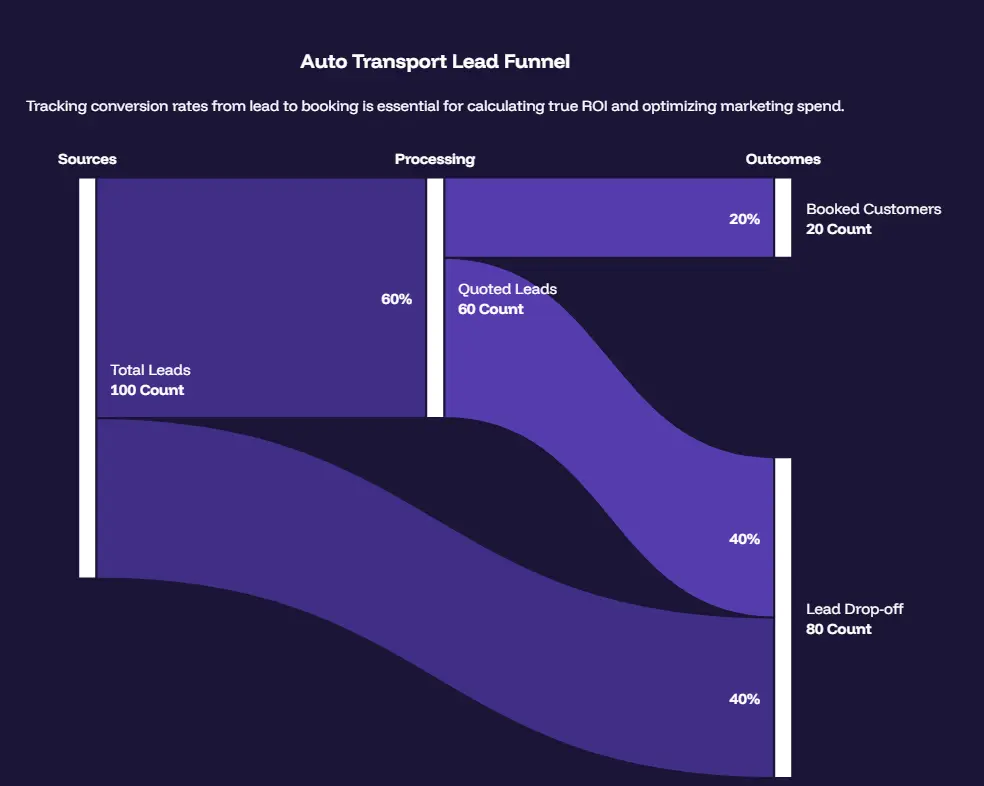
You measure lead ROI by tracking conversion rates at every funnel stage, then comparing profit against total lead spend. Skipping this math means flying blind on which lead source actually works.
Lead to Quote Rate
This tracks how many leads receive an actual price quote from your team. A low rate here signals a follow-up speed problem, not a lead quality problem.
Quote to Booking Rate
This measures how many quoted customers actually book the shipment. This is where your sales script and pricing strategy get tested directly.
Lead to Customer Conversion Rate
This is your overall close rate, from first contact to signed job. Compare this number across lead types to see which source deserves more budget.
Customer Acquisition Cost
Customer acquisition cost divides total marketing spend by the number of customers won. Lower acquisition cost means more profit per job booked.
Revenue Per Lead
This measures total revenue divided by total leads purchased. It helps you compare lead sources on equal footing, regardless of price per lead.
Return on Ad Spend and Lead Source ROI
Use this formula to calculate true profitability:
ROI = [(Closed Jobs × Gross Profit per Job) − Total Lead Cost] ÷ Total Lead Cost × 100
Where Gross Profit per Job equals Tariff Collected minus Carrier Pay. Run this formula separately for each lead source. You’ll quickly see which one deserves more of your budget.
Speed to Lead and Auto Transport Conversion
Speed to lead means how fast you contact a new lead, and it’s the single biggest factor in closing shared leads. Wait too long, and your competitor books the job first.
Why Speed to Lead Matters
Your chances of winning a shared lead drop sharply after the first five minutes. Customers submitting shared leads get calls from multiple brokers within minutes. Whoever reaches them first usually wins the trust.
Real Time Lead Response
Target contacting new leads in under 60 seconds. This sounds aggressive, but it’s the standard top-performing brokers hold themselves to. Auto-dialers make this speed achievable at scale.
Lead Follow Up Workflows
A strong follow-up sequence looks like this on day one: three phone calls, two text messages, and one detailed email quote. Days two through four bring daily emails covering insurance and carrier vetting. Days five through fourteen offer flexible pickup windows or seasonal discounts.
CRM Lead Assignment and Automation
Your CRM should auto-assign new leads to available reps instantly. Manual assignment adds delay you can’t afford with shared leads. Automation closes the gap between lead delivery and first contact.
How to Choose an Auto Transport Lead Provider
Choose a provider by checking their verification standards, exclusivity policies, and CRM integration options. The wrong provider choice costs you months of wasted spend before you notice the pattern.
Lead Quality and Verification Standards
Ask exactly how the provider verifies phone numbers and filters spam. Providers who can’t explain their process usually don’t have one.
Lead Exclusivity and Distribution Practices
Confirm how many brokers receive each lead type you’re buying. Get this in writing, not just a verbal promise from a sales rep.
Traffic Source Transparency
Ask where leads actually come from: SEO, PPC, social, or aggregator networks. Source transparency helps you judge long-term lead quality trends.
Geographic and Vehicle Targeting Options
Confirm the provider supports the specific states, routes, and vehicle types your carrier network covers. Generic, untargeted leads waste money fast.
Lead Delivery and CRM Integration
Check whether leads arrive through API, webhook, or manual email. Manual delivery slows your speed-to-lead and hurts shared lead close rates.
Lead Return and Replacement Policies
Ask about credit policies for fake numbers, duplicates, and out-of-area leads. A provider with no return policy is a red flag worth walking away from.
Provider Performance Data and Reporting
Good providers share performance data openly, including close rates by client segment. This transparency builds trust and helps you forecast budget accurately.
Payment and Contract Terms
Review contract length, cancellation terms, and payment schedules before signing. Month-to-month agreements give you flexibility while you test a new provider.
Auto Transport Lead Compliance and Operational Risk in the United States
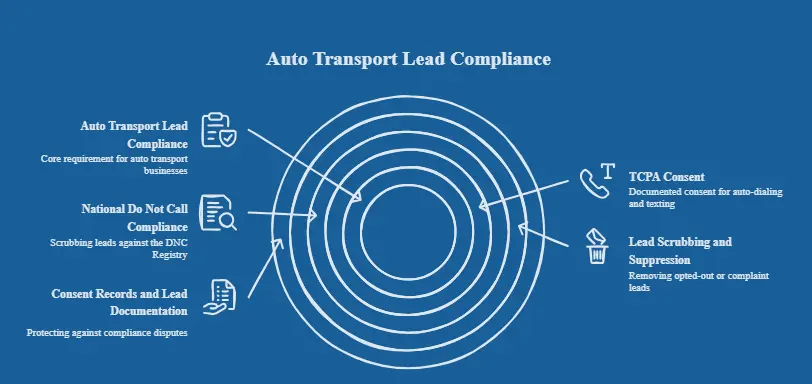
Auto transport lead compliance covers TCPA consent, Do Not Call rules, and FMCSA broker requirements. Skipping compliance checks can cost brokers thousands in fines and legal fees.
TCPA Consent and Marketing Permissions
TCPA law requires documented consent before auto-dialing or texting a lead. The company should confirm every purchased lead includes a consent record with timestamp.
National Do Not Call Compliance
Leads must get scrubbed against the National Do Not Call Registry before outreach. Providers who skip this step expose you to legal risk.
Lead Scrubbing and Suppression
Scrubbing removes leads tied to opted-out numbers or known complaint sources. This protects your sender reputation and keeps your calling campaigns compliant.
Consent Records and Lead Documentation
Keep consent documentation on file for every lead you contact. This paperwork protects you if a compliance dispute ever arises.
Commercial Email Compliance
Email outreach must follow CAN-SPAM rules, including a working unsubscribe link. Non-compliant email campaigns risk fines and damage your sender reputation.
FMCSA and Auto Transport Broker Requirements
Brokers must hold valid FMCSA registration and bonding before operating legally. This isn’t lead-specific, but it’s foundational to running a compliant transport business.
Buying Auto Transport Leads Versus Generating Your Own
Buying leads gets you instant volume, while generating your own through SEO and PPC builds long-term, owned data. Most successful brokers eventually use both approaches together.
Advantages of Buying Auto Transport Leads
Purchased leads give you plug-and-play volume without building marketing infrastructure. This works well during peak season when your pipeline needs a fast boost.
Advantages of Generating Leads Through SEO and PPC
Owned channels give you full control over brand messaging and exclusive data ownership. SEO also delivers a lower cost per acquisition over time, though it takes months to build momentum.
Comparing Purchased Lead Costs With Owned Channel Costs
| Approach | Speed | Cost Over Time | Data Ownership |
| Purchased Leads | Fast | Stays flat or rises | Shared or none |
| SEO/PPC Leads | Slow to start | Drops over time | Fully owned |
When to Buy Leads and When to Generate Your Own
Buy leads when you need volume right now or lack marketing infrastructure. Build your own channels when you have time to invest and want long-term cost savings.
Common Auto Transport Lead Buying Mistakes
The most common mistakes include chasing cheap leads, skipping distribution checks, and ignoring compliance. I’ve watched brokers repeat these errors for years before fixing them.
Choosing Leads Based Only on Price
This problem happens when brokers chase the lowest price per lead. Cheap leads often mean higher competition and lower close rates. Cost per booked job matters more than cost per lead.
Failing to Verify Lead Distribution
Some brokers never ask how many other companies received the same lead. This blind spot leads to wasted dial time chasing already-booked customers.
Ignoring Lead Freshness and Contact Accuracy
Old leads with bad phone numbers waste your sales team’s time daily. Always check a provider’s freshness guarantee before committing to a package.
Buying Leads Without Source Transparency
Customers struggle to trust brokers using leads from unknown or shady traffic sources. Always ask providers to disclose exactly where their leads originate.
Failing to Track Cost Per Booked Shipment
Many brokers track cost per lead but never calculate cost per actual booking. This gap hides which lead source truly drives profit.
Overlooking Marketing Compliance
Skipping TCPA and Do Not Call checks feels harmless until a fine arrives. Compliance isn’t optional, no matter how good the lead looks.
Frequently Asked Questions
What is an auto transport lead?
An auto transport lead is a customer request for a car shipping quote. It includes contact info, vehicle details, and pickup and delivery locations.
How much do auto transport leads cost?
Auto transport leads cost $1.50 to $90.00 depending on type. Shared leads sit at the low end, and live call transfers sit at the high end.
Are exclusive auto transport leads better than shared leads?
Yes, exclusive leads convert at 10% to 18%, compared to 2% to 5% for shared leads. They cost more but win more jobs.
Where can I buy auto transport leads?
You can buy leads through third-party aggregators, PPC campaigns, or dedicated performance marketing partners like Top7seven.
How quickly should I contact a new auto transport lead?
Contact new leads in under 60 seconds whenever possible. Your close rate drops sharply after the first five minutes.
What information should an auto transport lead include?
A quality lead includes contact info, vehicle details, pickup and delivery locations, and preferred shipping method.
Can I target specific U.S. states or shipping routes?
Yes, most providers let you target by state, zip code, vehicle type, and shipping lane to match your carrier network.
Are purchased auto transport leads TCPA compliant?
Only if the provider documents consent properly. Always confirm TCPA compliance and Do Not Call scrubbing before buying.
Key Takeaways
- Exclusive and live call leads cost more but convert far higher than shared leads, often lowering your true cost per booking.
- Speed to lead under 60 seconds is the single biggest factor in winning shared leads before competitors do.
- Track cost per booked shipment, not just cost per lead, to see which source actually drives profit.
- Always verify TCPA consent and lead distribution before buying from any new provider.
- Blend purchased leads with SEO and PPC for the best long-term cost and volume balance.
Final Thoughts
Buying auto transport leads isn’t complicated once you understand the types, sources, and pricing models. Shared leads bring volume but demand speed. Exclusive and live call leads cost more but close far more often. The real skill is tracking your numbers, from cost per lead down to cost per booked shipment, so you know exactly where your budget works hardest.
This is where experience matters most. Top7seven United States Performance Marketing Services has helped brokers across the country build lead strategies that actually convert, not just fill a CRM with names. We combine paid, organic, and compliant lead sourcing to get your sales team talking to customers who are ready to ship. Reach out to us today, and let’s build a lead pipeline that grows your bookings, not just your lead count.