Buying final expense leads can feel confusing when you do not know which leads are worth your money. Buy Final Expense Leads by choosing a trusted vendor, selecting the right lead type, and testing quality before making large purchases. Many insurance agents waste money because they focus only on price instead of lead quality, compliance, and conversion potential.
After working in lead generation for over 20 years, I have seen agents succeed when they match their buying strategy with their sales process. A good final expense lead source helps agents reach seniors who are already interested in burial insurance and final expense coverage. The right approach combines smart vendor selection, fast follow-up, and consistent tracking.
This guide explains how to buy final expense leads, compare lead types, understand pricing, and avoid common mistakes. You will learn how experienced agents evaluate vendors, measure results, and build a profitable final expense sales system.
Quick Answer
To buy final expense leads successfully, choose a compliant vendor, understand lead types, and start with a small test order. Compare exclusive, shared, aged, direct mail, and live transfer leads based on your budget and sales method. Track results before increasing your monthly lead purchases.
What Are Final Expense Leads?
Final expense leads are contact details from people interested in purchasing final expense insurance or burial coverage. These leads help insurance agents connect with seniors who may need protection for funeral costs and end-of-life expenses.
A final expense lead usually includes a person’s name, phone number, location, age information, and interest in insurance coverage. The information allows agents to contact potential clients and discuss available final expense policies.
Most final expense leads target adults between 50 and 85 years old. These prospects often look for affordable life insurance solutions that can help their families handle future expenses.
How Final Expense Leads Are Generated
Final expense leads are generated through online forms, direct mail campaigns, social media advertising, and inbound calls. Lead companies create campaigns that attract consumers who request more information about final expense insurance.
Digital campaigns often use search engines, Facebook leads, and landing pages to collect prospect information. Direct mail campaigns use physical cards that consumers complete and return when interested.
In my 20+ years of experience, the generation method matters because it affects buying intent. A person who requests information today usually requires a different approach than someone who filled out a form months ago.
Who Uses Final Expense Leads
Insurance agents, agencies, and independent brokers use final expense leads to find new customers. These leads help both new agents and experienced producers build a steady sales pipeline.
Many final expense agents use leads because cold calling and personal networking alone can limit growth. Purchased leads give agents access to people who already showed interest in insurance products.
Agencies also use leads to train new agents, increase sales activity, and expand into new licensed territories.
Why Agents Buy Leads Instead of Prospecting
Agents buy leads because purchased leads save time compared with traditional prospecting methods. Instead of searching for possible customers, agents receive contact information from interested consumers.
Prospecting can still help build relationships, but it often takes longer to create consistent opportunities. Purchased leads allow agents to spend more time selling and less time searching.
A smart agent does not depend only on buying leads. The strongest results usually come from combining lead generation with referrals, follow-up systems, and relationship building.
When Is the Right Time to Buy Final Expense Leads?
The right time to buy final expense leads depends on your experience level, sales goals, and ability to follow up. Agents should purchase leads when they have the time and systems needed to contact prospects quickly.
Buying leads without a plan can create wasted spending. Your budget, calling schedule, and closing skills should determine how many leads you purchase.

New Agents
New agents often benefit from buying a smaller number of final expense leads while learning the sales process. Leads provide practice opportunities and help new producers improve their conversations.
Starting with aged leads can be useful because they usually cost less. New agents can develop confidence before investing in higher-priced options.
A new agent should focus on learning qualification skills, objection handling, and appointment setting before scaling purchases.
Growing Agencies
Growing agencies use leads to create predictable sales activity across multiple agents. A consistent lead supply helps managers track performance and improve team results.
Agencies often need larger lead volumes because multiple agents require daily opportunities. Lead management systems become important as the number of contacts increases.
A structured process helps agencies measure which campaigns create the best return.
Replacing Low-Performing Lead Sources
Agents should consider new lead vendors when current sources produce poor results. Low contact rates, weak interest, or expensive acquisitions may signal a problem.
Testing another provider helps compare quality and performance. Avoid changing vendors based on one bad day because lead results can vary.
The goal is not simply finding cheaper leads. The goal is finding leads that produce profitable sales.
Types of Final Expense Leads and Pricing
Final expense leads come in different formats, and pricing depends on lead age, exclusivity, and contact method. Agents should select lead types based on their budget and sales strategy.
The table below shows common differences between major lead options:
| Lead Type | Typical Cost | Best For | Main Advantage |
| Aged Leads | $0.25–$5 per lead | High-volume callers | Low entry cost |
| Real-Time Exclusive Leads | $15–$35 per lead | Fast responders | Fresh interest |
| Direct Mail Leads | $25–$45+ per lead | Field agents | Strong intent |
| Live Transfers | $50–$100+ per transfer | Experienced closers | Immediate conversations |
| Shared Leads | Lower cost than exclusive | Budget-focused agents | More affordable access |
Aged Leads (15–90 days old)
Aged leads are older consumer inquiries that were collected days or months before purchase. They provide a lower-cost option for agents who can handle high call volumes.
Many agents start with aged final expense leads because the investment is smaller. These leads require stronger follow-up because the consumer may not remember requesting information.
Aged leads work best for agents with consistent dialing systems and strong scripts.
Real-Time Exclusive Leads
Real-time exclusive leads are delivered shortly after a consumer submits information. These leads give agents the opportunity to contact prospects while interest is still high.
Exclusive web leads are usually more expensive because fewer agents receive the same information. Agents often prefer them because competition is lower.
Speed matters with these leads. Calling within minutes can improve the chance of reaching the prospect.
Direct Mail / Physical Cards
Direct mail leads come from consumers who complete and return physical request cards. These leads often show strong buying intent because the person took action offline.
Direct mail leads are popular among face-to-face agents who prefer appointments in local areas. They can cost more because of printing, mailing, and processing expenses.
Agents should confirm that the vendor follows proper compliance practices before buying direct mail leads.
Live Transfers
Live transfers connect agents directly with consumers after a qualification process. A call center representative speaks with the prospect and transfers the conversation to an agent.
Live transfer leads can reduce time spent dialing because agents immediately speak with potential clients. However, they require a larger budget and strong closing skills.
These leads work best for experienced agents who can handle real-time conversations.
Shared Leads
Shared leads are sold to multiple agents instead of one buyer. They usually cost less than exclusive leads but create more competition.
Agents using shared final expense leads must contact prospects quickly. Delays can allow another agent to reach the consumer first.
Shared leads can work well for agents building experience or testing a new market.
How Much Should You Spend on Final Expense Leads?
The amount you should spend on final expense leads depends on your experience, budget, and ability to handle new prospects. Agents should start with a manageable lead budget and increase purchases after tracking results.
A common mistake is buying hundreds of leads before understanding conversion rates. A smaller test order helps you learn which lead sources match your sales process.
New Agent Budget Guidelines
New agents should start with a budget they can manage while learning the sales process. A smaller lead purchase allows agents to practice calling, improve scripts, and understand prospect behavior.
Starting with aged leads can reduce upfront costs. Agents can use these leads to build confidence before investing in higher-priced options.
Your first goal should be learning what creates appointments and sales. Lead volume matters less than building a repeatable process.
Scaling Lead Purchases
Scaling lead purchases requires proof that your current system produces profitable results. Agents should increase volume only after measuring contact rates, appointments, and sales.
A successful agent does not simply buy more leads. They improve follow-up systems, sales conversations, and customer tracking before increasing spending.
For example, an agent who understands their conversion numbers can estimate how many leads they need each month. This makes growth more predictable.
Calculating Cost Per Sale
Cost per sale shows how much money you spend to acquire one customer. This number helps agents decide whether their lead investment creates a positive return.
A simple calculation is:
| Metric | Example |
| Leads Purchased | 100 |
| Cost Per Lead | $10 |
| Total Lead Cost | $1,000 |
| Closed Policies | 5 |
| Cost Per Sale | $200 |
Tracking this number helps compare different vendors and campaigns. A cheaper lead is not always better if it creates fewer sales.
Steps to Buy and Evaluate Lead Vendors
Buying final expense leads requires researching vendors, testing quality, and checking compliance before making large purchases. A careful process helps agents avoid poor-quality leads and wasted spending.
Experienced agents evaluate more than pricing. They look at delivery speed, replacement policies, lead ownership, and customer support.
Define your budget and capacity
Define your monthly budget and determine how many leads you can realistically handle. Your calling time, appointment schedule, and closing ability should guide your purchase size.
Buying more leads than you can contact quickly reduces their value. A smaller number of properly managed leads often performs better.
Create a daily workflow before ordering leads. This helps you maximize every opportunity.
Select a Vendor
Select a vendor that provides clear information about lead sources, delivery methods, and compliance practices. Reliable vendors explain how their leads are generated.
Avoid providers that cannot answer basic questions about data collection. Transparency is a key sign of a professional lead company.
A good vendor should also provide support after purchase.
Apply Filters
Apply filters that match your target customers and licensed areas. Filters may include state, ZIP code, age range, and contact preferences.
Better targeting helps agents spend time with prospects who fit their final expense products. Poor targeting can create unnecessary calls and lower conversion rates.
Always match your filters with your ideal client profile.
Review Return Policies
Review replacement policies before buying leads. Vendors handle invalid numbers, duplicates, and unusable records differently.
A clear replacement policy protects your investment. Ask questions before placing an order.
Do not assume every vendor offers the same protection.
Target your licensed geography
Target areas where you hold active insurance licenses. Geographic targeting helps agents focus on markets where they can legally sell.
Local targeting can also improve appointment quality for face-to-face agents. Agents can plan visits more efficiently when leads are nearby.
Always confirm your licensing before contacting prospects.
Set Your Targeting Filters
Targeting filters help agents purchase leads that match their ideal customer profile. The right filters improve efficiency and reduce wasted conversations.
Most vendors allow agents to choose specific customer details. These choices should match your final expense marketing strategy.
Age Range
Age range is one of the most important targeting filters for final expense campaigns. Many agents focus on older adults who may need burial insurance or final expense coverage.
The right age range depends on your product focus and sales approach. Choose a range that matches your available policies.
Income Tier
Income tier helps agents focus on consumers who may fit their pricing options. Understanding financial ability helps create better conversations.
Agents should avoid making assumptions based only on income information. A respectful needs-based approach works best.
The goal is finding people who need coverage and can consider available options.
Geography
Geography helps agents focus on specific states, counties, or ZIP codes. This is especially useful for agents who sell in local communities.
Targeted areas can reduce travel time and improve appointment planning. Digital agents can also use geography to organize calling campaigns.
Vet Vendors Using Crucial Criteria
Vetting vendors protects agents from poor lead quality and compliance problems. A professional vendor should explain their process clearly before you purchase leads.
The best vendors focus on transparency, consumer permission, and reliable delivery.
TCPA Compliance
TCPA compliance is essential when buying insurance leads. Vendors should collect consumer information using proper consent practices.
Agents should ask how leads are generated and whether consumers agreed to receive calls. Compliance protects both agents and consumers.
Never ignore compliance because cheap leads can create expensive problems.
Exclusivity Window
The exclusivity window explains how long a lead remains available only to you. Exclusive leads usually provide less competition than shared leads.
Ask vendors whether leads are sold once or multiple times. This information affects your contact strategy.
Exclusive leads often cost more because fewer agents receive the opportunity.
Data Replacement Policy
A data replacement policy explains how vendors handle bad information. Common issues include disconnected numbers, duplicates, or incorrect details.
A fair replacement policy shows that a vendor stands behind their product. Always review these terms before purchasing.
Minimum Orders
Minimum orders determine how many leads you must buy at one time. Some vendors require larger purchases while others allow smaller tests.
New agents should avoid large commitments before testing quality. A trial order helps evaluate performance.
Top Established Lead Providers
Several established providers offer final expense lead solutions for insurance agents. Agents should compare each provider based on lead type, pricing, delivery, and support.
The best provider depends on your sales method and budget.
TOP7SEVEN
TOP7SEVEN provides older consumer leads designed for agents who prefer high-volume calling. These leads can help agents maintain activity with a lower upfront investment.
Agents should evaluate contact rates and sales results before increasing order size.
Lead Concepts
Lead Concepts focuses on insurance lead generation solutions for agents and agencies. Their offerings may include different lead formats based on sales needs.
Agents should confirm available targeting options and delivery methods before purchasing.
The Leads Warehouse
The Leads Warehouse provides lead solutions for insurance professionals. Agents should review their lead quality standards and replacement policies.
Testing a small order can help determine whether the leads match your market.
Digital BGA / Best Plan Pro
Digital BGA and Best Plan Pro provide digital marketing and lead generation options for insurance professionals. These services can help agents create a consistent flow of prospects.
Agents should compare campaign management, targeting, and support before choosing a provider.
Final Expense Leads ROI Calculator (Dat
A final expense leads ROI calculator helps agents understand whether their lead investment creates profitable sales. Tracking lead costs, appointments, and policy sales shows which campaigns deserve more budget.
Agents should measure results instead of guessing. The following example shows how an agent can evaluate a lead campaign:
| Metric | Example Result |
| Leads Purchased | 100 |
| Cost Per Lead | $15 |
| Total Lead Investment | $1,500 |
| Contacted Prospects | 70 |
| Appointments Set | 20 |
| Policies Sold | 4 |
| Average Sale Revenue | Depends on policy and commission |
| Cost Per Acquisition | $375 |
Your actual numbers will depend on your products, sales skills, and lead source. A campaign that looks expensive may perform well if it creates more quality sales.
A lower lead cost does not always mean better results. High-quality final expense insurance leads may create stronger returns because they reach more interested prospects.
Best Practices for Contacting New Final Expense Leads
Contacting leads quickly and consistently improves your chance of creating appointments. Final expense prospects often receive multiple offers, so timing and follow-up matter.
A strong follow-up system helps agents turn purchased leads into conversations. The goal is to build trust before asking for a decision.
Call Speed
Call speed plays a major role in final expense lead conversion. Fresh leads should receive attention quickly because consumer interest is highest soon after submission.
Agents using real-time final expense leads should aim to contact prospects as soon as possible. Waiting too long can reduce connection opportunities.
A fast response also creates a better customer experience.
Multi-Touch Follow-Up
Multi-touch follow-up means contacting prospects through multiple attempts and channels. Many good prospects do not answer the first call.
A consistent schedule may include phone calls, text messages, and voicemail messages. Repeated contact helps you reach people who were busy initially.
One mistake people make is giving up after one or two attempts. Many sales happen after multiple conversations.
Using Text and Voicemail
Text messages and voicemail help agents stay connected with prospects. These methods provide a simple way to remind consumers why you are calling.
Messages should be professional and respectful. Avoid aggressive sales language that can reduce trust.
A short message explaining your purpose can encourage a callback.
Keeping a Consistent Contact Schedule
A consistent contact schedule helps agents manage leads effectively. Every purchased lead should enter a follow-up system.
Use a CRM to track calls, messages, appointments, and outcomes. Organization prevents good opportunities from being forgotten.
Successful agents treat every lead as a process, not a single phone call.
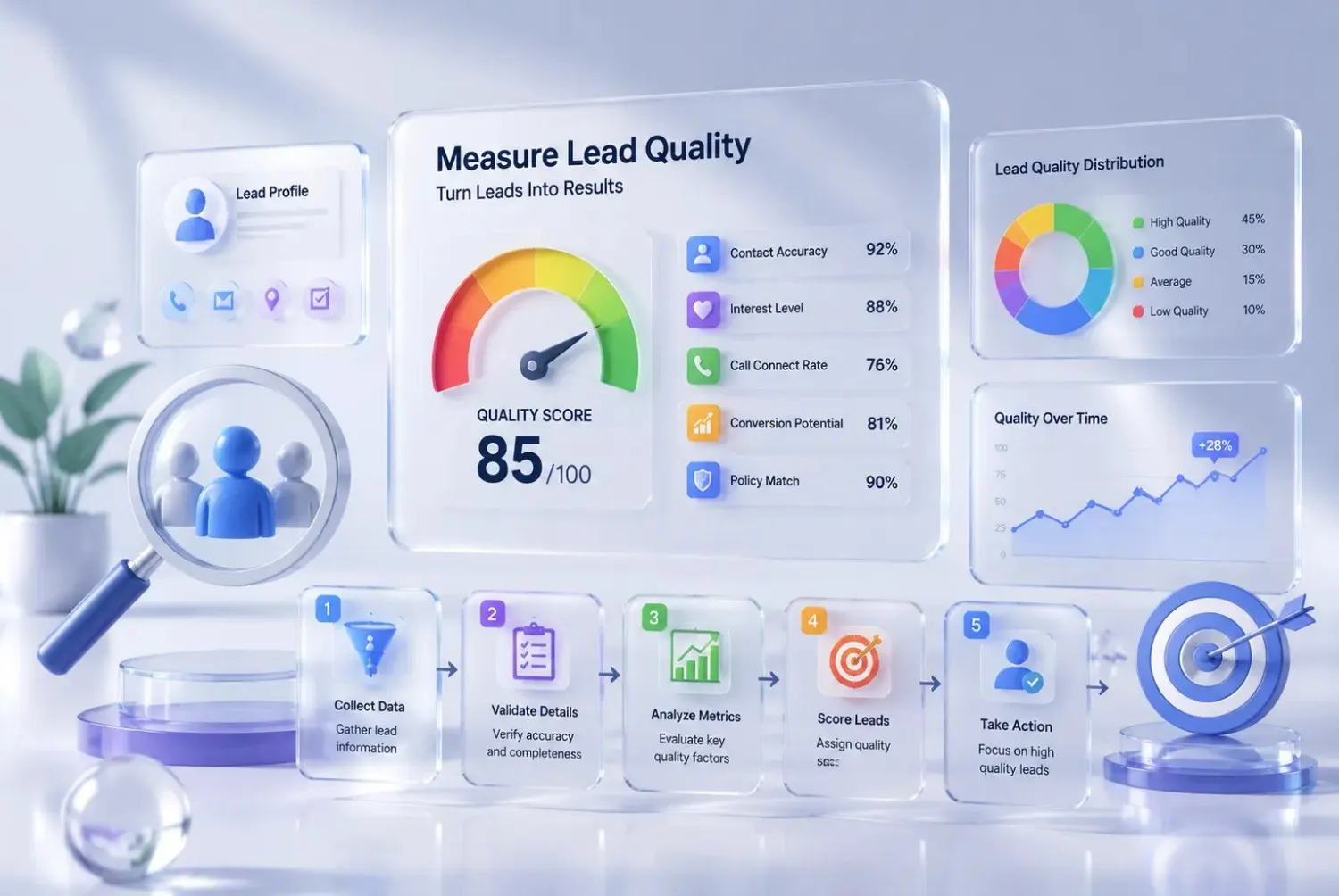
How to Measure Lead Quality After Purchase
Lead quality is measured by tracking contact rates, appointments, sales, and acquisition costs. These numbers show whether your purchased leads create value.
Tracking performance helps agents compare vendors and improve campaigns. Data makes decisions easier.
Contact Rate
Contact rate measures how many purchased leads you successfully reach. A strong contact rate shows that lead information is accurate and usable.
Low contact rates may indicate poor data quality or slow follow-up. Review your calling process before blaming the vendor.
Agents should track contact rates for every lead source.
Appointment Rate
Appointment rate shows how many contacted prospects agree to continue the conversation. This metric helps measure prospect interest.
A good appointment process requires clear communication and proper qualification. Agents should focus on solving customer needs.
High appointment rates often come from better targeting.
Closing Rate
Closing rate measures how many appointments become final expense policies. This number reflects your sales skills and lead quality together.
A low closing rate may require script improvements, better qualification, or stronger objection handling.
Lead quality alone cannot replace a good sales process.
Cost Per Acquisition
Cost per acquisition shows the total cost required to create one customer. It includes lead expenses and other marketing costs.
This metric helps agents understand true campaign profitability. It provides a clearer picture than looking only at lead prices.
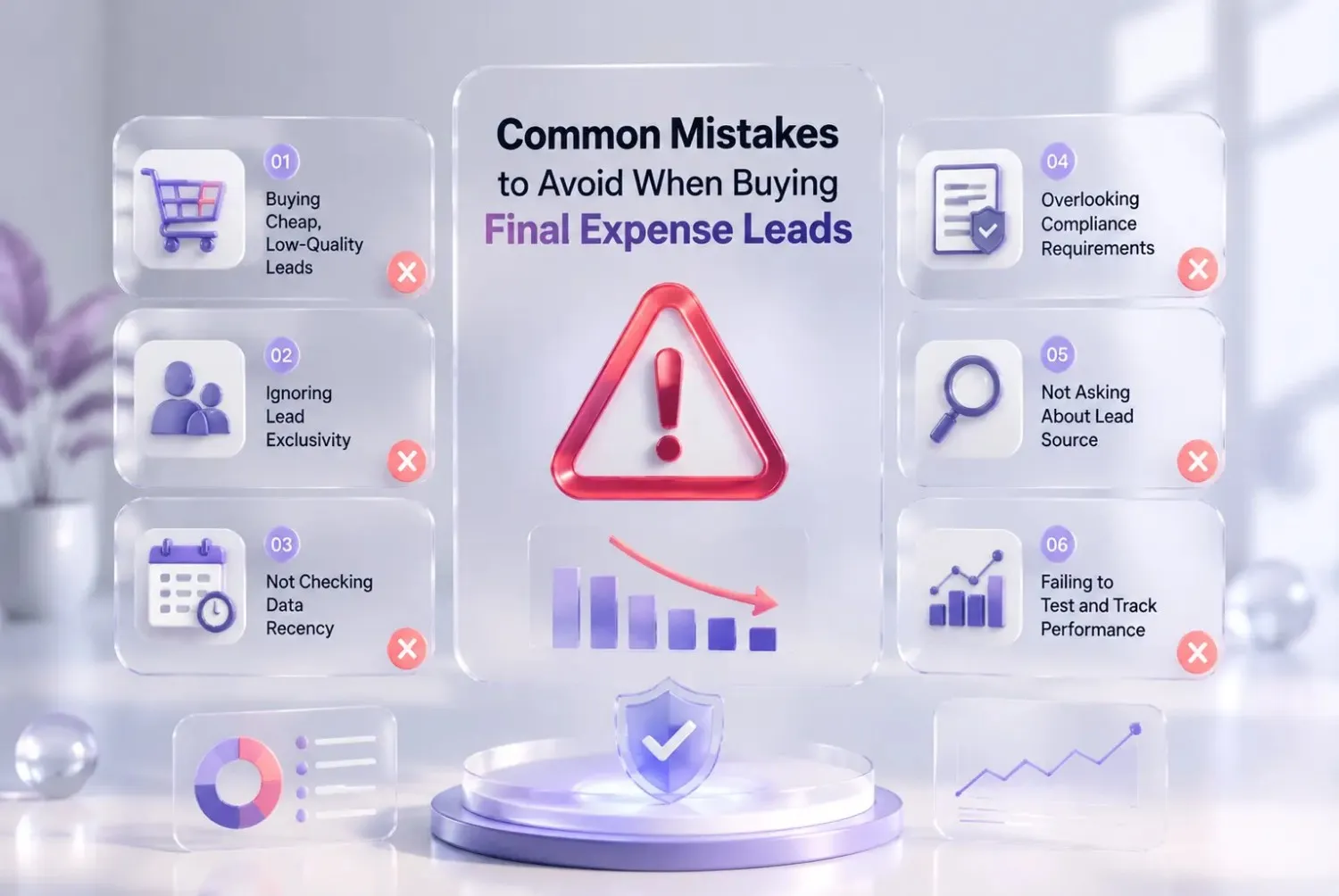
Common Mistakes to Avoid When Buying Final Expense Leads
Many agents lose money because they buy leads without a proper strategy. Avoiding common mistakes helps protect your budget and improve results.
A successful lead system requires planning, tracking, and consistent action.
Buying Too Many Leads Too Soon
Buying too many leads too soon can overwhelm your follow-up process. Agents may miss opportunities because they cannot contact every prospect.
Start with a manageable order and increase volume after measuring results. Quality management matters more than lead quantity.
A smaller group of well-managed leads often performs better.
Ignoring Follow-Up Speed
Ignoring follow-up speed reduces the value of fresh leads. Consumers may lose interest or speak with another agent.
Create a system that alerts you when new leads arrive. Quick action improves the customer experience.
Choosing Price Over Quality
Choosing the cheapest leads can create poor results. Low-cost leads may require more effort and produce fewer appointments.
Compare overall return instead of only looking at lead costs. A slightly higher investment may create better outcomes.
Not Tracking Vendor Performance
Not tracking vendor performance makes it difficult to know what works. Agents should record results from every campaign.
Measure contact rates, appointments, sales, and acquisition costs. This information helps identify your strongest lead sources.
Do final expense leads really work?
Final expense leads can work when agents choose quality sources and use effective follow-up systems. Leads provide opportunities, but results depend on how agents manage those opportunities.
Many successful agents use purchased leads as part of a larger marketing strategy. They combine leads with referrals, networking, and strong customer service.
The biggest difference between successful and unsuccessful campaigns is usually execution. Fast response, consistent follow-up, and proper sales skills create better outcomes.
Key Takeaways
- Choose final expense leads based on quality, not only price.
- Test vendors before making large lead purchases.
- Match lead types with your sales style and budget.
- Track contact rates, appointments, sales, and acquisition costs.
- Use fast follow-up to improve your chances of success.
Conclusion
Buying final expense leads can help insurance agents create more sales opportunities when they choose the right strategy. The best results come from selecting reliable vendors, understanding lead types, and tracking performance.
Agents should start with a practical budget and test different lead sources before scaling. Exclusive leads, aged leads, direct mail leads, and live transfers all serve different purposes.
A trusted lead generation partner can make the process easier. TOP7SEVEN, located at 4878 Nickel Road, El Monte, CA 91731, provides lead generation solutions for businesses looking to connect with qualified prospects. Contact TOP7SEVEN at (209)-655-3042 or email contact@top7seven.com for support from an experienced leads generation expert. We can help you find the right lead solution. Contact us today to get started.
Frequently Asked Questions
How many final expense leads should a new agent buy?
A new agent should start with a manageable number of leads that matches their budget and calling ability. Testing a smaller batch helps identify lead quality before increasing purchases.
New agents should focus on improving conversations and follow-up systems before buying larger volumes.
What is a good conversion rate?
A good conversion rate depends on lead quality, agent experience, product pricing, and sales process. Agents should track their own results instead of comparing against unsupported industry averages.
The best measurement is whether the campaign creates profitable sales.
Can I return bad leads?
Some vendors offer replacements for invalid or unusable leads. Policies vary, so agents should review replacement terms before purchasing.
Ask about duplicate records, incorrect information, and disconnected numbers.
Are exclusive leads worth the higher price?
Exclusive leads can be worth the higher price because fewer agents compete for the same prospect. They may give agents more opportunity to build a conversation.
However, results still depend on follow-up speed and sales ability.
How quickly should I contact a new lead?
Agents should contact new leads as quickly as possible, especially real-time leads. Faster responses help reach prospects while their interest remains active.