Buying auto transport live transfer calls means paying for a pre-screened customer to land on your phone, live, ready to talk. No chasing. No guessing if the number is real. You pick up, and a shipper who wants a quote is already on the line. I’ve watched brokerages waste thousands on cold form fills before switching to this model, and the difference in close rate is not small.
I’ve spent over 20 years buying and selling leads across service industries, and auto transport is one of the toughest niches out there. Customers struggle with slow response times, fake numbers, and leads sold to five brokers at once. The fix isn’t more leads. It’s better leads, delivered the right way, at the right moment.
This guide breaks down exactly what to expect when you buy your first batch. You’ll learn how the transfer process actually works, what it costs, how to spot a shady provider, and how to stay compliant with 2026 TCPA rules. By the end, you’ll know if live transfers fit your auto transport brokerage.
Quick Answer
Buying auto transport live transfer calls means purchasing real-time inbound calls from pre-qualified shippers, connected straight to your sales team. A provider screens the consumer, confirms origin, destination, and vehicle details, then patches the call to you live. Expect higher cost per lead than shared leads, near-100% contact rates, and strict buffer-time rules. Staffing and TCPA compliance matter most.
What Is an Auto Transport Live Transfer Call?
An auto transport live transfer call is a real person, live on the phone, already asking about shipping their car. That’s the short version. The provider does the heavy lifting before you ever hear the phone ring.
Here’s how it’s different from a regular lead. A regular auto transport lead is a name, number, and email sitting in a spreadsheet. You call it. Maybe they answer. Maybe they don’t. A live transfer skips that whole guessing game. The consumer already talked to a screener, confirmed they’re serious, and now they’re being handed to you mid-conversation.
I’ve run both models for clients. Form fills feel cheaper on paper. But when you factor in the hours reps spend dialing dead numbers, live transfers often win on actual cost per booked job. That’s the number that matters, not the sticker price.
Who Buys Auto Transport Live Transfer Calls?
Auto transport brokers buy live transfer calls to fill their pipeline fast without building an in-house marketing team. Smaller brokerages love this model because it skips the slow grind of SEO and paid search.
Growing brokers use live transfers to scale without hiring more marketers overnight. Established shops use them to fill gaps during slow seasons or test new shipping routes. I’ve also seen carriers with their own sales desks buy transfers directly, cutting out the broker middle step entirely. Even software-driven auto transport broker operations use live calls to feed reps who’d otherwise sit idle between CRM tasks.
The common thread? Every buyer wants speed. Nobody in this industry has time to babysit a lead for three days.
How the Auto Transport Live Transfer Process Works
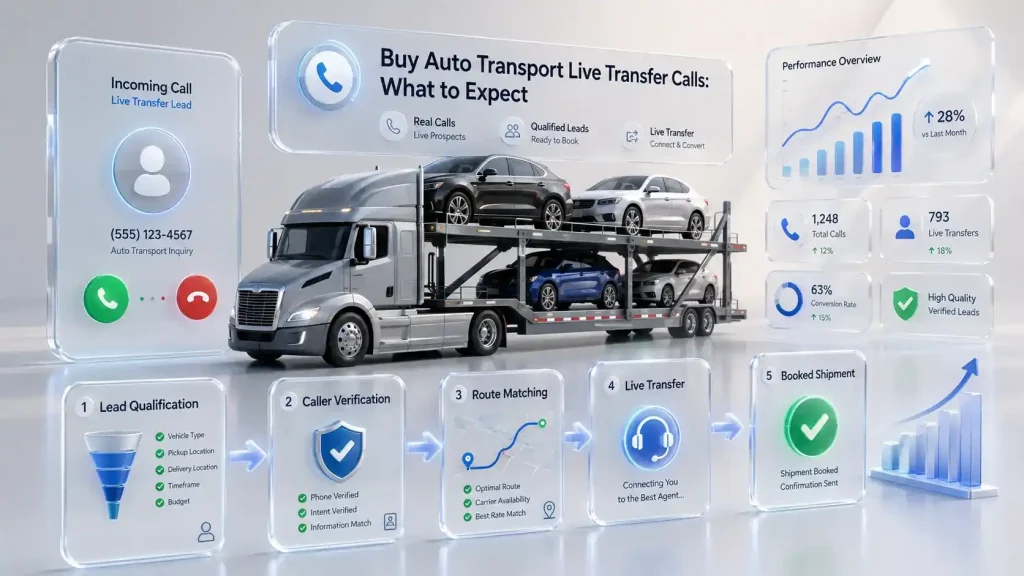
The live transfer process runs in three steps: intent, screening, and connection. Simple on paper, but each stage matters a lot.

Consumer Action
A shopper starts the whole thing by searching online for a shipping quote. She fills out a form or clicks an ad. This is the moment intent gets captured. Without real intent up front, the rest of the process falls apart fast.
Lead Screening
A qualification agent or automated system calls the shopper next. They confirm origin, destination, vehicle type, and whether the vehicle runs. This step weeds out the tire kickers before you ever spend a dime on a live call.
Call Transfer
The screener patches the call straight to your sales team once the lead clears your filters. Your phone rings. A warm, ready shopper is already on the line. This is the moment you’re paying for, so your team needs to answer fast.
What to Expect When Buying Auto Transport Live Transfer Calls
Expect to pay more per lead, but get a much higher chance of actually reaching the customer. That trade-off is the whole point of this model.
Cost Per Transferred Call
Live transfers cost more than shared data leads, and that’s by design. You’re paying for screening labor, not just a phone number. Providers price based on route, vehicle type, and exclusivity. A short local move costs less than a cross-country transfer with a non-operable vehicle. Budget accordingly and track your cost per acquisition, not just the sticker price per call.
Immediate Agent Availability
You need an agent ready to pick up within seconds, not minutes. This problem happens when brokers buy transfers but staff them like regular leads. If the call rolls to voicemail, the shopper hangs up and calls the next broker on their list. Schedule reps around your expected call volume, especially during peak hours like weekday afternoons.
Lead Exclusivity and Sharing
Ask upfront if your transfer is exclusive or shared with other brokers. Exclusive leads cost more but you’re not racing three competitors for the same shopper. Shared transfers cost less but drop your close rate fast. I’ve seen brokers get burned assuming “live transfer” automatically means exclusive. It doesn’t, unless the contract says so in plain words.
Consumer Information Provided Before Transfer
A good provider hands you origin, destination, vehicle operability, and moving timeline before the call connects. This lets your rep skip the small talk and go straight to quoting. Missing details here usually means a lazy screening process, and that’s a red flag worth noting.
Comparing Lead Types: Real-Time vs. Aged and Exclusive vs. Shared
Real-time exclusive transfers convert best, but cost the most; aged shared leads cost the least and convert worst. Here’s how they stack up side by side.
| Lead Type | Contact Rate | Typical Cost | Best For |
| Real-time exclusive transfer | 95–100% | Highest | Brokers focused on close rate |
| Real-time shared transfer | 80–90% | High | Brokers testing new routes |
| Aged exclusive lead | 30–50% | Medium | Brokers with strong follow-up systems |
| Aged shared lead | Under 30% | Lowest | High-volume, low-margin dialing teams |

Aged leads look cheap until you count the hours reps spend redialing dead numbers. I’ve watched brokers switch from aged shared leads to real-time exclusive transfers and cut their sales team size in half while booking more loads. That’s not hype. That’s just what happens when speed-to-lead stops being a problem.
Auto Transport Live Transfers vs. Other Lead Generation Channels (SEO, PPC, Referrals)
Live transfers deliver speed today; SEO and referrals build long-term, lower-cost pipeline over time. Each channel plays a different role in your growth.
SEO takes months to rank but eventually produces cheap, steady traffic without a per-lead cost. PPC gets you visible fast, but you’re bidding against every other auto transport broker in the country, and clicks aren’t cheap either. Referrals are gold, but you can’t scale them on demand. Live transfers fill the gap: instant volume while your other channels mature. Most brokerages I’ve worked with run all four at once, weighting budget toward whichever channel is underperforming that quarter.
What Are Our Requirements for Receiving Live Call Transfer Leads?
You’ll typically need active FMCSA broker authority, a working CRM, and staff available during agreed call windows. Providers won’t hand you calls if you can’t actually book the freight.
Most providers also require a minimum weekly spend commitment and a signed agreement on buffer times and refund terms. Some ask for a recorded intro script so your reps sound consistent from the first “hello.” Nail down these requirements before your first campaign launches, not after your first disputed charge.
Auto Transport Live Transfer Performance Metrics
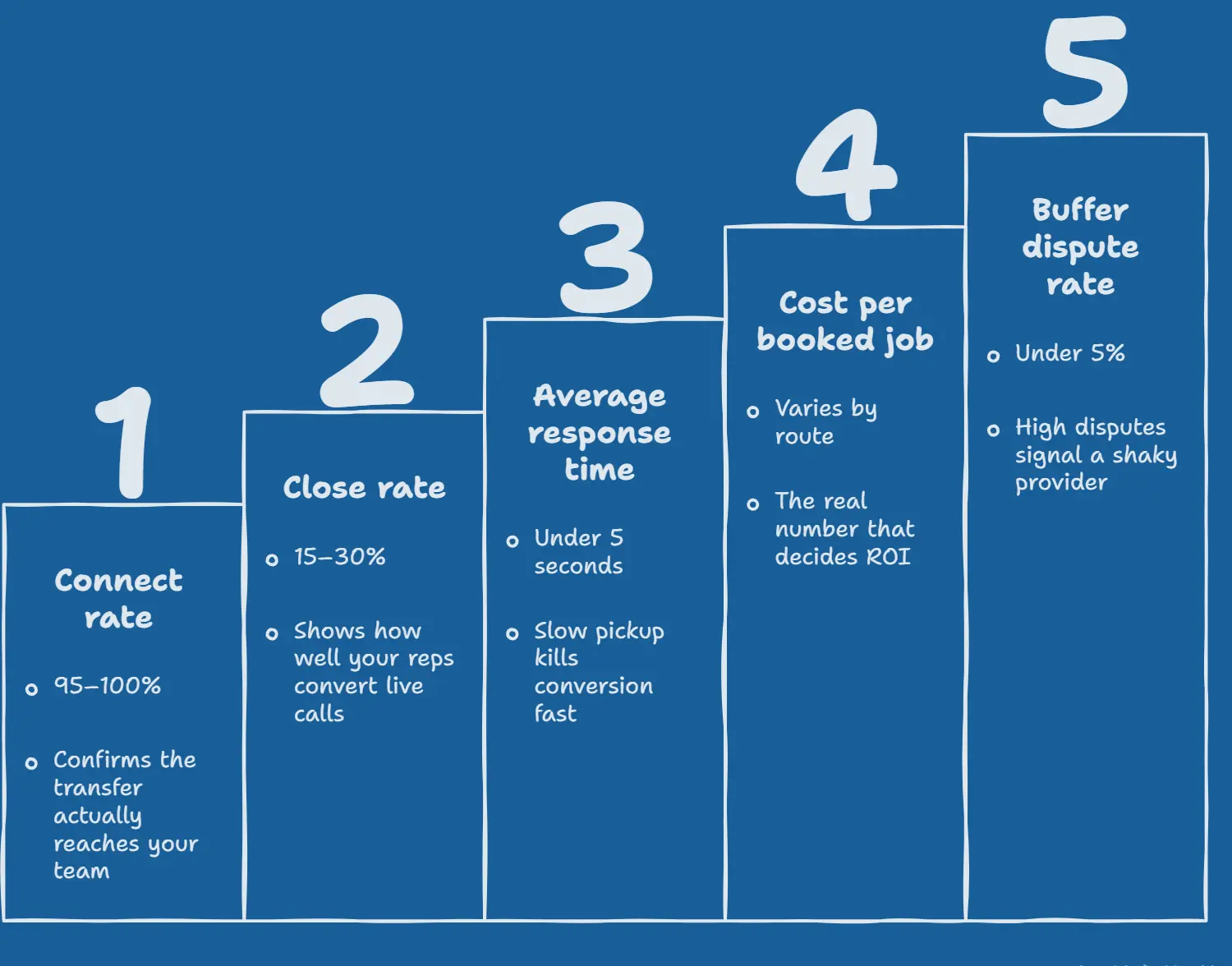
Track connect rate, close rate, and cost per booked job to know if your live transfer campaign is working. These three numbers tell you almost everything.
| Metric | Industry Benchmark | Why It Matters |
| Connect rate | 95–100% | Confirms the transfer actually reaches your team |
| Close rate | 15–30% | Shows how well your reps convert live calls |
| Average response time | Under 5 seconds | Slow pickup kills conversion fast |
| Cost per booked job | Varies by route | The real number that decides ROI |
| Buffer dispute rate | Under 5% | High disputes signal a shaky provider |
Pull these numbers weekly, not monthly. I’ve seen campaigns go sideways in five days because a provider quietly shifted from exclusive to shared calls, and nobody noticed until close rates cratered.
How to Evaluate Any Lead Provider
Evaluate a provider by their consent documentation, exclusivity terms, and willingness to share real client references. Skip anyone who dodges these three questions.
Ask for a sample recording of the screening call. This shows you exactly what shoppers hear before they’re transferred to you. Ask how they capture consent, since this protects you under TCPA rules. Ask for two or three current brokerage clients you can actually call. A provider confident in their process will hand these over without hesitation. One that stalls is telling you something, even if they don’t say it out loud.
Getting Started: How to Buy Your First Batch of Live Transfer Calls
Start small, test one route, and scale once your close rate proves the model works. Don’t dump your whole monthly budget into an untested provider.
- Pick one high-demand route to test, like Florida to New York.
- Set clear filters for vehicle type and shipping timeline.
- Confirm buffer time and refund terms in writing before paying.
- Staff your best closer during the test window.
- Track every metric from the performance table above.
- Scale spend only after two weeks of solid data.
This staged approach protects your budget while you learn how a new provider actually performs, not just what their sales pitch promised.
Key Pitfalls to Anticipate
Most live transfer problems trace back to unclear contracts, not bad leads. Read every term before you sign.
Misunderstanding Shared and Exclusive Calls
This problem happens when brokers assume “live transfer” always means exclusive. It doesn’t. Some providers sell the same transfer to multiple brokers simultaneously, and you won’t know unless the contract spells it out. Always get exclusivity in writing, not just in a sales call.
Broker-Owned Lead Networks
Some networks are secretly owned by competing brokerages. You might be buying leads from a company that keeps the best ones for itself. Ask directly who owns the lead source. A straight answer here tells you a lot about trustworthiness.
Strict Transfer and Buffer Time Requirements
Providers give you a short buffer, often 30 to 90 seconds, to judge if a call is valid. Miss that window and you’re stuck paying for a bad call. Train your reps to flag invalid calls immediately, not after the fact.
TCPA and Consent: What Brokers Buying Leads Need to Know in 2026
In 2026, brokers must confirm their provider collects explicit, documented consumer consent before every call transfer. This is not optional, and enforcement has gotten stricter.
The Telephone Consumer Protection Act requires clear proof the consumer agreed to be contacted about vehicle shipping. Fines for violations can hit thousands of dollars per call, and ignorance of your provider’s practices won’t protect you. Ask for documented consent records before your first campaign starts. Keep copies. If a provider can’t produce this paperwork on request, walk away, no matter how good their pricing looks.

FMCSA and Broker Licensing Basics for U.S. Lead Buyers
You need active FMCSA broker authority before any legitimate provider will sell you transfers. This confirms you’re licensed to legally arrange vehicle shipments across state lines. Providers who skip this check are often skipping other compliance steps too, and that should worry you.
How to Maximize ROI From Auto Transport Live Transfer Calls
Maximize ROI by tightening your filters, staffing correctly, and quoting fast once the call connects. Small operational fixes move the needle more than people expect.
Set Precise Lead Filters
Narrow filters to your strongest routes and vehicle types instead of buying everything. A broker who only ships operable sedans wastes money on inoperable truck transfers. Precision here directly lowers your cost per booked job.
Align Agent Schedules With Call Volume
Match your staffing to the hours transfers actually arrive, usually weekday business hours. An empty desk at 2pm means a wasted, already-paid-for call. Review your call volume data monthly and adjust shifts accordingly.
Prepare Fast Quoting and Follow-Up Systems
Reps need pricing tools ready before the call connects, not scrambling mid-conversation. A slow quote loses the shopper’s trust fast, even after you’ve paid for a warm transfer. Pair this with same-day follow-up texts for anyone who didn’t book on the first call.
The Tangible Benefits for Your Insurance Agency
Live transfers give your team near 100% contact rates and skip the speed-to-lead race entirely. These aren’t small perks. They change how your whole sales floor operates.
Standard web form leads often yield under a 30% contact rate, thanks to fake numbers and missed callbacks. Live transfers flip that completely, putting a real, willing shopper on the phone almost every time. Your reps stop wasting hours dialing dead numbers and start spending that time actually closing. Over months, this shift changes morale too. Reps close more, feel less burned out, and stop dreading the dialer.
What the Broader Auto Transport Market Means for Your Lead Strategy in 2026
The auto transport market keeps growing as more people relocate and buy vehicles online, pushing demand for fast, trustworthy quotes. This trend favors brokers who move quickly.
More consumers now shop for shipping quotes the same way they shop for anything else, expecting a fast answer. Brokers who still rely only on slow follow-up processes lose these shoppers to faster competitors within minutes. Live transfers fit naturally into this shift, since they meet the shopper right when intent peaks. I expect this gap between fast and slow brokers to widen further through 2026, not shrink.
Frequently Asked Questions
What is a good close rate for auto transport live transfers?
Most brokers see 15% to 30% close rates, depending on route and rep skill.
Are auto transport live transfer calls exclusive?
Not always. Confirm exclusivity in writing before paying, since some are shared.
How much do auto transport live transfer calls cost?
Pricing varies by route and vehicle type, but expect a premium over standard leads.
What happens if I miss the call?
Most providers won’t refund a missed call, so immediate agent availability matters most.
Is TCPA compliance my responsibility or the provider’s?
Both share responsibility. Always request documented consent records before buying.
Key Tak eaways
- Live transfers connect you to a screened, ready shopper in real time, cutting out cold dialing entirely.
- Confirm exclusivity in writing before you pay, since shared transfers cut close rates fast.
- Staff your team for instant pickup, since missed calls waste your entire spend.
- Demand documented TCPA consent from any provider before your first campaign launches.
- Track connect rate, close rate, and cost per booked job weekly to catch problems early.
Final Thoughts
Buying auto transport live transfer calls isn’t complicated once you know what to watch for. The model works because it removes the biggest bottleneck in this industry: reaching the customer before a competitor does. Get your filters right, staff your desk properly, and stay on top of TCPA consent, and this channel can outperform almost anything else in your lead mix.
We built Top7Seven United States Performance Marketing Services around exactly this kind of results-first thinking, helping brokerages nationwide fill their pipeline with real, ready shoppers instead of stale form fills. If you’re ready to stop chasing dead leads and start talking to shoppers who actually want to ship their car, we’re ready to help you get started today.