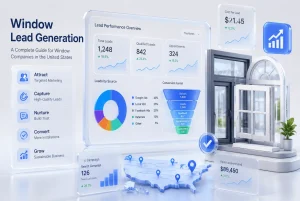
Travel Agency Lead Generation solves the common problem of weak, inconsistent flight inquiries. Many agencies attract visitors who compare prices but never contact an agent. A focused system turns those visitors into qualified flight-booking opportunities.
In my 20+ years of experience, random marketing rarely creates steady booking growth. Travel agencies need clear targeting, fast responses, and strong trust signals. These elements help agencies compete with airlines and large booking platforms.
This guide explains 12 practical strategies for attracting and converting U.S. travelers. You’ll also learn about costs, qualification, compliance, KPIs, and referral growth. Keep reading to build a reliable flow of booking opportunities.
Quick Answer
Travel agencies generate more flight bookings by targeting high-intent searches, improving website conversions, and responding quickly. The best strategies include SEO, Google Ads, video content, fare alerts, retargeting, live chat, referrals, email automation, and partnerships. Agencies should track qualified leads, bookings, acquisition costs, and repeat customers.
What Is Travel Agency Lead Generation in the United States?
Travel agency lead generation attracts people who may purchase flights or other travel services. It turns traveler interest into calls, forms, chats, consultations, and booking requests. The goal involves generating quality travel leads, not collecting random contact details.
A lead could request an international ticket, family package, or corporate travel plan. Strong agencies collect enough information to understand each traveler’s needs. They then guide suitable prospects toward a secure booking.
How Travel Agency Lead Generation Works
Travel lead generation moves customers through four connected stages. These stages cover search intent, lead capture, qualification, and booking conversion. Each stage needs clear tracking and trained sales support.
The process starts before a traveler contacts your agency. Your marketing must answer relevant questions and build early trust. Your booking team must then respond with useful, accurate options.
Traveler Search Intent
Traveler search intent reveals what a potential customer wants to accomplish. Some travelers research destinations, while others need a ticket immediately. Each intent requires different content, keywords, and offers.
A search for “best time to fly to Tokyo” shows research intent. “Last-minute flights from NYC to London” shows stronger booking intent. Route-specific pages can capture both types of searches.
Lead Capture Channels
Lead capture channels collect contact details from interested travelers. Common channels include calls, website forms, chat, social forms, and fare alerts. Each channel should connect with your central tracking system.
Mobile lead capture forms should request only essential booking information. Ask for departure, destination, dates, passenger count, and contact details. Longer forms can reduce inquiries from busy travelers.
Lead Qualification Process
Lead qualification identifies travelers who fit your services and sales process. Agents should verify destination, dates, budget, passenger count, and booking readiness. This process helps your team focus on serious inquiries.
A structured CRM can record answers and assign follow-up tasks. It can also separate urgent leads from early-stage researchers. Clear lead scoring improves speed and customer service.
Flight Booking Conversion
Flight booking conversion turns a qualified inquiry into paid travel. Agents achieve this through fast quotes, clear options, and helpful communication. Customers also need confidence in pricing, policies, and payment security.
Avoid sending long lists of confusing flight choices. Present two or three suitable options with clear differences. Then explain the next booking step.
Is It Difficult to Get Travel Clients in the U.S.?
Getting travel clients can feel difficult because customers have many booking choices. Airlines, online agencies, comparison sites, and local agents compete for attention. However, focused agencies can still attract valuable customers.
The hardest part involves building trust before the first conversation. Travelers worry about hidden fees, cancellations, and poor support. Clear information and quick service can reduce those concerns.
How Much Does Travel Agency Lead Generation Cost in the United States?
Travel agency lead generation costs depend on the channel, competition, service, and target market. Organic strategies usually require more time and content resources. Paid channels can produce faster traffic but need daily budget control.

Agencies may also pay for software, landing pages, call tracking, and sales staff. Pay-per-call or live-transfer providers may charge for qualified conversations. Always compare spending against completed bookings and gross profit.
| Lead Channel | Cost Pattern | Best Use | Main Risk |
| SEO | Ongoing content investment | Long-term organic leads | Slow early growth |
| Google Ads | Pay per click | High-intent route searches | Wasted clicks |
| Pay-per-call | Pay per qualified call | Urgent booking requests | Weak call quality |
| Social media | Content and advertising costs | Travel inspiration | Low booking intent |
| Referrals | Incentive or travel credit | Trusted new customers | Limited initial reach |
| Email marketing | Software and content costs | Repeat bookings | Poor segmentation |
Essential Travel Lead Generation KPIs
Travel lead generation KPIs show whether marketing creates profitable bookings. Agencies should track quality, conversion, cost, revenue, and customer retention. Website traffic alone cannot show real business growth.
Review each metric by campaign, source, destination, and agent. This approach reveals which channels attract valuable customers. It also exposes wasted spending and poor follow-up.
Cost Per Qualified Lead
Cost per qualified lead measures spending for each suitable travel inquiry. Divide campaign costs by the number of qualified leads. Exclude spam, wrong numbers, and unrelated requests.
This metric gives a clearer result than basic cost per form. It also helps compare paid search, calls, referrals, and social campaigns. Lower costs only matter when lead quality remains strong.
Lead-to-Consultation Conversion Rate
Lead-to-consultation conversion measures how many leads speak with an agent. Strong response speed and simple scheduling can improve this rate. Poor contact details or delayed follow-up can reduce it.
Track calls, scheduled meetings, and completed consultations separately. This separation shows where potential clients leave your process. Agents can then fix the weakest step.
Quote-to-Booking Conversion Rate
Quote-to-booking conversion measures how many travel quotes become paid reservations. It reflects pricing, communication quality, trust, and offer relevance. Low conversion may signal confusing quotes or weak follow-up.
Review conversion rates by agent and travel category. International and group bookings may need longer decision periods. Use suitable follow-up schedules for each category.
Customer Acquisition Cost (CAC)
Customer acquisition cost measures total spending needed to gain one paying customer. Include advertising, tools, agency fees, and relevant sales costs. This metric connects marketing work with actual travel bookings.
Compare CAC against booking profit and expected repeat purchases. A higher CAC may remain acceptable for valuable corporate accounts. It may not work for low-margin one-time tickets.
Revenue Per Qualified Lead
Revenue per qualified lead shows the value created by each suitable inquiry. Divide total lead-generated revenue by qualified lead volume. This metric rewards quality rather than basic lead quantity.
Use it to compare routes, campaigns, customer types, and booking agents. High-value niches may produce fewer leads but more revenue. That insight can guide future budgets.
Repeat Booking Rate
Repeat booking rate measures how many customers book again. Strong service, reminders, and personalized offers can improve this metric. Repeat customers often require less education and trust building.
Track repeat bookings by season and traveler type. Corporate travelers may book regularly throughout the year. Leisure customers may respond better before common vacation periods.
Define Your Ideal U.S. Travel Customer
An ideal customer profile defines the travelers your agency can serve best. It should include trip type, budget, location, needs, and booking behavior. Clear targeting improves messaging and lead quality.
Avoid marketing every service to every traveler. Choose customer groups that match your experience and supplier access. Then create specific pages and offers for them.
Leisure Vacation Travelers
Leisure travelers usually want affordable, enjoyable, and low-stress travel experiences. They often compare destinations, fares, hotels, and seasonal travel packages. Helpful guidance can build trust during their research.
Create destination guides and route-specific fare pages. Offer simple consultation forms and clear package details. Visual content can increase interest before booking.
Corporate Business Travelers
Corporate travelers need speed, flexibility, reporting, and reliable support. Companies may also require policy controls and recurring booking management. These accounts can create steady flight volume.
Build relationships with office managers, founders, and travel coordinators. Explain your response process and after-hours support. Provide clear service terms for business accounts.
Family & Group Travelers
Family and group travelers need coordinated flights, baggage guidance, and flexible arrangements. They may also need seating support and payment planning. These bookings often involve several decision-makers.
Create forms that capture passenger counts and group needs. Assign one agent to manage the full request. Clear communication can prevent costly booking mistakes.
International Flight Travelers
International travelers often need more guidance than domestic travelers. They may ask about connections, baggage, visas, fare rules, and airline choices. Complex trips create opportunities for expert travel agents.
Publish guides for popular international routes and airports. Explain connection times and ticket restrictions clearly. Never promise visa approval or guaranteed entry.
Understanding the U.S. Traveler Buying Journey
The traveler buying journey covers research, comparison, consultation, booking, and support. Agencies should provide useful help during every stage. Different stages require different calls to action.
Early researchers may join a fare alert list. Ready buyers may prefer a direct call or live chat. Match each offer with the traveler’s current intent.
Travel Research Stage
The research stage helps travelers explore routes, destinations, airlines, and travel periods. Useful travel content can introduce your brand during this stage. It can also create organic travel leads.
Publish travel guides, airport tips, and baggage explanations. Answer common travel questions with short, clear content. Add a relevant fare alert or inquiry form.
Fare Comparison Stage
The fare comparison stage helps travelers judge price, value, and ticket conditions. Many customers compare airline sites and several travel companies. Your agency must explain the complete value.
Show baggage, change rules, layovers, and support details. Avoid promoting a low fare without important restrictions. Transparent comparisons can protect customer trust.
Travel Consultation Stage
The consultation stage connects a qualified traveler with a travel professional. Agents should confirm needs before suggesting flight options. This approach prevents irrelevant quotes.
Ask focused questions and listen carefully. Explain why each recommended option suits the customer. Finish with a clear booking deadline or next step.
Booking & Post-Booking Experience
The booking experience should feel secure, simple, and well-supported. Customers need receipts, ticket details, policies, and contact information. Post-booking communication also supports repeat business.
Send clear confirmation messages after payment. Provide useful reminders before departure. Ask for a review after the completed trip.
Digital Marketing Strategies for Travel Agencies
Digital marketing strategies help travel agencies attract customers across search, video, and websites. The strongest campaigns match each channel with traveler intent. They also direct visitors toward one clear action.
The following strategies begin the 12 main booking-growth methods. Use tracking for every call, form, and completed reservation. This keeps your marketing focused on revenue.
Optimize Local Travel SEO
Local travel SEO helps nearby travelers find your agency through search results. Optimize service pages for your city, region, and travel specialties. Keep your business information accurate across major platforms.
Create pages for popular routes and customer needs. Add real reviews and clear contact details. Avoid creating thin pages for every nearby city.
Launch Google Ads Campaigns
Google Ads can capture travelers who actively search for specific flights. Target route-based and urgency-based keywords with clear booking intent. Avoid sending every visitor to your homepage.
Build landing pages for important destinations and routes. Match each advertisement with the page content. Add negative keywords to block unrelated searches.
Create Travel Video Marketing
Travel video marketing builds interest through useful and visual information. Videos can cover airlines, airports, cabins, baggage, and booking tips. YouTube and social platforms can reach planning-stage travelers.
Include a clear action after each video. Send viewers to a route page or quote form. Keep information accurate and update old policy videos.
Improve Website Conversion Rate
Website conversion improvements help more visitors become travel inquiries. Your site needs fast pages, simple navigation, and clear booking actions. Mobile users should complete forms without unnecessary steps.
Place calls to action near useful information. Display phone, chat, and form options clearly. Test pages by traffic source and device.
Lead Capture and Conversion Strategies
Lead capture strategies turn website and social visitors into reachable prospects. Strong systems reduce friction and respond while interest remains high. They also collect useful qualification details.
These five strategies continue the core 12-method framework. Each one improves a different conversion point. Agencies can use them together.
Create High-Value Travel Lead Magnets
Travel lead magnets exchange useful information for customer contact details. Fare alerts work well because they match a clear traveler need. Destination checklists and route guides can also attract potential leads.
Let users choose destinations or preferred travel periods. Store these preferences for future campaigns. Avoid sending unrelated promotions.
Improve Speed-to-Lead Response
Speed-to-lead response means contacting new inquiries quickly. Travelers often request prices from several agencies at once. The first useful response can gain an advantage.
Use instant confirmations and agent notifications. Route urgent calls to available ticketing staff. Automation should support agents, not replace helpful service.
Retarget Travel Website Visitors
Retargeting reconnects with visitors who leave without booking. Use messages related to their viewed route, destination, or travel period. Relevant ads usually feel more useful than general promotions.
Promote fare alerts, consultations, or updated availability. Avoid creating false urgency about prices or seats. Apply sensible frequency limits.
Capture Leads with Social Forms
Social lead forms collect inquiries without sending users to another website. They work well for travel packages, group trips, and destination campaigns. Keep each form short and easy.
Ask only questions needed for the first response. Connect submissions with your CRM or email system. Contact each lead with relevant details.
Convert Visitors with Live Chat
Live chat helps travelers resolve questions before leaving your website. Customers may ask about baggage, layovers, refunds, or airline rules. Fast answers can support booking confidence.
Use trained agents during busy periods. A chatbot can collect basic details after hours. Escalate complex questions to a human agent.
Community Marketing and Referral Growth
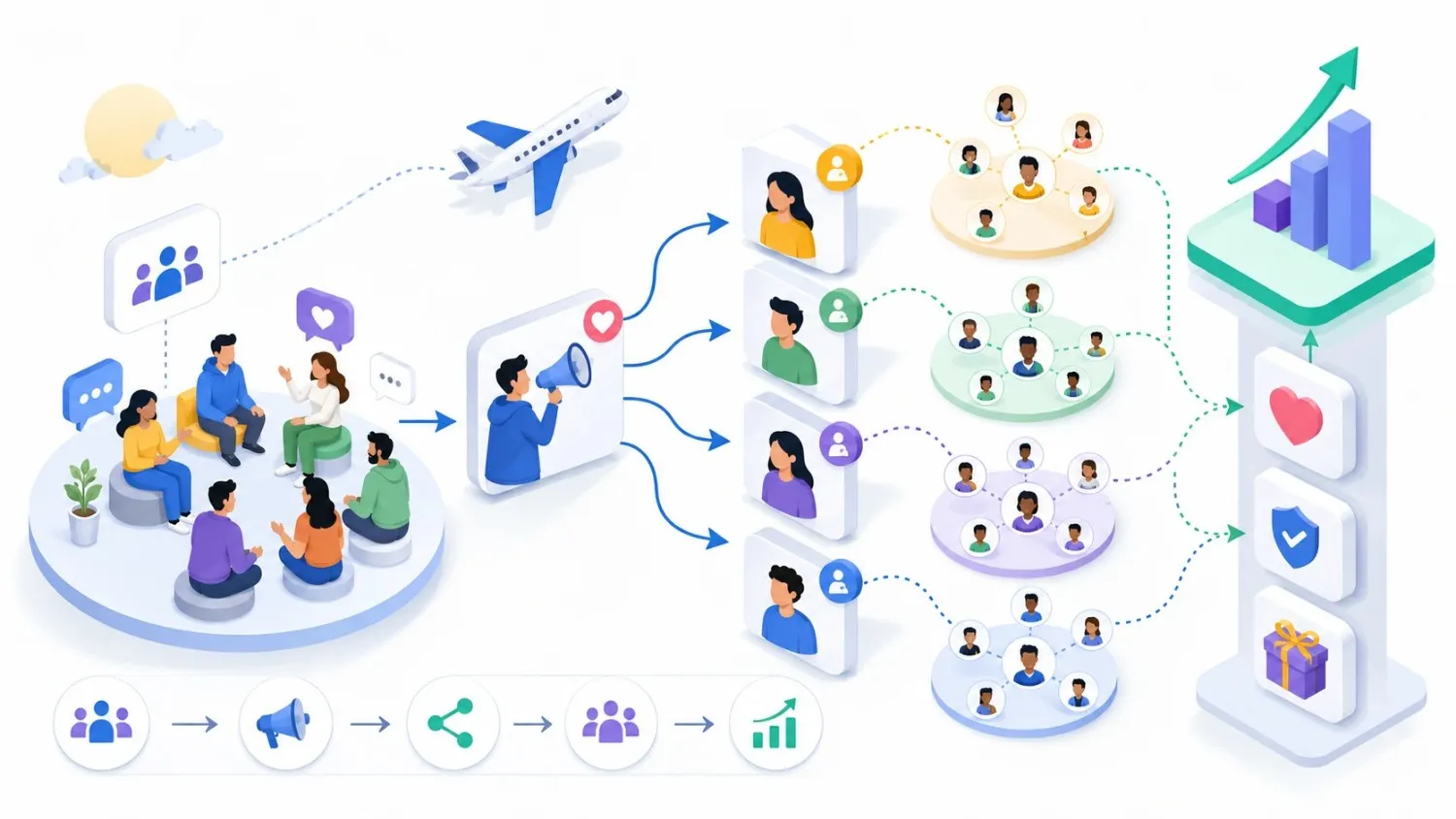
Community and referral marketing create leads through existing relationships. These leads often arrive with stronger trust than cold traffic. Local engagement can also strengthen your travel brand.
The final three core strategies cover communities, referrals, and automated email. Together, these methods encourage new and repeat travel bookings. They can reduce dependence on paid advertising.
Build Local Travel Communities
Local travel communities connect people with shared destinations or travel interests. Agencies can host workshops, online groups, and destination information sessions. These activities build familiarity before a booking request.
Focus each community around a clear audience. Examples include international students, families, or business travelers. Share useful guidance instead of constant sales messages.
Launch Customer Referral Programs
Customer referral programs reward travelers who introduce a friend or family member. Rewards may include travel credits, booking discounts, or priority support. Keep all terms simple and transparent.
Use tiered rewards for valuable referrals or repeat introductions. Track the referring customer and resulting booking. Deliver promised rewards without delays.
Automate Travel Email Campaigns
Automated email campaigns nurture leads and encourage repeat bookings. Segment customers by destination, season, history, and travel interests. Personalized messages usually provide more value than general promotions.
Send fare alerts before common travel periods. Follow up after consultations and completed trips. Include a clear unsubscribe option in every campaign.
Focus on a Profitable Travel Niche
A profitable travel niche helps your agency target clearer customer needs. Strong niches include corporate trips, group travel, international routes, or destination weddings. Specialization can improve content and sales knowledge.
Choose niches with suitable demand and booking value. Build dedicated pages and qualification questions. Review profitability before increasing campaign spending.
Strategic Partnerships for Travel Lead Growth
Strategic partnerships connect agencies with organizations serving the same travelers. Good partners can introduce qualified customers at useful decision points. Each partnership needs clear expectations and tracking.
Choose partners with trusted customer relationships. Create simple referral or co-marketing processes. Review lead quality and booking results regularly.
Partner with Hotels & Tour Companies
Hotels and tour companies can refer travelers who still need flights. Your agency can also refer customers needing accommodation or activities. This creates mutual value.
Build destination-specific partnership offers. Use tracked links, forms, or referral codes. Explain customer ownership and communication rules.
Build Relationships with Wedding Planners
Wedding planners can introduce couples and guests needing coordinated travel. Destination weddings may create group and international flight bookings. These customers often need patient support.
Offer a dedicated group travel contact. Provide clear booking deadlines and passenger instructions. Avoid promising group fares before supplier confirmation.
Connect with Corporate Travel Buyers
Corporate travel buyers can produce recurring business flight requests. Target local companies, nonprofits, event organizers, and growing firms. Explain how your service saves staff time.
Offer a structured onboarding process and clear support channels. Discuss approval needs and traveler policies. Track every corporate booking by account.
Collaborate with Study Abroad Advisors
Study abroad advisors work with students needing international flights. These travelers may need baggage, connection, and flexible-ticket guidance. Parents may also join the booking decision.
Provide route guides and consultation support. Explain ticket conditions in simple language. Keep all immigration advice within your professional limits.
Building Traveler Trust Before Booking
Traveler trust grows through transparency, proof, secure systems, and helpful communication. Customers need confidence before sharing personal details or making payments. Trust signals should appear across every booking page.
Avoid using vague claims without proof. Show how your agency works and supports customers. Make policies easy to find.
Display Industry Certifications
Industry certifications show relevant training, memberships, or supplier relationships. Display only valid credentials your agency currently holds. Explain what each certification means for customers.
Place credentials near contact and payment areas. Link to verification pages where available. Never suggest guarantees that certifications cannot provide.
Publish Transparent Service Fees
Transparent service fees help customers understand the full booking cost. Explain consultation, ticketing, change, and support fees before payment. Hidden charges can damage trust.
Use simple fee tables or written explanations. Separate agency fees from airline charges. Confirm costs again before processing payment.
Explain Cancellation Policies
Cancellation policies explain what happens after booking changes or cancellations. Customers need clear details about restrictions and possible charges. Fare rules can differ between tickets.
Share relevant rules before payment. Avoid promising refunds before airline confirmation. Record customer acceptance within your booking process.
Offer Secure Payment Methods
Secure payment methods protect customers and support booking confidence. Use trusted payment tools and controlled staff access. Avoid requesting sensitive card details through unsecured messages.
Explain available payment methods clearly. Send professional receipts after successful transactions. Review suspicious payment activity carefully.
Collect Verified Traveler Reviews
Verified reviews provide social proof from real customers. Ask for feedback after completed travel experiences. Include specific details without exposing private information.
Respond professionally to positive and negative reviews. Never purchase fake testimonials. Consistent feedback can strengthen your online presence.
Showcase Real Booking Success Stories
Booking success stories show how your agency solved real travel problems. Examples may include complex routes, group coordination, or urgent flights. Focus on the customer’s challenge and outcome.
Ask permission before publishing identifying details. Remove private travel information when needed. Keep each story honest and specific.
Publish Traveler Testimonials
Traveler testimonials help potential customers understand your service quality. Strong testimonials mention communication, support, or booking ease. Place them near relevant service pages.
Use the customer’s real words with permission. Avoid editing testimonials into misleading claims. Add context about the booked service.
Qualifying Travel Leads Effectively
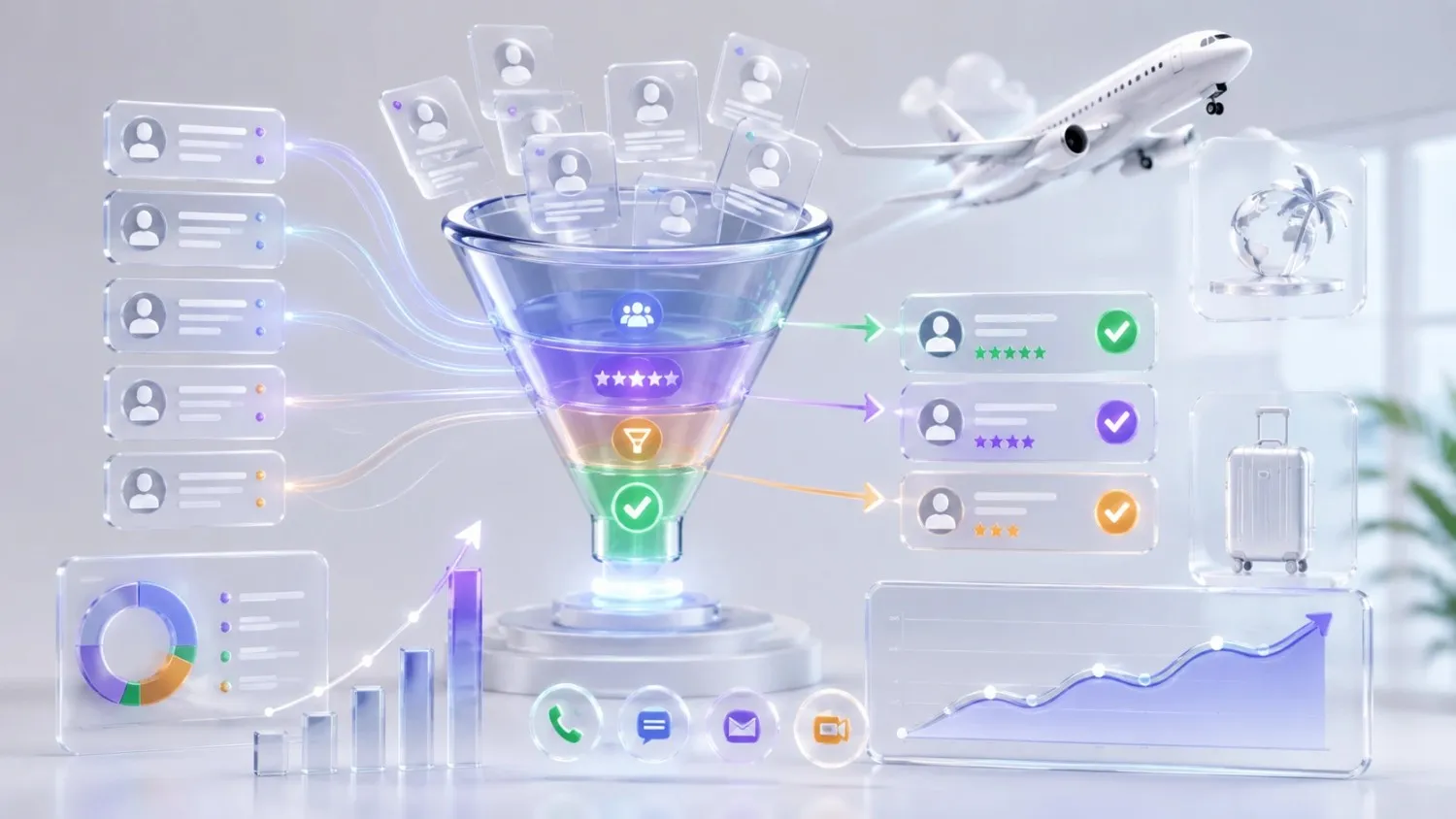
Effective qualification identifies travelers who have clear needs and realistic booking potential. Agents should ask consistent questions before preparing detailed options. This protects time and improves customer service.
Use a short qualification script. Keep the conversation friendly and helpful. Record important answers within your CRM.
Confirm Travel Destination
Destination confirmation identifies the route and possible airport options. Ask whether the traveler accepts nearby departure or arrival airports. This may uncover better flight choices.
Clarify one-way, return, or multi-city needs. Record all route segments accurately. Repeat complex routes before searching.
Verify Planned Travel Dates
Travel date verification confirms when the customer expects to depart and return. Ask about flexibility and important arrival deadlines. Flexible dates may create more fare options.
Note whether the dates remain fixed or estimated. Confirm local dates for international travel. Avoid assumptions about overnight arrivals.
Identify Traveler Count
Traveler count affects availability, pricing, and group booking needs. Confirm adults, children, and infants separately. Also ask whether everyone will travel together.
Large groups may require a different supplier process. Gather passenger names only through secure systems. Never collect unnecessary private data.
Assess Travel Budget
Budget assessment helps agents recommend realistic flight options. Ask for a preferred range without judging the customer. Explain which features can affect pricing.
Discuss cabin class, baggage, flexibility, and connection preferences. Avoid focusing only on the lowest fare. Value often includes support and better conditions.
Measure Booking Readiness
Booking readiness shows how soon a traveler may purchase. Ask whether they have confirmed dates and decision-makers. Also ask when they expect to pay.
Classify leads as urgent, active, or early-stage. Give each group a suitable follow-up plan. Do not pressure customers who still need research time.
Prioritizing High-Value Flight Booking Leads
High-value leads usually involve urgency, complexity, repeat demand, or several travelers. These inquiries deserve fast attention from experienced agents. However, every customer should still receive professional communication.
Use lead scoring to guide response order. Consider booking value and closing likelihood together. Do not prioritize high prices without checking fit.
Last-Minute Flight Requests
Last-minute requests often involve strong booking intent. Travelers usually need immediate options and direct agent support. Speed matters greatly for these leads.
Confirm dates, payment readiness, and route flexibility first. Explain that fares may change before ticketing. Avoid holding unconfirmed options as guaranteed.
International Multi-City Trips
International multi-city trips require detailed planning and route knowledge. These bookings may involve several airlines and connection rules. Skilled support can create strong customer value.
Assign complex requests to experienced agents. Review every segment before quoting. Explain baggage and ticket conditions clearly.
Group Travel Opportunities
Group travel can create several bookings from one qualified inquiry. Schools, families, companies, and event groups may need coordinated support. These leads require organized follow-up.
Confirm group size, dates, payment process, and deadlines. Use one main contact for communication. Keep written records of all agreed details.
Returning Customer Bookings
Returning customers already understand your service and booking process. Their previous preferences can support faster recommendations. Personalized communication may encourage loyalty.
Review past travel details before contacting them. Never assume their current needs remain unchanged. Offer relevant options based on new information.
When to Disqualify Low-Quality Travel Leads
Agencies should disqualify leads that lack fit, consent, realistic needs, or genuine booking intent. Common examples include spam, fake details, impossible requests, and repeated abuse. A clear disqualification process protects agent time.
Do not reject travelers only because they need more education. Move early researchers into a nurture campaign instead. Record the disqualification reason for future analysis.
U.S. Travel Lead Generation Compliance
U.S. travel lead generation must follow applicable marketing, privacy, and advertising rules. Requirements may vary by state, channel, and customer location. Agencies should document consent and protect customer information.
Use clear disclosures across forms, calls, texts, and advertisements. Ask qualified legal counsel to review your process. Keep compliance records organized.
Email Consent Requirements
Email campaigns should use proper consent and honest sender information. Tell subscribers what messages they will receive. Provide a clear way to stop future emails.
Keep records of sign-ups and preference changes. Avoid buying unclear or unverified email lists. Process unsubscribe requests promptly.
Phone & SMS Consent Rules
Phone and SMS marketing requires careful consent and contact management. Explain how your agency plans to use each phone number. Keep evidence of customer permission.
Follow applicable federal and state calling rules. Respect do-not-call requests and time restrictions. Review automated messaging practices with legal counsel.
Customer Data Privacy Standards
Customer data privacy standards protect personal and travel information. Collect only information needed for service or marketing. Limit access to trained staff.
Use secure systems for passenger and payment details. Create retention and deletion rules. Explain your privacy practices clearly.
Truthful Travel Advertising
Truthful advertising presents accurate prices, availability, terms, and limitations. Avoid misleading discounts or false urgency. Disclose important restrictions near each offer.
Update advertisements when offers end. Confirm supplier information before publishing claims. Correct mistakes as soon as your team finds them.
Common Travel Agency Lead Generation Mistakes
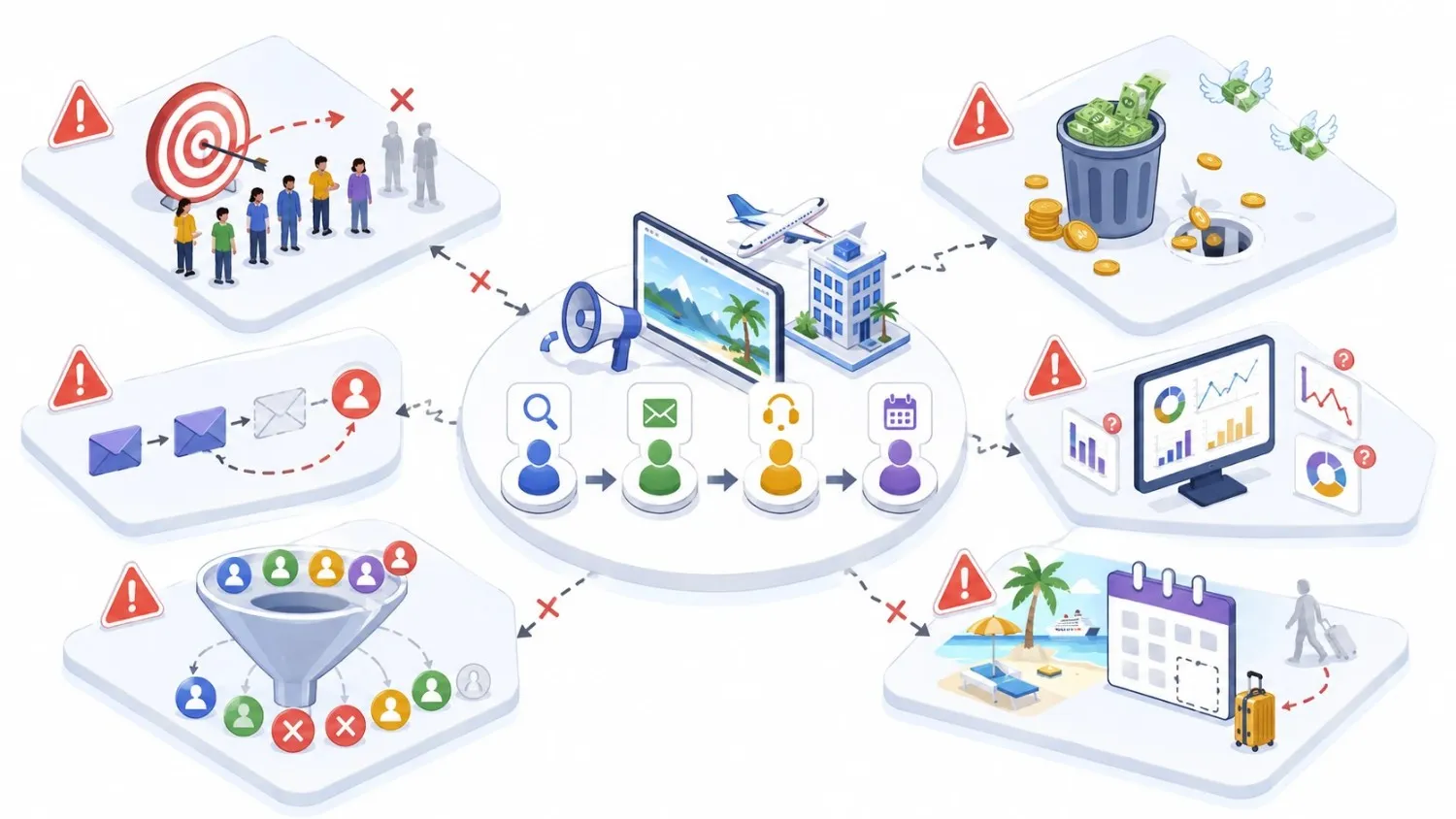
Common lead generation mistakes waste budgets and reduce booking conversion. Most problems involve poor targeting, weak qualification, slow responses, or wrong metrics. Agencies can fix these issues through better processes.
Review calls and lost bookings regularly. Look for repeated customer objections. Use those findings to improve campaigns and training.
Purchasing Shared Travel Leads
Shared travel leads often reach several agencies at once. This creates price competition and repeated customer contact. Lead quality may also vary greatly.
Ask providers how they collect and qualify each inquiry. Test small volumes before scaling. Track completed bookings, not delivered leads.
Ignoring Lead Qualification
Ignoring qualification forces agents to spend time on unsuitable inquiries. It also makes campaign results appear stronger than reality. Every source needs consistent qualification rules.
Create a short checklist for all agents. Score leads using the same criteria. Review disagreements during team training.
Delayed Lead Follow-Up
Delayed follow-up allows competitors to reach travelers first. Interest can also fall as customers continue searching. Fast, useful responses improve the customer experience.
Use alerts and clear lead ownership. Prepare response templates for common requests. Personalize each response before sending it.
Tracking Leads Instead of Bookings
Tracking only leads can hide weak sales performance. A campaign may generate many forms without profitable reservations. Booking data provides the real business result.
Connect lead sources with quotes and payments. Track revenue, profit, and cancellations where possible. Scale channels that produce sustainable value.
30-Day Travel Agency Lead Generation Action Plan
A 30-day plan helps agencies build and test a practical lead system. Each week should focus on one main growth stage. Avoid launching every channel at once.
Start with clear tracking and qualification. Then launch traffic, improve conversion, and scale strong results. Keep budgets controlled during testing.
Week 1: Build Your Lead Foundation
Week one creates the foundation for lead capture and tracking. Define your target customers, offers, qualification questions, and booking goals. Review your website and contact options.
Set up call, form, chat, and CRM tracking. Create one route-specific landing page. Prepare clear follow-up scripts.
Week 2: Launch Traffic Campaigns
Week two launches focused traffic from one or two channels. Start with high-intent search or a proven local audience. Use tightly matched advertisements and landing pages.
Publish useful route or destination content. Add a fare alert offer. Check every campaign link and form.
Week 3: Optimize Lead Conversion
Week three improves how visitors and agents handle inquiries. Review form completion, call quality, response times, and lost leads. Fix the largest conversion barrier first.
Shorten difficult forms and clarify offers. Train agents on qualification questions. Add chat support where practical.
Week 4: Measure & Scale Results
Week four measures bookings, costs, revenue, and lead quality. Compare results across campaigns and customer groups. Pause sources that create repeated low-quality inquiries.
Increase budgets gradually for profitable campaigns. Build new pages from proven keywords. Create a monthly review process.
Frequently Asked Questions
How can a travel agency generate more leads?
A travel agency can generate more leads through SEO, paid search, video, referrals, and fare alerts. Each channel should direct customers toward a simple call, chat, or inquiry form. Fast follow-up helps convert those leads into consultations.
What are the best leads for travel agents?
The best leads for travel agents have clear destinations, travel dates, budgets, and booking intent. International, group, corporate, and returning customers may offer strong booking value. Lead quality still depends on each agency’s services.
Should travel agencies buy leads?
Travel agencies can buy leads when providers offer transparent sources and qualification standards. Pay-per-call and live-transfer programs may connect agents with ready travelers. Agencies should test quality before purchasing large volumes.
How does SEO help travel agencies?
SEO helps travel agencies appear during route, destination, and policy searches. Useful pages attract travelers throughout the buying journey. Clear calls to action can turn organic visitors into booking inquiries.
Key Takeaways
- Target route-specific searches with focused pages and offers.
- Respond quickly to calls, forms, chats, and social inquiries.
- Qualify leads before creating detailed flight options.
- Track completed bookings, acquisition costs, and repeat customers.
- Build trust through clear fees, policies, reviews, and secure payments.
Final Thoughts on Travel Agency Lead Generation in the United States
Travel agency lead generation works best as a complete booking system. Agencies need focused targeting, simple lead capture, fast follow-up, and clear qualification. These elements turn traveler interest into measurable flight revenue.
Start with a small number of high-intent strategies. Track qualified leads, quotes, bookings, revenue, and customer acquisition costs. Scale only the channels that create profitable and suitable customers.
Top7seven supports travel businesses from 4878 Nickel Road, El Monte, CA 91731. Call (209)-655-3042 or email contact@top7seven.com for lead generation support. We can help you build a stronger flow of qualified travel bookings.