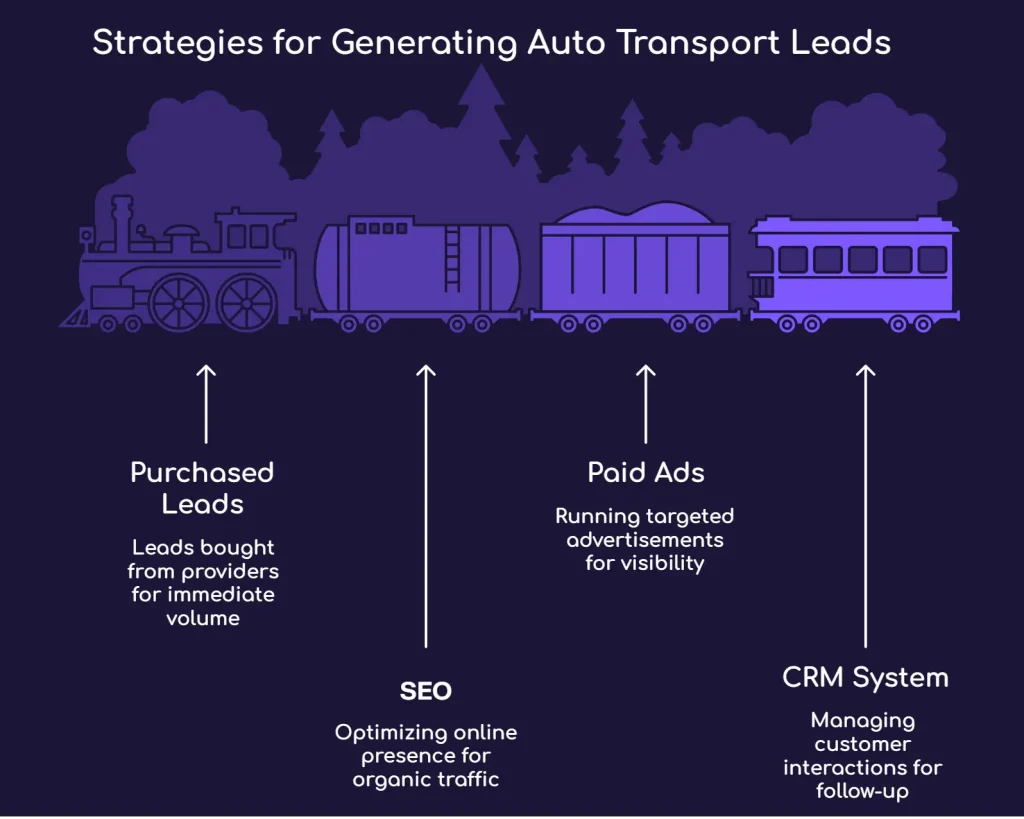
You generate auto transport leads by mixing paid leads, paid ads, SEO, and direct outreach. Most brokers make one big mistake. They lean on just one lead source. Then that source gets expensive or dries up, and the whole business stalls.
I’ve spent over 20 years in performance marketing, and auto transport is one of the toughest niches I’ve worked. Speed-to-contact wins deals. Quote accuracy keeps them. The brokers who grow fast build a system, not a single trick, for finding auto transport leads.
In this guide, you’ll learn how to buy car shipping leads, run high-intent ads, build organic SEO, and set up a CRM that routes leads instantly. You’ll also learn how to spot bad lead providers and avoid the mistakes that drain ad budgets fast.
Quick Answer
The fastest way to generate auto transport leads is combining purchased leads with owned channels like SEO and paid ads. Buy shared or exclusive leads from a trusted auto transport lead provider for quick volume. Then build Google Ads campaigns, local SEO pages, and a fast CRM follow-up system. This blend gives you quality leads today and cheaper, compounding leads over time.
Buy Third-Party Leads
Buying leads is the fastest way to fill your CRM with prospects. Lead aggregators run big quote-comparison sites. They collect shipper info and send it straight to brokers. This gets you moving without waiting months for SEO to kick in.
I’ve watched new brokerages skip this step entirely. Big mistake. You need volume on day one to train your sales team and test your close rate.
Shared leads
Shared leads get sold to multiple brokers at once. They cost less per lead. But you’re racing other brokers to the phone. Whoever calls first usually wins the job. Your team needs speed, not just a good pitch.
Exclusive leads
Exclusive leads go to only one company. They cost more upfront. But they close at a much higher rate. You’re not fighting five other brokers for the same shipper. Customers struggle with call fatigue from shared leads, so exclusive leads feel different to them too.
Setup
Setting up lead delivery means connecting your provider straight into your CRM. This problem happens when brokers check email manually for new leads. That delay costs bookings. Route leads automatically. Every minute matters.
Live Transfer and Inbound Call Leads
Live transfer leads connect you to a shipper who’s already on the phone. These convert the best out of any lead type. The prospect is ready. They’re asking questions in real time. Pay-per-call leads work the same way, just through inbound numbers instead of a warm handoff.
Evaluate an Auto Transport Lead Provider
You evaluate a provider by checking their lead freshness, source, and replacement policy. Not all providers are equal. Some resell old data. Some hide where leads actually come from. Ask direct questions before you sign a contract.
Check Lead Freshness, Verification, and Source Transparency
Fresh leads convert better than old ones. A lead older than 30 minutes has often already called five other brokers. Ask your provider how they verify phone numbers and emails. Ask where the traffic comes from. If they won’t tell you, walk away.
Review Geographic Filters, Resale Policies, and Lead Replacements
Good providers let you filter leads by state, lane, or ZIP code. This keeps you focused on your profitable service areas. Also ask how many times a lead gets resold. And ask about replacements for bad phone numbers. A provider without a replacement policy isn’t worth the risk.
Run Paid Digital Ads
Paid ads let you reach shippers the moment they search for a quote. This channel costs more per click than SEO. But it delivers leads faster, sometimes within hours of launching a campaign.
I’ve run hundreds of these campaigns. The brokers who win aren’t spending the most. They’re targeting the most specific, bottom-of-funnel searches.
Google Ads
Google Ads puts your quote form in front of people typing transactional searches. Think “ship a car from Texas to Florida” or “cost to transport an SUV cross country.” These searchers are close to booking. Use negative keywords like free, jobs, or carrier salary to stop wasting spend on people who aren’t shippers.
Facebook and Instagram Ads
Facebook and Instagram ads work best for retargeting and brand awareness, not cold intent. Shippers rarely search Facebook for a quote. But they will click a retargeting ad after visiting your site once. Use this channel to stay visible, not to replace search intent traffic.
Geographic and Lane-Based Campaign Targeting
Lane-based targeting means building separate campaigns for popular shipping corridors. A “California to New York” campaign converts better than one generic nationwide ad. Customers searching a specific lane already know what they need. Give them a landing page that matches their exact search.
Retarget Website Visitors
Retargeting brings back visitors who didn’t fill out your form the first time. Most shippers compare three or four companies before booking. This problem happens when brokers only get one shot at a visitor. A retargeting ad reminds them you exist while they’re still shopping around.
Landing pages
Landing pages should have one job: capture the quote. Send paid traffic to a focused, mobile-friendly page, not your homepage. Use a short multi-step form. Ask for origin ZIP, destination ZIP, vehicle year, make, and model. Keep it simple. Every extra field drops your conversion rate.
Build Organic SEO and Local Presence
SEO builds a steady stream of free auto transport leads over time. It takes three to six months to see real traction. But once it ranks, the leads keep coming without a per-click cost.
This is the highest ROI channel I’ve seen in 20 years of performance marketing, hands down. It just takes patience most new brokers don’t have.

Google Business Profile
A complete Google Business Profile helps you show up in local map searches. Searches like “auto transport company near me” bring highly motivated buyers. Fill out every field. Add photos of your trucks. Respond to every review, good or bad.
Build City and Service Area Pages
City pages tell Google exactly where you operate. Build a page for each major service area you cover. Include local details, not just a copy-pasted template. This helps you rank when someone searches your city plus “auto transport.”
Lane pages
Lane pages target specific shipping routes, like state-to-state corridors. These pages rank for searches like “ship a car from Ohio to Arizona.” They also pre-qualify the visitor since they already know the exact lane they need.
Publish Unique Local and Lane-Specific Content
Unique content beats generic content every time in Google’s eyes. Write real guides about specific lanes and cities. Include average transit times, seasonal weather notes, or local pickup tips. Duplicate content across pages gets ignored by search engines and by shippers.
Use Direct Outbound Prospecting
Outbound prospecting means you go find leads instead of waiting for them. This works well for B2B auto transport leads, not just consumer shippers. Dealerships, auctions, and relocation firms need transport constantly.
Build Targeted Prospect Lists
A targeted list starts with businesses that ship vehicles regularly. Think used car dealerships, auction houses, and fleet managers. Skip random cold lists. Build a list of companies with an actual, recurring need for transport services.
Use Cold Email Outreach
Cold email works when it’s short, specific, and follows the rules. Keep your first email under 100 words. Lead with a clear offer, not a sales pitch. The CAN-SPAM Act requires an opt-out link and your real business address on every message.
Use Cold Calling
Cold calling still works in this industry, especially with small dealerships. Call during business hours. Ask for the person who handles inbound inventory. This problem happens when reps pitch too fast. Ask questions first. Then offer your service.
Form Direct B2B Partnerships
B2B partnerships create repeat, predictable monthly business. One dealership relationship can produce more bookings than a week of cold leads. This is the channel most brokers ignore, and it’s a mistake.
Dealerships & Auctions
Dealerships and auto auctions need reliable transport for out-of-state inventory. They buy cars at auctions across the country constantly. Build a relationship with their buyer or general manager. Offer fast quotes and consistent pickup windows.
Relocation companies
Relocation companies often need vehicle transport bundled into moving packages. Corporate relocation firms and military moving coordinators handle this regularly. Reach out directly. Ask to become their preferred auto transport partner.
Referral loops
Referral loops turn happy customers into new lead sources. Ask every satisfied shipper for a referral or a review. Offer a small discount for referrals that book. Word of mouth converts higher than almost any paid channel.
Capture Auto Transport Leads From Your Website
Your website should make it effortless to request a quote. A slow or clunky quote form costs you leads every single day. Fix friction points and your conversion rate climbs fast.
Use Instant Auto Transport Quote Forms
Instant quote forms give shippers a ballpark price before they call. Consumers want a number fast, not a phone call first. Add a simple calculator to your homepage. This builds trust and captures the lead’s contact info at the same time.
Add Click-to-Call and SMS Options
Click-to-call buttons remove a step for mobile visitors. Most shippers browse on their phones now. A tap-to-call button beats typing a number into a form. Add SMS options too, since some customers prefer texting over calling.
Offer Live Chat and Callback Requests
Live chat catches visitors who have quick questions before they commit. A callback request button works for shoppers who don’t want to wait on hold. Both options keep hesitant visitors from leaving your site without giving you their info.
Reduce Friction in Lead Forms
Shorter forms convert better than long ones, every time. Cut every unnecessary field. Ask only for what you need to send a real quote. This problem happens when forms ask for ten fields instead of five. Fewer fields, more submissions.
Route and Manage New Leads in Your CRM
A CRM keeps every lead organized and moving through your funnel. Without one, leads get lost in inboxes and spreadsheets. A good CRM setup can double your close rate on its own.

Set Up Real-Time Lead Delivery and Routing
Real-time routing sends new leads straight to an available rep instantly. Manual lead checking wastes precious minutes. Connect your forms, ad platforms, and lead providers directly into the CRM. Speed here directly affects your booking rate.
Automate Lead Assignment and Sales Alerts
Automated assignment stops leads from sitting untouched. Set rules that assign leads based on rep availability or territory. Send instant alerts by text or app notification. The company that responds first usually wins the shipment.
Qualify Auto Transport Leads
Qualifying a lead means confirming the shipper actually needs your service now. Skip this step and you’ll waste hours quoting people who aren’t ready to book. A few quick questions save your team a lot of time.
Confirm Pickup and Delivery Locations
Confirming both ZIP codes lets you build an accurate quote. Distance drives most of the price. Get exact addresses when possible, not just city names. This avoids surprise costs later in the process.
Identify Vehicle Type and Condition
Vehicle type and condition change the price and the equipment needed. A running sedan costs less to ship than a non-running truck. Ask if the vehicle starts and drives. This one question prevents dispatch headaches down the road.
Confirm the Preferred Shipping Date
A firm ship date helps you match the right carrier and price. Flexible dates usually mean lower costs. Time-sensitive shippers pay more for guaranteed pickup windows. Always ask if the date is flexible or fixed.
Identify Open or Enclosed Transport Needs
Open or enclosed transport changes the price significantly. Open transport costs less and works for most standard vehicles. Enclosed transport protects classic or luxury cars from weather and road debris. Ask directly which one the shipper wants.
Respond to Auto Transport Leads Quickly
Fast response times directly increase your booking rate. Shippers request quotes from several brokers at once. The first company to call usually gets the job. This isn’t a maybe. It’s the single biggest factor in closing rate I’ve seen in 20 years.
Improve Speed-to-Lead
Speed-to-lead means calling within minutes, not hours. Set a goal of under five minutes for every new lead. Studies across industries show conversion drops fast after the first ten minutes. Build your staffing schedule around this number.
Use SMS and Email Follow-Up
SMS and email follow-up catch leads who don’t answer the first call. Send a text within seconds of a missed call attempt. Follow with an email quote so they have something to reference. Multiple touches beat a single phone attempt.
Build Trust With U.S. Auto Transport Prospects
Trust signals convince hesitant shippers to book with you instead of a competitor. Auto transport has scam operators, and shippers know it. Show them you’re legitimate right away.

Display FMCSA and Operating Authority Information
FMCSA registration numbers prove your business is licensed and legitimate. Display your MC number and operating authority clearly on your site. Shippers actively search for this before they hand over a deposit. Hiding it costs you trust and bookings.
Show Customer Reviews and Shipment Experience
Reviews from real past shipments build instant credibility. Feature reviews on your homepage and quote pages, not just Google. Include photos when customers share them. A stack of five-star reviews beats any sales pitch you could write.
Follow U.S. Lead Generation and Outreach Rules
Following outreach rules protects your business from fines and complaints. Compliance isn’t optional in this industry. A single TCPA violation can cost thousands per call.
Obtain Consent for Marketing Calls and Text Messages
You need clear consent before calling or texting a prospect. The TCPA requires written or verbal opt-in for marketing calls and texts. Document exactly how and when a shipper agreed to be contacted. This protects you if a complaint ever comes up.
Follow Commercial Email Requirements
Commercial emails must include an opt-out link and real business address. The CAN-SPAM Act sets these rules for every marketing email you send. Honor opt-out requests within ten business days. Skipping this step risks real legal trouble.
Keep Consent and Lead Source Records
Keeping records protects you if a lead disputes contact later. Log the lead source, timestamp, and consent method for every contact. This problem happens when brokers can’t prove consent during an audit. A simple spreadsheet or CRM field solves it.
Track Auto Transport Lead Generation Performance
Tracking performance shows you exactly which channels make money. Guessing wastes budget fast in this industry. Numbers tell you where to double down and where to cut.
Measure Cost Per Lead
Cost per lead tells you what each contact costs you upfront. Divide total spend by total leads for each channel. Compare shared leads, exclusive leads, and paid ads side by side. This number alone won’t tell the full story though.
Track Lead-to-Booking Conversion Rate
Conversion rate shows how many leads actually turn into paid shipments. A cheap lead with a low close rate can cost more than an expensive one that books often. Track this by source, not just overall.
Calculate Cost Per Booked Shipment
Cost per booked shipment is the number that really matters. It combines lead cost and conversion rate into one real figure. This tells you your true return, not just your spend. Compare it monthly across every channel you use.
Measure Lead Source ROI
ROI measures the profit each lead source generates over its cost. A pricier exclusive lead often beats a cheap shared lead here. Calculate revenue booked minus total spend, per channel. Scale whatever channel wins.
Choose the Best Auto Transport Lead Generation Channels
The best channel mix blends fast paid leads with slower, cheaper owned traffic. No single source should carry your whole business. I’ve seen brokers collapse overnight when one lead provider raised prices.
| Channel | Cost | Speed | Conversion |
| Shared leads | Low | Fast | Low-Medium |
| Exclusive leads | High | Fast | High |
| Google Ads | Medium-High | Fast | High |
| Live transfers | High | Instant | Highest |
| SEO/Organic | Free (time cost) | Slow (3-6 mo) | Compounding |
Compare Lead Cost, Intent, and Quality
Comparing channels means looking past just the price tag. A low cost per lead means nothing if your close rate is weak. Weigh intent and quality alongside cost before choosing where to spend.
Balance Purchased and Owned Lead Sources
Balance means using purchased leads for volume and owned channels for margin. Bought leads fund your business early on. SEO and referrals grow your margin over time. You can solve this by running both at once, not choosing one.
Scale Channels That Produce Profitable Bookings
Scaling means putting more budget behind whatever channel actually books shipments. Don’t scale a channel just because it’s cheap. Scale the one with the best cost per booked shipment. Let the numbers make the call.
Common Auto Transport Lead Generation Mistakes
Most lead generation failures come from a few repeatable mistakes. I’ve watched brokers make every one of these, more than once.

Relying Too Heavily on a Single Lead Source
Relying on one source leaves your whole business exposed. Prices rise. Providers change policies. A single dropped source can crash your monthly bookings overnight. Spread your lead flow across at least three channels.
Buying Leads Without Verifying Quality or Origin
Buying blind wastes your ad budget fast. Some providers resell old, recycled data as “fresh.” Always ask for a sample batch before committing. Test a small volume first, then scale up.
Targeting Markets Outside Your Profitable Service Areas
Chasing every state spreads your team too thin. Focus your ad spend and SEO pages on lanes you actually service well. Customers struggle with brokers who overpromise on lanes they barely cover.
Scaling Campaigns Before Proving Lead Economics
Scaling too early burns cash before you know what works. Test small. Track cost per booked shipment first. Only pour more budget into a channel once the numbers prove it out.
Key Takeaways
- Mix lead sources. Combine bought leads, paid ads, and SEO for stability.
- Speed wins deals. Call new leads within five minutes, every time.
- Verify providers. Check freshness, source, and replacement policy before buying.
- Track cost per booked shipment. This number beats cost per lead alone.
- Build trust fast. Show FMCSA info and reviews on every quote page.
Final Thoughts
Generating auto transport leads in the USA takes more than one trick. It takes a real system built from purchased leads, paid ads, local SEO, and a fast, organized CRM. The brokers who last don’t chase shortcuts. They test channels, track real numbers, and double down on what actually books shipments.
That’s exactly the kind of system we build at Top7seven United States Performance Marketing Services. We help auto transport brokers set up lead sources, ad campaigns, and CRMs that turn clicks into booked shipments. We’d love to help you build yours. Reach out to us today and let’s get your pipeline moving.
FAQ
What are Auto Transport Leads?
Auto Transport Leads are potential customers looking for vehicle shipping services. They can come from search engines, ads, websites, referrals, social media, and lead providers.
How Can I Generate Auto Transport Leads?
You can generate Auto Transport Leads through SEO, Google Ads, social media, referral partnerships, landing pages, local marketing, and targeted lead campaigns.
What Is the Fastest Way to Generate Auto Transport Leads?
Paid ads, lead providers, and inbound calls can generate Auto Transport Leads quickly. Focus on high-intent customers who need vehicle shipping soon.
Can AI Help Generate Auto Transport Leads?
Yes. AI tools can find prospects, create content, improve ads, answer customer questions, and automate follow-ups to help generate more Auto Transport Leads.
How Much Does It Cost to Generate Auto Transport Leads?
Costs vary by channel, lead quality, and location. SEO may take longer, while paid ads, exclusive leads, and calls often cost more upfront.