Flight Booking Pay Per Call helps U.S. travel businesses buy qualified inbound calls instead of clicks. It connects active travelers with agents who can complete complex bookings. Businesses pay only when calls meet agreed quality rules.
After 20+ years in lead generation, I’ve seen clicks waste budgets without producing sales. Phone calls give agents direct access to travelers with urgent needs. A strong system also tracks each source, keyword, call, and booking.
This guide explains setup, pricing, targeting, compliance, tracking, sales training, and scaling. You’ll also learn how to measure profit before increasing spend. Keep reading to build a safer and more profitable call campaign.
Quick Answer
Flight Booking Pay Per Call is a performance model for U.S. travel businesses. Agencies pay for qualified inbound calls from travelers seeking bookings, changes, or urgent help. Success depends on clear call rules, strong tracking, trained agents, compliant advertising, and careful ROI management.
Understanding Flight Booking Pay-Per-Call in the United States
Flight booking pay-per-call connects travelers with live U.S. travel agents. The model rewards qualified phone conversations instead of simple website visits.
Capturing High-Intent Flight Callers
High-intent callers already want prices, routes, changes, or immediate booking help. Target booking terms, urgent searches, and route-specific queries to reach them.
Connecting Travelers with Live Booking Agents
Live agents answer questions and guide travelers through complex choices. They can compare fares, explain ticket rules, and close bookings during one call.
How Flight Booking Pay-Per-Call Works
The model moves a traveler from an advertisement or landing page into a tracked call. Publishers, tracking platforms, and buyers each manage one part.
Flight Search Intent
Flight search intent shows how close someone is to booking. Terms like “book a flight today” usually show stronger buying intent.
Call Ad Click-to-Call
A click-to-call advertisement lets travelers call without visiting a full website. This shorter path often helps mobile users act faster.
Intelligent Call Distribution
Call routing sends each caller to the best available agent or team. Rules can use language, location, route, value, and business hours.
Qualified Call Verification
Verification checks whether each call meets the campaign agreement. Common rules include duration, location, intent, operating hours, and duplicate status.
Benefits of Flight Pay-Per-Call for U.S. Travel Agencies and OTAs
Pay-per-call gives travel businesses direct access to active travelers. It can improve speed, lead quality, and agent productivity.

Better Booking Conversion Rates
Live calls can produce better booking conversion rates than delayed online follow-up. Agents can solve concerns while the traveler still wants help.
Higher Average Booking Value
Complex calls often involve international, premium, group, or multi-city travel. These bookings may offer stronger revenue and upsell opportunities.
Eliminating Low-Quality Leads
Qualification rules filter many spam calls, wrong numbers, and weak inquiries. Buyers should still review recordings and disputed call data.
Flight Pay-Per-Call vs. Other Travel Lead Generation Models
Each travel lead model offers different speed, control, and quality. Phone calls usually work best for urgent or complex booking needs.
| Model | Main Strength | Main Weakness | Best Use |
| Phone calls | Immediate conversation | Requires available agents | Complex or urgent bookings |
| Web forms | Easy to collect | Slow follow-up risk | Planned travel research |
| Live chat | Fast written support | Harder for complex details | Simple questions |
| Shared leads | Lower starting cost | More buyer competition | Testing new markets |
| Exclusive calls | Stronger control | Higher call cost | Established sales teams |
Phone Calls vs. Web Form Leads
Phone calls create immediate contact with the traveler. Web forms often lose value when teams respond too slowly.
Phone Calls vs. Live Chat Inquiries
Phone calls handle detailed routes and fare rules more easily. Live chat works better for short questions and simple support.
Exclusive Calls vs. Shared Travel Leads
Exclusive calls go to one buyer under agreed rules. Shared travel leads reach several buyers and create more competition.
Choosing the Right Flight Call Acquisition Strategy
Choose between purchased calls and in-house advertisements based on your team. Review budget, marketing skills, agent capacity, tracking, and compliance needs.
Buying calls suits travel call centers with trained agents but limited advertising experience. In-house campaigns provide greater control over targeting and travel spend.
Buying Exclusive Flight Calls from U.S. Pay-Per-Call Networks
Buying calls can help established agencies add volume quickly. The buyer should define acceptance, reporting, disputes, and payment terms first.
A reliable marketplace should reveal the traffic source and qualification method. It should also give buyers access to call records and recordings.
High-Value Flight Call Sources
Strong sources include search advertisements, SEO pages, call-focused landing pages, and trusted affiliates. Buyers should require source-level tracking for every call.
Qualified Call Acceptance Criteria
Acceptance rules should cover duration, caller location, booking intent, route, and hours. They should also define spam, duplicates, and rejected calls.
Flight Booking Pay-Per-Call Pricing in the United States
Flight call pricing changes by intent, urgency, route, and booking value. Background data places many qualified calls near $25 to $90.
Actual pricing depends on the network and qualification window. Premium bookings and urgent requests usually command higher payouts.
Raw Flight Inquiry Calls
Raw inquiries receive little filtering before routing. They usually cost less, but buyers accept more quality risk.
General Flight Booking Calls
General booking calls involve travelers comparing or reserving flights. Pricing rises when callers show stronger timing and route intent.
Flight Change & Cancellation Calls
Change and cancellation calls often involve urgent traveler needs. These calls may cost more because speed drives stronger intent.
Qualified Live Transfer Calls
Live transfers pass a screened caller directly to an agent. They often command higher payouts because another team verifies intent first.
Building Google Ads Call Campaigns for Flight Bookings
Google Ads can generate direct flight calls under your control. Success requires careful keywords, call tracking, scheduling, and negative terms.
Your ads account should treat qualified phone calls as primary conversions. Avoid optimizing only for clicks, CTR, or website traffic.
Travel Industry Call Advertising Challenges
Travel advertising faces strong competition, policy limits, and costly irrelevant searches. Clear branding and strict search-query control protect the budget.
Selecting the Right Campaign Type
Choose a call-focused campaign that matches your booking process. Use call advertisements or phone extensions when calls drive revenue.
Optimizing for Qualified Calls
Optimize for calls that meet real sales criteria. Do not treat every connected call as equal value.
Track booking intent, connected duration, agent outcome, and confirmed revenue. These details improve conversion tracking and bidding decisions.
Smart Bidding for Flight Calls
Smart bidding works best after your account collects reliable conversion data. Feed qualified calls and booking outcomes into the bidding system.
New accounts may need controlled bidding limits at first. This approach prevents a single click from consuming too much budget.
Travel Negative Keyword Strategy
Negative keywords block job searches, free support, baggage rules, and refund checks. Review search terms often and expand the list.
Exclude searches for corporate offices, employment, airport information, and free airline support. These terms can lower call quality and Quality Score.
U.S. Flight Booking Call Campaign Keywords & Intent Targeting
Keyword targeting should match booking value and traveler urgency. Use separate ad groups for each clear intent.
| Intent | Example Keyword Theme | Call Value | Recommended Action |
| Immediate booking | Book flights today | High | Route to booking agents |
| Route-specific | New York to Paris flights | High | Use route-focused scripts |
| Last-minute | Last-minute flight deals | High | Prioritize fast answering |
| Change request | Change airline ticket | Medium to high | Route to service specialists |
| Cancellation | Cancel flight booking | Medium | Confirm service scope |
| Premium cabin | Business-class flights | High | Route to premium agents |
| General research | Cheap flight information | Lower | Use tighter qualification |
Related keywords should remain closely connected to booking intent. Broad terms can create clicks without producing valuable flight booking calls.
Flight Call Campaign Setup and Compliance
Campaign setup must protect travelers, platforms, and buyers. Clear advertisements, disclosures, filters, and records support safer growth.
Call-Focused Ad Formats
Call-focused advertisements place the phone action near the main message. Use accurate service descriptions and visible business identity.
You can also test responsive search advertisements with call assets. Match each message with the caller’s route or booking need.
Travel Advertising Policy Compliance
Travel advertisements must avoid false airline claims and misleading prices. Independent agencies should clearly state their business role.
Do not imply official support from Delta, American Airlines, or United Airlines. Only claim airline relationships that you can verify.
Call Qualification Filters
Filters remove many irrelevant calls before an agent answers. Use IVR questions, location rules, schedules, and duplicate controls.
Filters should not create long or confusing caller journeys. Keep each qualification question simple and useful.
Invalid Call Tracking
Invalid call tracking records spam, wrong numbers, short calls, and repeat callers. Use unique dispute references for every rejected call.
Both the provider and buyer should review the same call data. Clear rules reduce conflict and improve future traffic quality.
Call Recording Disclosure
Callers should hear required recording notices before recording starts. Follow applicable federal and state rules for each caller’s location.
Businesses should review disclosure scripts with qualified legal advisers. Recording rules may differ across U.S. states.
Geographic Targeting Strategies for U.S. Flight Call Campaigns
Geographic targeting helps agencies match demand with service coverage. Start where agents, offers, and route knowledge perform best.
Domestic vs. International Flight Campaigns
Domestic and international campaigns need different keywords and scripts. International calls often require more time and fare expertise.
Domestic flights may create faster sales but lower booking values. Test each segment through separate campaigns and booking reports.
State and Metro Area Targeting
State and metro targeting helps control costs and call quality. Compare confirmed bookings by market before expanding coverage.
Target areas with strong airport access and useful route demand. Avoid nationwide targeting until your data supports it.
Time Zone-Based Scheduling
Time zone scheduling keeps advertisements active when agents can answer. Separate Eastern, Central, Mountain, and Pacific schedules when needed.
Peak Flight Booking Hours
Peak hours depend on audience, route, and season. Use call reports to find profitable hours instead of guessing.
Increase coverage during strong booking periods. Reduce spend when missed calls or weak inquiries rise.
Segmenting Flight Calls by Booking Value
Call segmentation routes valuable travelers to the right sales team. Use cabin, route, group size, urgency, and itinerary complexity.
Economy Fare Callers
Economy callers often focus on price and schedule. Agents should present clear options without creating confusion.
Business & First-Class Travelers
Premium travelers often value flexibility, comfort, and service. Route these calls to agents with premium fare knowledge.
Group Travel Call Segments
Group travel involves more passengers and planning steps. Use dedicated agents who understand deposits, names, and fare deadlines.
Multi-City International Bookings
Multi-city bookings require careful route planning and fare review. Skilled agents can simplify choices and reduce booking errors.
Seasonal Trends in U.S. Flight Booking Pay-Per-Call
Seasonal demand changes call volume, urgency, and pricing. Travel businesses should adjust budgets and staffing before each peak.
Holiday Travel Demand
Holiday callers often book around fixed dates and limited seats. Fast responses and flexible route options can improve outcomes.
Summer & Spring Break Peaks
Summer and spring break create family and leisure demand. Plan extra coverage for popular departure cities and destinations.
Last-Minute Flight Searches
Last-minute callers usually need immediate options. Route them to fast agents who can quote and close quickly.
Weather Disruption Bookings
Weather disruptions create sudden change and rebooking demand. Use accurate advertisements and enough staffing during major disruptions.
Budget Planning for Flight Booking Call Campaigns
Budget planning should follow capacity and confirmed booking economics. Start small, measure profit, and increase spend carefully.

Launch Budget Planning
A launch budget should support enough calls for useful learning. Keep daily limits low until tracking proves call quality.
Daily Call Volume Limits
Daily caps protect agents from sudden overload. Match calls per day with realistic answering and handling capacity.
Matching Budget to Agent Capacity
Budget should never exceed the team’s ability to answer. Missed calls waste spend and harm traveler trust.
Scaling Based on Profitability
Scale only after confirmed bookings produce positive returns. Increase budgets in small steps and review results.
Flight Call Tracking and Revenue Attribution
Call tracking should connect each call to its source and revenue. Strong attribution guides budget and bidding decisions.
Dynamic Call Tracking Numbers
Dynamic numbers assign unique phone numbers to traffic sources. They help connect calls with advertisements, pages, and campaigns.
Traffic Source Attribution
Source attribution shows which channel generated each call. Track Google Ads, Bing Ads, SEO, affiliates, and call-only placements.
Keyword-Level Call Analysis
Keyword analysis reveals which searches create qualified calls and sales. Pause expensive terms that fail to produce revenue.
Booking Revenue Attribution
Revenue attribution links confirmed ticket value with the original call. This step turns call reports into useful business data.
CRM Integration for Flight Booking Calls
CRM integration gives teams one record for every traveler. It supports routing, follow-up, sales tracking, and reporting.
Automatic Caller Profile Creation
The CRM can create a profile when a new call arrives. Save source, phone number, route, dates, and agent notes.
Agent Routing Automation
Routing automation sends callers to suitable agents. Use language, route, value, skill, and availability rules.
Booking Pipeline Tracking
Pipeline stages show each caller’s progress toward purchase. Common stages include inquiry, quote, follow-up, booked, and lost.
Automated Follow-Up Workflows
Automated follow-up keeps unconverted callers from disappearing. Send timely messages with quotes, reminders, and agent contact details.
Training Travel Agents for Flight Booking Calls
Agent training turns call volume into bookings and revenue. Teams need product knowledge, clear scripts, and strong listening skills.
Managing Agent Availability
Availability planning keeps wait times low during active campaigns. Align schedules with advertisement hours and seasonal demand.
Flight Sales Call Scripts
Scripts help agents collect travel details in a clear order. They should guide conversations without sounding rigid.
Fare Quote Best Practices
Agents should explain fares, taxes, baggage, changes, and cancellation terms. Clear quotes reduce confusion and later disputes.
Overcoming Price Objections
Agents should first understand the traveler’s main concern. Then they can offer dates, airports, cabins, or route alternatives.
Improving Flight Call-to-Booking Conversion Rates
Better conversion comes from speed, skill, routing, and follow-up. Small process changes often protect more value than extra traffic.

Minimizing Call Wait Times
Short wait times keep high-intent travelers engaged. Use staffing plans, overflow routing, and queue alerts.
Routing to Flight Specialists
Specialist routing connects callers with relevant knowledge. International, premium, group, and change calls need different skills.
Presenting Alternative Flight Options
Alternative options help when the first fare fails. Offer nearby airports, flexible dates, different carriers, or cabin choices.
Agents may also suggest hotels or car rentals when suitable. However, they should solve the flight request first.
Following Up on Unconverted Calls
Follow-up gives interested travelers another chance to book. Record the quote, concern, next step, and preferred contact time.
Flight Booking Pay-Per-Call KPIs
The right KPIs connect marketing activity with booked revenue. Track quality, conversion, cost, value, and return together.
Qualified Call Percentage
Qualified call percentage measures accepted calls against total calls. It reveals traffic quality and filter performance.
Booking Conversion Rate
Booking conversion rate measures confirmed bookings against qualified calls. Review results by agent, source, route, and time.
Cost Per Confirmed Booking
Cost per confirmed booking divides campaign cost by completed bookings. This metric shows true acquisition efficiency.
Revenue Generated Per Call
Revenue per call divides tracked booking revenue by qualified calls. It helps set realistic call bids and payouts.
Return on Ad Spend (ROAS)
ROAS compares tracked booking revenue with advertising cost. Use profit data too, since revenue alone can mislead.
Calculating Flight Booking Pay-Per-Call ROI
ROI compares campaign profit with total campaign cost. Include media, call fees, labor, tools, refunds, and chargebacks.
Total Advertising Cost
Total cost includes all spending required to generate and handle calls. Count platform fees, network payouts, and tracking costs.
Average Booking Revenue
Average booking revenue measures revenue across confirmed bookings. Separate domestic, international, premium, and group categories.
Break-Even Cost Per Call
Break-even cost per call shows the maximum affordable acquisition cost. Use conversion rate, gross profit, and operating costs.
A simple formula is:
Break-Even Cost Per Call = Booking Conversion Rate × Average Gross Profit Per Booking
Campaign Profit Margin
Campaign margin compares profit with campaign revenue. Review it before increasing budgets or entering new markets.
Common Flight Booking Pay-Per-Call Mistakes
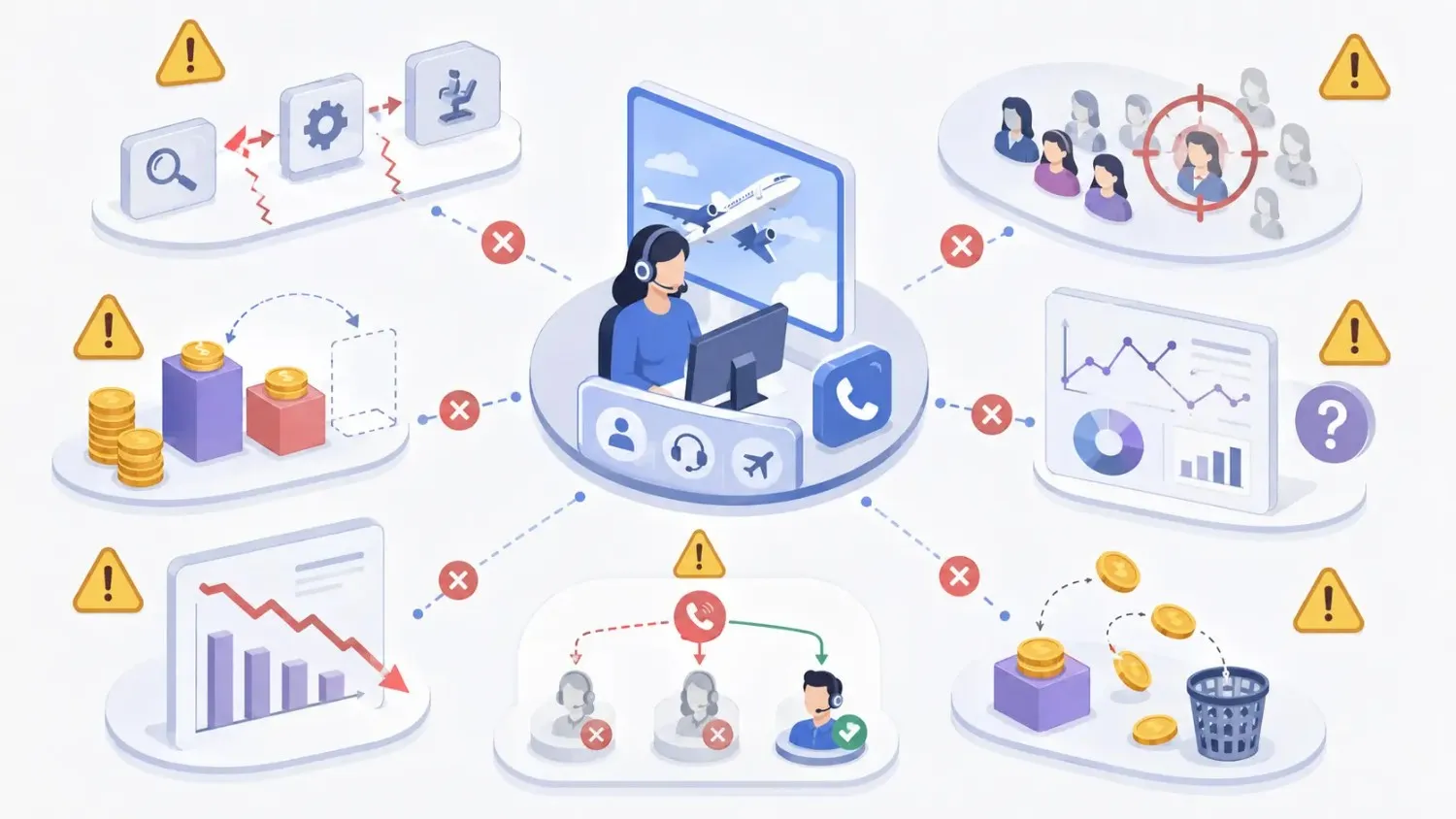
Most campaign mistakes come from weak tracking or rushed scaling. Fix the sales system before buying more calls.
Exceeding Agent Capacity
Too many calls create missed opportunities and long waits. Reduce spend or add trained coverage before volume grows.
Tracking Calls Instead of Sales
Call counts do not prove campaign success. Track quotes, bookings, revenue, refunds, and profit.
Offering Identical Booking Solutions
One option rarely fits every traveler. Agents should present useful alternatives based on price, timing, and route.
Scaling Before Positive ROI
Early scaling can multiply losses quickly. Prove repeatable profit before expanding budgets, hours, or markets.
Scaling a Profitable Flight Booking Pay-Per-Call Campaign
Profitable scaling adds volume without harming quality or service. Expand only where data shows stable booking economics.
Increasing Budget for Winning Markets
Increase budgets in markets with strong booking profit. Raise spend gradually and watch quality after each change.
Expanding U.S. Geographic Coverage
Expand coverage after current areas perform well. Test one new state or metro group at a time.
Targeting Premium Flight Categories
Premium categories can raise revenue per call. They also require skilled agents and accurate fare support.
Diversifying Call Traffic Sources
More traffic sources can reduce dependence on one platform. Test Google Ads, Bing Ads, SEO, affiliates, and marketplaces separately.
U.S. Flight Booking Pay-Per-Call Case Study
This case study presents an illustrative campaign plan, not a claimed client result. It shows how a U.S. agency could test profit safely.
Campaign Goals
The agency aims to generate qualified international booking calls. It also sets limits for cost, quality, and agent capacity.
Call Acquisition Strategy
The plan uses route keywords, click-to-call advertisements, and scheduled routing. It excludes support, jobs, baggage, and refund-status searches.
Campaign Performance Metrics
The team tracks qualified calls, bookings, revenue, costs, and ROAS. It avoids using clicks as the main success measure.
Optimization Insights
The team shifts spend toward profitable routes and hours. It also improves scripts, routing, negatives, and follow-up.
Why Choose TOP7SEVEN for Flight Booking Pay-Per-Call
TOP7SEVEN helps travel businesses build controlled call acquisition programs. The focus stays on call quality, tracking, and profitable growth.
Exclusive Flight Call Solutions
TOP7SEVEN can support exclusive flight call campaigns for qualified buyers. Campaign rules can match location, hours, intent, and call duration.
Advanced Call Quality Controls
Strong controls help reduce spam, duplicates, and irrelevant inquiries. Tracking records also support review and dispute handling.
Growth-Focused Travel Partnerships
Growth partnerships work best when both sides share clear data. TOP7SEVEN focuses on long-term performance instead of raw call volume.
Frequently Asked Questions
What counts as a qualified flight call?
A qualified call meets agreed rules for duration, location, intent, and operating hours.
How much do flight booking calls cost?
Background data suggests many qualified calls cost about $25 to $90. Actual pricing depends on call intent and booking value.
Can travel agencies run their own campaigns?
Yes. Agencies can use Google Ads, Bing Ads, SEO, and tracked landing pages.
Should every call count as a conversion?
No. Count only calls that meet your real qualification standard.
Can agencies record calls?
They can record calls when applicable laws and required disclosures permit recording.
What types of flight calls offer the highest value?
Premium, international, group, multi-city, and urgent rebooking calls may offer greater value.
Key Takeaways
- Define qualified call rules before buying traffic.
- Match daily spend with trained agent capacity.
- Track bookings, revenue, profit, and rejected calls.
- Use clear advertisements, disclosures, and accurate business identity.
- Scale only after the campaign produces repeatable profit.
Final Thoughts on Flight Booking Pay-Per-Call in the United States
Flight Booking Pay Per Call can help U.S. travel businesses reach active travelers. It works best for urgent, complex, and higher-value flight needs. Clear qualification rules protect both call buyers and providers.
Strong results require more than a busy phone line. Teams need accurate tracking, skilled agents, compliant advertisements, and revenue attribution. They should scale only after confirmed bookings create profit.
TOP7SEVEN serves travel businesses from 4878 Nickel Road, El Monte, CA 91731. Call (209)-655-3042 or email contact@top7seven.com for lead generation support. We can help you build a stronger flight call program. Contact us today to get started.