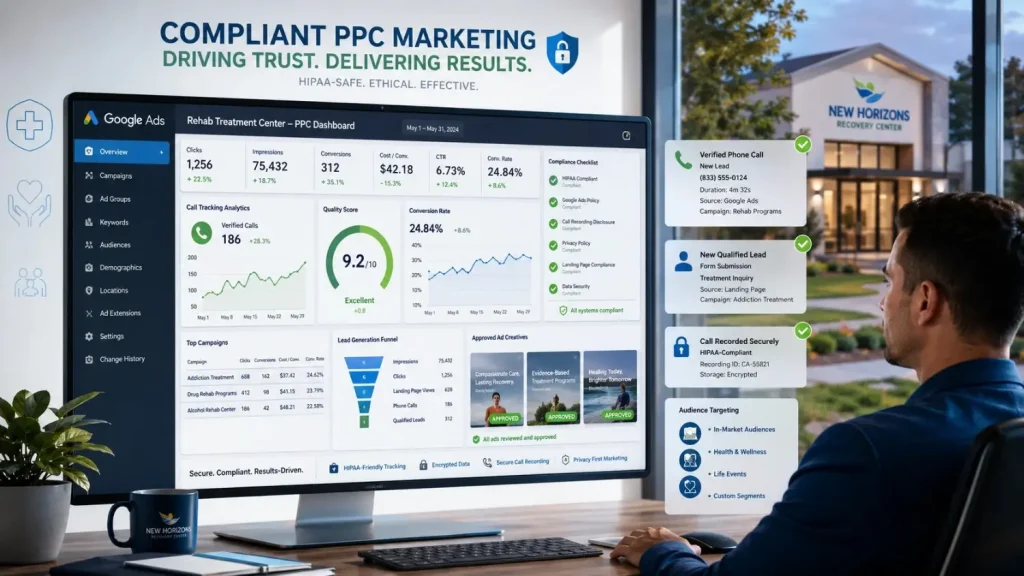
You can build compliant Drug Rehab PPC Leads and Calls by proving trust before buying traffic.
Customers often need help during stressful and urgent moments. They search for drug rehab, addiction treatment, detox, or local care. They need honest answers fast. They also need a safe path toward real help.
This guide reflects 20 years of lead generation work I have handled. I have seen strong PPC campaigns fail from poor call handling. I have also seen small treatment centers grow through clear systems. Top7seven helps teams build campaigns that attract serious, qualified people.
This article explains compliance, budgets, keywords, ads, landing pages, calls, tracking, and growth. Customers can use these steps to reduce wasted ad spend and improve admissions. Contact Top7seven at 4878 Nickel Road, El Monte, CA 91731. Call (209)-655-3042 or email contact@top7seven.com.
Compliance note: This guide shares marketing operations, not legal or clinical advice.
This work needs regular reviews from licensed counsel, privacy teams, and clinical leadership.
Establish Drug Rehab PPC Eligibility and Compliance
This section helps treatment centers confirm their legal and platform readiness before running ads.
Customers struggle when campaigns launch before compliance reviews finish. This mistake causes ad disapprovals, paused accounts, lost budgets, and damaged trust.
Google requires LegitScript certification for recovery-oriented drug and alcohol addiction service advertisements. LegitScript also excludes many lead generators, referral agencies, and paid call centers from certification.
This system starts with proof. The company needs accurate licenses, real service details, clear ownership, and working admissions coverage.
Identify Whether You Advertise as a Treatment Provider, Lead Generator, or Referral Partner
This step defines your real business role before campaign creation begins.
Customers deserve to know who answers their calls. The company should never hide a referral relationship. This problem happens when marketers present themselves as providers.
The company should name the facility, provider, or referral role clearly. This helps protect trust and reduces misleading healthcare marketing practices.
Obtain LegitScript Certification and Required Platform Authorization
This step secures the approval needed for compliant addiction service advertising.
The company should complete certification before launching Google Ads campaigns. This prevents rushed campaign builds and sudden account problems.
Customers trust verified providers more easily. The company should keep certification records, approvals, and renewal dates in one secure folder.
Verify State Licensing, Treatment Scope, Facility Locations, and Telehealth Eligibility
This step matches every ad promise with real licensed care options.
Customers struggle when ads promise services unavailable in their state. This creates poor calls and frustrated families.
The company should list every licensed state and facility location. The company should also confirm telehealth rules and treatment scope.
Review Medication Assisted Treatment and Restricted Drug Terms Before Bidding
This step prevents risky bidding on controlled or restricted treatment terms.
Customers may search for medication names during urgent moments. The company needs extra care with medication language and treatment claims.
The company should review each keyword with clinical and compliance teams. This protects the drug rehab PPC campaign from avoidable policy issues.
Use Accurate Facility Identity, Credentials, Treatment Claims, and Admissions Availability
This step keeps your ads honest, clear, and easy to verify.
The company should use the real facility name everywhere. This includes ads, landing pages, call scripts, and forms.
Customers lose trust when locations or credentials differ. The company should avoid cure promises, guaranteed outcomes, and fake availability claims.
The FTC expects advertisements to remain truthful, nondeceptive, and evidence-based.
Disclose Lead Ownership, Call Routing, and Referral Relationships
This step tells people who owns their information and answers their call.
Customers deserve clear details before sharing private information. The company should explain call routing and lead ownership near forms.
This reduces confusion during admissions calls. It also supports stronger consent records.
Avoid Patient Brokering, Improper Referral Payments, and Deceptive Advertising Practices
This step prevents payment models that can harm people seeking care.
The company should never pay for patient placement through hidden arrangements. This problem happens when revenue controls every admissions decision.
Customers need treatment based on fit and availability. The company should involve compliance leaders before approving partner payouts.
Restrict Sensitive Audience Targeting, Remarketing, and Customer Data Use
This step limits targeting methods that can expose sensitive health interests.
The company should avoid targeting people based on addiction-related profiles. The company should also restrict remarketing around sensitive treatment searches.
Google limits sensitive-interest targeting and restricts related Customer Match uses.
This keeps campaigns focused on search intent, not personal health assumptions.
Manage HIPAA, 42 CFR Part 2, and Website Tracking Risks
This step protects sensitive information from unsafe tracking and sharing.
Customers share deeply personal details during addiction treatment searches. The company should collect only information needed for the next step.
Federal rules protect many substance use disorder treatment records. These rules require careful limits on use and disclosure.
The company should review pixels, call tracking, form tools, CRM access, and session recordings. This work needs privacy experts and documented vendor controls.
Apply Consent, Do Not Call, Texting, and Call Recording Controls
This step creates clear permission rules for calls, texts, and recordings.
Customers should understand who may contact them and why. The company should record consent details, opt-outs, timestamps, and source pages.
Federal telemarketing rules require consent controls and respect for stop-contact requests.
The company should also review state call-recording rules before recording admissions calls.
Define Qualified Drug Rehab Leads, Calls, and Admissions
This section defines which inquiries deserve more budget and admissions effort.
Customers struggle when every form fill counts as a lead. A name and phone number alone do not show treatment fit.
This system tracks progress from first call to assessment and admission. That helps the company improve Drug Rehab PPC Leads and Calls using real outcomes.
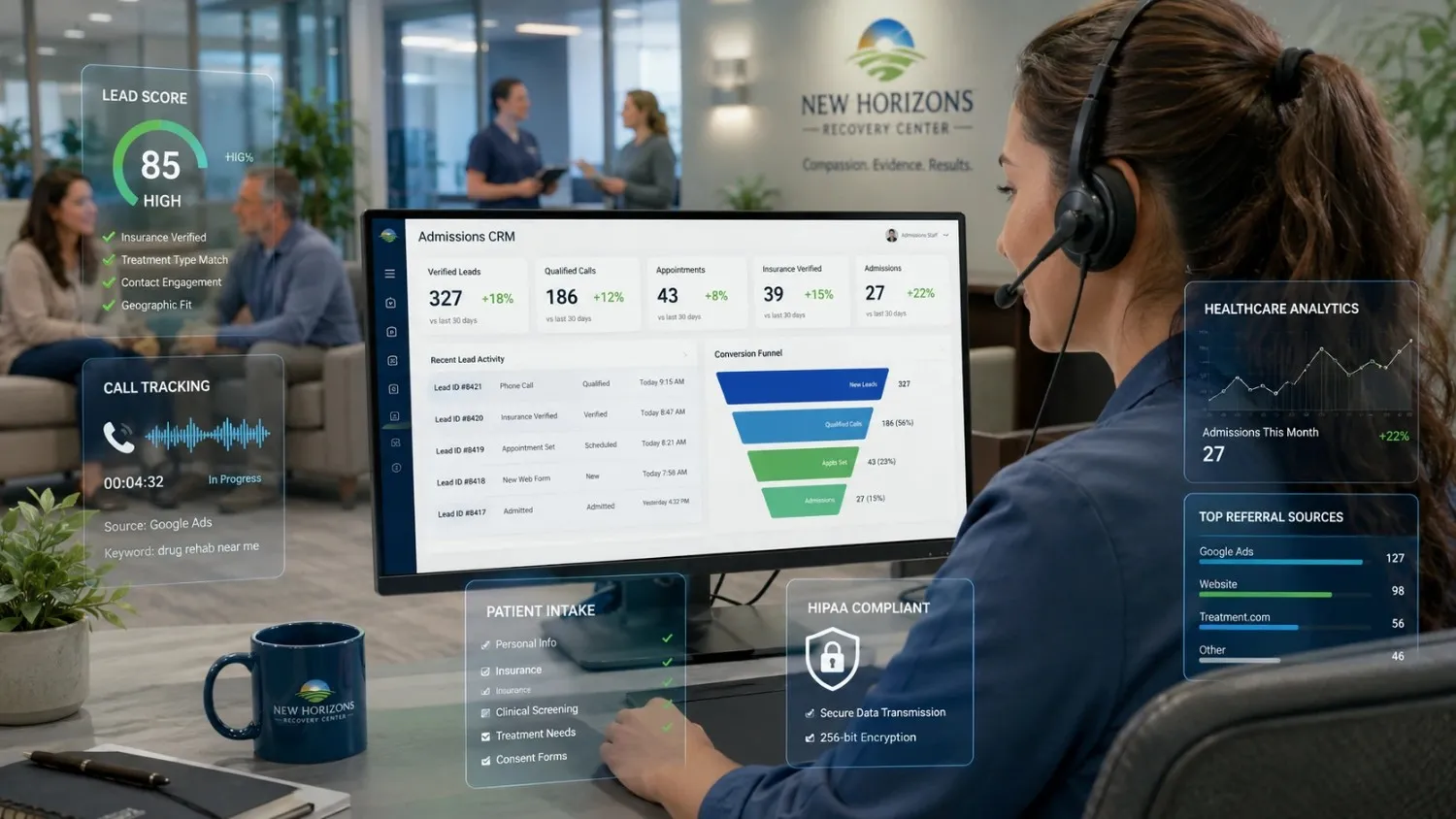
Define Qualified Calls, Form Leads, Insurance Verifications, Assessments, and Admissions
This step gives each lead stage a clear and useful meaning.
The company should label calls by real outcomes. This includes inquiry, qualified call, insurance review, assessment, and admission.
| Lead Stage | Simple Meaning | Main Action |
| Form Lead | A person sends contact details | Fast response |
| Qualified Call | A caller fits basic service rules | Admissions review |
| Insurance Verification | Coverage needs checking | Benefits team review |
| Assessment | Clinical team reviews needs | Care recommendation |
| Admission | Person starts approved care | Outcome tracking |
Set Qualification Rules Based on Clinical Fit, Payer Mix, and Bed Availability
This step sets rules for the people your center can truly help.
The company should use simple admission criteria. This includes clinical need, insurance fit, state eligibility, and bed availability.
Customers suffer when calls go nowhere after long conversations. The company should show unavailable services early.
Separate Self Referral and Family Member Search Intent
This step recognizes that patients and family members search differently.
Customers searching for themselves often need privacy and speed. Family members often need education, reassurance, and practical steps.
The company should create separate ads and pages for both groups. This improves message fit and reduces weak conversion paths.
Match Lead Criteria to Detox, Residential Treatment, Dual Diagnosis, and Outpatient Services
This step connects each person with the right treatment service.
The company should separate detox, residential care, outpatient care, and dual diagnosis campaigns. This prevents mixed messages and poor call routing.
Customers need clear treatment options. The company should never push a service without checking real clinical fit.
Set Drug Rehab PPC Budgets and Cost Per Admission Targets
This section helps treatment centers spend based on admissions, not surface-level clicks.
Customers struggle when teams chase cheap leads. Cheap leads often create expensive staff time and poor admissions results.
This system starts with collected revenue, capacity, and treatment fit. The company should set limits before raising bids.
Calculate Target Cost Per Lead, Qualified Call, Qualified Lead, and Admission
This step turns revenue goals into useful PPC spending targets.
The company should track four main cost numbers:
- Cost per lead
- Cost per qualified call
- Cost per qualified lead
- Cost per admission
The company should use the final number for major budget decisions. This protects marketing ROI from vanity metrics.
Use Expected Collected Revenue, Payer Mix, and Capacity to Set Bid Limits
This step keeps bids connected to real business value.
The company should use collected revenue, not billed revenue. This problem happens when teams ignore denials, refunds, and unpaid balances.
Customers also need timely care. The company should lower bids when beds, staff, or services reach capacity.
Allocate Budget by State, Treatment Service, Search Demand, and Competition
This step gives stronger markets more focused budget support.
The company should separate budgets by state and service line. This creates clearer cost data for addiction treatment services.
Customers in high-demand states may need faster support. The company should avoid spreading small budgets across too many markets.
Separate Testing Budgets From Scaled Campaign Budgets
This step prevents new tests from hurting working campaigns.
The company should keep test budgets separate. This helps teams compare results without disturbing steady lead flow.
This is a hidden cost many teams miss. The company should never call a small test a proven campaign.
Track Fully Loaded Cost Per Admission Alongside Media Spend
This step shows the true cost of each admitted patient.
The company should include ad spend, call staff, software, agency work, and follow-up time. This gives a more honest admission cost.
Customers rarely see this number on reports. This is where many rehab center budgets quietly fail.
Structure National Drug Rehab PPC Campaigns
This section organizes campaigns by intent, location, and licensed service availability.
Customers struggle when one national campaign serves every state. This creates poor matches and weak local trust.
The company should build small, controlled groups first. This makes PPC management easier and safer.

Separate Brand, Nonbrand, and Competitor Search Campaigns Without Impersonation
This step keeps brand searches separate from broader treatment searches.
The company should protect its brand terms with clear ads. The company should also keep nonbrand high-intent keywords in separate campaigns.
Customers should never believe your facility is another provider. The company should avoid impersonation and misleading competitor references.
Segment Campaigns by State, Licensed Facility, Treatment Service, and Insurance Intent
This step creates better control over every important campaign choice.
The company should group ads by state and service type. This supports better keyword targeting and landing page matching.
Customers searching for insurance help need different messages. The company should build separate paths for private pay and coverage questions.
Match Search Themes to Ads, Assets, and Dedicated Landing Pages
This step makes every search feel relevant and useful.
The company should send detox searches to detox pages. The company should send outpatient searches to outpatient pages.
Customers leave when pages feel unrelated. This improves conversion rate and lowers wasted clicks.
Use Geographic Controls That Reflect Actual Admission Eligibility
This step limits ads to areas your team can serve responsibly.
The company should target states with real admissions access. This includes licensed facilities, approved telehealth, and transport plans.
Customers should not discover eligibility limits after calling. The company should state location details clearly.
Expand State by State After Lead Quality, Cost, and Capacity Are Proven
This step grows campaigns through proof, not guesswork.
The company should expand one state at a time. This protects budgets during national growth.
Customers need stable admissions support. The company should wait until call quality, cost, and capacity remain strong.
Build a High Intent Drug Rehab PPC Keyword Strategy
This section finds search terms that show real treatment interest.
Customers use urgent and emotional search phrases. They often search late at night, on mobile devices, or during family crises.
This system focuses on need, service type, location, and payment intent. The company should avoid broad traffic that drains budgets.
Target Urgent Detox and Addiction Help Searches
This step captures searches from people needing fast treatment support.
The company should target phrases like “drug rehab near me” and “alcohol rehab near me.” The company should match these terms with real admissions coverage.
Customers expect fast answers from urgent searches. The company should use call-focused ads during open hours.
Target Residential Treatment, Outpatient Treatment, and Dual Diagnosis Searches
This step connects specific treatment searches with matching care options.
The company should create focused groups for residential, outpatient, and dual diagnosis needs. This improves relevance across addiction treatment center campaigns.
Customers searching for addiction recovery want direct answers. The company should avoid sending them to generic homepages.
Use Insurance, Private Pay, and Out of Network Search Terms
This step reaches people asking how they can pay for treatment.
The company should build keyword groups around insurance verification and payment questions. This helps admissions teams prepare for likely conversations.
Customers need honest payment details. The company should never promise coverage before verification.
Use Keyword Match Types to Control Traffic Quality
This step gives your PPC team more control over search quality.
The company should use tighter matching for high-cost treatment terms. The company should use broader matching only with strong negative controls.
Customers search in many different ways. The company should review the real search terms often.
Build Negative Keyword Lists for Unqualified Searches
This step blocks searches that rarely create qualified treatment inquiries.
The company should block job searches, free training searches, school searches, and unrelated research terms. This reduces wasted ad spend fast.
Customers seeking treatment should not compete with job seekers. The company should update negatives as new patterns appear.
Review Search Terms and Add Negative Keywords Regularly
This step keeps campaigns clean after launch.
The company should review search terms every week during active testing. This exposes weak keywords and expensive irrelevant traffic.
This is where hidden waste appears. The company should add each useful negative keyword quickly.
Create Compliant Drug Rehab PPC Ads
This section creates ads that feel honest, caring, and clear.
Customers often feel afraid, confused, or ashamed during treatment searches. The company should use calm language and direct next steps.
This is not a place for hype. The company should build trust before asking for a call.
Use Accurate, Empathetic, Person First Ad Copy
This step uses respectful language that supports people seeking help.
The company should write “help for alcohol addiction” instead of labels or blame. This makes ads feel safer for potential patients.
Customers respond better to human language. The company should avoid fear-based ad copy.
Align Ad Claims With Verified Services and Landing Page Content
This step makes each promise easy to prove.
The company should match every ad statement with the page content. This includes treatment types, locations, credentials, and availability.
Customers lose confidence when details change after clicking. The company should keep ads and pages aligned.
Highlight Legitimate Accreditation, Credentials, Insurance Options, and Availability
This step uses proof points without making risky claims.
The company should show verified credentials and real insurance options. The company should avoid unsupported rankings and outcome promises.
Customers look for proof during stressful searches. The company should make key facts easy to find.
Write Clear Calls to Action for Admissions and Insurance Verification
This step tells people exactly what happens next.
The company should use simple calls like “Call for Admissions Support” or “Verify Insurance Options.” This reduces uncertainty.
Customers need clear next steps. The company should avoid vague phrases like “Learn More Today.”
Build Responsive Search Ads With Call, Location, and Sitelink Assets
This step gives searchers more useful ways to contact your team.
The company should add call assets during staffed hours. The company should use sitelinks for detox, residential care, insurance, and contact details.
Customers need quick paths. The company should remove broken links and old location details.
Build Landing Pages That Convert Qualified Drug Rehab Leads
This section turns paid clicks into safe, useful treatment conversations.
Customers struggle when they land on crowded pages. Long pages, unclear forms, and missing trust details create exits.
This system uses focused optimized landing pages for each search need. The company should make calling and form completion easy.
Match Each Landing Page to Treatment Search Intent
This step gives each visitor a page that matches their search.
The company should match detox searches with detox information. The company should match rehab near me searches with location details.
Customers stay longer when pages answer their question fast. The company should put key answers above the fold.
Create Dedicated Pages for Detox, Residential Treatment, Dual Diagnosis, and Outpatient Care
This step builds separate pages for separate care needs.
The company should explain each service in plain language. The company should also explain basic admission steps and availability.
Customers should not guess which service fits. The company should guide them toward a qualified conversation.
Display Facility Ownership, Location, Treatment Scope, and Provider Credentials
This step shows people who operates the treatment program.
The company should show its real name, address, and service scope. The company should also show provider credentials where appropriate.
Customers look for transparency. The company should never use stock identities or unclear ownership.
Use Verified Accreditation, Authentic Facility Images, and Accurate Insurance Information
This step builds trust through real proof and real details.
The company should use authentic facility photos and verified accreditation badges. This helps visitors judge the treatment center more confidently.
Customers notice fake-looking pages quickly. The company should remove outdated photos and insurance lists.
Make Click to Call Options Easy to Use on Mobile Devices
This step helps urgent mobile visitors reach admissions teams quickly.
The company should place visible call buttons near the top. The company should also use clear operating hours.
Customers often call from phones. The company should test every mobile button weekly.
Use Secure Lead Forms That Collect Only Necessary Information
This step reduces friction and privacy risk on your forms.
The company should ask for name, phone, state, and basic treatment interest. The company should avoid collecting detailed medical histories online.
Customers share more when forms feel safe. The company should explain why each field matters.
Add Clear Privacy, Consent, and Contact Disclosures
This step explains how your team may use submitted contact details.
The company should place disclosures near submit buttons. The company should make consent language easy to read.
Customers should never discover contact rules later. The company should save each consent record securely.
Turn PPC Calls Into Qualified Admissions Opportunities
This section turns urgent calls into respectful and useful next steps.
Customers may call scared, tired, angry, or unsure. The admissions team needs speed, empathy, and accurate answers.
This system treats call handling as part of lead generation. The company should never blame ads for poor calls.

Schedule Call Assets Around Actual Admissions Coverage Hours
This step prevents calls from reaching empty lines or untrained staff.
The company should show call ads during staffed admissions hours. The company should lower call-focused bids during closed hours.
Customers lose trust after unanswered calls. The company should use after-hours forms with honest response expectations.
Route Calls by Treatment Need, Location Eligibility, and Service Availability
This step sends every caller toward the right admissions path.
The company should route detox calls differently from outpatient calls. The company should also route by licensed state and bed status.
Customers need quick direction. The company should avoid transferring callers repeatedly.
Verify Clinical Fit, Insurance Eligibility, and Admission Criteria Early
This step identifies basic fit before long sales-style conversations.
The company should ask simple screening questions early. The company should review clinical needs through approved procedures.
Customers should not feel pressured. The company should explain why each question helps the next step.
Create Backup Procedures for Missed and Overflow Calls
This step protects inquiries during busy periods.
The company should set overflow rules, callback queues, and staff backups. The company should review missed-call reports daily.
Customers may call only once. The company should respond fast to every missed opportunity.
Train Admissions Teams for Empathetic, Accurate, and Compliant Conversations
This step prepares staff for difficult and sensitive conversations.
The company should train teams on listening, disclosures, eligibility, and service details. The company should also review common mistakes.
Customers remember how the first call feels. The company should measure kindness and accuracy, not only call length.
Create Crisis Escalation Procedures for Immediate Safety Concerns
This step gives staff a clear plan for urgent safety situations.
The company should use approved emergency escalation steps. The company should train staff to stay calm and follow clinical guidance.
Customers in immediate danger need emergency support. The company should never use PPC calls as emergency services.
Improve Drug Rehab PPC Bidding and Spend Control
This section improves bids using qualified outcomes instead of cheap clicks.
Customers struggle when automated bidding learns from weak form fills. This often pushes spend toward low-quality traffic.
This system feeds better outcome data into PPC optimization. The company should use admissions results whenever possible.
Choose Bidding Strategies Based on Verified Qualified Lead Data
This step selects bidding based on real lead quality.
The company should begin with controlled data collection. The company should move toward smarter bidding after quality patterns become clear.
Customers need stable campaigns. The company should avoid changing bidding methods every few days.
Adjust Bids by Licensed Service Area, Treatment Service, and Lead Quality
This step gives more budget to proven search areas.
The company should raise bids where qualified calls become admissions. The company should lower bids where calls lack fit.
This helps the company optimize spend without guessing. The company should review changes by state and service.
Use Dayparting That Matches Admissions Coverage
This step spends more during hours when trained staff answer calls.
The company should review call quality by hour and day. The company should avoid paying premium rates during weak coverage periods.
Customers want quick help. The company should align ad schedules with real human support.
Improve Ad Relevance and Landing Page Experience
This step lowers friction between the search, ad, and page.
The company should use the same treatment language across each step. The company should also remove slow pages and unclear buttons.
Customers leave when pages feel confusing. The company should test mobile speed and page clarity often.
Reduce Spend on Low Quality, Invalid, and Unqualified Traffic
This step protects budgets from traffic that cannot become admissions.
The company should block repeat spam, wrong states, fake numbers, and unrelated searches. The company should also review suspicious click patterns.
Customers deserve better use of your budget. The company should not count invalid leads as campaign wins.
Measure Drug Rehab PPC Lead, Call, and Admission Costs
This section connects ad spend with real admissions results.
Customers struggle when reports only show clicks and form fills. Those numbers cannot explain patient fit or intake success.
This system follows people through the full admissions journey. The company should keep data private and access-controlled.
Track Calls, Forms, Insurance Verifications, and Qualified Leads
This step records every meaningful action from the campaign.
The company should track calls, forms, insurance reviews, and qualified outcomes. The company should use one clear source of truth.
Customers create many touchpoints before admission. The company should avoid counting the same person twice.
Use a Consistent Call Outcome and Lead Disposition Framework
This step gives every admissions result a consistent label.
The company should use labels like qualified, unavailable, wrong state, duplicate, and no response. This makes reporting more useful.
Customers deserve accurate follow-up. The company should train everyone to use the same labels.
Connect PPC Leads With Intake, Assessment, and Admission Outcomes
This step shows which campaigns actually support admissions.
The company should connect ad data with intake results. The company should use privacy-safe methods and limited access.
Customers often take time before admission. The company should measure delayed outcomes, not only same-day results.
Monitor Cost Per Lead, Cost Per Qualified Call, Cost Per Qualified Lead, and Cost Per Admission
This step shows which campaigns create profitable and appropriate admissions opportunities.
The company should review these numbers every month. The company should compare them by state, service, keyword, and landing page.
Customers should guide budget choices through real outcomes. The company should not let click volume control decisions.
Exclude Spam, Duplicate, and Unqualified Leads From Optimization Data
This step keeps weak data from teaching campaigns the wrong lesson.
The company should remove spam and duplicates from lead reports. The company should also flag wrong-state and unavailable-service leads.
This gives bidding tools cleaner signals. The company should document every exclusion rule.
Use Privacy Safe First Party Outcome Data for Campaign Optimization
This step improves campaigns without exposing sensitive patient details.
The company should share only approved and necessary outcome data. The company should avoid uploading sensitive treatment details into ad tools.
Customers need privacy at every stage. The company should use privacy reviews before new tracking launches.
Test and Scale Drug Rehab PPC Campaigns
This section grows campaigns through small tests and clear proof.
Customers struggle when teams change everything at once. That makes results impossible to understand.
This system tests one major change at a time. The company should keep notes on every test.
Test One Ad Message, Offer, or Call to Action at a Time
This step shows which message creates stronger admissions conversations.
The company should test one headline, offer, or call action. The company should keep other campaign parts stable.
Customers react differently to message styles. The company should let enough data build before choosing winners.
Test Landing Page Relevance, Form Friction, and Click to Call Placement
This step finds the page layout that helps visitors act faster.
The company should test shorter forms and clearer call buttons. The company should also test trust details near the top.
Customers often leave from small friction points. The company should watch recordings only through approved privacy practices.
Test Search Themes, Match Types, and Negative Keyword Lists
This step improves traffic quality without expanding waste.
The company should test one search theme at a time. The company should review quality before adding more volume.
Customers searching for treatment use many phrases. The company should let real search data shape campaigns.
Scale Campaigns Only After Qualified Lead Cost, Admission Cost, and Capacity Targets Are Met
This step protects your center from growth that operations cannot support.
The company should scale after cost and capacity remain stable. The company should also confirm staffing and bed availability.
Customers need reliable service. The company should never grow faster than admissions operations.
Choose Paid Channels Based on Compliance and Qualified Lead Cost
This section selects paid channels through compliance, intent, and admission performance.
Customers search across several platforms. The company should start with channels that match urgent treatment intent.
This keeps digital marketing focused. The company should compare every channel using real admission outcomes.
Prioritize Google Search Ads for High Intent Drug Rehab Searches
This step reaches people actively searching for addiction treatment help.
The company should start with Google Ads search campaigns. These searches often show stronger intent than interruption-based ads.
Customers searching for addiction need clear answers now. The company should match each search with a focused page.
Test Microsoft Advertising for Additional High Intent Search Demand
This step finds extra search volume beyond Google campaigns.
The company should test Microsoft Advertising with controlled budgets. The company should use the same compliance standards.
Customers may search through different browsers. The company should measure quality before increasing spend.
Use Meta Campaigns Only With Required Authorization, Clear Consent, and Strong Follow Up Operations
This step limits social media ads to approved and carefully managed uses.
The company should use social media ads only after platform and privacy reviews. The company should avoid sensitive audience assumptions.
Customers may need more education on social platforms. The company should use clear consent and fast follow-up.
Compare Channels by Qualified Lead Rate, Admission Rate, and Cost Per Admission
This step compares channels using outcomes that matter.
The company should compare qualified lead rate, admission rate, and admission cost. The company should not compare channels by clicks alone.
Customers benefit when budgets support the right channels. The company should move spend toward proven care opportunities.
Build a Compliant Drug Rehab PPC System That Supports Sustainable Admissions
This section brings every campaign part into one reliable admissions system.
Customers need truthful ads, safe pages, fast calls, and clear treatment options. The company needs compliance controls around every step.
This work is never only about running PPC ads. This work connects clinical fit, privacy, call quality, budget control, and honest communication.
The company should use this simple checklist:
- Verify certification, licenses, and platform approval
- Build state-specific and service-specific campaigns
- Use high-intent keywords and strong negative keyword lists
- Create honest ads and focused landing pages
- Train admissions teams for fast, respectful call handling
- Track qualified calls, assessments, and admissions
- Scale only after cost and capacity targets stay stable
Conclusion
This system builds stronger Drug Rehab PPC Leads and Calls through compliance, care, and consistent tracking. Customers need trust before they share private details. The company should match every ad with real services, real people, and clear next steps. This creates better qualified leads and more stable admissions growth.
This work needs steady reviews, not quick shortcuts. Top7seven supports treatment centers across the USA with practical lead generation, PPC, and conversion systems. Visit us at 4878 Nickel Road, El Monte, CA 91731. Call (209)-655-3042 or email contact@top7seven.com. We can help you build a compliant PPC system that supports qualified calls and sustainable admissions.
FAQ
How Can Rehab Centers Get More Qualified PPC Leads and Calls?
Rehab centers can get more Drug Rehab PPC Leads and Calls by targeting people who need help now. Use clear keywords, location-based ads, and simple landing pages. Add a strong call button. Show your treatment services, insurance options, and contact details clearly.
What Marketing Mistakes Should Drug Rehab PPC Campaigns Avoid?
Drug rehab PPC campaigns should avoid vague ads, misleading promises, and broad keywords. Do not target people outside your service area. Avoid sending visitors to weak landing pages. Keep every ad honest, clear, and focused on the treatment support you provide.
How Can PPC Ads Help Remove Barriers to Treatment?
PPC ads can make treatment feel easier to reach. Use kind words that reduce fear and shame. Explain payment options, insurance help, and available care levels. Make calling simple. Fast answers and clear next steps can help people seek support sooner.
How Should Rehab Centers Target Different Levels of Care?
Rehab centers should create separate ads for each treatment level. You can promote detox, outpatient care, residential treatment, and aftercare services. Match each ad to a focused landing page. This helps people find care that fits their needs and improves lead quality.
How Can Rehab Centers Improve Drug Rehab PPC Calls?
Rehab centers can improve Drug Rehab PPC Leads and Calls by answering calls quickly and with care. Train staff to listen, ask simple questions, and explain next steps. Use call tracking to find strong ads. Remove ads that create poor-quality or unrelated calls.