You get more pest control leads by mixing fast local ads with strong organic search and smart follow-up. Most small pest control owners struggle here. You fix the bug problem fast, but you can’t fill your own schedule. Calls slow down. The phone stays quiet on a Tuesday. Meanwhile a national brand shows up first on Google.
I’ve spent over 20 years in performance marketing, and pest control is one of my favorite industries to work in. This business is different from most local services. Pest problems are emergencies. A homeowner spots a termite swarm and searches right then. That moment is where small companies either win the job or lose it to a bigger competitor with a bigger ad budget.
In this guide, you’ll learn exactly how pest control lead generation works, from Google Business Profile tricks to paid ads, referral programs, and speed-to-lead tactics. I’ll also break down real costs, common mistakes, and how to pick a marketing partner that won’t waste your budget.
Quick Answer
Pest control leads come from three channels: inbound search (Google Ads, SEO, Google Business Profile), outbound outreach (referrals, neighborhood marketing, B2B partnerships), and paid lead marketplaces (Angi, Thumbtack). The fastest wins for small businesses are Google Local Services Ads and a fully optimized Google Business Profile, paired with fast call response times under 5 minutes.
What Is Lead Generation for Pest Control Businesses?
Lead generation means turning a homeowner’s pest problem into a booked job. It sounds simple. It rarely is. Customers struggle with pests at the worst times, and they want help fast.
This process covers every touchpoint between “I have ants” and “you’re hired.” It includes your website, your ads, your reviews, and your phone. Small pest control companies often focus on just one piece, like a website, and ignore the rest. That’s a mistake I see constantly. A pretty website with no phone tracking is basically a business card nobody reads.
How Lead Generation Works in the Pest Control Industry
Lead generation works by matching urgent pest problems with fast, visible solutions. A homeowner sees roaches. She grabs her phone. She types “pest control near me” or calls a number from a truck she saw last week.
This is not a slow-decision purchase like buying a couch. Customers want an answer today, sometimes within the hour. The company that responds fastest, with the clearest offer, usually wins the job. I’ve watched technicians lose easy jobs simply because the office took four hours to call back a lead.
Common Lead Capture Points
Common lead capture points include your website form, phone number, GBP messaging, and text lines. Each one needs to work without friction.
- Website contact forms and chat widgets
- Click-to-call buttons on mobile
- Google Business Profile “Message” and “Call” buttons
- Text-to-schedule links in ads
- Social media direct messages
Customers bounce fast if a form feels clunky or a page takes too long to load. Every extra click costs you leads.
Inbound vs. Outbound Pest Control Lead Generation: What’s the Difference?
Inbound leads come looking for you; outbound leads are ones you go find. Inbound includes search ads, SEO, and GBP. Outbound includes door hangers, cold outreach, and B2B partnerships.
Inbound leads convert faster because the customer already has a pest problem and is actively searching. Outbound leads take more nurturing but often cost less per lead over time. The company, in most cases, needs both. Inbound fills today’s schedule. Outbound builds tomorrow’s pipeline through relationships that keep paying off for years.
| Type | Speed to Convert | Typical Cost | Best For |
| Inbound (Google Ads, SEO) | Fast | Medium-High | Emergency pest jobs |
| Outbound (referrals, B2B) | Slower | Low | Recurring contracts |
Identifying Your Target Audience
Your target audience is homeowners and property managers facing an active pest problem in your service area. This sounds obvious, but most small pest control businesses target too broadly.
Termite treatments attract homeowners worried about resale value. Rodent jobs attract families with young kids or older homes. Commercial accounts, like restaurants, need recurring prevention contracts, not one-time visits. You can solve targeting confusion by building separate ad campaigns and landing pages for each customer type. A termite inspection page should read differently than a bed bug emergency page. Different fears need different words.
Local Search & Organic Lead Generation
Local search brings in pest control leads without paying for every click. This channel takes longer to build but keeps paying off for years.
Google Business Profile Optimization
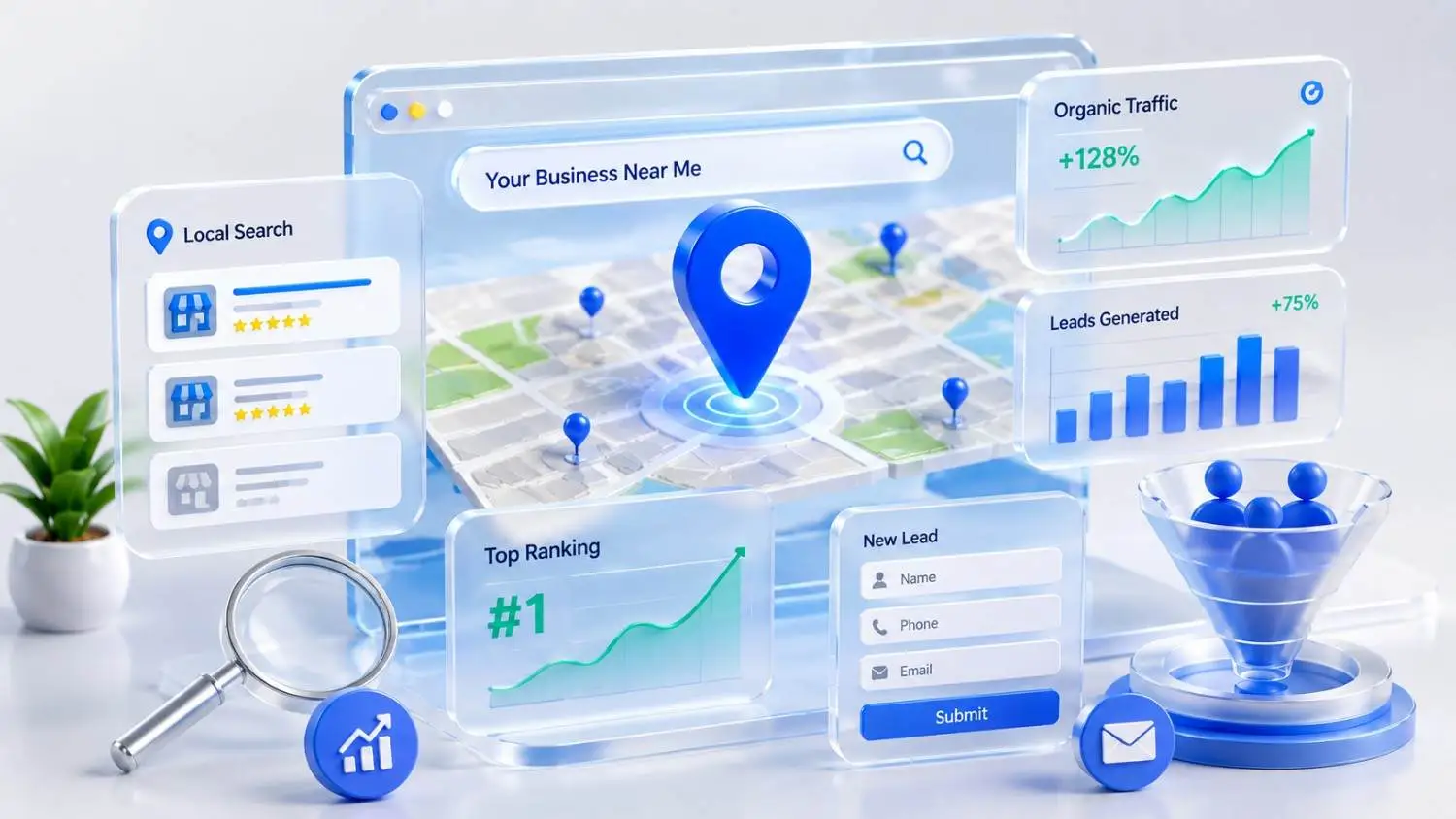
Google Business Profile optimization means filling out every field Google gives you. This directly improves your spot in the Local 3-Pack.
Add every relevant service category, including bed bug removal and wildlife exclusion, not just “pest control.” Upload real photos of your trucks and techs, not stock images. Post weekly updates about seasonal pest risks in your area. This problem happens when owners set up their profile once and never touch it again. Google rewards activity. A stale profile drops in rankings while active competitors climb past you.
Local SEO
Local SEO helps your website rank for searches like “pest control in [city].” This takes content, links, and technical setup working together.
You need city and neighborhood pages, fast page speed, and mobile-friendly design. Customers searching “termite treatment Dallas” want to see Dallas in your title tag and headline. Generic homepage copy rarely ranks well against specific local content.
Localized Service Pages
Localized service pages target specific neighborhoods and pest problems together. A page titled “Wasp Nest Removal in Maple Grove” beats a generic wasp page every time.
Build separate pages for each major service area you cover. Mention nearby landmarks, common pest issues in that region, and local pricing ranges. This approach captures long-tail searches that bigger national brands often skip entirely.
Customer Review Generation
Review generation means asking every happy customer for a review, right after the job. Reviews build trust fast and boost local rankings.
Set up automatic text reminders through your pest control software the moment a technician marks a job complete. Customers are far more likely to leave a review within the first hour after service. Waiting a week drops response rates dramatically. I’ve seen review request timing alone double a company’s monthly review count.
Paid Search & Local Advertising
Paid ads put your pest control business at the top of search results immediately. This channel costs money but delivers leads today, not months from now.
Google Local Services Ads
Google Local Services Ads (LSAs) appear above regular search ads, and you pay per lead, not per click. This makes LSAs one of the best tools for small pest control budgets.
You get a “Google Screened” badge after passing a background check. Customers trust that badge. Unlike regular ads, you’re not charged when someone clicks and doesn’t call. You only pay for actual leads, which protects tight marketing budgets from getting drained by window shoppers.
Google Search Ads
Google Search Ads target people typing high-intent phrases like “emergency termite treatment.” These ads cost more per click but reach customers ready to book now.
Geo-targeting down to specific ZIP codes keeps your daily budget from bleeding into areas you don’t service. This problem happens when owners target an entire metro area and burn cash on clicks from customers 40 miles away. Tight geography plus tight keywords equals cheaper, better leads.
Facebook & Instagram Ads
Facebook and Instagram ads work best for building awareness, not instant bookings. Customers scrolling social media aren’t usually mid-emergency.
Short videos showing standing water or wood piles causing pest problems perform well here. These ads plant a seed before the problem even starts. You can solve slow lead flow by pairing social ads with a lead magnet, like a free inspection offer, to push casual scrollers toward action.
Buying Leads from Third-Party Marketplaces
Third-party marketplaces sell you leads that other pest control companies are also bidding on. These platforms can fill gaps fast but come with real trade-offs.

Angi, HomeAdvisor & Thumbtack for Pest Control Companies
These platforms connect homeowners to multiple pest control companies at once. You often compete against three to five other bidders for the same lead.
Response speed matters even more here because everyone gets the same contact info. Customers usually book with whoever calls first. I’ve watched techs lose a $400 job simply because a competitor called eleven minutes sooner.
Pros, Cons & When Paid Lead Services Make Sense
Paid lead services make sense when you need volume fast, not when you need long-term growth.
Pros:
- Quick lead volume with no long ramp-up time
- Useful for filling slow seasons
Cons:
- Shared leads mean lower close rates
- Costs add up fast with little brand-building value
- Little control over lead quality
Small businesses often use marketplaces short-term while building their own inbound engine underneath.
Outbound & Partnership Lead Generation
Outbound generation means actively reaching customers instead of waiting for a search. This builds relationships that keep sending work your way.
Neighborhood Outreach
Neighborhood outreach means marketing to homes near a job you just completed. This tactic, sometimes called neighborhood blitzing, works especially well after termite or flea treatments.
Neighboring homes often share the same pest pressure, especially with termites and ants. Door hangers left the same day, while your truck is still visible on the street, convert better than mailers sent weeks later.
B2B Strategic Partnerships
B2B partnerships mean building referral relationships with businesses that don’t compete with you directly. Real estate agents, property managers, home inspectors, and contractors are all strong partners.
Real estate agents need termite inspections and clearances before closings. Property managers need recurring commercial pest contracts across their buildings. Home inspectors and contractors send wildlife damage repair referrals your way when they spot the issue first. These partnerships take time to build but often produce your highest-value, lowest-cost leads.
Educational Social Media Campaigns
Educational content teaches customers about pest risks before problems start. This builds trust and keeps your business top of mind.
Short videos about seasonal risks, like mosquito breeding in standing water, perform well on Facebook and Instagram. Customers share helpful content with neighbors, extending your reach for free.
Customer Referral Programs
Referral programs turn happy customers into your cheapest lead source. Word of mouth still closes better than almost any paid channel.
Offer a clear reward, like a service credit or gift card, for every referral that books. Customers struggle to refer you if the process feels vague or forgotten. Make the ask automatic, built right into your post-job follow-up texts and emails. A simple, repeatable ask beats a one-time mention at the end of a job.
Regional & Seasonal Lead Generation Strategy
Your lead strategy should shift based on region and season, not stay the same year-round. Pest pressure changes dramatically across the United States.
Adjusting Campaigns for Regional Pest Pressure
Different regions face different bugs, so your ads should match local pest threats. Termites dominate Southeast searches. Rodents spike in the Northeast during colder months. Ants drive high search volume across the Southwest.
This problem happens when companies run the same generic ad copy nationwide. A Georgia homeowner searching about termites doesn’t care about your rodent services. Match your keywords and ad copy to what’s actually crawling through homes in your specific region.
Building Seasonal Content and Ad Calendars by U.S. Region
Seasonal calendars help you run the right ads at the right time, region by region. Spring brings ant and termite swarms. Summer brings mosquitoes and wasps. Fall and winter push rodent and spider searches up in colder states.
| Season | High-Search Pests | Best Regions to Target |
| Spring | Ants, Termites | Southeast, Southwest |
| Summer | Mosquitoes, Wasps | Nationwide |
| Fall/Winter | Rodents, Spiders | Northeast, Midwest |
Planning ad budgets around this calendar, months ahead, keeps you visible right when searches spike.
Website Conversion Optimization
Conversion optimization turns website visitors into booked calls. Traffic means nothing if visitors leave without contacting you.
Mobile-First Website Experience
Most pest control searches happen on a phone, so your site must load fast on mobile. A slow site loses customers before they even see your services.
Test your homepage load speed regularly. Customers struggle with sites that take more than three seconds to load, and many simply leave. This problem happens more than owners realize, especially with image-heavy homepages that were never compressed properly.
Conversion-Focused Calls-to-Action
A strong call-to-action tells customers exactly what to do next. A sticky “Call Now” button at the top of every mobile screen performs best.
Buttons should stay visible as customers scroll, not disappear after the header. This small change alone has increased call volume for clients I’ve worked with by double digits, just from removing the friction of scrolling back up.
Trust Signals & Proof Elements
Trust signals prove you’re licensed, insured, and safe to hire. Customers want reassurance before letting a stranger treat their home.
- State licensing numbers displayed clearly
- Pest control association badges
- Proof of liability insurance
- Real customer review counts and star ratings
Place these signals near your call-to-action, not buried in a footer nobody scrolls to.
Building Paid-Campaign Landing Pages
Paid ad landing pages should match the exact offer in your ad, nothing else. Sending paid clicks to a generic homepage wastes budget fast.
A termite ad should land on a termite-specific page, with termite-specific trust signals and a clear offer. Customers struggle to find relevant information when landing pages feel unrelated to what they clicked. Keep these pages short, focused, and built around one single call-to-action.
Speed-to-Lead: Why Response Time Determines Conversion
Response time often matters more than price when it comes to booking pest control jobs. Customers call multiple companies at once during emergencies.
The company that calls back first usually wins the job, even at a higher price point. This isn’t theory. I’ve watched it happen on real accounts, repeatedly, where the cheaper competitor lost simply because they called back too slowly.
Setting Up Instant Call/Text Alerts
Instant alerts notify your team the second a lead comes in. Delays of even 30 minutes can cost you the job entirely.
Route new leads straight to a mobile phone or shared team inbox. Customers expect a response within minutes, not hours, especially for active infestations.
Using AI Chatbots for Immediate First Response
AI chatbots answer basic questions instantly, even outside business hours. This keeps leads engaged until a human can call.
A chatbot can collect the pest type, address, and urgency level before your team even picks up the phone. This small step alone can prevent a customer from calling a competitor while waiting.
Lead Nurturing and Conversion Techniques
Nurturing means following up with leads who didn’t book right away. Many pest control leads need one or two more touches before converting.
Email & SMS Drip Follow-Up Campaigns
Drip campaigns send automatic follow-ups over several days after a lead comes in. This catches customers who got distracted before booking.
A simple three-message sequence, spread over five days, often recovers 10 to 20 percent of leads that first went quiet.
Quote-to-Close Nurture Strategy
Quote-to-close nurturing follows up after you’ve sent a price, not just after first contact. Customers often compare quotes from several companies before deciding.
You can solve slow decision-making by following up within 24 hours of sending a quote, then again at day three. Customers who hear nothing after receiving a price often assume you’re too busy or not interested.
How Much Do Pest Control Leads Cost?
Pest control leads typically cost between $15 and $80 depending on the channel and service type. Emergency services like bed bugs or termites often cost more per lead than general prevention.
Average Cost Per Lead in the U.S. Pest Control Industry
Average lead costs vary widely by channel, region, and competition level. Big metro areas usually cost more than smaller towns.
- Google Local Services Ads: roughly $20–$60 per lead
- Google Search Ads: roughly $25–$80 per lead
- Third-party marketplaces: roughly $15–$50 per shared lead
- Organic/SEO leads: little to no direct cost per lead, after setup
Cost Comparison: Organic vs. Paid Ads vs. Third-Party Lead Services
| Source | Cost Per Lead | Lead Quality | Long-Term Value |
| Organic/SEO | Low (after setup) | High | Excellent |
| Paid Ads (LSAs, Search) | Medium-High | High | Good |
| Third-Party Marketplaces | Low-Medium | Medium (shared) | Fair |
Organic leads cost less over time but take months to build momentum. Paid ads deliver faster, at a steeper price.
Choosing a Pest Control Marketing Agency or Lead Gen Partner
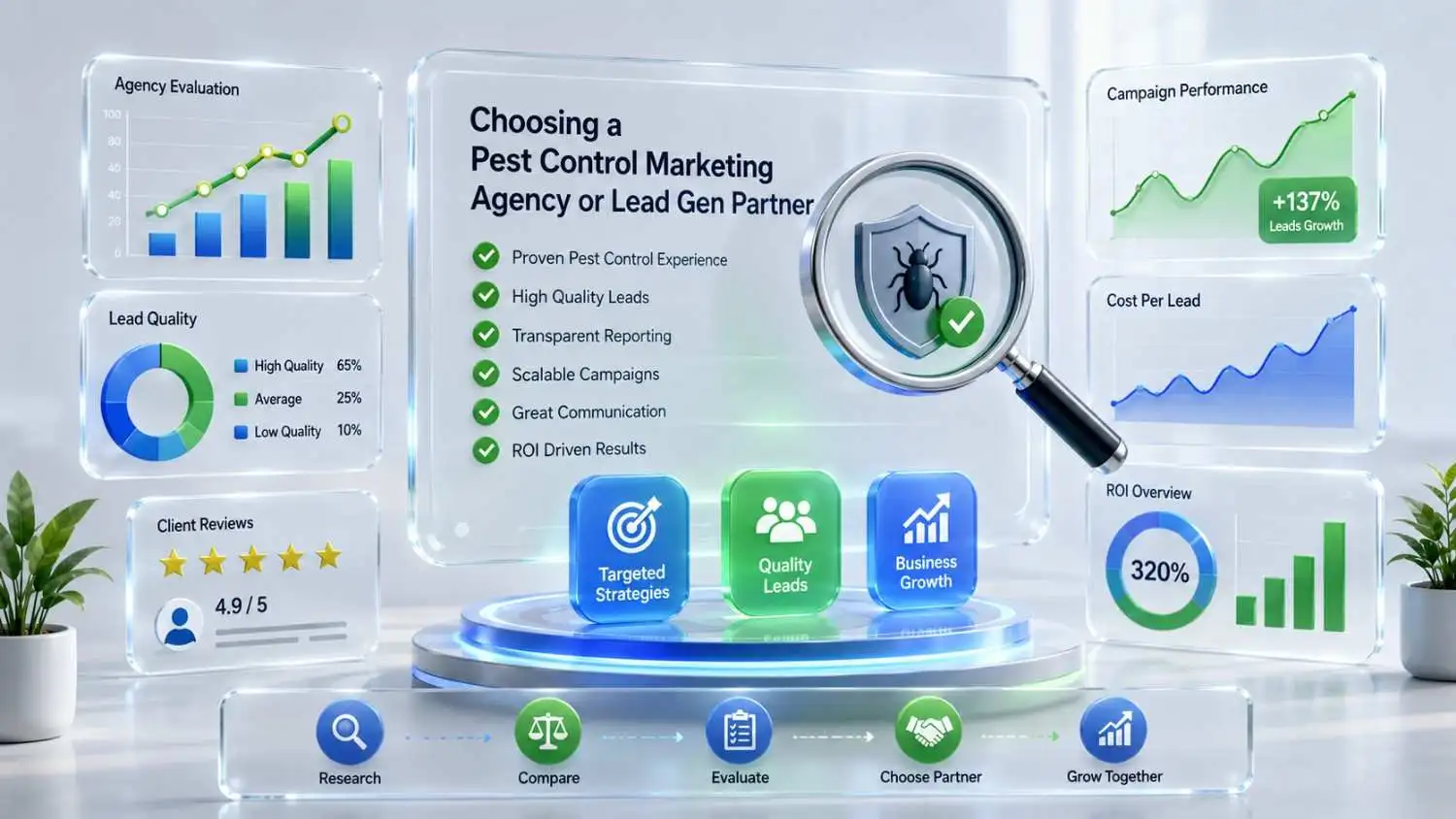
Choose a partner who reports real numbers, not vague promises. Small businesses need transparency more than flashy claims.
Questions to Ask Before You Sign
Ask direct questions before handing over your marketing budget.
- How many leads did similar clients get last month?
- What’s your average cost per lead in my region?
- Do you provide call tracking and recordings?
- Can I cancel without a long contract lock-in?
Red Flags That Signal a Bad Fit
Watch for agencies that avoid specific numbers or lock you into long contracts.
This problem happens when agencies promise “hundreds of leads” without defining lead quality. Customers struggle later when those leads turn out unqualified or outside their service area. A trustworthy partner shares both wins and struggles honestly, every single month.
Measure The Effectiveness Of Pest Control Leads
You measure lead effectiveness by tracking cost per lead, close rate, and revenue per job. Raw lead counts alone mean little without conversion data attached.
Track every lead source separately using call tracking numbers and UTM tags. A channel bringing cheap leads that never close is actually more expensive than it looks. Review this data monthly, not once a year, so you can shift budget toward what’s actually working.
Common Mistakes That Waste Pest Control Marketing Budget
The biggest budget wasters are slow response times, weak landing pages, and untracked ad spend.

- Sending paid traffic to a generic homepage instead of a matching landing page
- Waiting hours to call back new leads
- Running the same ads year-round, ignoring seasonal pest shifts
- Skipping call tracking, so you can’t tell which channel actually works
- Buying shared leads without a fast follow-up process in place
I’ve audited accounts losing thousands monthly from just the first two mistakes alone.
Frequently Asked Questions
How fast should I respond to a new pest control lead?
Respond within five minutes when possible. Customers often call the next company on their list after ten minutes of silence.
What’s the best lead source for a brand-new pest control business?
Google Local Services Ads work well early on, since you pay per lead and build trust fast through the Google Screened badge.
Do referral programs really work for pest control companies?
Yes. Referral customers close faster and cost far less than paid ad leads, since trust is already built in.
Should small pest control companies buy leads from Angi or Thumbtack?
It depends on your goals. These platforms help fill slow weeks but shouldn’t replace building your own inbound engine.
Key Takeaways
- Respond to leads within five minutes to beat competitors calling the same customer.
- Google Local Services Ads and Google Business Profile are the fastest wins for small budgets.
- Match your marketing to regional pest pressure, like termites in the Southeast or rodents in the Northeast.
- Referral programs and B2B partnerships produce your cheapest, highest-quality leads over time.
- Track cost per lead and close rate monthly, not just raw lead counts.
Final Thoughts
Growing a pest control business takes more than one good ad campaign. You need fast response times, a mobile-friendly website, strong local SEO, and real relationships with referral partners. Small companies that mix these channels consistently outgrow bigger competitors who rely on brand name alone. The strategies above aren’t theory. They’re pulled from real accounts, real seasons, and real customer behavior across the country.
Top7seven United States Performance Marketing Services has spent years helping pest control companies build exactly this kind of lead pipeline, from Google ads to local SEO to speed-to-lead systems. We know which channels actually convert for this industry, and which ones quietly drain budgets. If you’re ready to fill your schedule with quality pest control leads, we’d love to build that plan with you.