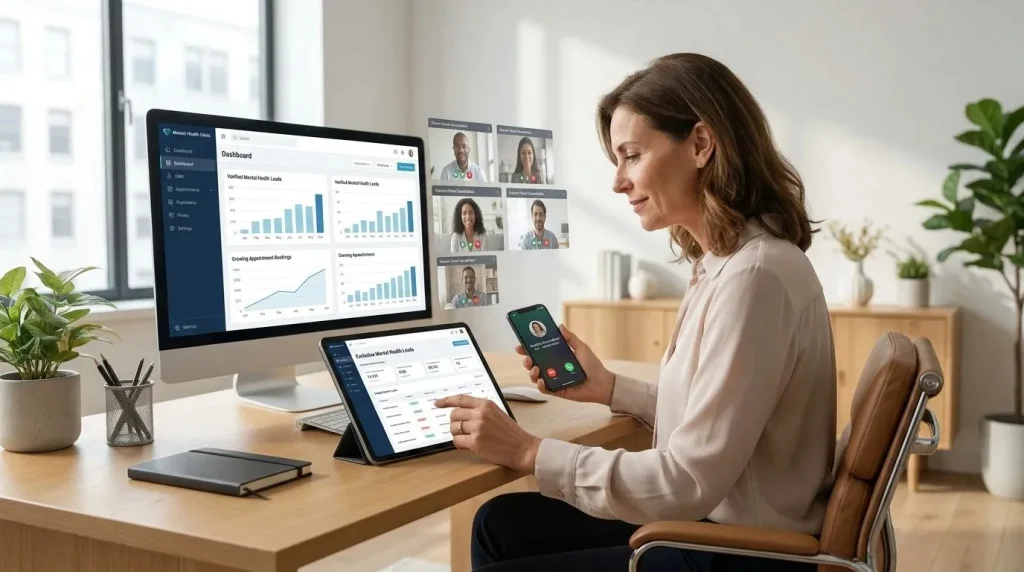
You need quality mental health leads & calls — and you need them now. Studies show over 50 million Americans struggle with mental health conditions each year. Yet many providers lose patients simply because they can’t connect fast enough. We know how frustrating it feels when your pipeline runs dry and your calendar sits empty. You work hard to help people. You deserve leads that work just as hard for you. In this guide, you’ll learn exactly how to get exclusive mental health leads & calls, improve your patient acquisition, and grow your behavioral health practice the smart way. Let’s get started.
Mental Health Lead Generation Services: Exclusive Leads, Calls, and Patient Acquisition Strategies
Mental health lead generation connects providers with people who are actively seeking help. This is not guesswork. It is a targeted system that finds individuals seeking care and routes them directly to your intake team.
Health professionals across the United States use lead generation to fill their schedules faster. Without it, they rely on word of mouth or slow organic search traffic. With it, they reach high-intent patients in real time. In our 20+ years of experience, we’ve seen providers double their patient intake within 60 days of switching to exclusive lead programs. The right lead generation strategy is the engine behind sustainable practice growth.
💡 Pro Tip: Always ask your lead provider if leads are exclusive or shared. Shared leads go to multiple providers. Exclusive leads go only to you — giving you a massive conversion advantage.
Understanding Mental Health Lead Generation
What Is Mental Health Lead Generation
Mental health lead generation is the process of finding people who need mental health care and connecting them with providers. It uses targeted ads, local SEO, and inbound marketing to attract potential patients. These systems capture contact details and send them directly to your team.
How Behavioral Health Lead Generation Works
Behavioral health lead generation starts with identifying individuals actively searching for help online. The system places ads or content where those people search. When they click and fill out a form — or make a mental health call — their information routes to the right provider instantly.
Patient Acquisition Funnel From Inquiry to Appointment
The funnel starts with high-intent search queries. A person types “therapist near me” or “addiction treatment help.” They land on a well-optimized page. They call or submit a form. Your intake team receives the lead. They schedule appointments and convert that person into a patient.
Why Mental Health Providers Invest in Lead Generation
Providers invest because it works. Traditional marketing is slow. Lead generation is fast. One clinic in Texas saved $4,000/month by switching from shared to exclusive mental health leads. They got fewer leads — but far more appointments. Generating high-quality leads always beats chasing volume.
Who Benefits Most From Lead Generation Programs
Mental health professionals, treatment centers, telehealth platforms, and counselors all benefit. Healthcare providers who serve older adults, adolescents, or people with substance use disorder see especially strong results.
💡 Pro Tip: Focus your budget on lead sources that match your specialty. A psychiatrist and a therapist need very different lead types.
Types of Mental Health Leads Available
| Lead Type | Response Rate | Cost Range | Best For |
| Therapy & Counseling | High | $25–$75 | Private practices |
| Psychiatry & Medication | Medium-High | $50–$120 | Psychiatrists |
| Addiction/Rehab | Very High | $75–$200 | Treatment centers |
| IOP Leads | High | $60–$150 | Outpatient programs |
| Dual Diagnosis | High | $80–$180 | Specialty clinics |
| Telehealth | Medium | $20–$60 | Virtual providers |
| Adolescent/Family | Medium | $40–$100 | Family therapists |

Therapy and Counseling Leads
Therapy leads come from people searching for a licensed counselor or therapist. These are often individuals seeking help for anxiety, depression, or relationship issues. They are ready to take the next step. Response rates are high when you contact them within 5 minutes.
Addiction Treatment and Rehab Leads
Addiction treatment leads are among the highest-intent leads available. These callers often need immediate assistance. Speed matters here more than anywhere else. A slow response means a lost patient — and possibly a life in danger. Call tracking helps ensure no lead slips through.
Telehealth Mental Health Leads
Telehealth leads come from people who want online therapy. They may live in rural areas. They may prefer convenient times like evenings or weekends. These leads are growing fast across the United States.
💡 Pro Tip: Telehealth leads often convert better on mobile. Make sure your intake page loads fast on phones.
Exclusive Mental Health Leads and Calls
What Are Exclusive Mental Health Leads
Exclusive mental health leads go to one buyer only — you. Unlike shared leads, no competitor receives the same contact. This means higher conversion rates and less price-sensitive competition. One buyer per lead models protect your investment and your time.
Exclusive vs Shared Lead Models
Shared leads go to multiple providers. You compete with 3–5 other practices for the same patient. Exclusive leads go only to you. Conversion rates for exclusive leads are 3–5x higher than shared leads. The cost is higher — but the ROI is far better.
How Exclusive Mental Health Calls Work
When a person dials a mental health call number, the system instantly routes that call to your intake team. No middlemen. No delays. The caller hears your voice first. This is critical for mental health crisis situations where timing saves lives.
Geographic Buyer Suppression Systems
These systems prevent the same lead from going to two providers in the same area. If you serve ZIP code 91731, no other buyer in that zone gets your leads. This protects your service area and your pipeline.
Preventing Duplicate Lead Distribution
Good lead platforms use call tracking and form submission IDs to flag duplicates. If the same person submits twice, the system catches it. You only pay for real, unique contacts.
⚠️ Warning: Avoid platforms that can’t explain their duplicate-prevention system. Low-quality leads and duplicate contacts cost you money and damage health outcomes.
Understanding Mental Health Lead Quality
What Makes a Qualified Mental Health Lead
A qualified lead is someone who is willing to contact a provider, has a real need, and can receive care. Insurance-verified leads are even more valuable. They signal the patient can pay — reducing intake friction.
Appointment-Ready vs Information-Seeking Prospects
Appointment-ready leads are ready to book now. Information-seeking prospects are still exploring. Your intake team needs to handle both differently. Fast follow-up converts appointment-ready leads. Attentive listening and helpful content convert exploratory ones.
Lead Screening and Verification Standards
Good lead providers screen every contact. They verify phone numbers, check consent forms, and confirm patient information is real. Our team uses a multi-step verification process before any lead reaches your inbox.
Lead Acceptance and Return Policies
Always know the return policy before you buy. Quality providers offer lead dispute and refund options for bad leads. If a number is disconnected or the contact is fake, you should not pay for it.
💡 Pro Tip: In our 20 years of experience, providers who track lead quality weekly improve their conversion rate by 30% within 90 days.
Lead Sources and Patient Acquisition Channels
High-intent patient inquiry channels include PPC ads, local SEO, social media, and landing pages. Each channel attracts a slightly different type of patient.

PPC advertising puts your practice at the top of Google search results. People who click are actively searching for help right now. SEO and organic search acquisition builds long-term visibility. It takes time but delivers sustainable growth. Social media ads work well for reaching younger adults or parents seeking help for their children. Landing page conversion systems turn clicks into contacts. A well-optimized page with a clear contact us button can dramatically improve your intake numbers. Call tracking and attribution technology shows you exactly which channel sent each caller — so you only spend money on what works.
💡 Pro Tip: Combine PPC for fast results with local SEO for long-term growth. This two-channel approach delivers the best ROI over time.
Local and Geographic Targeting Strategies
Local targeting helps you reach patients in your exact service area. It combines Google Business Profile optimization, citation building, and ZIP code targeting to put your practice in front of local searchers.
Reputation management matters too. Patients read reviews before calling. Five-star ratings drive more inbound calls. For providers expanding to new markets, multi-location clinic growth strategies help you scale without losing quality. Urban vs rural patient acquisition requires different tactics. Urban markets are more competitive. Rural markets may rely more on telehealth options. State-level lead delivery and call routing strategies ensure your leads always go to the right location and the right team member.
💡 Pro Tip: Claim and optimize your Google Business Profile today. It’s free and drives real mental health calls from people nearby.
Live Call Transfers and Pay-Per-Call Lead Generation
What Is a Live Call Transfer
A live call transfer connects a prospective patient to your intake team in real time. The caller is already warm — they’ve already expressed interest. Your team picks up and starts the intake process immediately.
Benefits for Intake and Admissions Teams
Live calls reduce the speed to contact problem. No chasing leads. No playing phone tag. The patient is on the line right now. This is especially powerful for mental health crisis calls where provide immediate response is critical.
How Pay-Per-Call Networks Generate Mental Health Leads
Pay-per-call networks run ads that trigger phone calls. You only pay when someone actually calls. This model eliminates wasted spend on clicks that never convert. It’s one of the most cost-efficient models in behavioral health marketing.
Best Practices for Intake Conversion
Answer every call within 3 rings. Use attentive listening. Have a script that addresses the caller’s need first. Training provided to intake staff improves conversion dramatically. One provider we worked with increased admissions by 40% simply by improving first-call response.
💡 Pro Tip: Record and review calls weekly. Call recording and quality monitoring reveals exactly where patients drop off — so you can fix it fast.
Intake Response and Conversion Optimization
First response time is the number one factor in lead conversion. Leads contacted within 5 minutes are 9x more likely to convert than those contacted after 30 minutes.

Missed call recovery systems automatically send an SMS or email when your team misses a call. This keeps the conversation going even when you’re busy. CRM and EHR integration workflows ensure every lead is logged, tracked, and followed up. SMS and email follow-up automation keeps prospects engaged until they book. Improving appointment booking rates comes down to speed, empathy, and simplicity. Make it easy to book. Offer convenient times. Follow up twice if needed.
💡 Pro Tip: Set up an auto-SMS that fires within 60 seconds of a missed call. This one step can recover 20–30% of missed leads.
Mental Health Lead Pricing and Cost Benchmarks
Cost per lead varies by lead type and exclusivity. Here are typical ranges across the United States:
- Therapy leads: $25–$75 per lead
- Psychiatry leads: $50–$120 per lead
- Addiction/rehab leads: $75–$200 per lead
- Pay-per-call (live transfer): $80–$250 per call
Exclusive vs shared lead pricing: Exclusive leads cost 2–3x more. But they convert 3–5x better. The math almost always favors exclusive. Cost per appointment metrics matter more than cost per lead. If a $150 exclusive lead books an appointment worth $1,200, your ROI is strong. Budgeting for scalable growth means reinvesting in what works. Start small. Track results. Scale the channels that deliver the best cost per acquisition.
💡 Pro Tip: Track cost per admission, not just cost per lead. This is the true measure of your marketing strategies working.
Compliance and Privacy Requirements
HIPAA Compliance for Lead Generation
All patient information must be handled with strict HIPAA compliance. Any platform you use must sign a Business Associate Agreement (BAA). Do not work with providers who cannot provide this.
TCPA and Consent Requirements
Every lead must give consent before you can contact them. TCPA violations can result in fines of up to $1,500 per call. Always use a lead provider with verified, compliant consent language on every form.
Ethical Behavioral Health Marketing Practices
Mental health professionals serve vulnerable people. Marketing must be honest, clear, and never exploitative. Avoid misleading claims. Focus on emotional support and real solutions. Increasing awareness of available help is ethical. Pressure tactics are not.
⚠️ Warning: Never buy leads from providers who cannot show proof of TCPA consent. The liability falls on you — not the vendor.
Choosing the Right Mental Health Lead Generation Partner
Evaluating a lead generation partner means asking the right questions up front. Do they offer 100% exclusive leads? Can they prove TCPA compliance? Do they have experience in behavioral health?
Look for partners who offer real-time delivery within seconds of inquiry. Ask about their lead dispute and refund policies. Check their reporting and analytics capabilities. You should be able to see exactly where every lead came from and what it cost. Evaluating behavioral health experience is critical. Generic lead vendors don’t understand the nuances of mental health care. You need a partner who speaks your language and understands your patients’ needs.

Unlike generic lead marketplaces, Top7seven provides:
- ✅ 100% exclusive leads — never resold to competitors
- ✅ Real-time delivery within seconds of inquiry
- ✅ TCPA-compliant verified contacts on every lead
- ✅ US-based lead generation team with 20+ years of experience
💡 Pro Tip: Ask any lead vendor for a sample report before signing. If they can’t show you clean data, walk away.
Lead Quality Checklist
Before accepting any lead program, confirm these standards are met:
✅ TCPA Compliant — consent captured at point of inquiry ✅ Real-Time Delivery — leads arrive within seconds ✅ Exclusive (Not Resold) — one buyer per lead only ✅ Verified Contact Info — phone and email confirmed ✅ High Intent Score — caller is actively seeking care
Conclusion
Mental health leads & calls are the lifeblood of a growing behavioral health practice. You’ve learned what exclusive leads are and why they outperform shared models. You’ve seen how live call transfers connect you to patients in real time. You understand HIPAA compliance, TCPA rules, and how to choose the right partner. You know how to track ROI, optimize your intake response, and build a multi-channel acquisition strategy that scales.
Top7seven is the trusted lead generation partner for mental health professionals across the United States. We bring 20+ years of experience, 100% exclusive leads, and real-time delivery to every campaign we run. Every lead is TCPA-compliant, verified, and delivered within seconds. Don’t wait — every day without quality leads is a day your competitors are closing your deals. We’re here to help you grow, serve more patients, and improve health outcomes in your community.
📞 Call us today at (209)-655-3042 or book online.
Top7seven 4878 Nickel Road, El Monte, CA 91731 📞 (209)-655-3042
FAQ
What is mental health lead generation?
Mental health lead generation is the process of finding people actively seeking mental health care and connecting them with qualified providers using PPC, SEO, and call tracking systems.
How much do mental health leads cost?
Mental health leads typically cost $25–$200 per lead depending on the lead type, exclusivity, and geography. Exclusive leads cost more but deliver far better conversion rates.
What is a live call transfer in behavioral health?
A live call transfer connects a high-intent caller directly to your intake team in real time. It is one of the fastest ways to convert inquiries into appointments.
What is the 3-month rule in mental health?
The 3-month rule suggests that many people begin to see meaningful improvement in mental health within 3 months of consistent treatment. This reinforces why fast patient acquisition matters — earlier care leads to better health outcomes.
What are 5 ways to improve mental health?
The top five ways include regular therapy, medication when needed, physical activity, strong social support, and access to telephone support or a mental health helpline like 988 in a crisis.
What are mental health support groups?
Mental health support groups are community spaces where people share experiences and offer emotional support to each other. They complement professional mental health care and can be a lead source for group therapy programs.