Getting Exclusive Siding Leads and Calls helps siding contractors win more jobs and waste less money.
Customers struggle with bad leads, missed calls, and shared prospects. Many contractors buy leads that go to several companies. This problem creates price wars and lower close rates.
They need a better way to find serious homeowners. That is where Top7seven helps. We have worked in lead generation for over 20 years. We understand how siding contractors need real opportunities, not recycled contacts.
They will learn how exclusive siding leads, lead verification, pricing, and delivery work. They will also learn how to improve conversions and avoid common mistakes. Contact Top7seven, 4878 Nickel Road, El Monte, CA 91731. Phone: (209)-655-3042. Email: contact@top7seven.com.
What Are Exclusive Siding Leads
Exclusive siding leads are homeowner inquiries sent to only one contractor.
Customers struggle with shared prospects that many companies receive. This problem happens when a lead aggregator sells the same contact repeatedly. A true exclusive lead belongs to one company only. That gives contractors a better chance to win the project. In my experience, response rates improve when contractors know they are not competing against several buyers immediately.
Definition of Exclusive Siding Leads
Exclusive siding leads are homeowner requests delivered to one contractor only.
They come from homeowners actively seeking estimates. They may request siding installation, siding replacement, or siding repair. The homeowner submits information through forms, calls, or landing pages. The contractor receives ownership of that lead.
How Exclusive Leads Differ From Shared Leads
Exclusive leads go to one contractor, while shared leads go to many.
Customers struggle when multiple companies call the same homeowner. The homeowner becomes overwhelmed quickly. Shared prospects often create lower contact rates. Exclusive opportunities usually allow better conversations and stronger trust from the first call.
| Feature | Exclusive Leads | Shared Leads |
| Buyers Per Lead | 1 | Multiple |
| Competition | Low | High |
| Response Quality | Higher | Lower |
| Close Rate Potential | Better | Lower |
| Customer Experience | Improved | Often Frustrating |
Why Siding Contractors Buy Exclusive Leads
Siding contractors buy exclusive leads to increase booked appointments.
They want access to homeowners looking for siding work now. They also want fewer competitors chasing the same prospect. In many markets, contractors save time by purchasing verified opportunities instead of waiting for referrals. The goal is simple. Get quality conversations that can become profitable jobs.
How Exclusive Siding Leads Work
Exclusive siding leads work through generation, qualification, verification, and delivery.
The system works by connecting homeowners with contractors. Customers submit requests online or by phone. The information gets checked before delivery. Contractors then contact prospects quickly. Fast response often makes the biggest difference in conversion rates.
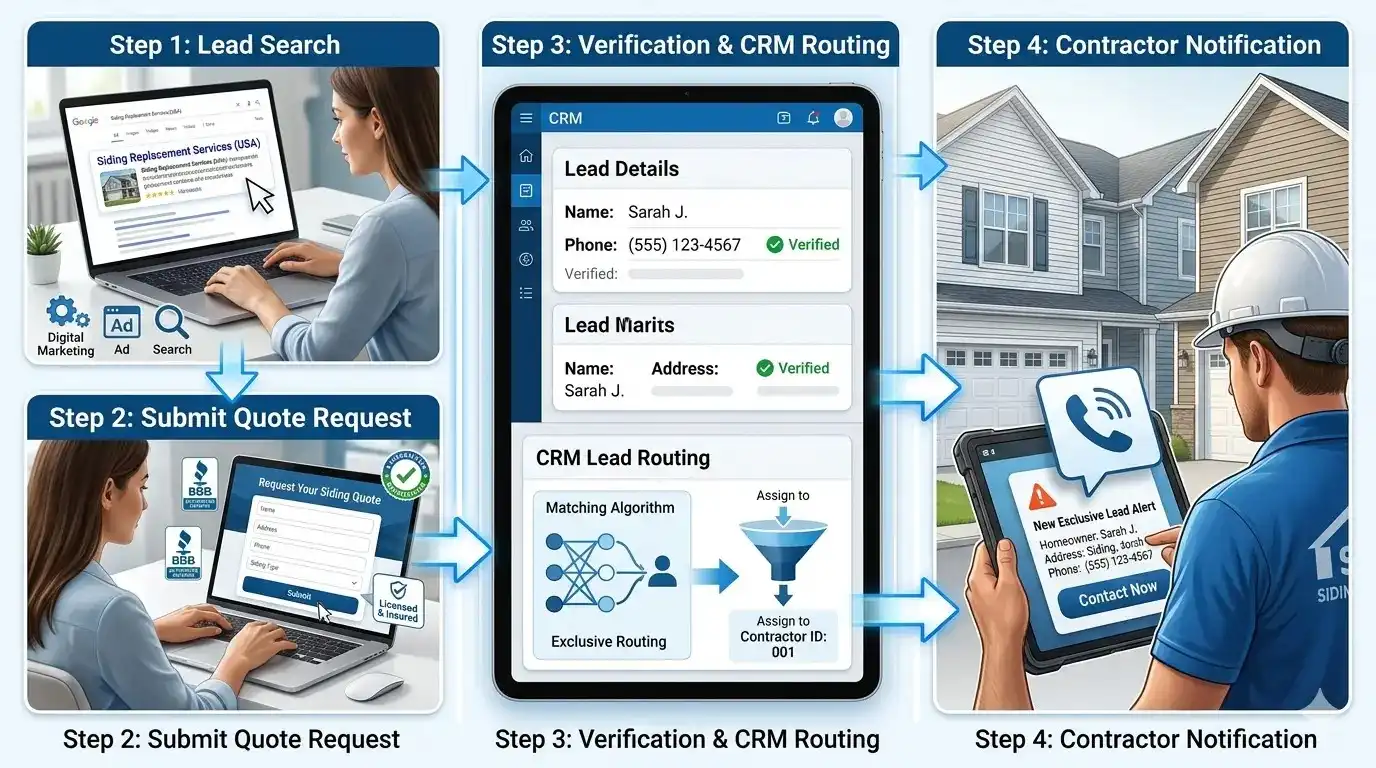
Lead Generation Process
Lead generation collects homeowner requests for siding services.
They arrive through websites, search ads, local SEO, and landing pages. Some leads come from homeowners searching for new siding or repair options. Others request replacement estimates after storm damage. The goal is attracting people with real project needs.
Lead Qualification Process
Lead qualification checks if the homeowner matches contractor requirements.
They review service location, project type, and customer intent. Customers struggle when unqualified leads consume sales time. Qualification helps reduce that problem. It focuses attention on people genuinely interested in hiring.
Lead Verification Process
Lead verification confirms the information is real and usable.
They validate phone numbers and contact details. They remove fake submissions and duplicate entries. This process improves lead quality and protects marketing budgets. Reliable information helps sales teams move faster.
Exclusive Leads Versus Exclusive Calls
Exclusive leads are form submissions, while exclusive calls are live phone inquiries.
They both create opportunities but work differently. Calls often show stronger buying intent. A homeowner who calls usually wants answers immediately. Form leads allow follow-up and nurturing. Many successful contractors use both sources together.
Quick Comparison
| Type | Description | Best Use |
| Exclusive Lead | Form submission | Follow-up sales process |
| Exclusive Call | Live phone inquiry | Immediate appointment setting |
| Shared Lead | Sent to several buyers | Lower-cost option |
| Verified Lead | Checked for accuracy | Higher lead quality |
Signs of a Strong Siding Lead
- Homeowner owns the property.
- Contact information works.
- Project timeline is clear.
- Service area matches.
- Budget expectations are realistic.
- Customer requests a quote.
- Need relates to repair or replacement.
These signals often help identify a qualified lead. They also improve conversion opportunities for siding companies and local contractors.
Types of Exclusive Siding Leads
Types of exclusive siding leads help contractors target the right projects.
Customers struggle when every lead looks the same. Different projects need different sales approaches. Some homeowners need fast repairs. Others plan full replacements months ahead. Knowing the lead type helps contractors prepare better estimates and close more jobs.
Siding Installation Leads
Siding installation leads come from homeowners planning new siding projects.
They often involve new homes or major renovations. Customers usually compare materials before buying. Many ask about vinyl siding, fiber cement, and metal siding options. These prospects often request detailed estimates and project timelines.
They usually spend more time researching products. Contractors who educate homeowners often win these jobs. Clear material comparisons help build trust.
Siding Replacement Leads
Siding replacement leads come from homeowners replacing old or damaged siding.
They often have visible problems already. This problem happens when siding cracks, fades, warps, or leaks. Many homeowners contact contractors after storms or years of wear.
These leads frequently convert faster. The homeowner already knows work is needed. Contractors should focus on inspection findings and solution options.
Siding Repair Leads
Siding repair leads come from homeowners seeking fixes instead of replacement.
They may have loose panels, moisture issues, or small storm damage. Customers often want affordable solutions first. Some repair projects later become full replacements.
In many jobs, repair requests uncover larger hidden damage. Contractors who inspect carefully often find additional opportunities.
Residential Siding Leads
Residential siding leads come from homeowners needing work on houses.
They represent the largest siding market. Homeowners often request estimates for curb appeal improvements, weather protection, or energy savings. These leads may involve single-family homes, townhouses, or duplexes.
Residential projects often depend on trust and communication. Fast follow-up remains important.
Commercial Siding Leads
Commercial siding leads come from businesses and property managers.
They often involve larger buildings and longer sales cycles. Customers may request multiple bids and detailed project plans. Commercial opportunities usually require additional documentation.
These projects can produce higher revenue. They also require more planning and coordination.
Exclusive Lead Ownership and Quality Standards
Exclusive lead ownership means one contractor receives one lead.
Customers struggle when several companies contact them at once. Exclusive ownership removes that problem. Quality standards ensure the lead meets specific requirements before delivery. Strong standards help contractors spend time on real opportunities.
One Contractor Per Lead
One contractor per lead means a single buyer receives the opportunity.
They do not compete with several companies for first contact. This model helps improve customer conversations. It also creates a better experience for homeowners.
Many contractors report higher appointment rates when exclusivity exists.
No Shared Distribution
No shared distribution means the lead is not sent elsewhere.
Customers often become frustrated by repeated calls. Exclusive delivery prevents that issue. The homeowner speaks with fewer companies and receives more focused service.
This approach helps protect lead value.
No Resold Leads
No resold leads means previously sold contacts are not sold again.
They remain tied to the original buyer. Contractors avoid wasted spending on old prospects. This standard helps maintain lead freshness.
Fresh opportunities usually perform better than recycled records.
Lead Exclusivity Guarantees
Lead exclusivity guarantees confirm ownership rights for the buyer.
They define how the lead can be delivered. They also explain replacement policies if errors occur. Contractors should always review guarantee terms before purchasing.
Clear guarantees reduce disputes later.
Quality Standards
Verified Contact Information
Verified contact information helps ensure the homeowner can be reached.
They check phone numbers and email details. Customers struggle when contact data is incorrect. Verification helps reduce wasted follow-up efforts.
Reliable information increases sales efficiency.
Consumer Initiated Requests
Consumer initiated requests come directly from interested homeowners.
They are not random cold contacts. The homeowner actively asks for information or estimates. This creates stronger engagement and better conversations.
Intent matters greatly in lead quality.
Qualified Project Intent
Qualified project intent means the homeowner genuinely wants siding work.
They may request pricing, inspections, or project planning. Contractors should prioritize these prospects. Strong intent often produces better appointment rates.
These leads usually move through the sales process faster.
Budget Qualified Prospects
Budget qualified prospects show signs of financial readiness.
They understand siding projects require investment. Customers may share budget ranges during the inquiry process. This information helps contractors prepare realistic proposals.
Budget details also help sales teams focus efforts wisely.
Quality Checklist for Exclusive Siding Leads
| Quality Factor | Why It Matters |
| Verified Phone | Easier contact |
| Verified Email | Better follow-up |
| Project Intent | Higher conversion potential |
| Correct Service Area | Reduces wasted leads |
| Homeowner Request | Stronger engagement |
| Budget Information | Better sales planning |
| Exclusive Delivery | Less competition |
Common Buyer Mistakes
- Buying leads without verification.
- Ignoring service area filters.
- Focusing only on low prices.
- Waiting hours before calling.
- Skipping lead tracking.
- Assuming every lead is sales-ready.
I have seen contractors lose jobs simply because they waited too long. Homeowners often hire the first company that responds professionally. Fast action and quality screening usually outperform cheap volume.
How Siding Lead Verification Works
Siding lead verification works by checking if lead information is real and usable.
Customers struggle with fake forms, wrong phone numbers, and duplicate submissions. This problem happens when poor filters allow bad data into the system. Verification helps protect marketing budgets and sales time. In real campaigns, verified opportunities usually outperform unverified leads by a wide margin.
Phone Validation
Phone validation checks if the provided number actually works.
They test number format and connection status. Some systems identify disconnected numbers before delivery. Contractors save time because they avoid chasing dead contacts.
A working phone number remains one of the strongest lead signals.
Caller Identification
Caller identification helps confirm who submitted the request.
They compare contact details and activity records. Customers sometimes enter incorrect information by mistake. Identification reduces confusion and improves accuracy.
This process supports stronger lead verification standards.
Real Time Verification
Real time verification checks information immediately after submission.
They review data while the homeowner is still active. Contractors receive fresher opportunities. Fast verification helps improve response speed.
The system works best when checks happen instantly.
Lead Quality Scoring
Lead quality scoring ranks leads based on buying signals.
They evaluate project type, urgency, location, and contact accuracy. Some homeowners want work next week. Others plan months ahead. Scoring helps prioritize sales efforts.
Higher scores often indicate stronger conversion potential.
Common Lead Verification Checks
| Verification Step | Purpose |
| Phone Validation | Confirm working number |
| Email Validation | Confirm contact accuracy |
| Duplicate Check | Remove repeat submissions |
| Location Check | Verify service area |
| Intent Review | Confirm project interest |
| Quality Score | Rank lead value |
What Information Is Included in a Quality Lead
A quality lead includes contact details, project information, and customer intent.
Customers struggle when lead records lack important details. Missing information creates extra work. Strong lead records help contractors prepare better conversations and estimates.
Contact Information
Contact information identifies and reaches the homeowner.
They typically include name, phone number, and email address. Accurate contact details improve follow-up success. Contractors can respond faster and build trust quickly.
Without contact information, a lead has little value.
Property Information
Property information describes the location and building.
They may include address, property type, and project area. Contractors use this data to estimate job scope. It also helps confirm service coverage.
Property details support more accurate planning.
Project Requirements
Project requirements explain what the homeowner needs.
They may request siding installation, siding replacement, or siding repair. Some homeowners ask for specific products like fiber cement or vinyl siding. Others need guidance choosing materials.
Clear requirements help sales teams prepare answers before calling.
Estimated Budget Information
Estimated budget information helps qualify project opportunities.
They provide spending expectations or budget ranges. Customers sometimes have unrealistic assumptions about costs. Early budget discussions reduce misunderstandings later.
Contractors can recommend solutions that fit customer goals.
Information Found in Strong Siding Leads
- Homeowner name
- Phone number
- Email address
- Property address
- Service type
- Project timeline
- Material interest
- Budget range
- Additional comments
Lead Delivery and Routing Methods
Lead delivery methods determine how contractors receive opportunities.
Customers expect fast responses after requesting quotes. Delivery systems help contractors react quickly. The faster the response, the higher the chance of booking an appointment.
Email Delivery
Email delivery sends lead details directly to your inbox.
They arrive with project information and contact data. Email works well for documentation and tracking. Many contractors use email as a backup channel.
It remains one of the most common delivery methods.
SMS Delivery
SMS delivery sends lead alerts directly to mobile devices.
They help contractors respond quickly while on job sites. Fast notifications reduce delays. Immediate action often improves contact rates.
Text alerts work especially well for urgent projects.
CRM Integration
CRM integration places leads directly into a customer management system.
They reduce manual data entry and organization problems. Contractors can track follow-ups, appointments, and sales activity. Good CRM systems improve efficiency.
Many growing companies rely on automation.
Real Time Lead Routing
Real time lead routing delivers opportunities immediately after verification.
They move directly to the assigned contractor. Customers receive quicker responses. Faster routing often improves conversion rates.
Speed remains a major competitive advantage.
Ping Post Distribution
Ping post distribution checks buyer criteria before delivery.
They evaluate service areas and targeting rules. The system identifies the correct destination first. Delivery then occurs automatically.
This process improves lead matching accuracy.
Lead Delivery Comparison
| Method | Main Benefit |
| Easy record keeping | |
| SMS | Fast notifications |
| CRM Integration | Automated management |
| Real Time Routing | Immediate response |
| Ping Post | Better lead matching |
Geographic Targeting Options
Geographic targeting helps contractors receive leads from selected areas.
Customers struggle when leads come from outside service regions. Geographic filters solve this issue. Contractors focus only on areas they actually serve.
Nationwide Coverage
Nationwide coverage provides opportunities across the United States.
They support contractors with large service networks. National campaigns create broad reach. Some multi-location companies prefer this approach.
It works best for expanding businesses.
ZIP Code Targeting
ZIP code targeting focuses lead delivery within specific postal areas.
They help contractors dominate selected neighborhoods. Smaller service areas often improve efficiency. Contractors reduce travel time and fuel costs.
This option remains popular among local companies.
County Targeting
County targeting delivers leads within selected counties.
They provide broader coverage than ZIP code targeting. Contractors can balance lead volume and travel distance. This strategy works well in suburban regions.
Many growing businesses use county-based campaigns.
City Targeting
City targeting focuses opportunities inside chosen cities.
They allow contractors to strengthen local market presence. Customers searching nearby often prefer local providers. City campaigns support stronger branding efforts.
Local visibility helps increase trust.
Project Based Targeting
Project based targeting filters leads by service type.
They separate siding installation leads, repairs, and replacement projects. Contractors receive opportunities matching business goals. This creates more relevant conversations.
The system works well for specialized companies.
Geographic Targeting Benefits
- Reduce wasted leads.
- Improve service efficiency.
- Lower travel expenses.
- Increase appointment quality.
- Focus marketing budgets.
- Support local growth.
I have seen contractors double efficiency simply by tightening geographic filters. Many companies chase volume first. The better strategy often involves serving fewer areas more effectively.
TCPA Compliance and Consumer Consent
TCPA compliance protects contractors and consumers during lead generation.
Customers expect their information to be handled properly. This problem happens when companies buy leads without proper consent records. Compliance reduces legal risk and improves trust. In real campaigns, documented consent often becomes valuable when disputes arise.

Proof Of Consent
Proof of consent shows that the homeowner agreed to be contacted.
They may accept terms through a form submission. Contractors should keep records for future reference. Clear documentation helps support compliance efforts.
Consent records create accountability.
TrustedForm Verification
TrustedForm verification helps document consumer consent activity.
They capture details from lead submissions. Contractors can review records if questions appear later. Verification creates an additional layer of protection.
Many lead buyers request this documentation.
Jornaya LeadID Tracking
Jornaya LeadID tracking helps verify lead origin and consent history.
They provide data showing how the inquiry occurred. Contractors gain additional transparency. This information supports compliance reviews.
Tracking tools improve record management.
Compliance Best Practices
Compliance best practices help reduce legal and operational risks.
They include proper documentation and clear disclosures. Customers appreciate honest communication. Contractors should review consent records regularly.
Compliance Checklist
| Best Practice | Benefit |
| Consent Records | Legal protection |
| Lead Documentation | Better transparency |
| Verification Tools | Improved accuracy |
| Regular Reviews | Risk reduction |
| Staff Training | Better compliance |
Simple Compliance Steps
- Store consent records.
- Verify lead sources.
- Review compliance reports.
- Train sales staff.
- Document customer communication.
Exclusive Siding Lead Pricing in 2026
Exclusive siding lead pricing depends on quality, location, and competition.
Customers often focus only on cost. That approach creates problems later. In my experience, cheap leads frequently produce poor results. Contractors should evaluate value instead of price alone.
Average Cost Per Lead
Average cost per lead usually ranges from $40 to $250.
They vary based on targeting and project type. High-intent prospects often cost more. Better qualification usually increases lead value.
Contractors should measure return, not just spending.
Average Cost Per Call
Average cost per call often ranges from $80 to $400.
They typically cost more than form leads. Calls usually show stronger buying intent. Many homeowners want immediate answers when they call.
Live conversations can increase appointment rates.
Shared Lead Pricing
Shared lead pricing is usually lower than exclusive lead pricing.
They cost less because multiple buyers receive the same prospect. Customers often receive several calls quickly. This creates stronger competition.
Lower pricing does not always mean better value.
Factors Affecting Lead Costs
Service Type
Service type affects pricing because project values differ.
They include repairs, replacements, and installations. Larger projects often command higher lead prices. Revenue potential influences cost.
Market Competition
Market competition increases pricing when many contractors buy leads.
They compete for limited homeowner demand. Popular markets generally cost more. Strong competition drives prices upward.
Geographic Location
Geographic location influences lead availability and demand.
They vary between urban and rural markets. Contractors in major cities often pay more. Local conditions affect pricing.
Lead Quality
Lead quality impacts pricing because verified opportunities cost more.
They require additional screening and validation. Higher-quality leads often produce better results. Verification adds value.
Typical Pricing Comparison
| Lead Type | Average Range |
| Shared Lead | $15 – $80 |
| Exclusive Lead | $40 – $250 |
| Exclusive Call | $80 – $400 |
| High-Intent Call | $150 – $500+ |
Hidden Costs Contractors Miss
- Slow response times
- Poor lead tracking
- Weak follow-up systems
- Unqualified service areas
- Missed appointments
- Bad CRM setup
I have seen contractors blame lead quality when follow-up caused the problem. Many opportunities disappear because nobody called quickly.
Local Siding Lead Pricing by Market
Local siding lead pricing changes based on demand and competition.
Customers often compare prices across markets. That comparison can be misleading. Local conditions strongly affect acquisition costs.
Major Metropolitan Areas
Major metropolitan areas usually have the highest lead prices.
They attract more contractors and advertisers. Competition drives costs upward. Larger populations create strong demand.
Examples include large city markets across the USA.
Suburban Markets
Suburban markets often provide balanced cost and opportunity.
They combine steady demand with moderate competition. Contractors frequently find strong returns here. Many growing companies target suburban areas first.
These markets often offer stable lead flow.
Rural Markets
Rural markets generally have lower lead costs.
They also produce lower lead volume. Contractors may travel farther between jobs. Lower competition can improve close rates.
Coverage planning becomes important.
ZIP Code Competition Levels
ZIP code competition levels affect lead availability and pricing.
They vary even within the same city. One neighborhood may attract heavy advertising. Another may have fewer competing contractors.
Targeting decisions influence campaign performance.
Market Pricing Overview
| Market Type | Competition | Typical Cost |
| Major Metro | High | Higher |
| Suburban | Medium | Moderate |
| Rural | Low | Lower |
| Premium ZIP Codes | Very High | Highest |
Cost Per Lead Versus Subscription Models
Cost per lead and subscription models offer different ways to buy opportunities.
Customers struggle choosing the right payment structure. The best option depends on goals, budget, and sales capacity. Both models can work when managed correctly.
Pay Per Lead Programs
Pay per lead programs charge contractors for each opportunity received.
They provide flexibility and control. Contractors pay only when leads arrive. This model works well for testing new markets.
Many smaller companies prefer this approach.
Subscription Programs
Subscription programs charge a fixed recurring fee.
They often provide ongoing lead access. Contractors can predict marketing expenses more easily. Some programs include additional features and reporting.
Volume may vary from month to month.
Which Model Delivers Better ROI
The best ROI depends on sales process performance.
They both succeed when contractors manage follow-up well. Pay-per-lead models offer flexibility. Subscription models provide consistency.
Companies should test and measure results carefully.
Model Comparison
| Factor | Pay Per Lead | Subscription |
| Upfront Cost | Lower | Higher |
| Flexibility | High | Medium |
| Predictability | Lower | Higher |
| Testing Markets | Excellent | Moderate |
| Scaling | Good | Excellent |
Questions Before Choosing
- How many leads can your team handle?
- How fast do you respond?
- What is your closing rate?
- Do you track ROI?
- Which service areas perform best?
The contractors who succeed rarely chase the cheapest option. They focus on systems, tracking, and consistent follow-up. Those factors often matter more than the pricing model itself.
Choosing the Best Siding Lead Generation Company
The best siding lead generation company delivers verified, exclusive opportunities with transparency.
Customers struggle when providers promise volume but deliver poor-quality contacts. This problem happens when companies focus on quantity over results. A reliable partner should provide clear reporting, lead tracking, and replacement policies.

Lead Quality Standards
Lead quality standards help contractors receive better opportunities.
They include verification checks, homeowner intent, and accurate contact information. Strong standards reduce wasted time. Better screening often improves conversion rates.
Quality begins before delivery.
Lead Replacement Policies
Lead replacement policies explain when invalid leads qualify for replacement.
They protect contractors from paying for unusable opportunities. Customers should review policy terms carefully. Clear rules reduce misunderstandings.
Good providers make replacement procedures simple.
Lead Refund Policies
Lead refund policies define when contractors can request credits or refunds.
They vary between providers. Contractors should understand conditions before buying. Transparency helps avoid future disputes.
Policies should be written clearly.
Reporting and Transparency
Reporting and transparency help contractors measure performance accurately.
They show lead sources, delivery times, and outcomes. Good reporting helps improve campaigns. Data supports smarter decisions.
Numbers reveal what actually works.
Questions To Ask Before Buying Leads
The right questions help contractors avoid expensive mistakes.
Ask these questions before purchasing:
- Are the leads exclusive?
- How are leads verified?
- What replacement options exist?
- How quickly are leads delivered?
- What reporting is available?
- How is consent documented?
These questions often uncover important details.
Why Contractors Choose Exclusive Siding Calls
Contractors choose exclusive siding calls because callers usually have stronger intent.
Customers who call often want help immediately. They need answers, estimates, or appointments. In many campaigns, calls convert faster than form submissions.
Benefits Of Live Calls
Live calls create direct conversations with homeowners.
They allow immediate questions and answers. Contractors build trust faster. Quick engagement often improves booking rates.
Live interaction matters.
Call Intent Signals
Call intent signals help identify serious buyers.
They include urgency, project readiness, and budget discussions. Homeowners calling today often need help soon. These signals support better sales decisions.
Intent affects conversion rates.
Call Tracking Systems
Call tracking systems measure phone lead performance.
They record source information and outcomes. Contractors identify winning campaigns. Better tracking improves marketing efficiency.
Data drives improvement.
Call Recording And Quality Assurance
Call recording helps evaluate sales conversations.
They reveal strengths and weaknesses. Managers can coach teams more effectively. Quality reviews improve consistency.
Small changes often improve results.
Conversion Rates For Calls
Calls often produce higher conversion rates than standard form leads.
They create immediate engagement. Customers receive answers faster. Many successful contractors prioritize phone opportunities.
Speed supports success.
How To Generate Siding Leads Internally
Contractors can generate siding leads internally through marketing and optimization.
Customers searching online create opportunities every day. Internal marketing reduces dependence on purchased leads. Consistent effort builds long-term growth.
Local SEO
Local SEO helps contractors appear in local search results.
They target homeowners searching nearby. Strong local visibility attracts qualified prospects. Reviews and location pages support rankings.
Local search remains powerful.
Google Ads
Google Ads place contractor offers in front of active searchers.
They target homeowners needing immediate help. Campaigns generate traffic quickly. Proper management improves efficiency.
Paid search creates visibility.
Google Local Services Ads
Google Local Services Ads connect contractors with local homeowners.
They focus on service-related searches. Many homeowners trust these listings. Strong profiles increase opportunities.
Local trust matters.

Website Conversion Optimization
Website conversion optimization turns visitors into leads.
They improve forms, calls-to-action, and user experience. Contractors often lose leads through weak websites. Better design increases inquiry rates.
Small improvements create gains.
Pay Per Call Campaigns
Pay per call campaigns generate inbound phone inquiries.
They connect contractors with active buyers. Calls often move faster through the sales process. Strong call handling remains essential.
Phone leads remain valuable.
Internal Lead Generation Channels
| Channel | Primary Benefit |
| Local SEO | Long-term visibility |
| Google Ads | Immediate traffic |
| Local Services Ads | Local trust |
| Website Optimization | Higher conversions |
| Pay Per Call | High-intent prospects |
Siding Lead Conversion Benchmarks
Siding lead conversion benchmarks help contractors measure performance.
Customers often judge campaigns too quickly. Benchmarks provide useful context. Performance tracking helps identify improvement opportunities.
Lead To Appointment Rates
Lead-to-appointment rates measure how many leads become meetings.
They reflect response speed and qualification quality. Fast follow-up improves results. Delays often reduce opportunities.
Response time matters.
Appointment To Sale Rates
Appointment-to-sale rates show how many meetings become jobs.
They reveal sales effectiveness. Good inspections and communication improve outcomes. Strong presentations help close projects.
Trust drives decisions.
Cost Per Acquisition
Cost per acquisition measures total cost to gain a customer.
They include lead expenses and sales costs. Contractors should monitor this metric closely. Profitability depends on acquisition efficiency.
Numbers tell the story.
Expected ROI
Expected ROI measures return from marketing investments.
They compare revenue against expenses. Tracking ROI helps identify profitable channels. Strong systems improve results.
Measurement supports growth.
Best Practices For Maximizing ROI
Best practices for maximizing ROI focus on speed, tracking, and consistency.
Customers often contact several companies before choosing one. Contractors who respond quickly gain advantages. Small process improvements frequently produce significant returns.
Speed To Lead
Speed to lead means contacting prospects as quickly as possible.
They expect fast responses. Delays create lost opportunities. Quick outreach increases appointment rates.
Minutes matter.
CRM Management
CRM management keeps leads organized and actionable.
They track calls, emails, and appointments. Contractors avoid missed opportunities. Good systems improve follow-up consistency.
Organization improves performance.
Lead Source Tracking
Lead source tracking identifies where opportunities originate.
They help allocate budgets effectively. Contractors can focus on profitable channels. Data supports smarter growth.
Tracking prevents guessing.
Service Area Optimization
Service area optimization improves local campaign efficiency.
They focus marketing on profitable regions. Contractors reduce wasted spending. Better targeting improves results.
Location matters.
Compliance Monitoring
Compliance monitoring helps maintain proper lead handling practices.
They reduce operational risks. Regular reviews improve accountability. Consistency protects business growth.
Good habits matter.
Common Mistakes When Buying Siding Leads
Common mistakes when buying siding leads often reduce ROI and create frustration.
Customers sometimes blame lead quality first. The real issue often involves process failures. Avoiding these mistakes improves performance.
Choosing Leads Based Only On Price
Choosing leads based only on price often creates poor outcomes.
They may lack verification or intent. Cheap opportunities can become expensive mistakes. Value matters more than cost.
Look deeper.
Delayed Lead Follow Up
Delayed follow-up causes contractors to lose opportunities.
They allow competitors to respond first. Homeowners often choose early responders. Speed improves conversion rates.
Act quickly.
Ignoring Verification Standards
Ignoring verification standards increases wasted spending.
They allow invalid contacts into the pipeline. Better screening improves efficiency. Verification protects budgets.
Quality starts early.
Ignoring Geographic Targeting
Ignoring geographic targeting creates unnecessary travel and inefficiency.
They waste time and resources. Focused service areas perform better. Smart targeting improves operations.
Stay focused.
Failing To Track ROI
Failing to track ROI prevents accurate decision-making.
They leave contractors guessing. Tracking reveals profitable strategies. Measurement supports growth.
Data matters.
Most Common Contractor Mistakes
- Slow response times.
- Weak follow-up systems.
- Poor CRM usage.
- Buying unverified leads.
- Ignoring tracking data.
- Overlooking compliance.
- Expanding service areas too quickly.
I have seen companies spend thousands on marketing while missing calls. Better systems usually outperform bigger budgets.
Conclusion
Evaluating the Right Lead Strategy for Your Siding Business
The right lead strategy combines quality, speed, verification, and tracking.
Exclusive opportunities help reduce competition and improve customer conversations. Verified leads provide stronger sales potential. Contractors who respond quickly often achieve better results.
Balancing Lead Quality, Cost, and Long Term Growth
Balancing quality, cost, and growth creates sustainable success.
The best contractors focus on systems, follow-up, and measurement. They understand that every lead deserves attention. Strong processes turn opportunities into revenue.
If you want dependable Exclusive Siding Leads and Calls, contact Top7seven today. Visit us at 4878 Nickel Road, El Monte, CA 91731. Call (209)-655-3042 or email contact@top7seven.com. We help contractors connect with qualified homeowners and grow consistently. Contact us today and let we help build a stronger pipeline for your business.
FAQ
What Are Exclusive Siding Leads and Calls?
Exclusive Siding Leads and Calls are homeowner inquiries sent to only one contractor. No other company receives the same lead. This gives contractors a better chance to connect with the customer, schedule an appointment, and win the project without competing against multiple companies.
How Much Do Exclusive Siding Leads Usually Cost?
The cost of Exclusive Siding Leads and Calls depends on lead quality, location, and project type. Most exclusive siding leads cost more than shared leads because only one contractor receives them. Higher-quality leads often deliver better conversion rates and stronger return on investment.
Is It Worth Paying for Siding Leads?
Yes, paying for siding leads can be worth it when the leads are verified and exclusive. Many contractors use Exclusive Siding Leads and Calls to find homeowners who actively need siding services. Fast follow-up and strong sales processes help increase the value of purchased leads.
How Can I Get Siding Leads Without Paying?
You can get siding leads without paying through local SEO, Google Business Profile optimization, referrals, social media, and customer reviews. Many contractors also create helpful website content to attract homeowners searching for siding services in their area.
Can ChatGPT Help Find Siding Leads?
ChatGPT can help support siding lead generation by creating marketing content, email campaigns, landing pages, and follow-up messages. While ChatGPT does not directly provide leads, it can help contractors attract more homeowners and improve lead generation efforts.