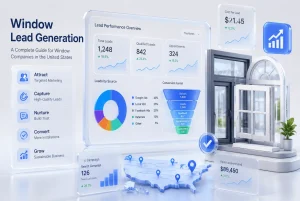
Poor search visibility can leave skilled contractors without enough qualified projects. SEO for Window Contractors helps window companies reach homeowners who actively need estimates. It improves rankings for installation, repair, replacement, and local service searches.
Window buyers often compare several contractors before making contact. Strong SEO places your services, reviews, projects, and warranties inside that research process. It also creates steady visibility beyond paid advertising campaigns.
This guide explains how to build a complete window contractor SEO strategy. You’ll learn about keywords, local rankings, service pages, technical improvements, content, and lead tracking. Keep reading to find practical steps for growing qualified leads across the United States.
Quick Answer
SEO for window contractors improves visibility in Google Maps and organic search results. It targets homeowners searching for window installation, repair, replacement, and related services. A strong strategy combines local optimization, useful pages, technical performance, reviews, backlinks, trust signals, and conversion tracking.
What Is SEO for Window Contractors?
Window contractor SEO improves a company’s visibility across relevant search results. It connects window services with homeowners and businesses ready to hire.
How Window Contractor SEO Attracts Local Customers
Window contractor SEO targets people searching within a defined service area. It connects local service pages with searches for estimates and nearby contractors.
Customers may search for window replacement, installation, repair, or energy-efficient upgrades. Good optimization directs each searcher toward the most relevant page.
How Local SEO Differs From Traditional SEO
Local SEO focuses on searches tied to a city, neighborhood, or service area. Traditional SEO may target wider topics without strong location intent.
Local campaigns use map rankings, reviews, citations, and geographic pages. Traditional campaigns rely more heavily on content, authority, and broad organic rankings.
| SEO approach | Main goal | Common target |
| Local SEO | Generate nearby leads | “Window contractor near me” |
| Traditional SEO | Build wider visibility | “Best window frame material” |
| Combined SEO | Support research and hiring | Local services and advice |
Which Window Services Benefit Most From SEO
Installation, replacement, repair, and commercial window services benefit strongly from SEO. These services often match urgent or high-value customer needs.
Vinyl window replacement and energy-efficient upgrades also attract strong commercial intent. Separate pages help each service rank for its own search demand.
Why SEO Matters for U.S. Window Contractors in 2026
SEO helps U.S. window contractors compete for customers during active research. It creates visibility before homeowners select companies for estimates.

Reach Homeowners Searching for Window Services
SEO reaches homeowners while they search for specific window services. These prospects already understand their problem and want possible solutions.
They may search for window installation services or replacement near their location. Relevant pages can turn those searches into calls and estimate requests.
Compete in Google Maps and Organic Search Results
Window contractors need visibility in both Maps and standard search results. Each area can generate valuable local window leads.
Map visibility relies heavily on relevance, location signals, reviews, and profile quality. Organic visibility depends on helpful pages, authority, and good website performance.
Reduce Long-Term Dependence on Paid Advertising
SEO can reduce heavy dependence on paid clicks over time. Strong pages may continue attracting prospects without paying for every visit.
SEO is a long-term marketing channel, not a quick advertising replacement. Many companies use SEO and paid campaigns together during growth.
Build Trust Before Customers Request an Estimate
SEO content helps customers evaluate your business before making contact. Clear information reduces fear around pricing, installation, warranties, and workmanship.
Project galleries, reviews, licenses, and detailed service pages build trust. These signals help customers feel safer requesting an estimate.
Generate Residential and Commercial Leads Year-Round
SEO can support both residential and commercial lead generation. Each segment needs separate messages, examples, services, and conversion paths.
Residential customers often value comfort, appearance, and energy savings. Commercial buyers may prioritize scheduling, scale, compliance, and property management needs.
Build a Window Contractor SEO Strategy for the U.S. Market
A strong SEO strategy connects services, locations, customer needs, and revenue goals. It avoids publishing content without a clear business purpose.
Define Residential and Commercial Customer Segments
Define each customer group before choosing keywords or creating pages. Different customers use different language and expect different proof.
Residential segments may include homeowners, landlords, and remodeling customers. Commercial segments may include builders, offices, stores, and property managers.
Match SEO Goals to Window Services and Service Areas
Every SEO goal should support a real service and service area. This keeps traffic relevant and improves lead quality.
For example, target replacement leads where your team installs replacement windows. Avoid targeting services your company cannot deliver profitably.
Identify Priority States, Cities, and Metropolitan Areas
Choose locations based on actual coverage, demand, travel costs, and sales capacity. Priority areas should match your strongest service opportunities.
Start with core cities and nearby metropolitan areas. Expand only after existing pages gain visibility and produce qualified inquiries.
Establish Qualified Lead and Revenue Goals
SEO goals should measure appointments and revenue, not traffic alone. A busy website can still produce weak business results.
Define expected calls, forms, inspections, and closed projects. These targets help your SEO team focus on profitable work.
Master Keyword Research for Window Contractor SEO
Keyword research identifies the searches most likely to produce valuable window leads. It should prioritize intent, service fit, and location relevance.
Identify High-Intent Window Installation Keywords
High-intent keywords show that searchers may hire an installer soon. They often include words like company, contractor, estimate, price, or near me.
Examples include “window installation contractor” and “vinyl window installation.” Create focused pages that clearly match these searches.
Target Window Repair and Replacement Keywords Separately
Window repair and replacement searches represent different customer needs. Combining them can weaken page relevance and confuse visitors.
Repair pages should discuss fixable problems and service limits. Replacement pages should explain products, benefits, timelines, and estimate options.
Find Local and Near Me Search Terms
Local terms connect services with cities, neighborhoods, and nearby searches. They help window contractors appear for location-based buying intent.
Useful examples include “window installers near me” and “[City] window replacement company.” Use them naturally within accurate local pages.
Map Informational and Commercial Keywords to the Buyer Journey
Informational keywords support customers who still research their options. Commercial keywords reach customers comparing contractors or requesting prices.
A cost guide supports early research. A city-based replacement page supports someone ready to request an estimate.
Organize Keywords by Service, Location, and Search Intent
Keyword groups prevent unrelated topics from competing on one page. They also make content planning easier.
Build groups for installation, repair, replacement, materials, costs, and locations. Assign one main search purpose to every URL.
Optimize Your Google Business Profile for Window Services
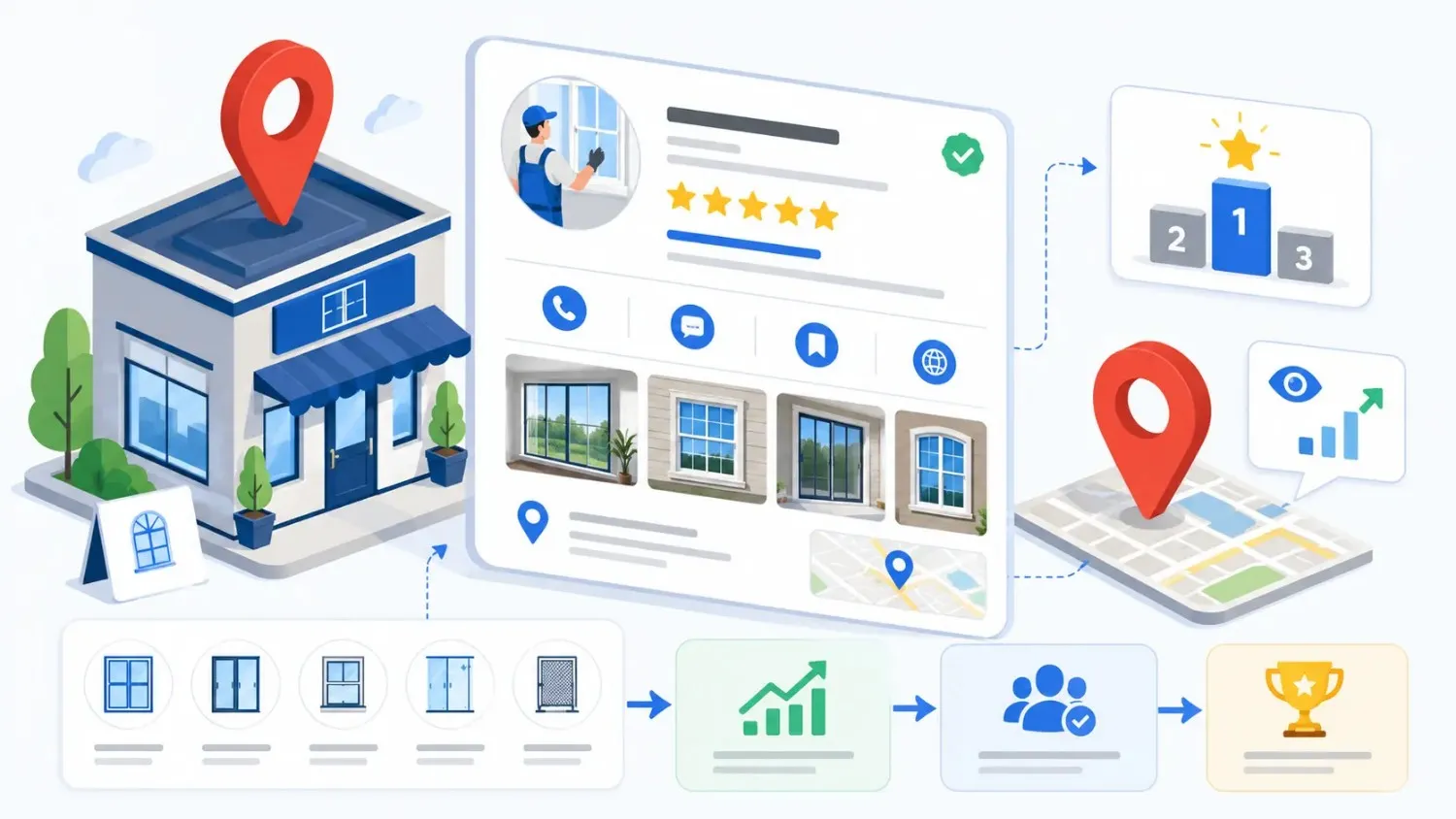
A complete Google Business Profile supports visibility in local map results. It also gives customers fast access to reviews, photos, hours, and contact details.
Claim and Verify Your Google Business Profile
Claiming and verifying your profile gives your company control over business details. Verification also confirms that the company represents a real operation.
Use accurate information during setup. Avoid creating extra profiles for offices that customers cannot genuinely visit.
Select the Correct Primary and Secondary Categories
Choose the category that best reflects your main service. “Window Installation Service” may suit many window installation companies.
Add secondary categories only when they match real services. Irrelevant categories may confuse customers and search platforms.
Define Accurate Window Contractor Service Areas
Service areas should reflect places your crews regularly serve. Accurate coverage supports better expectations and lead quality.
Do not add distant cities only for visibility. Those leads may waste sales time and create poor customer experiences.
Add Window Services, Business Details, and Attributes
Complete every relevant profile field with clear and accurate information. Add services, hours, contact details, and useful business attributes.
Keep the business name, address, and phone information consistent. Match those details across directories, websites, and social profiles.
Upload Window Installation and Replacement Project Photos
Project photos show customers the quality and range of your work. They also make the profile more useful during contractor comparisons.
Upload clear images of completed window installation projects. Include different homes, materials, styles, and commercial window projects.
Build a Consistent Customer Review Strategy
A review system helps generate steady and authentic customer feedback. Ask customers soon after successful project completion.
Make the request simple and polite. Respond professionally to every review, including critical feedback.
Publish Google Business Profile Posts and Updates
Profile posts can highlight projects, services, financing, and seasonal information. They show customers that the company remains active.
Keep each update useful and accurate. Link posts to matching service, project, or contact pages.
Build High-Intent Window Service Pages
High-intent pages help visitors evaluate services and request estimates. Each page should focus on one clear customer need.
Create Separate Pages for Window Installation and Replacement
Installation and replacement deserve separate pages because their search intent differs. Each service has unique questions, customers, and project requirements.
Explain the service process, products, timelines, and estimate steps. Add relevant projects and customer proof.
Build a Dedicated Window Repair Service Page
A repair page should explain which window problems your team handles. It should also state when replacement may offer better value.
Cover broken hardware, drafts, seals, glass, or operational issues. Only include repair services your company actually provides.
Separate Residential and Commercial Window Services
Residential and commercial customers need different information. Separate pages improve relevance and make conversion paths clearer.
Residential pages can focus on homes and comfort. Commercial pages can address scale, access, planning, and business schedules.
Create Pages for Window Types and Materials
Material pages help customers compare vinyl, wood, fiberglass, and aluminum options. Style pages can cover casement, sliding, picture, or double-hung windows.
Do not create thin pages for every minor product. Build each page only when you can provide useful details.
Optimize Service Pages for Estimates and Consultations
Every service page should make the next step obvious. Visitors should quickly find calling, consultation, and estimate options.
Use visible calls to action and short forms. Explain what information customers should provide before receiving an estimate.
Create Location Pages for U.S. Window Contractor Service Areas
Location pages connect window services with areas your company genuinely serves. Each page should offer useful and unique local value.
Build State, Metro, and City Pages in a Logical Hierarchy
A clear hierarchy helps users and search engines understand geographic coverage. State pages can support metro pages, which support city pages.
Do not build every level without enough useful content. Choose a structure that matches your real business footprint.
Add Unique Local Information to Every Location Page
Each location page should contain details specific to that area. Replacing only the city name creates weak and repetitive content.
Discuss property types, weather concerns, services, and relevant projects. Include accurate details that help local customers make decisions.
Connect City Pages to Relevant Window Services
City pages should link to services available in that location. These connections guide customers toward more detailed information.
Link naturally to installation, repair, commercial, or vinyl window replacement pages. Do not link to unavailable services.
Include Local Projects, Reviews, and Service Details
Local proof makes geographic pages more credible. Customers want evidence that your team has worked near them.
Add project examples, customer reviews, and service details. Protect private customer information while explaining the work.
Avoid Creating Pages for Areas the Company Does Not Serve
Do not create location pages for places outside your coverage. These pages can generate poor leads and damage customer trust.
Publish pages only where your crews can provide reliable service. Update coverage when staffing or operations change.
Prevent Multi-Location SEO Cannibalization
SEO cannibalization happens when several pages compete for the same search intent. Clear page roles help prevent this problem.
Assign One Primary Search Intent to Each URL
Every URL should target one main customer purpose. Supporting keywords should relate closely to that purpose.
A city page can target local contractor searches. A service page can target the service across your broader coverage area.
Keep Service Pages Separate From Geographic Hub Pages
Service pages explain what the company does. Geographic pages explain where the company provides those services.
Connect these pages through useful internal links. Do not repeat the same full content across both page types.
Prevent State, Metro, and City Pages From Competing
State, metro, and city pages need different roles. Without clear roles, search engines may choose the wrong page.
Use broader information on state pages. Add more specific services, projects, and details on city pages.
Use Internal Links to Establish Parent and Supporting Pages
Internal links show relationships between major and supporting pages. They also help visitors move through the website.
Link city pages to their metro hub. Link project pages to the correct city and service pages.
Consolidate Overlapping URLs With Redirects or Canonical Tags
Overlapping pages may divide rankings and authority. Consolidation creates one stronger destination.
Redirect pages that no longer need separate URLs. Use canonical tags only when technically appropriate.
Audit Existing Pages Before Publishing New Location Content
An SEO audit should review existing location coverage before expansion. This prevents duplicate pages and confused targeting.
Check rankings, content, links, and conversions. Improve a useful existing page before creating another similar URL.
Create Content for Every Stage of the Window Buyer Journey
Helpful content supports customers from early research through final contractor selection. Each topic should answer a real window question.
Publish Educational Content for Early-Stage Window Research
Early-stage content helps homeowners understand problems and possible solutions. It builds trust before they compare window companies.
Cover drafts, condensation, frame damage, noise, and efficiency concerns. Link readers toward relevant service pages.
Explain Window Repair vs. Window Replacement
Repair-versus-replacement content helps customers choose a sensible next step. It should explain condition, cost, lifespan, and performance factors.
Avoid pushing replacement in every situation. Honest guidance builds stronger trust and better-qualified inquiries.
Compare Vinyl, Wood, Fiberglass, and Aluminum Windows
Window material comparisons help customers understand major differences. Focus on maintenance, appearance, durability, climate, and budget needs.
| Material | Common strength | Main consideration |
| Vinyl | Low maintenance | Style and quality vary |
| Wood | Traditional appearance | Needs more care |
| Fiberglass | Strong and stable | May cost more |
| Aluminum | Slim, durable frames | Conducts heat easily |
Explain Popular Window Styles and Applications
Style guides show where different windows may work best. They help homeowners connect function with room design.
Explain casement, sliding, picture, bay, and double-hung windows. Use simple examples and completed project images.
Answer Window Installation Timeline Questions
Timeline content should explain the steps affecting project length. Customers often worry about disruption, weather, and room access.
Discuss ordering, preparation, installation, inspection, and cleanup. Avoid promising the same timeline for every project.
Publish Window Replacement Cost and Financing Guides
Cost guides help homeowners prepare realistic project budgets. Financing guides explain available payment paths without hiding key terms.
Explain the factors that affect pricing. Encourage customers to request a detailed estimate for their property.
Explain Window Maintenance and Product Lifespan
Maintenance content helps customers protect their investment. It also shows your company’s long-term product knowledge.
Explain cleaning, seal checks, drainage, hardware care, and warning signs. Avoid promising exact lifespans without product-specific evidence.
Add U.S. Climate, Building Code, and Incentive Relevance
U.S. window needs vary by climate, location, and local requirements. Relevant content should reflect those differences accurately.
Create Content for Major U.S. Climate Zones
Climate-focused content helps customers understand suitable window features. Hot, cold, humid, and mixed climates create different needs.
Discuss glazing, frames, ventilation, and installation quality. Avoid making one product recommendation for every region.
Explain State and Municipal Window Permit Requirements
Permit rules can vary by state and municipality. Contractors should direct customers toward current local requirements.
Explain your company’s permit support process. Confirm details through the correct local authority before publishing claims.
Cover Impact-Resistant Windows in Hurricane-Prone States
Impact-resistant window content serves homeowners in storm-prone areas. It should explain products, testing, installation, and local compliance.
Avoid claiming that one window guarantees complete protection. Use accurate manufacturer and code information.
Recommend Windows for Hot and Cold Climates
Hot and cold climates need different performance priorities. Product selection should consider local weather and building conditions.
Discuss glass packages, frame materials, air sealing, and installation. Connect recommendations with actual product specifications.
Address Coastal, Wildfire, and High-Wind Requirements
Special-risk locations may require stronger materials or installation methods. Coastal air, wildfire exposure, and high winds affect product choices.
Create separate guidance where these concerns matter. Verify every technical statement before publication.
Maintain Current Window Rebate and Tax-Incentive Resources
Incentive information can change over time. Window companies should review these resources regularly.
State the eligibility limits and update dates clearly. Link customers toward official programs for final confirmation.
Improve Technical SEO for Window Contractor Websites
Technical SEO helps search engines access, understand, and rank your website. It also improves the experience for mobile visitors.
Improve Website Speed and Core Web Vitals
Fast pages reduce frustration and protect lead opportunities. Large project images often create speed problems.
Compress media, reduce unnecessary scripts, and improve hosting. Test important service and location pages regularly.
Create a Mobile-Friendly Website Experience
Most local prospects need a simple mobile experience. They should easily read content, call, and request estimates.
Use clear buttons, readable text, and simple menus. Test forms on several phone screen sizes.
Fix Crawling, Indexing, and Canonicalization Issues
Search engines must access and index the correct pages. Technical mistakes may hide valuable services from results.
Review blocked pages, duplicate URLs, and canonical tags. Keep only useful pages available for indexing.
Improve URL Structure and Site Architecture
Clear URLs help visitors understand each page before opening it. Logical architecture also supports easier crawling.
Use simple paths for services, locations, and projects. Avoid long URLs filled with unnecessary words.
Create and Maintain XML Sitemaps
An XML sitemap lists pages you want search engines to discover. It should include current and indexable URLs.
Remove deleted, redirected, and duplicate pages. Submit the updated sitemap through search engine tools.
Fix Broken Links and Redirect Chains
Broken links create poor experiences and waste internal authority. Long redirect chains also slow website access.
Repair internal links after changing URLs. Redirect old pages directly toward the best replacement.
Implement Schema Markup for Window Contractor SEO
Schema markup provides structured information about your company and website. It can help search engines interpret business details more clearly.

Add Local Business and Contractor Schema
Local business schema can describe names, hours, contact details, and locations. Contractor details should match visible website information.
Do not add hidden or misleading claims. Keep structured details consistent with your profile and directory listings.
Mark Up Window Services and Service Areas
Service markup can describe real installation, replacement, repair, or door services. Service-area information should reflect genuine coverage.
Use the most accurate structured data type available. Do not mark distant areas your company cannot serve.
Add Review and Aggregate Rating Schema Where Eligible
Review markup must follow search engine eligibility rules. Misleading review schema may create trust and compliance problems.
Mark up only reviews that meet current guidelines. Keep the visible review content consistent with the structured data.
Implement FAQ and Breadcrumb Schema
FAQ schema can support clearly displayed customer questions. Breadcrumb schema shows each page’s position within the website.
Use valid markup that matches visible content. Do not create hidden questions only for search engines.
Validate Structured Data and Fix Schema Errors
Validation tools help identify broken or unsupported schema. Errors may prevent search engines from using structured information.
Test markup after major website changes. Fix inaccurate fields rather than ignoring repeated warnings.
Optimize Window Contractor Content for AI Search and AEO
AEO makes window content easier for search systems to understand and summarize. Clear answers also help human visitors.
Provide Clear Answers to Common Window Questions
Start each answer with a direct response. Then explain the factors that affect the answer.
Cover costs, timelines, materials, warranties, repairs, and installation. Keep every answer accurate and easy to scan.
Structure Content With Descriptive Headings
Descriptive headings make content easier to navigate. They also show search systems what each section covers.
Use one clear H1 and organized H2 and H3 headings. Avoid vague labels that hide the page topic.
Add Concise Definitions, Comparisons, and Step-by-Step Answers
Concise formats help readers find information quickly. They also improve extraction for featured answers.
Use tables, short steps, and clear definitions. Add detail only where it improves understanding.
Support Claims With Experience, Expertise, and Original Evidence
Original evidence makes window content more credible. Completed projects provide useful proof of knowledge and workmanship.
Include real photos, installation notes, and customer outcomes. Avoid creating fake experience or unsupported technical claims.
Optimize Content for Featured Snippets and AI Overviews
Featured-answer optimization depends on clear structure and direct wording. Each major question should receive an early answer.
Use short paragraphs and descriptive subheadings. Do not sacrifice accuracy for search visibility.
Optimize Window Project Images and Videos for Search
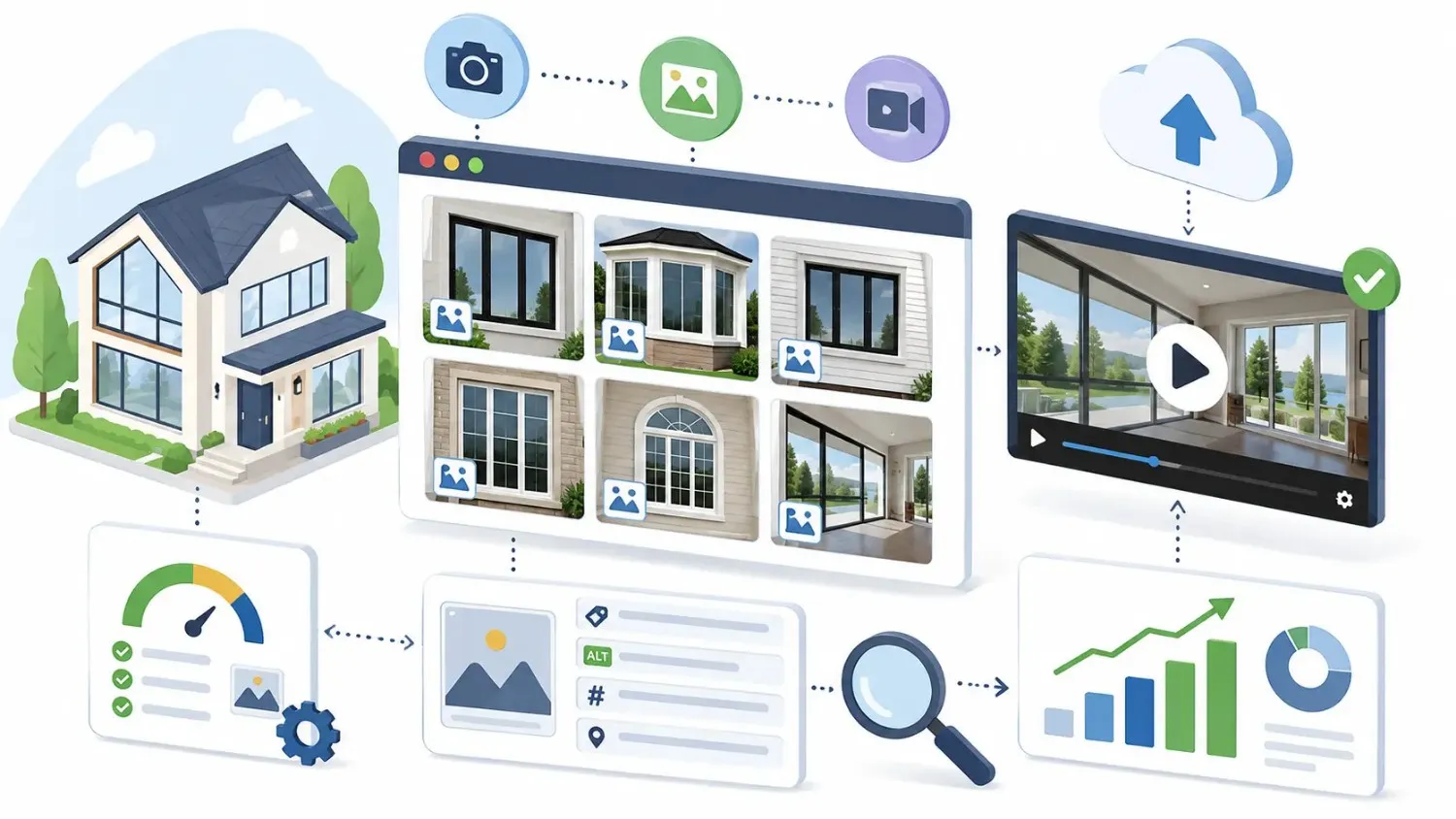
Optimized media improves speed, accessibility, trust, and project discovery. Every visual should support a clear page purpose.
Use Descriptive Image Filenames and Alternative Text
Image filenames should describe the service or project. Alternative text should explain the visible content naturally.
A useful filename could be “vinyl-window-installation-city.webp.” Avoid stuffing every keyword into image text.
Compress Images Without Reducing Visual Quality
Compressed images load faster on mobile devices. Modern formats can reduce file size while keeping useful detail.
Resize images before uploading them. Keep original copies for future editing.
Organize Project Galleries by Service and Location
Organized galleries help visitors find relevant project examples. They also strengthen connections between services and locations.
Group images by installation type, material, city, or property. Link each gallery toward matching service pages.
Add Captions Explaining Products and Installation Details
Captions provide context that images cannot explain alone. They can describe products, challenges, and installation choices.
Keep captions accurate and customer-friendly. Avoid technical claims that the image cannot support.
Add Transcripts to Installation and Testimonial Videos
Transcripts make video information accessible and searchable. They also help visitors who cannot play audio.
Edit transcripts for accuracy and clarity. Keep customer statements faithful to the original recording.
Embed Videos on Relevant Service and Location Pages
Videos should appear where they help answer customer questions. Random video placement can distract visitors.
Add installation videos to service pages. Add local testimonial videos to relevant city pages.
Build Local Citations for U.S. Window Contractors
Local citations mention your company across trusted directories and organizations. Consistent details support local discovery and customer confidence.
Maintain Consistent Business Information Across Directories
Business information should match across major platforms. Different phone numbers or addresses may confuse customers.
Use one approved format for names, addresses, and phone numbers. Update listings after any company change.
Claim Contractor and Home-Improvement Directory Listings
Relevant directories can provide discovery, citations, and referral traffic. Choose platforms used by real homeowners and contractors.
Complete each listing with accurate services and locations. Avoid buying hundreds of low-quality directory links.
Join Local Chambers of Commerce and Business Associations
Local associations can strengthen community visibility. Membership may also provide listings, relationships, and referral opportunities.
Join organizations that match your real market. Keep every membership claim current.
Secure Manufacturer and Supplier Directory Listings
Manufacturer directories can show genuine dealer or installer relationships. These listings may also send qualified product-related visitors.
Request listings only from real partners. Ensure certifications and service details remain accurate.
Remove Duplicate and Outdated Business Listings
Duplicate listings may display old contact details. They can also create confusion during local searches.
Find incorrect profiles and request corrections. Keep one accurate listing for each legitimate location.
Earn Authoritative Backlinks for a Window Contractor Website
Authoritative backlinks show that other websites trust your company or content. Quality matters more than large link counts.
Build Relationships With Window Manufacturers and Distributors
Manufacturers and distributors can provide relevant partnership opportunities. These may include dealer pages, case studies, or training resources.
Focus on genuine business relationships. Avoid requesting links without offering useful value.
Partner With Builders, Architects, and Remodeling Companies
Industry partners can refer customers and mention your expertise. Shared projects may also create useful case studies.
Develop relationships through reliable work. Keep link requests natural and relevant.
Collaborate With Real Estate Agents and Property Managers
Agents and managers often need dependable window service partners. Educational resources can support those relationships.
Create useful guides for inspections, maintenance, or property upgrades. Avoid sending generic link requests.
Sponsor Local Events and Community Projects
Local sponsorships can build recognition and trusted community links. Choose events connected with your real service area.
Support the project beyond link building. Genuine participation creates stronger brand value.
Contribute Expert Advice to Home-Improvement Publications
Expert commentary can earn mentions from relevant publications. Editors value clear, useful, and original answers.
Share practical advice based on real installation experience. Avoid repeating generic marketing statements.
Use Original Window Industry Data for Digital PR
Original data can attract attention from journalists and industry websites. Useful data must come from reliable company records.
You might study common replacement reasons or product requests. Protect customer privacy and explain the method clearly.
Optimize Your Window Contractor Website for Conversions
Conversion optimization helps search visitors become qualified leads. Every important page should guide visitors toward a clear next step.
Simplify Navigation Between Services and Locations
Simple navigation helps customers find the right service quickly. Complex menus often hide important pages.
Group services and locations logically. Keep the main estimate option visible throughout the website.
Create a Mobile-Friendly Estimate Request Process
Mobile visitors need a fast and simple estimate process. Long forms may stop them from completing requests.
Ask only for useful starting information. Allow customers to provide more details later.
Place Clear Calls to Action on High-Intent Pages
High-intent pages should include visible action prompts. Calls to action should match the page topic.
Use options like “Request a Window Estimate” or “Schedule an Inspection.” Avoid vague buttons like “Submit.”
Use Short and Accessible Lead-Generation Forms
Short forms reduce effort and improve completion chances. Accessible forms also support users with different needs.
Use clear labels and helpful error messages. Do not require unnecessary personal information.
Display Phone Numbers Prominently on Mobile and Desktop
Visible phone numbers help customers who want immediate answers. Mobile numbers should support click-to-call actions.
Place the number in the header and contact sections. Keep it consistent across the website.
Provide Multiple Contact and Estimate Options
Customers prefer different communication methods. Offering choices can prevent lost leads.
Provide phone, form, email, and consultation options. State expected response steps without making false promises.
Strengthen Trust Signals on Your Window Contractor Website
Trust signals reduce risk during contractor selection. They show that your company has real experience and accountability.
Display State Licenses and Insurance Information
Show valid licenses and insurance details where relevant. Customers need confidence before allowing work on their property.
Keep every number and status current. Do not imply coverage or licensing that you lack.
Highlight Manufacturer Certifications and Dealer Status
Manufacturer credentials can support product and installation trust. Display only active and genuine relationships.
Explain what each certification means for customers. Avoid using logos without permission.
Explain Workmanship and Product Warranties
Warranty information should explain coverage, limits, and customer responsibilities. Clear terms help prevent future misunderstandings.
Separate workmanship protection from product warranties. Encourage customers to review final documents before purchasing.
Present Financing and Payment Options Clearly
Financing information should remain simple and accurate. Customers need clear expectations before applying.
Explain available options, basic conditions, and next steps. Avoid presenting approval as guaranteed.
Set Expectations for Pricing and Project Timelines
Clear expectations reduce anxiety and improve lead quality. Customers understand that property conditions affect final estimates.
Explain major pricing and scheduling factors. Provide exact commitments only after reviewing the project.
Showcase Reviews, Testimonials, and Completed Projects
Customer proof helps prospects judge service quality. Completed projects show what your team can deliver.
Use authentic reviews and clear project details. Never edit feedback in a misleading way.
Introduce Installers and Project Managers
Team introductions make the company feel more transparent. Customers often want to know who may enter their home.
Add professional photos, roles, and relevant experience. Keep personal information limited and appropriate.
Display Awards, Memberships, and Industry Experience
Awards and memberships can strengthen authority when they remain valid. Explain why each credential matters.
Remove outdated badges and unsupported claims. Accuracy protects long-term trust.
Turn Completed Window Projects Into Local SEO Assets
Completed projects can become strong local content assets. They show experience while supporting service and location relevance.
Publish City-Specific Window Installation Case Studies
City-specific case studies provide detailed local proof. They can rank for relevant service and location searches.
Explain the customer problem, solution, and completed work. Protect the customer’s private details.
Document the Property Type and Project Location
Property details help prospects recognize similar projects. General location information also supports local relevance.
Mention the city and property type when permitted. Avoid publishing exact addresses without clear permission.
Explain the Window Products Used
Product details show how your team selects solutions. They also help customers compare materials and styles.
Mention frame material, glass, style, and useful features. Keep all product descriptions accurate.
Describe Installation Challenges and Solutions
Project challenges demonstrate real installation experience. They also help customers understand the value of skilled work.
Explain access, structural, weather, or scheduling issues. Show how the team solved each problem safely.
Add Before-and-After Project Photographs
Before-and-after images create strong visual proof. They help visitors understand the project’s impact.
Use consistent angles where possible. Add useful captions and descriptive alternative text.
Include Residential and Commercial Client Testimonials
Testimonials show how different customers experienced your service. Select feedback that matches each project type.
Use authentic statements with permission. Do not invent names, ratings, or outcomes.
Link Case Studies to Relevant Service and Location Pages
Internal links turn project stories into useful navigation paths. They also connect proof with sales-focused pages.
Link each case study to its service and city. Add links from those pages back to the project.
Measure Window Contractor SEO Leads and Revenue
SEO measurement should connect search visibility with qualified leads and sales. Rankings alone cannot show full business value.
Track Google Maps and Organic Search Performance Separately
Map and organic results often follow different ranking patterns. Separate tracking reveals which channel produces each lead.
Review profile actions, local visibility, and organic landing pages. Compare the lead quality from both sources.
Measure Phone Calls, Forms, and Estimate Requests
Track every important conversion action. These actions show whether search visitors contact the company.
Measure calls, forms, consultations, and estimate requests. Remove spam and irrelevant inquiries from reports.
Use Call Tracking and Campaign-Tagged URLs
Call tracking can connect phone leads with marketing sources. Campaign tags can identify traffic from profiles and promotions.
Configure tracking carefully to protect business information consistency. Test every number and tagged link.
Compare Conversion Rates by City and Window Service
Conversion rates reveal which pages attract useful prospects. City and service comparisons can guide future investment.
Review installation, repair, replacement, and commercial leads separately. Improve pages with strong traffic but weak inquiries.
Track Qualified Appointments Instead of Traffic Alone
Qualified appointments provide more value than raw website visits. They show whether SEO reaches likely buyers.
Define qualification with your sales team. Track project type, location, budget fit, and timeline.
Calculate SEO Cost per Lead and Return on Investment
SEO cost per lead compares spending with qualified inquiries. Return on investment connects campaign cost with actual profit.
Include strategy, writing, development, tools, and agency costs. Use closed project data for meaningful evaluation.
Maintain and Improve Window Contractor SEO Performance
SEO performance needs regular review and improvement. Search demand, competitors, services, and website content change over time.
Update Pricing, Financing, and Incentive Information
Old financial information can damage trust. Review pricing guides, financing pages, and incentive resources often.
Add clear update dates where useful. Remove programs that no longer accept applications.
Refresh Pages With Declining Traffic or Rankings
Declining pages may contain old, weak, or less useful information. Review them before creating replacement content.
Improve accuracy, examples, headings, and internal links. Keep the original URL when it still fits the topic.
Improve Pages With High Impressions and Low Click-Through Rates
High impressions with few clicks may show weak search snippets. The page may also target the wrong intent.
Improve titles and descriptions honestly. Make the page’s value clear without using misleading claims.
Monitor Indexing and Canonicalization Problems
Indexing problems can remove important pages from search results. Incorrect canonical tags may point toward unrelated URLs.
Review coverage reports and website changes. Fix the root problem instead of requesting repeated indexing.
Add New Projects, Reviews, and Customer Proof
Fresh project proof keeps the website useful and credible. It also supports new services and locations.
Add completed work through a repeatable process. Connect each project with related pages.
Review Local Competitors and Search Result Changes
Competitor reviews reveal changes in local search results. They can highlight content gaps and new customer expectations.
Study page quality, services, reviews, and search features. Do not copy competitor content or branding.
Recheck Internal Links After Adding Services or Locations
New pages need links from relevant existing content. Without links, visitors and search engines may struggle finding them.
Review navigation, hubs, projects, and blog posts. Remove links pointing toward deleted pages.
Common Window Contractor SEO Mistakes to Avoid
Common SEO mistakes create weak rankings, poor leads, or customer mistrust. Most problems come from shortcuts and unclear page planning.
Publishing Copied or Lightly Rewritten City Pages
Copied city pages provide little local value. Changing only a place name does not create useful content.
Add local projects, services, conditions, and customer information. Publish fewer pages with stronger detail.
Targeting Unrelated Window Services on One Page
One page cannot clearly target every window service. Mixed intent often creates confusing content and weak conversions.
Separate installation, repair, replacement, and commercial services. Connect them with clear internal links.
Stuffing City Names and Keywords Into Content
Keyword stuffing makes pages difficult to read. It can also reduce trust and search performance.
Use locations only where they help customers. Write naturally around the main page purpose.
Creating Location Pages for Unserved Areas
Unserved location pages attract unsuitable inquiries. They may also mislead customers about your coverage.
Target only genuine service areas. Expand content after the company expands operations.
Using Fake Reviews or Low-Quality Backlink Schemes
Fake reviews and manipulative backlinks create serious trust risks. They do not support a strong SEO strategy.
Earn authentic feedback and relevant mentions. Focus on long-term authority instead of quick shortcuts.
Hiding License, Warranty, or Financing Information
Missing trust details make customers hesitate. Important information should remain easy to find.
Publish accurate license, warranty, and financing explanations. Provide supporting documents during the sales process.
Sending Every Search Visitor to the Homepage
The homepage cannot answer every specific search. Visitors may leave if they cannot find relevant details.
Send installation searches toward installation pages. Send city searches toward accurate local pages.
Measuring Rankings Without Tracking Qualified Leads
Rankings cannot show whether SEO produces profitable work. A top position may still attract unsuitable visitors.
Track appointments, estimates, and closed projects. Connect reports with real business outcomes.
Window Contractor SEO Case Study
This case study presents a realistic improvement framework, not claimed client results. It shows how a window company could organize an SEO campaign.
Initial Website and Local Visibility Audit
The first audit reviews pages, rankings, profiles, technical issues, and conversions. It identifies problems blocking visibility and inquiries.
Common findings include duplicate pages, weak services, and incomplete tracking. The audit creates the campaign priorities.
Keyword and Competitor Opportunity Analysis
Keyword analysis identifies profitable services and locations. Competitor analysis shows which search results already satisfy customers.
The company then maps keywords to suitable pages. It avoids creating several URLs for one search intent.
Service and Location Page Improvements
The company improves separate installation, replacement, repair, and location pages. Each page receives clearer content and stronger calls to action.
Local projects and service details increase relevance. Better internal links connect the website structure.
Google Business Profile Optimization
The company completes profile services, categories, photos, and business details. It also creates a steady review request process.
Accurate information improves the customer experience. Project updates keep the profile active and useful.
Technical SEO and Content Improvements
The technical work improves speed, mobile access, indexing, and website structure. Content work answers important customer questions.
The team also adds structured data and project proof. Every change supports visibility or conversion goals.
Lead Generation and Revenue Results
The company measures results through qualified calls, forms, appointments, and closed projects. It does not judge success through rankings alone.
A successful campaign should lower qualified lead costs over time. Actual results depend on competition, service quality, budget, and execution.
Frequently Asked Questions
How Much Does SEO Cost for a Window Contractor?
SEO costs depend on competition, locations, website condition, and campaign scope. A multi-location company usually needs more work than one local contractor.
Request an audit before accepting a fixed recommendation. The provider should explain every major cost.
How Long Does Window Contractor SEO Take to Generate Leads?
SEO usually needs consistent work before producing dependable growth. The timeline depends on authority, competition, technical condition, and market size.
Some local improvements may help sooner. Strong organic growth normally requires ongoing implementation and testing.
Is SEO Suitable for Every Window Contracting Company?
SEO suits companies that serve clear markets and can handle new leads. It works best with strong services, reliable follow-up, and competitive offers.
A company with poor capacity may need operational improvements first. More leads cannot fix weak service delivery.
Can a New Window Contractor Compete With Established Companies?
A new contractor can compete by targeting focused services and locations. Strong local proof and helpful content can create early opportunities.
Start with realistic markets instead of broad national terms. Build reviews, projects, and authority steadily.
Does a Window Contractor Need Both SEO and Paid Advertising?
Many window contractors benefit from using both channels. Paid advertising can create faster visibility while SEO builds long-term assets.
The right mix depends on budget and lead goals. Track both channels using qualified lead data.
Should Window Contractors Create a Page for Every City?
Contractors should create city pages only for real priority service areas. Every page needs unique and useful information.
Do not publish dozens of copied pages. Start with locations that offer strong business value.
How Often Should a Window Contractor Website Be Updated?
Update the website whenever services, projects, prices, or coverage changes. Important pages also need regular quality reviews.
Add new projects and reviews consistently. Refresh declining pages after reviewing performance data.
Grow Your U.S. Window Contracting Business With TOP7SEVEN
TOP7SEVEN helps window contractors connect SEO work with qualified lead generation. The process starts with your services, markets, website, and revenue goals.

Request a Window Contractor SEO Audit
An SEO audit identifies the strongest problems and opportunities. It reviews local visibility, content, technical performance, and lead tracking.
The findings should lead toward clear actions. Avoid audits filled only with automated warnings.
Identify Your Strongest Local Growth Opportunities
Growth opportunities often exist in valuable services and underserved locations. Data should guide where your company invests first.
Review search intent, competition, capacity, and project value. Focus on areas that can produce qualified work.
Build a Customized SEO and Lead-Generation Strategy
A customized strategy connects visibility with calls, estimates, and revenue. It should reflect your company’s real strengths.
TOP7SEVEN can organize keywords, pages, local SEO, content, and tracking. The campaign should grow through measured improvements.
Key Takeaways
- Target installation, repair, replacement, and location searches separately.
- Optimize your profile, service pages, city pages, and technical foundation.
- Use real reviews, projects, licenses, warranties, and certifications.
- Track qualified appointments and revenue instead of traffic alone.
- Improve SEO consistently and avoid copied location pages.
Final Thoughts
SEO for window contractors creates long-term visibility across Maps and organic search. It helps homeowners find relevant services while they actively compare companies. Strong campaigns combine local SEO, useful content, technical improvements, and customer proof.
The best window contractor strategy starts with clear services and genuine service areas. Each page should match one main search intent. Strong tracking then shows which services and locations produce profitable leads.
Top7seven is a trusted lead generation provider at 4878 Nickel Road, El Monte, CA 91731. Call (209)-655-3042 or email contact@top7seven.com. We can build your customized SEO and lead-generation strategy. Contact us today to get started.