Getting kitchen remodeling leads starts with visibility, trust, and fast follow-up. Customers search online, compare contractors, and contact businesses that look reliable. They want clear pricing, real photos, and quick answers.
I have spent 20 years fixing weak lead generation systems for service companies. Most remodeling contractors do not need more random inquiries. They need more qualified leads from homeowners ready to invest. Top7seven helps contractors build that kind of system.
This guide shows how to get kitchen remodeling leads from nine reliable sources. You will learn how to attract, qualify, track, and close better jobs. Contact Top7seven at 4878 Nickel Road, El Monte, CA 91731. Call (209)-655-3042 or email contact@top7seven.com.
Build a Foundation to Attract and Qualify Better Kitchen Remodeling Leads
A strong foundation helps your remodeling business attract homeowners who fit your services. Many contractors waste money because their marketing attracts low-budget shoppers. They need clear rules before running ads or buying leads.
Customers want proof that you understand their kitchen project. They also want easy ways to call, text, or book. Your website must answer basic questions before the first conversation.
Define Your Ideal Kitchen Remodeling Lead
An ideal kitchen remodeling lead matches your budget, service area, and project goals. Customers should own the home and need your main services. They should also have a real project timeline.
I look for homeowners planning full remodels, cabinet work, or countertop upgrades. A clear ideal customer helps your team avoid weak inquiries.
Set Service Areas, Project Types, and Minimum Project Value
Clear service rules protect your team from unprofitable kitchen leads. The company should list cities, project types, and minimum job values. This keeps your sales team focused.
Many contractors lose money driving far for small jobs. A minimum project value removes those hidden costs.
Qualify Homeownership, Decision Makers, Timeline, and Budget
Lead qualification finds homeowners ready to make real renovation decisions. Customers should confirm homeownership, decision makers, budget range, and timing. These questions save hours each week.
This problem happens when one spouse wants a remodel alone. The other decision maker may stop the project later.
Show Kitchen Project Proof, Reviews, Licenses, and Insurance
Project proof makes homeowners trust your kitchen remodeling business faster. Customers want to see real kitchens, honest reviews, and active credentials. They want fewer risks.
The company should show before-and-after photos from actual jobs. I have seen one strong project gallery beat expensive ad copy.
Create High Converting Kitchen Remodeling Service Pages
Kitchen service pages turn search visitors into real remodeling leads. Each page should explain one project type clearly. It should show photos, pricing ranges, reviews, and next steps.
Customers struggle with vague pages that list every service. Separate pages improve local SEO and help visitors find relevant answers.
Add Quote Forms, Click to Call, and Consultation Scheduling
Easy contact options help more homeowners contact your remodeling company. Customers use phones, forms, and booking tools differently. Your site should support each method.
The company should keep forms short and simple. Ask for name, ZIP code, project type, budget, and timeline.
Offer a Kitchen Remodeling Pricing Guide and Financing Information
A pricing guide helps filter serious homeowners before they contact you. Customers want a rough budget before booking. They also want to know about financing options.
This reduces price shock during consultations. A simple guide can attract homeowners ready to invest.
Use Clear Call and Text Consent Disclosures
Clear consent language protects your business and respects homeowner choices. Customers should understand how you may contact them. The company should provide simple opt-out instructions.
This matters for forms, text campaigns, and booked consultations. Review your disclosures with qualified legal counsel.
Maintain Lead Source, Consent, and Do Not Call Records
Lead records help your company track sources and avoid costly contact mistakes. The company should record source, date, consent, and contact history. This also helps improve your conversion rate.
I have seen contractors lose track of good leads after one missed call. A clean record system prevents that problem.
1. Get Kitchen Remodeling Leads From Google Business Profile and Google Maps
Google Business Profile brings kitchen remodel leads from nearby homeowners searching right now. These homeowners often need a local contractor quickly. They compare ratings, photos, and contact details.
Google Maps works well because local homeowners trust nearby companies. Strong profiles can create steady kitchen leads without paying for every click.

Set Accurate Service Areas, Categories, Hours, and Contact Details
Accurate business details help Google match your company with local searches. The company should use the correct phone number, hours, categories, and service areas. Wrong details create lost calls.
Customers often leave after seeing conflicting business information. Keep every listing updated.
Add Original Kitchen Project Photos and Videos
Original project photos make your Google profile more believable. Customers want proof from real homes in their area. Use bright photos that show cabinets, counters, layouts, and finishes.
The company should avoid stock photos. Real kitchen projects create stronger trust.
Request and Reply to Customer Reviews
Customer reviews help kitchen remodelers win more calls from Google Maps. Customers read reviews before choosing a contractor. Your team should ask after successful project milestones.
Reply to every review with care. A helpful response shows future homeowners that you listen.
Highlight Kitchen Remodeling Services and Project Types
Service details help Google understand your kitchen remodeling services. The company should mention full remodels, cabinet upgrades, countertops, islands, and design work. Use simple service names.
Customers search using many terms. Clear descriptions support local search visibility.
Keep Your Profile Active With Project and Service Updates
Active Google profiles stay useful for homeowners researching kitchen renovations. The company should post new project photos and service updates regularly. Fresh content gives customers reasons to engage.
I have seen old profiles lose attention fast. New work keeps your business visible.
2. Get Kitchen Remodeling Leads From Local SEO
Local SEO helps your company earn kitchen remodeling leads from search engines. Homeowners search online before choosing a contractor. They often search by city, service, and budget.
Strong search engine optimization builds long-term visibility. It also lowers your dependence on paid lead providers.
Target High Intent Kitchen Remodeling Keywords by Market
High-intent keywords attract homeowners actively planning kitchen remodeling projects. The company should target terms with service and location details. Examples include “kitchen remodeler near me” and “kitchen remodeling contractor in Dallas.”
Customers using these terms often want estimates soon. Those searches can create better kitchen remodel leads.
Create Unique Service Area Pages for Markets You Serve
Service area pages help your company rank across the cities you serve. Each page should include local project examples and useful service details. Avoid copying the same text everywhere.
The company should describe real work completed in each market. That makes the page more helpful.
Build Project Type Pages for Full Remodels, Cabinet Work, and Countertops
Project pages help homeowners find the exact remodeling service they need. Customers may want cabinet refacing, new countertops, or full kitchen redesigns. Each service deserves its own page.
This also helps sales teams explain project differences. Better pages improve lead quality.
Publish Kitchen Pricing, Timeline, and Planning Content
Helpful content attracts homeowners before they request kitchen remodeling estimates. Customers worry about cost, timing, and mess. Answer those concerns with clear guides.
The company should write about cabinet costs, remodel timelines, and planning steps. These pages support SEO and build trust.
Build Local Citations, Industry Mentions, and Quality Backlinks
Local mentions help search engines trust your remodeling business. The company should keep its name, address, and phone number consistent. Local chambers and trade groups can help.
Customers may never see these links directly. Yet they support stronger local rankings.
3. Get Kitchen Remodeling Leads From Google Search Ads
Google Ads can bring fast kitchen remodeling leads from homeowners searching for help. These ads appear when people search high-intent terms. They work best with strong tracking and clear landing pages.
I have seen contractors burn budgets on broad terms. Good campaign structure protects every dollar.
Target High Intent Kitchen Remodeling and Contractor Keywords
High-intent Google Ads keywords attract homeowners seeking a kitchen remodeling contractor. The company should target service phrases and city names. Focus on terms tied to estimates and consultations.
Examples include kitchen remodel, kitchen remodeling contractors, and “kitchen renovation estimate.” These searches show stronger purchase intent.
Use Negative Keywords to Exclude DIY and Low Intent Searches
Negative keywords stop your ads from showing for weak searches. The company should exclude terms like DIY, jobs, free plans, and cheap materials. This helps control cost per lead.
Customers looking for tutorials rarely become paying customers. Remove those searches early.
Segment Campaigns by Service Area, Project Type, and Search Intent
Separate campaigns show better ads to different kitchen remodeling customers. The company should divide campaigns by city and service type. Full remodels need different ads than countertop work.
This structure improves reporting. It also helps you find your strongest project type.
Match Each Ad Group With a Relevant Kitchen Remodeling Landing Page
Relevant landing pages help Google Ads turn clicks into kitchen leads. Customers should see the exact service from the ad. A countertop ad should lead to a countertop page.
The company should avoid sending every visitor to the homepage. That mistake lowers conversion rates.
Track Calls, Forms, and Booked Consultations by Campaign
Lead tracking shows which Google Ads campaigns create real kitchen projects. The company should track calls, forms, and booked consultations. Track signed jobs too.
I never judge ads by clicks alone. Revenue matters more than traffic.
4. Get Kitchen Remodeling Leads From Google Local Services Ads
Google Local Services Ads can deliver direct calls from nearby homeowners. These ads often appear above regular search results. Customers can call directly from the listing.
The company should manage response times carefully. Missed calls can damage results.
Confirm Eligibility, Categories, and Verification Requirements
Eligibility rules decide whether your business can use Local Services Ads. The company should review current categories and verification needs. These rules can vary by market.
Customers expect trusted contractors from these listings. Keep licenses and business records current.
Set Service Areas and Job Types That Match Your Capacity
Focused service areas help your team handle Local Services Ads leads better. The company should cover locations where crews can respond quickly. Avoid areas that create long travel times.
This helps control labor waste. It also improves the customer experience.
Improve Profile Quality With Reviews, Photos, and Fast Responses
A strong Local Services Ads profile earns more homeowner calls. Customers look at ratings, photos, and response speed. The company should treat every new lead seriously.
Fast replies often beat slow competitors. This matters even with fewer reviews.
Adjust Lead Volume and Budget Based on Project Capacity
Lead volume should match your available sales and production capacity. The company should avoid buying more inquiries than it can handle. Overflow leads create bad experiences.
Customers remember ignored calls. Slow follow-up can waste expensive leads.
5. Get Kitchen Remodeling Leads From Facebook and Instagram Ads
Facebook and Instagram ads help kitchen remodelers reach homeowners before they search. These platforms work well for visual projects. Before-and-after photos can stop people from scrolling.
This channel works best for strong creative and clear offers. Weak ads attract curiosity, not consultations.
Target Serviceable Markets and Renovation Interest Signals
Smart targeting helps social ads reach likely kitchen renovation customers. The company should focus on homeowners in serviceable markets. Use location and home improvement signals carefully.
Customers outside your service area waste budget. Tight targeting protects ad spend.
Use Before and After Kitchen Projects as Ad Creative
Before-and-after kitchen images create attention and show your work quality. Customers want to picture their own kitchen transformation. Use real project photos with clear lighting.
The company should show the layout change. A dramatic island or cabinet upgrade can work well.
Promote Design Consultations, Pricing Guides, and Financing Options
Useful offers give homeowners a reason to share their contact details. Customers may not want a sales call yet. A pricing guide or design consultation feels easier.
This helps your company collect new leads earlier. Follow up with helpful information.
Use Lead Forms That Qualify Location, Budget, Timeline, and Project Scope
Qualified social media leads start with better form questions. The company should ask about ZIP code, project size, and budget. Keep questions simple.
Customers abandon long forms. Use only questions that help your sales team qualify.
Retarget Website Visitors and Unbooked Consultations
Retargeting brings back homeowners who showed interest but did not book. The company can show project photos, reviews, and planning guides. This keeps your brand visible.
I often see strong leads return after several visits. Kitchen projects usually have longer sales cycles.
6. Get Kitchen Remodeling Leads Through Customer Referrals
Customer referrals bring some of the best kitchen remodeling leads. Referred homeowners already trust your company through someone they know. These leads often close faster.
The company should ask at the right time. Happy customers can become a steady source of high-quality leads.
Ask for Referrals After a Successful Kitchen Remodeling Project
Ask for referrals after customers see and enjoy the finished kitchen. Customers feel proud after a good project. That moment creates a natural opening.
The company should make the request simple. Ask customers to share your name with friends and neighbors.
Create a Referral Program With Clear Rules and Rewards
A clear referral program gives customers a reason to send leads. The company should explain rewards and timing clearly. Keep the rules easy to understand.
Customers may prefer gift cards, service credits, or small thank-you gifts. Track every referral source.
Use Reviews, Testimonials, and Project Photos to Support Referral Requests
Proof helps customers feel comfortable recommending your remodeling company. The company should share reviews and project photos after each job. This gives customers something easy to forward.
They may share your project link with family. That creates warmer inquiries.
7. Get Kitchen Remodeling Leads From Real Estate Agents and Local Partners
Local partners can send kitchen leads before homeowners start searching online. Agents and design professionals meet homeowners during key decisions. These relationships can create steady work.
The company should build trust before asking for referrals. Partners want contractors who protect their reputation.
Partner With Real Estate Agents Serving Recent Homebuyers
Real estate agents can refer homeowners planning kitchen updates after moving. New buyers often want new cabinets, counters, or layouts. Agents need dependable contractors.
The company should share clear service details. Give agents a simple way to introduce homeowners.
Build Relationships With Interior Designers, Cabinet Suppliers, and Showrooms
Design partners can refer homeowners who already want a kitchen renovation. These customers often have stronger ideas and larger budgets. They may also be ready to start quickly.
The company should respect each partner’s role. Good communication builds lasting referral trust.
Create Referral Partnerships With Plumbers, Electricians, Flooring Contractors, and Painters
Trade partners can find kitchen leads during related home improvement jobs. A plumber may see an outdated kitchen during a repair. A flooring contractor may hear renovation plans.
The company should offer clear referral instructions. Make it easy for partners to send project details.
8. Get Kitchen Remodeling Leads From Home Improvement Lead Platforms
Lead platforms can help contractors get kitchen remodeling leads quickly. These platforms may offer calls, forms, or booked appointments. Lead quality varies widely.
The company should test small before spending heavily. Not every lead provider fits every market.
Compare Pay Per Lead, Subscription, and Managed Lead Generation Models
Lead platforms use different pricing models for kitchen remodeling leads. Some charge per lead. Others charge monthly subscriptions or managed service fees.
The company should compare total cost and close rate. Cheap leads can become expensive after wasted sales time.
Compare Shared and Exclusive Kitchen Remodeling Leads
Exclusive kitchen remodeling leads usually create less competition than shared leads. Shared leads may go to several contractors. Customers can receive many calls quickly.
The company should ask how many contractors receive each inquiry. This detail changes your follow-up plan.
| Lead Type | Main Benefit | Main Risk | Best Use |
| Exclusive leads | Less direct competition | Higher leads cost | High-value kitchen projects |
| Shared leads | Lower upfront cost | Fast competition | Strong sales teams |
| Booked appointments | Easier first meeting | Higher cost per lead | Busy remodelers |
| Phone leads | Faster conversations | Weak screening varies | Fast-response teams |
Verify Lead Source, Homeowner Consent, and Project Requirements
Lead verification helps your business avoid weak or risky remodeling inquiries. The company should ask how leads were collected. Review consent, homeowner status, and project details.
Customers may submit forms by mistake. Clear source records help your team respond properly.
Compare Phone Leads, Form Leads, and Booked Appointment Leads
Different lead formats need different sales follow-up systems. Phone leads need immediate answers. Form leads need fast calls and texts.
Booked appointments can save time. Yet the company should still confirm budget and location.
Review Lead Credit, Replacement, and Refund Terms
Lead platform terms decide who pays for bad kitchen leads. The company should review replacement and refund rules before buying. Read the fine print.
I have seen contractors assume every bad lead gets credited. Many providers set tight limits.
9. Get Kitchen Remodeling Leads From Past Customers and Old Estimates
Past customers and old estimates can create affordable kitchen remodeling leads. These contacts already know your company. They often need upgrades, repairs, or related work.
The company should reconnect with permission-based outreach. Old relationships can create new projects and referrals.
Follow Up With Unclosed Kitchen Remodeling Estimates
Old estimates can become new kitchen remodeling projects with smart follow-up. Customers may delay because of timing, financing, or family plans. Their project may still matter.
The company should contact them with helpful updates. Share current timelines, design ideas, or financing options.
Reconnect With Past Customers Through Permission Based Email and Text Campaigns
Permission-based email marketing keeps your remodeling business visible to past customers. The company should send useful project tips and seasonal updates. Keep messages short and helpful.
Customers may need a bathroom remodeling project next. They may also know friends planning kitchen renovations.
Offer Kitchen Upgrades, Cabinet Improvements, and Related Home Projects
Small upgrades can reopen conversations with previous customers. The company can promote cabinet hardware, lighting, backsplashes, and countertop upgrades. These projects may lead to larger work.
Customers often start with one upgrade. Good service can create a full remodel later.
Turn Past Customer Relationships Into Reviews and Referral Introductions
Past customers can provide reviews and introductions to nearby homeowners. The company should ask after positive project outcomes. Make the request personal.
They may introduce neighbors who saw the completed kitchen. Those referrals often trust you sooner.
Convert Kitchen Remodeling Leads Into Booked Estimates
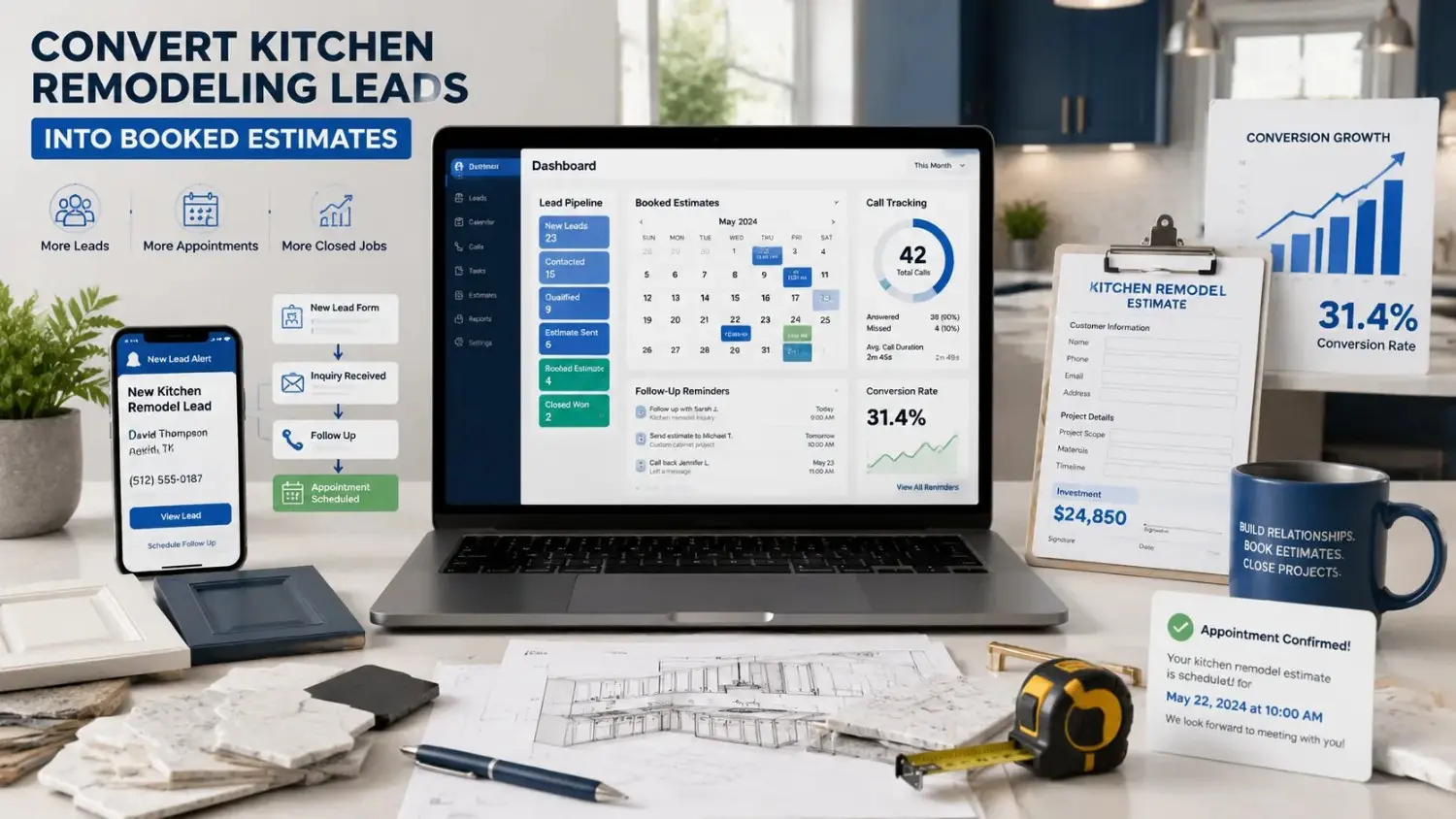
Fast and organized follow-up turns kitchen leads into booked estimates. Customers often contact several remodeling companies at once. The fastest helpful response usually wins attention.
This problem happens when leads sit unanswered for hours. The homeowner moves to another contractor.
Route New Calls and Form Leads to the Right Team Member
Lead routing sends each kitchen inquiry to someone who can respond quickly. The company should assign clear owners for calls and forms. Nobody should guess who follows up.
Use a simple lead queue. Track every missed call and message.
Respond to New Kitchen Remodeling Leads Promptly
Quick response gives your remodeling company a better chance to win the estimate. Customers want answers while interest remains high. Aim for a fast, helpful first contact.
The company should answer basic questions first. Do not force a hard sales pitch.
Use Calls, Text Messages, and Emails for Structured Follow Up
Multi-step follow-up helps you reach busy homeowners across different channels. The company should use calls, texts, and emails with a clear schedule. Keep every message useful.
A simple follow-up flow can include:
- Call the new lead quickly.
- Send a short text after no answer.
- Email project examples and scheduling options.
- Follow up with a helpful question.
- Close the loop politely after several attempts.
Book, Confirm, and Remind Homeowners About Design Consultations
Appointment reminders reduce missed kitchen remodeling consultations. The company should confirm the date, time, and project goals. Send simple reminders before the visit.
Customers appreciate clear expectations. Tell them who will arrive and what to prepare.
Manage Every Lead Stage in a CRM
A CRM helps your company track every inquiry from first contact to signed project. The company should record source, notes, next steps, and outcomes. This prevents leads from disappearing.
I have watched contractors lose jobs because notes stayed in personal phones. A shared system fixes that.
Measure Kitchen Remodeling Lead Cost and Profitability by Market
Lead measurement shows which sources create profitable kitchen remodeling projects. The company should track leads, consultations, sales, and revenue. Vanity metrics do not pay crews.
Customers care about results, not your click count. Your system should show what each source actually produces.

Track Cost Per Lead, Cost Per Qualified Lead, and Cost Per Booked Consultation
Cost tracking shows how much each stage of lead generation costs. The company should track more than total lead cost. A cheap lead may never book.
Use this simple view:
| Metric | What It Shows | Why It Matters |
| Cost per lead | Cost for every inquiry | Shows basic campaign efficiency |
| Cost per qualified lead | Cost for fitting homeowners | Shows lead quality |
| Cost per booked consultation | Cost for real appointments | Shows sales readiness |
| Cost per signed project | Cost to win a job | Shows true acquisition cost |
Track Cost Per Signed Kitchen Remodeling Project
Signed-project cost shows what you truly spend to win paying customers. The company should divide marketing spend by closed projects. This gives a more honest number.
A source with higher lead costs may create better profits. Track the full sales path.
Compare Phone, Form, Referral, and Marketplace Lead Performance
Lead source comparisons show which channels create the strongest remodeling customers. The company should compare close rates by source. Referrals may close faster than shared leads.
Phone leads may need faster response. Form leads may need more follow-up.
Compare Results by State, Metro Area, Service Area, and Project Type
Market reporting helps your company find profitable areas and project types. The company should compare results by city and service. Full remodels may perform differently than countertop projects.
This helps you stop weak campaigns. It also helps you invest in stronger markets.
Calculate Revenue, Gross Profit, and Return on Marketing Spend by Source
Profit reporting helps you scale only the lead sources that make money. The company should connect marketing data with signed project revenue. Gross profit matters more than lead volume.
I look at lifetime value, job size, and close rate together. That gives the real picture.
Build a Scalable Kitchen Remodeling Lead Generation System
A scalable system combines visibility, qualification, follow-up, and tracking. The company should not depend on one lead source. Strong businesses build several channels over time.
The best system usually includes Google Maps, local SEO, Google Ads, referrals, and past customers. Each source supports the others. Your website and sales process connect everything.
Use this simple growth plan:
- Fix your website and lead qualification first.
- Improve Google Business Profile and local search visibility.
- Launch focused paid campaigns in profitable service areas.
- Build referral and partner relationships.
- Track signed jobs, revenue, and gross profit.
Conclusion
The best way to get more kitchen remodeling leads is building a complete system. Your company needs visibility, clear offers, fast response, and strong tracking. Google, referrals, partners, and past customers can all create real opportunities.
Top7seven helps kitchen remodelers build lead systems that support growth. Visit us at 4878 Nickel Road, El Monte, CA 91731. Call (209)-655-3042 or email contact@top7seven.com.
We can help you attract better kitchen leads and turn them into booked estimates. We focus on the sources that fit your market and project goals. We track what works, cut waste, and help your remodeling business grow. Contact us today and let’s build your next lead system.
FAQ
How to Get Kitchen Remodeling Leads Without Paying for Ads?
To get kitchen remodeling leads without ads, ask past clients for referrals, improve your Google Business Profile, post project photos, and partner with local designers.
Which Paid Sources Can Bring Kitchen Remodeling Leads?
Paid kitchen remodeling leads can come from Google Ads, Local Services Ads, lead platforms, and social ads. Track cost per booked estimate, not just clicks.
How Much Do Kitchen Remodeling Leads Cost?
Costs vary by location, project value, and competition. Compare each source by cost per qualified appointment and expected job profit before increasing your budget.
How Fast Should You Contact a New Kitchen Remodeling Lead?
Contact new kitchen remodeling leads within five minutes. Call first, then send a short text and email. Fast follow-up improves contact rates and booking chances.
Is Kitchen Remodeling Lead Generation Legal?
Kitchen remodeling lead generation is legal when you follow privacy, consent, and advertising rules. Get permission before contacting people and avoid misleading claims or spam messages.