Google Ads for Kitchen Remodelers can bring steady, high-value project leads when you control who contacts you. Many kitchen remodelers waste money on calls from renters, DIY shoppers, and low-budget homeowners.
Google Ads work best with clear rules, strong local proof, and fast follow-up. Top7seven helps remodeling contractors turn paid clicks into booked estimates and closed kitchen projects.
This guide shows how to run Google Ads for kitchen remodeling with less waste. Contact Top7seven at 4878 Nickel Road, El Monte, CA 91731, call (209)-655-3042, or email contact@top7seven.com.
Define Your Profitability and Lead Qualification Rules
This section helps your remodeling business define profitable leads before spending on ads. Many contractors chase every call and later find weak budgets.
I have seen good Google Ads campaigns fail because the sales team lacked clear rules. The company needs one shared definition for a qualified lead, booked estimate, and closed project.
Define Your Ideal Kitchen Remodeling Customer
This step defines the homeowner most likely to buy your kitchen remodeling services. Customers often lose time with people who only want rough ideas.
This customer owns the home, lives nearby, and wants real work done. They also have a clear goal, a workable budget, and decision power.
Choose High Margin Kitchen Remodeling Services to Advertise
This step focuses your ads on kitchen services that create stronger profit. Customers often click broad ads for small repairs.
This company can advertise full kitchen remodel projects, cabinet refacing, layouts, and design work. They should avoid low-profit repair calls unless those jobs support larger projects.
Set Your Minimum Project Value and Gross Profit Target
This rule protects your budget from small jobs that drain your sales time. Customers may ask for work below your minimum project value.
This company should set a clear starting budget in ads and forms. A $35,000 minimum filters out many weak remodeling leads early.
| Lead Metric | Simple Goal |
| Minimum project value | Set a clear floor |
| Target gross profit | Know your needed margin |
| Cost per qualified lead | Stay below your profit limit |
| Close rate | Track real sales, not clicks |
Qualify Homeownership Decision Making Authority and Financing Readiness
This step checks whether the lead can approve and fund the project. Customers struggle when one missing decision-maker delays every next step.
This company should ask about homeownership, decision-makers, timeline, and funding. They should also ask whether the homeowner has set a realistic budget.
Define Qualified Leads Booked Estimates and Closed Projects
This system separates interest from real sales opportunities. Customers often call every form fill a lead.
This company should track three stages:
- Qualified lead: The project fits your service, area, and budget.
- Booked estimate: The homeowner selects a meeting time.
- Closed project: The homeowner signs and pays a deposit.
Prepare Your Business for Local Kitchen Remodeling Demand
This section prepares your business before local homeowners see your ads. A weak setup can ruin a good Google Ads strategy.
Customers trust businesses that look active, local, and organized. The company needs matching details across ads, its website, and local profiles.

Define Your Service Area by City Zip Code and Travel Capacity
This step limits ads to places your crew can serve well. Customers dislike long waits and uncertain travel charges.
This company should target cities, ZIP codes, and nearby areas with strong project values. They should avoid distant areas that create weak margins.
Align Advertising Claims With Contractor Licensing Insurance and Local Requirements
This step keeps your ads honest and builds homeowner trust. Customers often check credentials before sharing their details.
This company should show current licensing, insurance, and service details. They should never claim awards, guarantees, or services they cannot prove.
Connect Your Google Business Profile to Google Ads
This connection helps local homeowners see your location and business details. Customers often trust a visible local profile more quickly.
This company should keep its Google Business Profile accurate and active. They should use the same business name, phone number, and address everywhere.
Build Recent Reviews and Project Proof From Completed Kitchen Remodels
This proof helps homeowners trust your kitchen remodeling business before calling. Customers want to see work like their planned project.
This company should show before-and-after photos, recent reviews, and completed kitchen projects. They should highlight real project details, not stock images.
Keep Business Details Accurate Across Ads Landing Pages and Local Profiles
This step stops confusion that can reduce calls and booked estimates. Customers leave when phone numbers and service areas conflict.
This company should review its ads, landing page, website, and profile each month. They should fix old offers, broken forms, and wrong service details.
Choose the Right Google Ads Channels for Kitchen Remodeling Leads
This section helps kitchen remodelers choose channels that match buyer intent. Not every ad type produces high-quality leads.
I start with channels that reach homeowners already looking for a kitchen remodel contractor. Broad awareness campaigns come later, after strong tracking exists.
Use Google Search Ads as Your Primary High Intent Lead Channel
Google Search Ads reach homeowners actively looking for kitchen remodeling help. Customers use searches like “kitchen remodel contractor near me.”
This company should make search ads its main starting channel. These searches often show stronger buying intent than video or display traffic.
Use Local Services Ads Where Eligible
Local Services Ads can add local calls for eligible kitchen remodeling businesses. Customers often see these ads above regular search results.
This company should confirm local eligibility, service categories, and screening requirements. Google states that screening can involve business records, licenses, insurance, and background checks.
Use Remarketing to Reengage High Value Prospects
Remarketing helps you reconnect with homeowners who viewed your kitchen remodeling pages. Customers often research several companies before choosing one.
This company can show proof, reviews, and project ideas to past visitors. They should avoid aggressive ads that feel repetitive.
Test Performance Max Only After Conversion Tracking Is Reliable
Performance Max needs clean conversion data before it can support useful decisions. Customers may see poor lead quality from unclear signals.
This company should start after tracking qualified leads and booked estimates. They should judge results by closed work, not cheap form fills.
Structure Campaigns Around Kitchen Remodeling Services and Search Intent
This structure keeps your ads relevant to each homeowner search. Customers respond better to ads that match their exact need.
This company should separate service types instead of putting every keyword inside one campaign. Clear groups also make budget decisions easier.
Separate Full Kitchen Remodel Cabinet Refacing and Kitchen Design Campaigns
This setup gives each service its own budget, ad copy, and landing page. Customers search differently for cabinet refacing and full renovation work.
This company should create separate campaigns for full remodels, kitchen design, and cabinet work. They should protect higher-value kitchen projects first.
Build Keyword Groups Around Contractor Estimate Quote and Company Searches
This step targets searches that show strong hiring intent. Customers often use contractor, estimate, quote, and company words before hiring.
This company should group terms like kitchen remodel contractor, kitchen renovation estimate, and remodeling company. They should write matching ad copy for each group.
Use Local Kitchen Remodeling Keywords With City and Near Me Modifiers
Local keywords help you reach homeowners near your service area. Customers often search with city names or “near me.”
This company should use phrases like kitchen remodeler in Pasadena or kitchen renovation near me. They should build separate city pages for major markets.
Use Exact Match and Phrase Match Keywords for Cost Control
Exact and phrase match give more control over who sees your ads. Customers may trigger broad terms with weak buying intent.
This company should begin with focused match types and monitor search behavior. They should add broader targeting only after lead quality stays strong.
Build Negative Keyword Lists for DIY Jobs Repairs Research and Low Budget Searches
Negative keywords block searches that rarely become profitable remodeling jobs. Customers often search for DIY guides, cheap repairs, or job openings.
This company should exclude terms such as:
- DIY kitchen remodel
- kitchen remodel jobs
- free kitchen design
- kitchen cabinet repair
- cheap kitchen renovation
- kitchen remodel ideas
Control Location Targeting and Market Level Spend
This section keeps your budget focused on homeowners inside your real service area. Customers outside your area can waste call time and ad spend.
This problem happens when campaigns target broad regions without clear exclusions. Google allows location settings based on presence, interest, or both.
Use Presence Targeting for People Located in Your Service Area
Presence targeting helps focus ads on people physically located near your business. Customers may search your city from another state.
This company should review location options before launch. Google notes that the default setting can include people showing interest in your target area.
Target Cities Zip Codes and Radius Areas That Produce Profitable Projects
This step directs spend toward areas with stronger project demand and margins. Customers in nearby premium neighborhoods may bring larger projects.
This company should start with a small, proven market. They should add new ZIP codes after profitable project data appears.
Exclude Locations You Do Not Serve
Location exclusions stop clicks from places your team cannot support. Customers feel frustrated when service coverage changes after their call.
This company should exclude distant cities, low-value areas, and travel-heavy locations. They should review location reports every month.
Allocate Budget by Market Competition Project Value and Sales Capacity
This plan matches ad spend with your crew’s ability to handle projects. Customers suffer when your team cannot answer new inquiries.
This company should spend more in areas with stronger margins and close rates. They should reduce spend during full production weeks.
Review Location Performance by Qualified Lead and Booked Estimate Rate
This review shows which markets produce real kitchen remodeling opportunities. Customers may fill forms without having workable project plans.
This company should compare each city by qualified leads and booked estimates. They should not judge locations by clicks alone.
Build Kitchen Remodeling Landing Pages That Qualify Homeowners
This section turns interested visitors into qualified kitchen remodeling leads. Customers leave quickly when pages feel generic or confusing.
This company needs a focused landing page for each main service and city. One clear page usually works better than a crowded homepage.

Match Each Landing Page to Its Keyword Group Service and Location
This match helps homeowners see the service they searched for immediately. Customers expect kitchen remodel ads to lead to kitchen remodel pages.
This company should match the keyword, headline, project photos, and city name. They should avoid sending cabinet searches to bathroom remodel pages.
Use a Clear Local Kitchen Remodeling Value Proposition
This message explains why homeowners should contact your remodeling company today. Customers compare several contractors before taking action.
This company should lead with local proof, service focus, and a clear project promise. They should avoid vague lines like “best service guaranteed.”
Show Before and After Projects Reviews Licenses Insurance and Service Area Proof
This proof lowers fear before a homeowner calls or fills out a form. Customers want evidence before sharing project details.
This company should show real work, review quotes, credentials, and local service areas. They should place this proof near the contact form.
Add Qualification Questions for Budget Project Scope Timeline Homeownership and Location
These questions filter weak inquiries before they reach your sales team. Customers may submit forms without a real project plan.
This company should ask for:
- Estimated budget
- Project type
- Desired start date
- Homeownership status
- Project ZIP code
- Best callback time
Add Click to Call and Online Estimate Booking Options
These options give homeowners an easy next step from any device. Customers often prefer calling during urgent planning stages.
This company should add click-to-call buttons and simple booking forms. They should keep forms short and mobile-friendly.
Use Clear Consent Language for Calls Texts and Follow Up
This language explains how your company will contact interested homeowners. Customers want clear expectations before sharing phone numbers.
This company should place simple consent wording near each form. They should follow applicable communication and privacy rules.
Create Google Ads That Prequalify Homeowners
This section uses ad copy to attract serious kitchen remodeling prospects. Customers can self-filter before clicking your ad.
This company should mention service type, location, proof, and project fit. Clear ads reduce wasted clicks and weak calls.
Use Responsive Search Ads for Each Kitchen Remodeling Keyword Group
Responsive Search Ads let you test messages for each kitchen remodeling search. Customers respond differently to price, proof, and design messages.
This company should create headlines around each service group. They should keep each ad focused on one clear homeowner need.
Mention Project Type Service Area Reviews and Contractor Credentials
This information builds trust before the homeowner reaches your landing page. Customers want local proof before booking a consultation.
This company can mention full remodels, city coverage, five-star reviews, and licensed service. They should only use claims they can support.
Use Budget and Project Fit Language to Filter Weak Leads
This language helps reduce calls from homeowners seeking very small jobs. Customers need clear expectations before they contact your company.
This company can say “Full Kitchen Remodels Starting at $35,000.” They can also state “Design Consultations for Qualified Homeowners.”
Add Consultation Focused Calls to Action
Consultation calls to action attract more serious planning-stage homeowners. Customers respond better to clear next steps.
This company should use phrases like:
- Book Your Kitchen Remodel Consultation
- Request a Local Project Estimate
- Talk With a Kitchen Remodeling Contractor
- See Your Kitchen Renovation Options
Use Call Assets Location Assets Sitelinks and Structured Snippets
These ad assets give homeowners more reasons to call and learn. Customers can see key services before clicking.
This company should add service links, review proof, locations, and call options. They should remove assets that promote weak services.
Improve Ad Relevance and Quality Score to Control Costs
This section improves relevance between keywords, ads, and landing pages. Customers respond faster when every message feels connected.
This problem happens when one generic ad serves every kitchen remodeling search. Better relevance can improve click quality and reduce wasted budget.
Align Keywords Ad Copy and Landing Pages With the Same Search Intent
This alignment gives homeowners a smooth path from search to estimate request. Customers dislike seeing unrelated pages after clicking.
This company should match “cabinet refacing” searches with cabinet refacing content. They should match full remodel searches with full remodel proof.
Improve Expected Clickthrough Rate With Project Specific Ad Messaging
Project-specific messages can earn more useful clicks from serious homeowners. Customers click ads that answer their exact search.
This company should test location, project type, review proof, and consultation language. They should avoid clickbait offers that attract low-quality leads.
Improve Landing Page Experience for Kitchen Remodeling Searchers
A strong landing page makes homeowners feel safe taking the next step. Customers leave pages that load slowly or hide key information.
This company should use clear headlines, real projects, reviews, and simple forms. They should remove popups that block mobile users.
Review Quality Score Components Before Raising Bids
This review helps you fix relevance problems before paying more per click. Customers may ignore weak ads, even with larger budgets.
This company should check keyword relevance, expected clickthrough rate, and page experience. They should repair weak areas before raising bids.
Set a Realistic Google Ads Budget and Bidding Plan
This section helps you set a budget based on profit, sales capacity, and local demand. Customers often spend too little to learn anything useful.
I have seen contractors stop campaigns after ten days without enough data. A meaningful test budget gives campaigns time to show patterns.
Use Keyword Planner and Local Competition Data to Estimate Cost Per Click
This research helps you estimate likely click costs before launching ads. Customers face different competition in every remodeling market.
This company should review local CPC, search volume, and competitor activity. They should treat estimates as planning tools, not final promises.
Set a Meaningful Monthly Test Budget for Each Priority Market
A meaningful test budget creates enough traffic to judge lead quality. Customers cannot learn much from a few random clicks.
This company should fund one priority market before adding more cities. They should protect budget for at least one full sales cycle.
Calculate Your Target Cost Per Qualified Lead
Your target cost per qualified lead should fit your gross profit. Customers often focus on cheap leads that never close.
This company can use this simple formula:
Target Cost Per Qualified Lead = Gross Profit Per Project × Close Rate × Safe Marketing Share
Calculate Your Target Cost Per Booked Estimate
Your target cost per booked estimate shows the cost of real sales meetings. Customers need more than a phone number or form fill.
This company should divide ad spend by booked estimates. They should compare this number with show-up rates and close rates.
Calculate Your Target Cost Per Closed Kitchen Remodeling Project
This number shows the true cost of winning one kitchen remodeling project. Customers often miss this number inside their ads dashboard.
This company should divide total ad spend by closed projects. They should compare that cost with project revenue and gross profit.
Use Controlled Bidding During Initial Data Collection
Controlled bidding protects your budget while you learn which searches perform. Customers may waste money with aggressive automated settings too early.
This company should start with close monitoring and careful bid limits. They should review search terms and calls every week.
Switch to Conversion Focused Bidding After Qualified Conversion Data Is Reliable
Conversion-focused bidding works best after your account receives reliable qualified lead data. Customers need clean signals before automation can help.
This company should use real qualified leads, booked estimates, and closed projects. Google recommends enhanced conversions for leads as an updated offline tracking option.
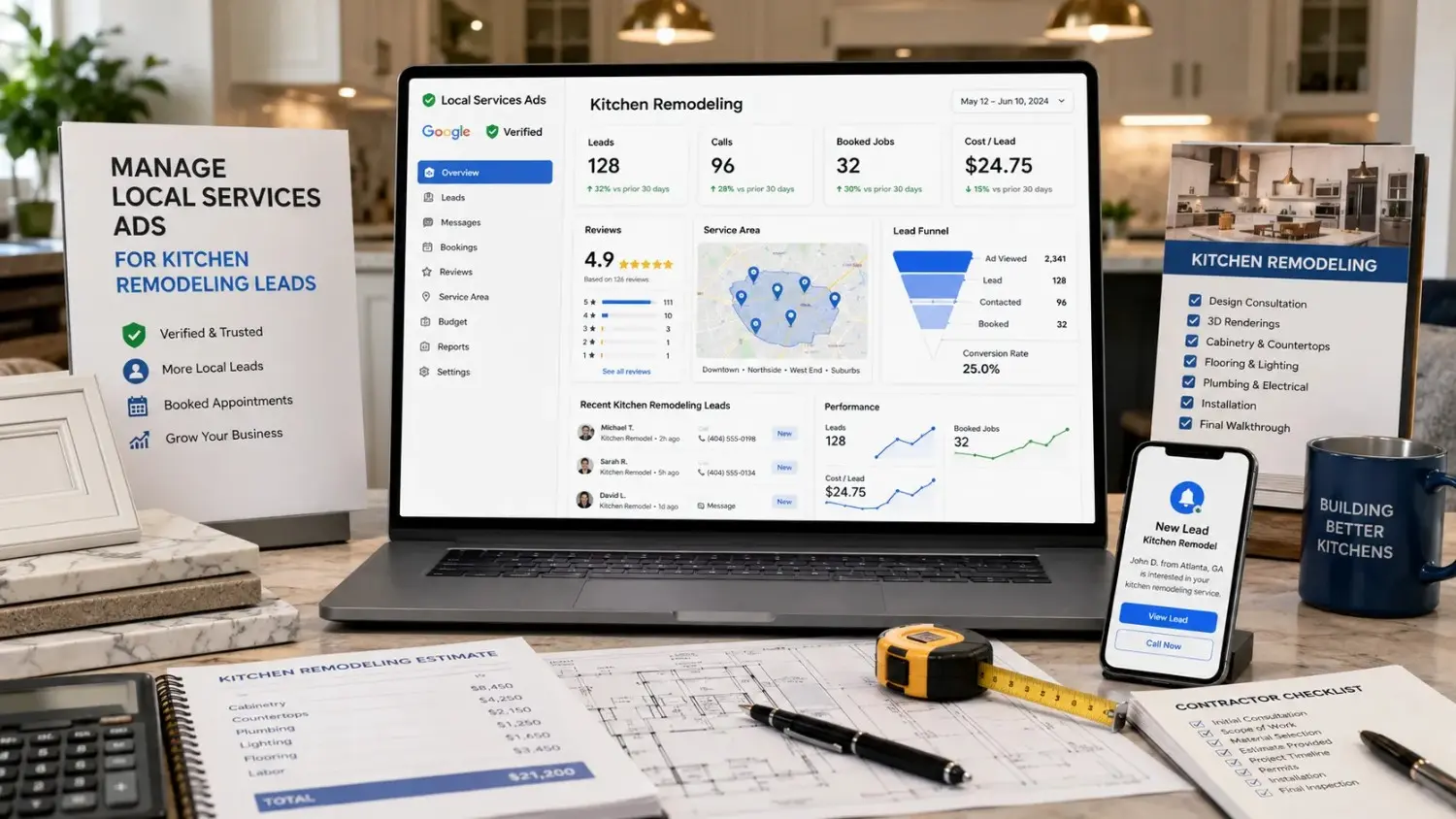
Manage Local Services Ads for Kitchen Remodeling Leads
This section helps eligible contractors manage Local Services Ads with better control. Customers often expect fast replies from these local listings.
This company should treat Local Services Ads as a separate lead source. They should track it against standard Google Search Ads.
Confirm Service Category and Local Services Ads Availability
This check confirms whether your business can run Local Services Ads locally. Customers may see different categories in different markets.
This company should review its available categories and service area inside Google. Eligibility can vary by business type and location.
Complete Google Verification License Insurance and Background Screening Requirements
This process helps Google verify businesses before certain Local Services Ads appear. Customers often trust verified local providers more.
This company should submit requested business records quickly and accurately. Google notes that verification requirements vary by location and category.
Set Local Services Ads Lead Budgets and Bidding Preferences
This setup limits lead flow to a level your sales team can handle. Customers get poor experiences when calls go unanswered.
This company should begin with a controlled weekly budget. They should increase spend after strong call quality and booking rates appear.
Respond to Calls Messages and Booking Requests Quickly
Fast response protects high-intent homeowners from choosing another remodel company. Customers often contact several contractors within minutes.
This company should answer live calls and return missed calls quickly. They should also pause ads during staff shortages.
Review Lead Quality and Request Available Credits for Invalid Leads
This review helps you identify leads that do not match your service. Customers may contact your business for unrelated requests.
This company should label each lead outcome inside its tracking system. They should review Google’s current dispute or credit options where available.
Track the Full Journey From Click to Closed Kitchen Remodeling Project
This section shows which ads produce revenue, not just forms and calls. Customers lose money when they track only surface-level actions.
This company needs a clear path from click to qualified lead, booked estimate, and signed job. The best Google Ads for remodelers campaigns use sales data.
Set Up Form Submission and Website Call Conversion Tracking
This tracking records important lead actions from your website. Customers need accurate records before they optimize ads.
This company should track completed forms, calls, bookings, and thank-you page visits. They should test tracking after every website update.
Set Qualified Call Duration Thresholds for Phone Lead Conversions
This rule separates real project calls from wrong numbers and quick hangups. Customers may create noise with short calls.
This company should mark longer, useful calls as stronger conversions. They should listen to call samples before setting a time threshold.
Track Calls From Ads and Calls From Landing Pages Separately
This separation shows which part of your campaign drives each phone lead. Customers need clear data for better decisions.
This company should track call asset calls and website calls independently. They should compare call quality, booking rates, and revenue.
Capture Google Click IDs and Lead Source Data in Your CRM
This process connects each lead with its original Google Ads click. Customers need source data to measure real ROI.
This company should save click IDs, campaign names, keywords, and lead details. They should keep this data with every sales record.
Use Enhanced Conversions for Leads and Offline Conversion Imports
This setup sends qualified sales outcomes back into Google Ads. Customers benefit when bidding learns from better lead signals.
This company should import qualified leads and closed projects from its CRM. Google describes enhanced conversions for leads as an upgraded offline conversion import method.
Track Qualified Leads Booked Estimates Show Up Rates and Closed Projects
This scorecard shows where your real sales process breaks down. Customers may get many leads but few signed jobs.
This company should review each stage weekly. They should spot slow follow-up, weak forms, poor sales calls, and no-show patterns.
Compare Google Ads Spend With Revenue Gross Profit and Close Rate
This comparison shows whether your ads create profitable kitchen remodeling work. Customers should not judge campaigns by clicks alone.
This company should compare spend with signed revenue, gross profit, and close rate. They should keep campaigns that produce profitable projects.
Protect High Intent Leads With Fast Response and Follow Up
This section helps you keep strong leads from going to competing remodelers. Customers often contact multiple contractors on the same day.
This problem happens when calls go unanswered or form replies arrive hours later. Fast, helpful contact can protect your marketing investment.
Set a Lead Response Standard for Calls Forms and Booking Requests
This standard gives every lead a clear and fast response path. Customers expect quick answers after sharing project details.
This company should aim for immediate call answers and rapid form follow-up. They should assign one person to watch new lead alerts.
Use Missed Call Text Back and Callback Workflows
This workflow helps recover leads that call during busy hours. Customers may not call again after one missed attempt.
This company should send a simple text and call back quickly. They should avoid long messages or repeated pressure.
Route Leads to the Right Salesperson by Service Area and Project Type
This routing sends each homeowner to the person best prepared to help. Customers lose confidence when they repeat details many times.
This company should route kitchen design leads, cabinet projects, and full remodels correctly. They should also assign leads by service area.
Follow Up With Unbooked and No Show Estimate Opportunities
This follow-up gives serious homeowners another chance to book. Customers sometimes pause because life gets busy.
This company should send helpful reminders, project examples, and booking links. They should keep follow-up respectful and useful.
Record Lead Outcomes to Improve Keyword Bidding and Budget Decisions
This habit turns sales feedback into smarter ad decisions. Customers often repeat mistakes when outcomes stay untracked.
This company should record lost reasons, project values, and close results. They should reduce spend on sources that create weak opportunities.
Optimize and Scale Kitchen Remodeling Campaigns Over Ninety Days
This plan improves campaigns in stages instead of making rushed changes. Customers need enough data before big budget decisions.
I use ninety days because kitchen remodel sales cycles often need time. This approach separates setup problems from true market patterns.
First Thirty Days Build Tracking Campaigns Landing Pages and Qualification Rules
The first thirty days build the foundation for useful data. Customers should focus on clean setup before chasing scale.
This company should launch focused campaigns, test forms, and review calls. They should add negative keywords from real search terms.
Days Thirty One to Sixty Improve Search Terms Calls Lead Quality and Booking Rates
Days thirty-one to sixty improve the parts creating weak leads. Customers now have enough data for focused changes.
This company should pause poor keywords, improve ads, and fix form questions. They should also study call recordings and booking outcomes.
Days Sixty One to Ninety Scale Profitable Markets and Import Closed Project Data
Days sixty-one to ninety support careful scaling of proven campaigns. Customers should increase budgets only around profitable trends.
This company should add budget to strong cities, services, and keyword groups. They should import closed project data for better decisions.
Review Search Terms and Add Negative Keywords Every Week
Weekly search term reviews stop irrelevant clicks before they grow. Customers often find waste inside broad and vague searches.
This company should add negative keywords for jobs, DIY, repairs, parts, and research. They should keep one shared negative keyword list.
Remove Keywords Locations Devices and Times That Produce Weak Leads
This cleanup protects spend from patterns that rarely produce real projects. Customers may notice low-quality leads from specific sources.
This company should compare results by device, hour, location, and keyword. They should remove weak areas with enough supporting data.
Shift Budget Toward Markets Services and Campaigns That Produce Profitable Projects
This move increases spend on parts of your account that create better returns. Customers should follow revenue, not vanity metrics.
This company should fund high-value kitchen remodel campaigns before low-margin services. They should protect budget for markets with strong close rates.
Review Cost Per Qualified Lead Cost Per Booked Estimate and Cost Per Closed Project Each Month
This monthly review keeps your Google Ads account tied to business profit. Customers need simple numbers that support better choices.
This company should review cost per lead, booked estimate cost, closed project cost, and ROI. They should share these results with sales and production teams.
Build a Predictable Google Ads Lead Generation System for Your Kitchen Remodeling Business
A predictable system combines strong ads, smart tracking, quick follow-up, and honest sales data. Customers need more than clicks to grow a kitchen remodeling business.
This company should start with one market, one clear service, and one strong landing page. They should build from real lead outcomes, not guesses.
Google Ads for Kitchen Remodelers work best when every click has a clear path to revenue. Top7seven helps remodelers improve keywords, ads, landing pages, tracking, and lead follow-up. Reach us at 4878 Nickel Road, El Monte, CA 91731, call (209)-655-3042, or email contact@top7seven.com.
This system helps you protect your ad budget and win better kitchen projects. We help you build a Google Ads lead generation system that supports real growth. Contact us today, and we will review your current lead flow together.
FAQ
Do Google Ads Work for Kitchen Remodelers?
Yes. Google Ads for Kitchen Remodelers can bring qualified local leads when you target high-intent searches, use negative keywords, and send visitors to a focused landing page.
Are Google Ads Worth Paying for Kitchen Remodelers?
Google Ads are worth paying for when leads produce profitable projects. Track calls, form fills, booked consultations, and job revenue to measure your return.
How Much Should a Kitchen Remodeler Spend on Google Ads?
Start with a budget that supports enough local clicks and testing. Many remodelers begin near $1,000 monthly, then raise spending after profitable leads appear.
Why Did Google Ads Charge Me $500?
Google Ads may charge your card after reaching a billing threshold or monthly payment date. Review your billing settings, campaign spend, and daily budget.
What Are the Main Risks of Google Ads for Kitchen Remodelers?
The main risks include wasted clicks, weak leads, high costs, and poor tracking. Use location targeting, negative keywords, lead filters, and call tracking.