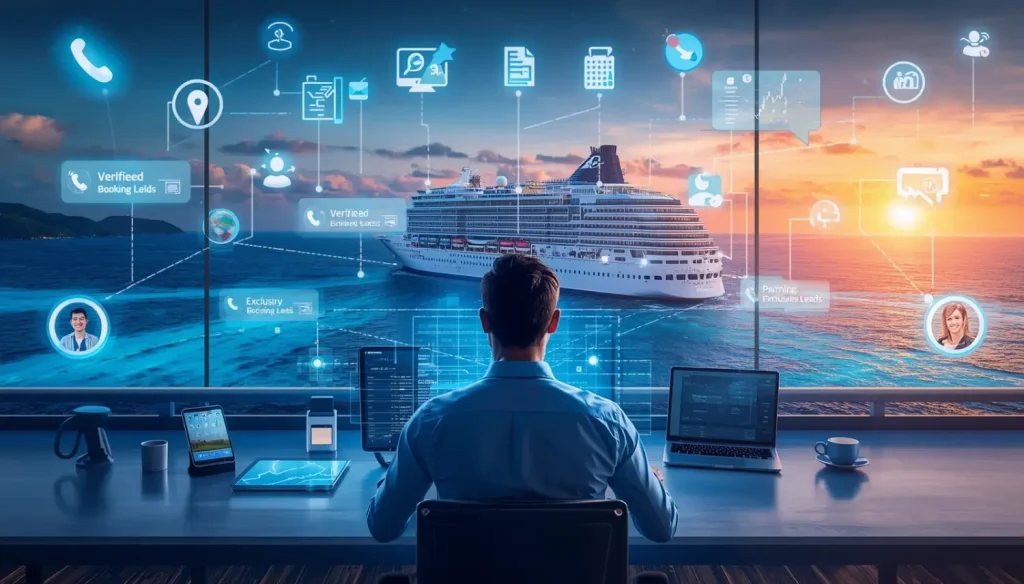
Cruise Booking Leads and Calls help travel businesses reach people ready to book. Many travel agents waste money on cold lists and weak web leads. Those leads often want free advice only. Your sales team needs real people with real travel plans.
Top7seven has worked in lead generation for over 20 years. We know cruise buyers ask many questions before booking. They compare cabins, cruise lines, departure dates, and cruise deals. The right call system helps your team speak with serious travelers first.
This guide explains how to generate exclusive cruise booking leads across the USA. You will learn about paid calls, PPC ads, social media, funnels, routing, and tracking. Contact Top7seven, 4878 Nickel Road, El Monte, CA 91731. Call (209)-655-3042 or email contact@top7seven.com to discuss your cruise lead goals.
Exclusive Pay Per Call Networks
Exclusive pay per call networks deliver live cruise booking calls to your sales team. This method works best when agents answer quickly. The caller already wants travel help. Your team can guide them toward the right cruise itinerary.
Customers struggle when several travel agencies receive the same lead. Shared leads create price wars and slow follow-up. Exclusive calls give one sales team the first real chance.
DOPPCALL
DOPPCALL connects advertisers and publishers through pay per call campaigns. It can help travel businesses buy qualified inbound calls. The buyer should still review every campaign rule before launch.
The company should ask clear questions before buying calls:
- Is each cruise booking call exclusive?
- What counts as a billable call?
- Does the buyer set ZIP code rules?
- Can the buyer reject duplicate callers?
- Does the network show call recordings?
- Does the buyer control daily call caps?
DOPPCALL presents itself as a pay per call network for advertisers and publishers.
LeadDistro AI
LeadDistro AI can help agencies track leads, routing, and campaign margins. The platform may suit teams handling several lead sources. It helps reduce spreadsheet mistakes.
Customers often lose money because they cannot see lead results. One source may send calls. Another source may send web leads. Your team needs one clear report.
Pay Per Call Billing
Pay per call billing charges you after a call meets set rules. The rule may include call duration, caller location, or IVR answers.
This problem happens when buyers pay for short calls. A person may dial by mistake. Another caller may ask for a job. Your billing rule should block those calls.
IVR Pre Qualification
IVR pre qualification asks simple questions before an agent joins the call. It can filter weak calls early.
Customers may hear questions like these:
- Are you ready to book a cruise?
- Which destination interests you?
- When do you want to travel?
- How many guests will travel?
- What is your ZIP code?
US ZIP Code Verification
US ZIP code verification checks whether the caller fits your service area. It helps travel agencies target selected states or regions.
The company may want callers from Florida, Texas, California, or New York. A ZIP code filter can stop calls outside that target.
Ping Post Auctions
Ping post auctions send basic call details before sending the full call. Buyers can bid after seeing limited details.
The system may share location, destination interest, and travel date. It should avoid sharing sensitive details too early. This can help buyers match calls with the right agent.
CallGrid
CallGrid offers a real-time marketplace for buying and selling inbound calls. It focuses on live bidding, call scoring, and routing.
Real Time Inbound Lead Call Buying
Real-time call buying lets you accept a cruise call immediately. The system sends the caller to an available buyer.
This setup helps during busy cruise sale periods. It also helps when a cruise line announces price drops.
Minimum Call Duration 60 Seconds
A 60-second rule can protect your budget from weak calls. Still, duration alone does not prove quality.
A two-minute call may still be poor. A 50-second call may be valuable. Your team should track bookings, not only call length.
Search Engine Marketing and Pay Per Click
Search ads capture travelers who already search for cruise bookings. These people often show stronger intent than social users. They search when they feel ready.
Customers struggle when ads target broad travel words. A search for “best beaches” may not create a booking. A search for “book Caribbean cruise from Miami” shows stronger intent.

Google Ads for Cruise Booking Calls
Google Ads can generate cruise booking calls from search results. Call campaigns and call assets help people contact your team directly. Google now uses call campaigns and call assets instead of call-only ads.
Google requires a matching phone number on your verification page. Your landing page should clearly show the same business number.
Call Only Campaign Strategy
Call-only campaigns are no longer the best current Google Ads choice. Use call campaigns or responsive search ads with call assets.
Your ads should run only during live agent hours. Google supports call scheduling, which helps reduce missed calls.
Long Tail Keyword Targeting
Long-tail keywords bring more focused cruise travelers. They usually show a clear trip need.
Examples include:
- book Alaska cruise for seniors
- Caribbean cruise deals from Texas
- Disney cruise booking phone number
- Mediterranean cruise package for couples
- last-minute cruise deals from Florida
High Intent Search Queries
High-intent search queries show strong booking interest. They often include a place, date, price, or cruise line.
Customers may search:
- book a cruise today
- cruise reservations near me
- best cruise deal for families
- cruise travel agent near me
- balcony room cruise package
Branded Cruise Keywords Strategy
Branded cruise keywords can attract shoppers comparing specific cruise lines. Your ad copy must remain honest and clear.
Customers may search Royal Caribbean cruise deals or Disney cruise reservations. Your landing page should explain your role as a travel agent. Do not pretend to be the cruise line.
Destination Based Keyword Mapping
Destination keywords connect your ads with travel plans. Each destination needs its own ad group.
| Destination | Example Search Phrase | Best Landing Page Message |
| Alaska | Alaska cruise packages | Wildlife, glaciers, cabin choices |
| Caribbean | Caribbean cruise deals | Beaches, family trips, value packages |
| Europe | Mediterranean cruise booking | Ports, excursions, flight planning |
| Hawaii | Hawaii cruise vacation | Island routes and sailing dates |
| Antarctica | Antarctica expedition cruise | Small ships, guides, gear needs |
Discount and Deal Focused Keywords
Deal keywords attract travelers who compare prices before booking. They need clear answers fast.
Use terms like cruise deals, best deal, price drops, free gratuities, and onboard credit. Your team should explain limits before promising savings.
Booking Intent Keyword Selection
Booking intent keywords should guide callers toward a real next step. Use words like “book,” “reserve,” “price,” and “availability.”
The company should avoid broad terms like “cruise pictures.” Those searches may create traffic without calls.
Negative Keywords for Cruise Campaigns
Negative keywords block searches that waste ad spend. They help keep low-value traffic away.
Add terms like:
- free games
- cruise jobs
- cruise ship salary
- cruise webcam
- cruise documentary
- cruise accident news
- cruise ship tracker
- cruise lyrics
Bing Ads Microsoft Advertising for Cruise Reservations
Microsoft Advertising can bring another source of cruise reservation calls. It supports call extensions in search ads.
Customers may search across Google and Bing. Your team should track both sources separately. Never assume one platform produces the same lead quality.
Sample High Converting Ad Copy for Cruise Calls
Strong cruise ads answer the traveler’s main concern quickly. They should sound helpful, not pushy.
Cruise Deals for Your Next Vacation
Compare cabins, dates, and cruise lines.
Speak with a USA travel agent today.
Call now for cruise booking help.
Social Media Ads for Cruise Lead Generation
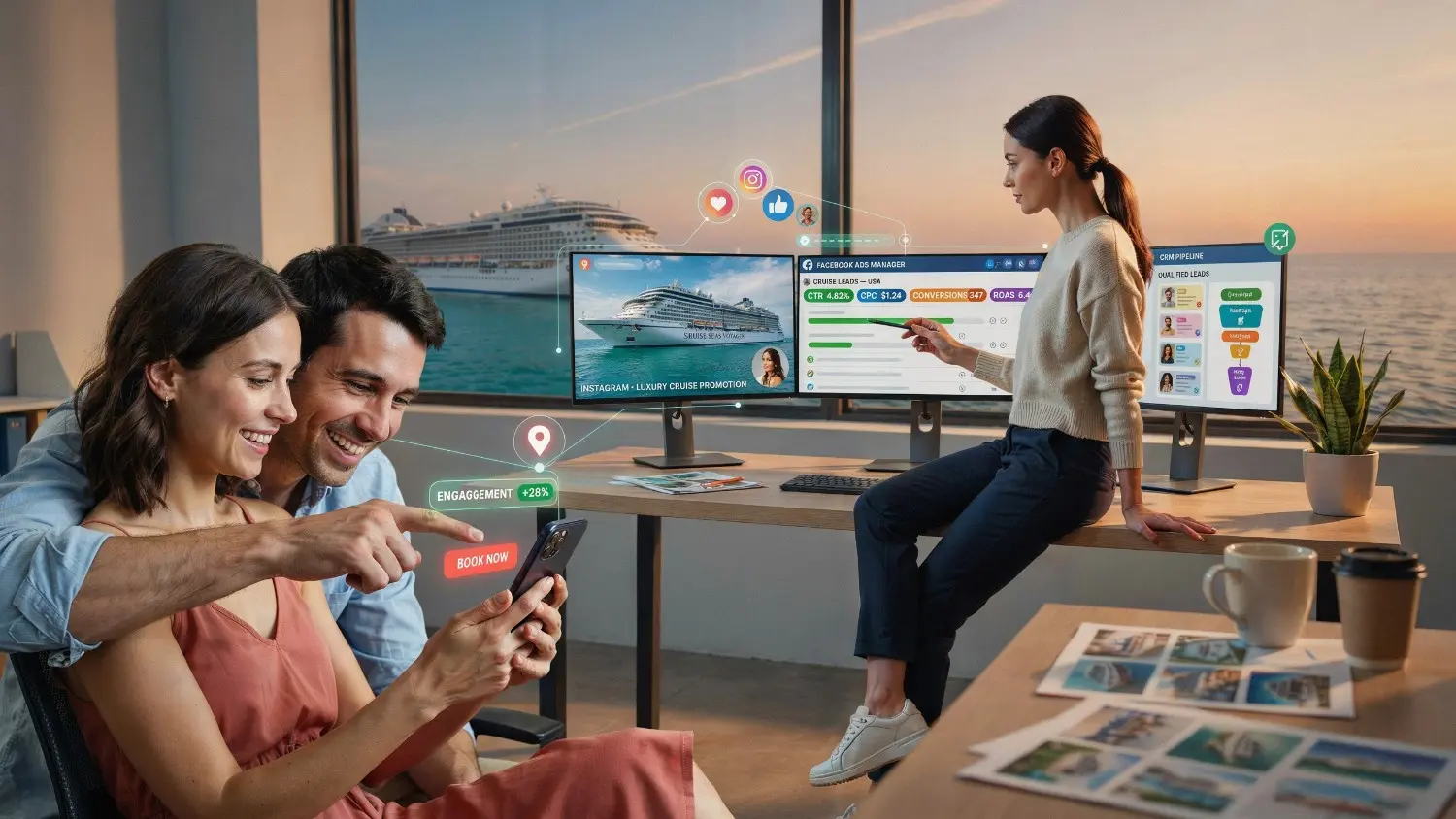
Social media ads create demand before travelers begin searching. They work well for photos, short videos, and cruise offers. Meta offers call ads that encourage people to phone a business directly.
Customers may enjoy cruise videos for weeks before booking. Your ad should capture their interest early. Then, your follow-up should move them toward a call.
Facebook Ads for Cruise Promotions
Facebook ads help reach families, couples, and older travelers. Use clear offers and simple images.
The company can test ads for a Caribbean cruise, family cruise, or senior cruise. A strong image should show the destination, not only the ship.
Instagram Ads for Cruise Bookings
Instagram ads work best with visual cruise moments. Show cabins, sunsets, ports, and onboard meals.
Customers may save your ad before calling. Use a “Call Now” button and a simple offer. Avoid cluttered images with too much text.
TikTok Ads for Cruise Vacations
TikTok ads can reach first-time cruise customers with short videos. Keep the video useful and real.
The company can show “Three things to know before your first cruise.” The ending can invite viewers to call for cruise booking help.
Landing Pages and Funnel Strategy
A strong landing page turns cruise ad clicks into calls or web leads. It gives travelers confidence before they speak. Weak pages often make people leave.
Customers struggle when pages hide prices, phone numbers, or business details. Your page should explain who helps them. It should also explain what happens after they call.
High Converting Cruise Lead Funnels
A cruise funnel guides each traveler from interest to booking. It should remove doubt at every step.
Use this simple flow:
- Show a destination or cruise deal.
- Ask for travel dates and guest count.
- Offer a call or web form.
- Route the lead to an agent.
- Follow up with itinerary choices.
- Track the final booking result.
Click to Call Optimization for Mobile Users
Click to call buttons help mobile users speak with an agent quickly. Keep the button visible near the top.
Customers often browse on phones during lunch or evenings. A hidden number can cost you the call. Make the call option easy to see.
Trust Signals and Social Proof Elements
Trust signals help travelers feel safer before they share travel plans. Use real proof, not fake claims.
Your page should include:
- Real business name and address
- Agent experience
- Clear phone number
- Privacy statement
- Cruise line relationships
- Real customer reviews
- Refund and cancellation guidance
Lead Qualification and Conversion Optimization
Lead qualification helps your team focus on callers who can book. It saves agent time and reduces missed chances.
Customers struggle when agents ask the same questions repeatedly. A simple intake process keeps calls smooth. It also helps the right agent handle each traveler.
Call Routing and Geo Targeting in the United States
Call routing sends each cruise lead to the best available agent. Route calls by state, destination, language, or trip type.
A luxury cruise traveler may need a senior agent. A family cruise caller may need Disney experience. Good routing creates better conversations.
US Call Hours 8am to 6pm EST
Call hours from 8am to 6pm EST can cover many USA travelers. Your best schedule depends on your data.
Customers may call after work in California. Your team may need later coverage for Pacific Time. Track missed calls before setting fixed hours.
Smart Routing and Scheduling Rules
Smart routing uses rules to send calls to available agents. It can stop one agent from getting every call.
The company can set rules for:
- State or ZIP code
- Cruise destination
- Cruise line interest
- Agent language
- Agent availability
- Maximum concurrent calls
IVR Funnel Optimization
IVR funnels qualify callers before your sales team joins. Keep the questions short and helpful.
Customers dislike long menus. Ask only what your team truly needs. Three useful questions beat ten weak questions.
Call Tracking and Attribution Tools
Call tracking shows which ads and keywords create bookings. Without tracking, your ad budget becomes guesswork.
Customers may call from Google, Facebook, or a landing page. Your system should label every source. It should also record call outcome and booking value.
Call Tracking Software Solutions
Call tracking software connects each phone call with its marketing source. It helps identify winning campaigns.
The company should track call source, duration, outcome, agent, and booked value. That data helps cut bad campaigns faster.
AI Call Routing
AI call routing can match calls with the right team faster. It should support agents, not replace them.
Customers still want human answers for cruise plans. AI can sort the call. A trained travel agent should handle details.
CRM Integration and Follow Up Automation
CRM integration keeps every cruise lead inside one follow-up system. It prevents missed callbacks.
The company should add call notes after every conversation. A caller may need time to discuss travel plans. Your follow-up can include cabin choices, payment options, and itinerary ideas.
Pricing and Cost Structures
Cruise lead pricing should match lead quality and booking value. Cheap calls can become expensive when they never book.
Customers often focus only on cost per call. That creates mistakes. Your team should measure cost per booking and total commission.
Transparent Pay Per Call Pricing Models
Transparent pricing explains exactly when a call becomes billable. Your contract should define every rule.
Ask about call length, duplicate calls, wrong numbers, call transfers, and rejected leads. Hidden rules often create surprise invoices.
Per Minute Call Costs and Billing Thresholds
Per-minute pricing charges based on call length. Billing thresholds set the minimum call time.
A 60-second rule can reduce accidental calls. Still, your team should review the caller’s booking intent. Minutes alone do not prove value.
Cruise Leads Cost Per Call in United States
Cruise leads cost more when the caller shows strong booking intent. Luxury trips and last-minute bookings may cost more.
The company should not chase the lowest price. A low-cost caller may only ask general questions. A higher-cost caller may book a balcony room.
Setup Fees and Monthly Subscription Tiers
Setup fees may cover tracking, routing, and campaign build work. Monthly plans may include reporting and support.
Customers should ask what happens after the first month. Confirm support hours, minimum terms, and cancellation rules before signing.
Payment Schedule Net 5 Weekly $100 Threshold
Payment terms should stay clear before your campaign starts. A Net 5 weekly schedule may work for some lead programs.
The company should confirm the invoice threshold. A $100 threshold means billing may wait until that amount is reached. Review the contract before agreeing.
Daily Cap 50 Billable Calls Concurrent Calls 3
Call caps protect your team from more calls than agents can handle. Start smaller and scale with results.
A useful starting example includes:
| Setting | Example Rule |
| Daily billable calls | 50 calls |
| Concurrent calls | 3 calls |
| Minimum duration | 60 seconds |
| Call hours | 8am–6pm EST |
| Review period | Weekly |
Real Time Lead Bidding and Auction Mechanics
Real-time bidding lets buyers compete for the same qualified call. The highest useful bid may win the call.
Customers should not bid blindly. A high bid can reduce profit fast. Set a maximum price based on actual cruise commissions.
Live Ping Post Auction Process
Live ping post auctions share limited call data before routing. Buyers can decide whether they want the call.
The system may send destination, ZIP code, and travel date. Then the buyer may accept, reject, or bid. The full call moves only after approval.
Highest Bid Winner Selection
The highest bid often wins only when rules match. The best buyer also needs available agents.
A buyer may offer more money. Another buyer may have better routing rules. The system should favor a qualified buyer, not only the highest price.
Real Time Agency Bidding Networks
Real-time bidding networks help agencies manage changing call demand. They work best with strong reporting.
The company should pause sources that create weak calls. It should increase budgets only after seeing real bookings.
Integration and Technology Stack
A connected technology stack keeps cruise leads organized from click to booking. It links ads, calls, forms, and CRM data.
Customers feel frustrated when they repeat details to several agents. Integration helps agents see trip dates, destination interests, and prior messages.
Google Ads Integration
Google Ads integration links search campaigns with phone calls and bookings. It helps identify profitable search terms.
Google supports call-focused campaigns and call assets for businesses seeking phone leads.
Facebook Ads Integration
Facebook Ads integration connects social campaigns with calls and lead data. It helps compare social leads with search leads.
Meta supports call ads and lead-focused campaigns.
CRM Platform Integrations
CRM integrations help travel agencies track every caller and follow-up task. They reduce lost lead details.
HubSpot Integration
HubSpot can store lead notes, tasks, and follow-up reminders. Your team can track each traveler’s journey.
The company should add cruise type, travel date, budget, and cabin interest. Those notes help future conversations.
Salesforce Integration
Salesforce can help larger travel teams manage sales stages and reporting. It works well for structured sales teams.
Customers should see consistent messages from every agent. CRM rules can keep that process organized.
SEO for Cruise Lead Generation
SEO helps travel businesses attract cruise leads without paying for every click. It takes time, but it can create steady demand.
Customers search questions before they book. Your website should answer those questions clearly. Helpful content can turn research traffic into cruise booking calls. 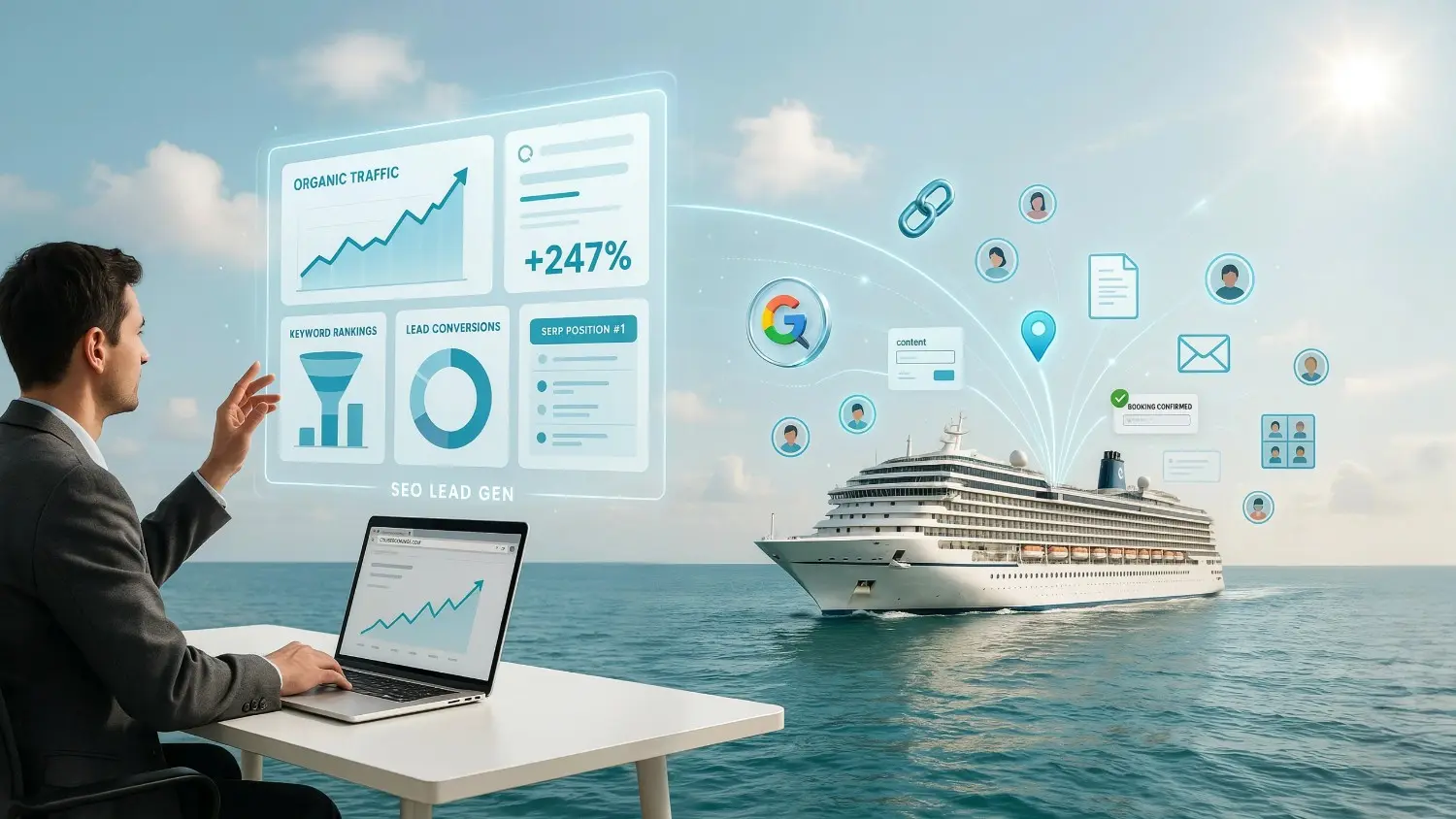
Local SEO for Travel Advisors in the United States
Local SEO helps nearby travelers find your travel agency. It works well for “travel agent near me” searches.
The company should keep its business name, address, and phone number consistent. Add service areas, office hours, and real reviews.
High Intent Cruise Keywords Strategy
High-intent cruise keywords target users who want booking help. Use words that show action.
Examples include:
- cruise booking calls
- book a Caribbean cruise
- travel agent for Alaska cruise
- Disney cruise reservations
- best cruise deal for seniors
- last-minute cruise booking
Content Clusters for Cruise Niches
Content clusters help your website cover cruise topics in depth. Each cluster should lead toward a call or booking form.
Alaska Cruise Deals
Alaska cruise content should explain sailing seasons, wildlife, and cabin views. Travelers often compare ports and weather.
Caribbean Cruise Packages
Caribbean cruise content should explain islands, family activities, and departure ports. Deal seekers want simple comparisons.
Luxury Cruise Experiences
Luxury cruise content should focus on service, suites, dining, and private excursions. These travelers expect detailed advice.
Mediterranean Cruise Deals
Mediterranean cruise content should explain ports, flights, and shore excursions. Travelers often need planning help.
European Cruise Packages
European cruise content should compare river cruises and ocean voyages. The right answer depends on trip style.
Asia Cruise Vacations
Asia cruise content should explain ports, visa needs, and travel timing. Travelers may need extra trip planning.
Hawaii Cruise Trips
Hawaii cruise content should explain island routes and sailing days. Travelers often compare cruises with land trips.
South America Cruise Itineraries
South America cruise content should highlight ports, seasons, and longer travel times. Clear plans build trust.
Antarctica Expedition Cruises
Antarctica cruise content should explain ship size, gear, and safety planning. These travelers need expert help.
Cruise Line Specific Lead Programs
Cruise line programs help agents match callers with suitable cruise options. Each cruise line attracts different traveler groups.
Customers may ask for a familiar brand first. Your agents should still ask about budget, age group, trip dates, and travel style.
Royal Caribbean Cruise Leads
Royal Caribbean cruise leads often include families and active travelers. They may ask about ships, shows, and onboard activities.
NCL Norway Cruise Leads
NCL cruise leads often ask about flexible dining and casual travel options. Confirm their departure city and cabin needs.
Carnival Cruise Booking Leads
Carnival cruise booking leads often focus on value and fun group trips. Ask about guest count and budget early.
Disney Cruise Specialized Leads
Disney cruise leads need fast and accurate answers. Families may compare dates, staterooms, and kids’ activities.
Monetization and Revenue Models
Travel businesses can earn more when they match lead costs with commission value. Your profit depends on booking quality.
Customers struggle when they buy leads without a revenue plan. Your team should know the expected booking value before setting bids.
Pay Per Call vs Pay Per Lead
Pay per call gives your team a live conversation with the traveler. Pay per lead gives you a form or contact record.
| Lead Type | Best Use | Main Risk |
| Pay per call | Fast booking needs | Missed calls |
| Web leads | Long planning cycles | Slow follow-up |
| Transferred calls | Agent-ready buyers | Weak screening |
| Shared leads | Lower upfront cost | Heavy competition |
Pay Per Call vs Web Form Leads
Pay per call leads usually create faster conversations than web form leads. They can work well for travelers ready to book.
Web leads still matter for long trips. A traveler may need days to compare cruise lines. Your CRM should support both paths.
Commission Structures and Profit Margins
Commission structures show how much revenue each booking may create. Your team should know this before buying calls.
The company should track deposit amount, cabin type, trip value, and add-ons. Excursions, insurance, and flights may affect total revenue.
Average Cost Per Lead for Travel Businesses
Average lead cost changes by destination, season, and traveler intent. There is no single safe number.
The company should calculate its own target cost. Use past booking data. Avoid copying another travel agency’s bid.
Compliance and Call Marketing Regulations
Compliance protects your travel business from costly call marketing mistakes. It should be part of every campaign.
The FCC’s TCPA rules restrict certain automated, prerecorded, and artificial voice telemarketing calls. The FTC also enforces telemarketing rules and Do Not Call protections.
TCPA Compliance for Pay Per Call Campaigns
TCPA compliance requires careful consent and calling practices. Do not use automated or prerecorded outreach without legal approval.
The company should keep consent records. It should also identify the seller clearly. Speak with qualified legal counsel before launching outbound campaigns.
Call Recording and Consent Laws in the United States
Call recording rules can differ across states. Your business should use approved recording notices.
The FTC notes that recording requirements can involve state law duties. Your legal team should review the rules for every target state.
No Coached Calls No Fake Call No Transfers
Real cruise leads come from honest customer interest. Never use coached callers, fake calls, or hidden transfers.
Customers lose trust when the call feels staged. The company should reject suppliers that cannot prove lead source quality.
Important: This section offers general marketing guidance, not legal advice.
Lead Generation Benefits for Travel Businesses
Inbound cruise calls can outperform cold outreach because travelers start the conversation. They already have an interest.
Customers dislike surprise sales calls. They prefer speaking when they choose. Inbound calls can create a better first experience.
Outperforming Cold Outreach with Inbound Calls
Inbound calls reduce the pressure of cold outreach. The traveler controls the first step.
The company can focus on useful answers. That helps agents build trust before asking for a booking.
Higher Conversion Rates Than Form Fills
Live calls can reveal booking intent faster than simple form fills. Agents can ask useful questions immediately.
Customers may write “Caribbean cruise” in a form. A live call can uncover travel dates, cabin needs, and price limits.
How Do Cruise Booking Leads Benefit Your Business
Cruise booking leads help your sales team find people with active travel plans. They can improve agent productivity.
The company should still measure call quality. Good lead generation does not end with the call. It ends with a confirmed booking.
Call Flow and IVR Script Best Practices
A clear call flow helps cruise agents guide travelers without sounding scripted. It keeps the conversation useful.
Customers remember agents who listen. They do not remember agents who rush through a sales script.
Why Call Flows Matter for Travel Sales
Call flows help agents ask the right questions in the right order. They reduce confusion.
A simple cruise call flow includes:
- Welcome the caller.
- Ask about destination.
- Confirm travel dates.
- Ask guest count.
- Discuss budget range.
- Recommend suitable cruise options.
- Set the next step.
Conversation Scripts for Cruise Advisors
Conversation scripts give agents a helpful starting point. They should not sound robotic.
“Thanks for calling. I can help with your cruise plans.
Which destination are you considering?
What dates work best for your group?
I will check cruise options that fit your needs.”
Analytics and Performance Metrics
Analytics show whether your cruise lead campaigns create real revenue. Track more than calls.
Customers often celebrate high call volume too early. A campaign may produce many calls but few bookings. Your dashboard should show the full journey.
Cost Tracking and Meta Ad Spend Integration
Cost tracking compares ad spend with call and booking results. It helps stop waste quickly.
The company should review cost per call, cost per qualified call, and cost per booking. Include Google Ads, Meta Ads, and lead network costs.
Multi Touch Attribution for Cruise Bookings
Multi-touch attribution shows every step before a cruise booking. A traveler may click several ads before calling.
The company should track ad click, landing page visit, call, follow-up, and booking. This gives a fairer view of campaign value.
Target Audience Segmentation
Audience segmentation helps you speak to each cruise traveler differently. One message cannot fit everyone.
Customers book cruises for different reasons. Some want value. Others want luxury, family time, or a first-time adventure.
Luxury Cruise Travelers
Luxury cruise travelers care about service, suites, and special experiences. They want details before booking.
The company should discuss private tours, dining, cabin upgrades, and concierge-style support.
Family Cruise Buyers
Family cruise buyers need easy planning and clear activity options. They often ask about cabins and kids’ programs.
Customers may also need help with flights, transfers, and family travel dates. Give simple answers first.
First Time Cruise Customers
First-time cruise customers need extra guidance before they book. They may worry about seasickness, cabins, and boarding.
The company should explain cruise basics without making them feel inexperienced. Helpful education can build trust.
Retirees and Senior Cruise Travelers
Senior cruise travelers often value comfort, timing, and support. They may ask about walking needs and travel protection.
Customers may also prefer longer itineraries or quieter cruise ships. Your agents should ask respectful questions.
Conclusion
Cruise Booking Leads and Calls work best when your team tracks every step. Use strong keywords, useful landing pages, smart routing, and honest call rules. Focus on booked trips, not only call volume. Keep your agents ready when travelers call.
Top7seven helps travel businesses build lead systems that fit real sales teams. Contact Top7seven, 4878 Nickel Road, El Monte, CA 91731. Call (209)-655-3042 or email contact@top7seven.com. We can help you create a practical cruise lead strategy that brings more qualified booking calls.
FAQ
How can travel agencies get Cruise Booking Leads and Calls?
Travel agencies can get Cruise Booking Leads and Calls through Google Ads, local SEO, social ads, referrals, and pay-per-call partners. The best sources target people who search for cruise prices, dates, cabins, or destinations. Fast follow-up helps turn interest into bookings.
Are exclusive cruise booking leads better than shared leads?
Exclusive cruise booking leads go to one travel business only. Shared leads go to several agencies at once. Exclusive leads give agents more time to build trust. They may cost more, so track booked trips and profit before raising your budget.
How much do travel agents earn from booking a cruise?
Travel agents earn different amounts from each cruise booking. Income depends on the cruise line, cabin type, trip price, add-ons, and agency agreement. A $10,000 trip does not guarantee one set commission. Agents should review supplier terms before selling.
Is it cheaper to use a travel agent to book a cruise?
Booking with a travel agent does not always cost more. Many agents earn from cruise line commissions, not separate client fees. They may also find cabin choices, added value, or cruise deals. Travelers should compare full trip prices, terms, and cancellation rules.
Is cruise lead generation legal for travel agencies?
Cruise lead generation is legal when businesses use honest ads, clear consent, and lawful contact methods. Travel agencies should protect customer data and explain how they use it. Avoid fake calls, copied reviews, or unwanted automated messages. Rules can vary by state.