Get Exclusive Payday Loan Leads and Live Transfer Calls in the United States
Exclusive Payday Loan Leads and Calls help lenders reach borrowers without competing against other buyers. Customers lose money when shared leads reach many lenders at once. They need fast delivery, strong filters, and clear consent records.
At Top7seven, we bring over 20 years of lead generation experience. We have seen lenders buy cheap leads that never answer. We have also seen strong campaigns fail from poor routing. The right setup protects your budget and your team.
This guide explains how to buy, track, and improve payday loan leads USA. Customers will learn about calls, web leads, costs, quality checks, and compliance. Contact Top7seven at 4878 Nickel Road, El Monte, CA 91731. Call (209)-655-3042 or email contact@top7seven.com.
Understand Payday Loan Lead Types and Buyer Eligibility
This section explains the main Payday Loan Leads and Calls types buyers can receive. Customers should match each lead type with their licenses, loan rules, and agent capacity.
This problem happens when lenders buy leads without clear buyer filters. They receive applicants from blocked states or outside loan limits. The company should define every rule before launching campaigns.
| Lead Type | Best Use | Main Benefit | Main Risk |
| Exclusive web leads | Lenders with fast follow-up | One approved buyer | Higher lead cost |
| Shared web leads | Testing new funnels | Lower entry cost | Heavy buyer competition |
| Live transfer calls | Sales teams with open agents | Immediate borrower contact | Missed calls waste money |
| Inbound click-to-call leads | Mobile-focused campaigns | Strong intent | Limited daily volume |
| Aged leads | Re-engagement teams | Lower purchase cost | Lower contact rates |
Exclusive Payday Loan Web Leads
Exclusive payday loan web leads go to one approved buyer only. Customers avoid competing with other lenders after the form arrives.
This setup works best for lenders with fast sales teams. The company should call within minutes after receiving real-time leads. Slow follow-up often turns strong interest into lost applications.
Shared Payday Loan Leads
Shared payday loan leads go to more than one buyer. Customers often pay less upfront for this lead type.
This option can work during early campaign testing. The company should expect faster buyer competition and lower contact rates. Customers should never judge shared leads by price alone.
Payday Loan Live Transfer Calls
Payday loan live transfer calls connect qualified borrowers directly with an agent. Customers can speak with interested applicants before they leave the funnel.
This problem happens when agents cannot answer transferred calls quickly. The company should route calls only during staffed hours. Customers should also set overflow rules for busy periods.
Direct Inbound and Click to Call Payday Loan Leads
Direct inbound and click-to-call payday loan leads come from borrowers who choose to call. Customers usually receive stronger intent from these calls.
This format works well for mobile search traffic. The company should show the phone number clearly on landing pages. Customers should track each call source inside the CRM.
Real Time Versus Aged Payday Loan Leads
Real-time payday loan leads arrive soon after borrower interest. Customers can contact the applicant while the need feels urgent.
Aged payday loan leads arrive later after the first inquiry. The company can use them for email sequences or re-engagement calls. Customers should use separate scripts for each lead age.
Licensed Lenders, Lead Aggregators, Affiliates, and Publishers
Licensed lenders, lead aggregators, affiliates, and publishers serve different campaign roles. Customers should know who collects data and who receives it.
This problem happens when lead ownership stays unclear. The company should request a full delivery map before buying. Customers should know every approved recipient and traffic source.
Compare Exclusive and Shared Payday Loan Leads
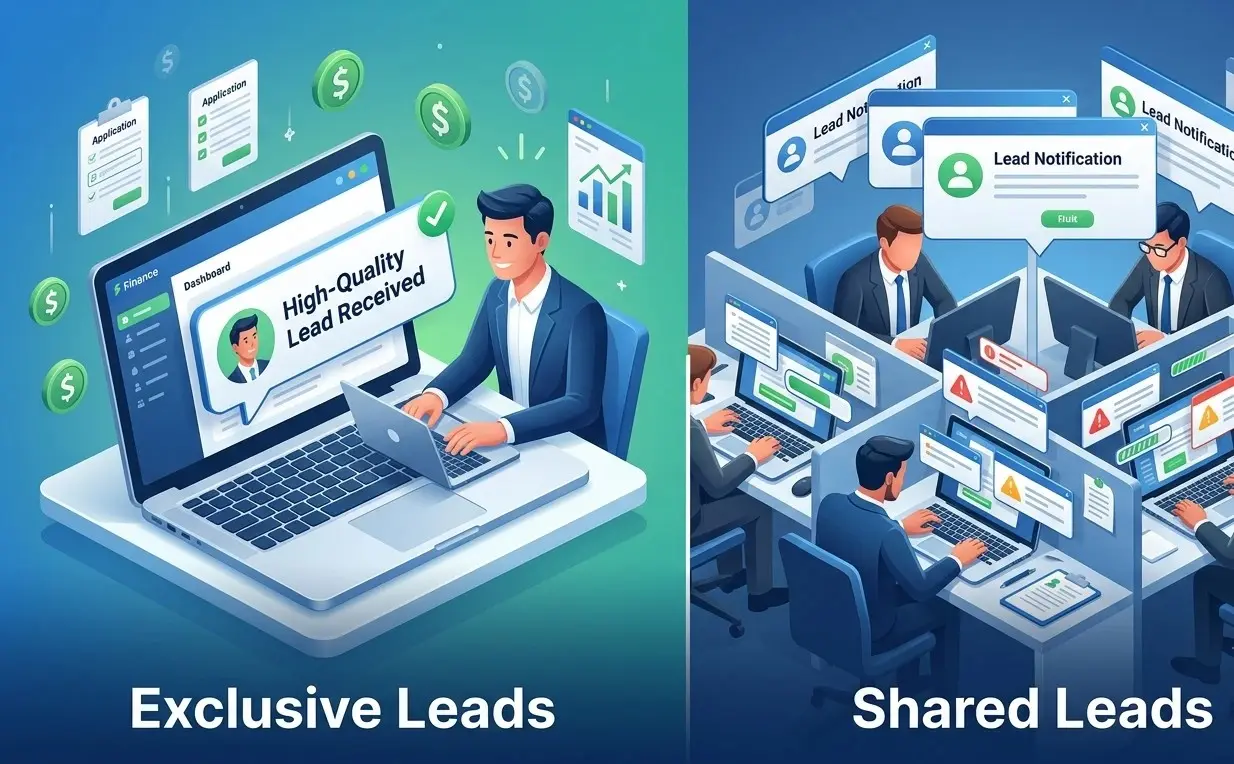
Exclusive leads offer more control, while shared leads offer lower entry costs. Customers should choose based on speed, budget, and team strength.
This decision affects conversion, sales pressure, and return on ad spend. The company should test both options with separate tracking. Customers should compare funded loans, not only lead volume.
What Makes a Payday Loan Lead Exclusive
An exclusive payday loan lead goes to one approved buyer. Customers should receive written confirmation of this rule.
This rule should cover form submissions and call transfers. The company should ask about resale rights after rejection. Customers should also ask about repeat borrower submissions.
Shared Lead Delivery and Buyer Competition
Shared lead delivery sends one borrower inquiry to several buyers. Customers need faster response times in this model.
This setup creates a race for borrower attention. The company should use short call scripts and quick text follow-ups. Customers should not expect exclusive conversion rates from shared traffic.
How Exclusivity Affects Lead Price and Conversion Potential
Exclusive leads usually cost more because buyer competition stays lower. Customers may gain better contact opportunities from faster ownership.
This problem happens when buyers compare only cost per lead. The company should compare cost per funded loan instead. Customers should measure full results over several weeks.
How to Confirm One Buyer Only Lead Delivery
Written delivery rules confirm whether a lead stays exclusive. Customers should request proof before sending payment.
The company should ask these questions before buying:
- Does one buyer receive each approved lead?
- Can the provider resell rejected leads later?
- Can affiliates reuse applicant data?
- Does the contract list every approved recipient?
- Will the provider replace duplicate submissions?
Understand Payday Loan Lead Routing and Delivery Models
Lead routing decides which lender receives each borrower inquiry. Customers need routing rules that match their product and state filters.
This system works by checking borrower details against buyer rules. The company can route by state, loan amount, credit range, or open hours. Customers should review routing reports each week.
Ping Tree and Ping Post Lead Routing
Ping tree routing checks buyer rules before sending full applicant data. Customers can protect data by sharing limited details first.
This method can improve routing speed and buyer matching. The company should define minimum bid and acceptance rules. Customers should also test failed delivery paths.
Lead Waterfall Pricing and Buyer Acceptance Rules
Lead waterfall pricing sends leads through buyers in a set order. Customers can build rules around price, quality, or lender priority.
This setup works when several approved buyers accept different profiles. The company should define clear rejection reasons. Customers should avoid vague rules like “bad quality.”
What Happens When a Buyer Declines a Lead
A declined lead should follow a documented next step. Customers should know whether the lead gets rerouted, returned, or removed.
This problem happens when providers resend declined leads without clear rules. The company should set resale limits before launch. Customers should protect borrower trust and data privacy.
State and Loan Product Filters
State and product filters block leads that do not fit lender rules. Customers should set these rules before buying traffic.
The company should filter restricted states before forms and calls. Customers should also filter loan amounts and product types. This process reduces wasted agent time.
API, Webhook, Email, and CRM Lead Delivery
API, webhook, email, and CRM delivery methods move leads into lender systems. Customers should choose the fastest reliable method.
This problem happens when leads sit inside inboxes too long. The company should use API or webhook delivery for urgent leads. Customers should test every field before spending heavily.
Daily Lead Caps and Campaign Pause Controls
Daily lead caps stop campaigns from sending more leads than teams can handle. Customers should set caps around real agent capacity.
The company should pause campaigns when approvals fall or agents miss calls. Customers should also use weekend and holiday controls. This prevents wasted lead generation spend.
Buy Payday Loan Live Transfer Calls
Payday loan live transfer calls work best when agents answer immediately. Customers should only buy calls during staffed business hours.
This problem happens when call volume exceeds agent capacity. The company should track missed calls, wait times, and transfers. Customers should treat missed calls as a direct campaign cost.
Live Transfer Call Qualification Criteria
Live transfer call criteria define when a borrower reaches an agent. Customers should agree on these rules before launch.
The company may filter by state, age, income, or loan need. Customers should avoid unclear words like “qualified.” This rule should list exact required data points.
Direct Inbound Calls Versus Warm Transfers
Direct inbound calls come straight from the borrower to your team. Customers receive the caller without another person joining first.
Warm transfers include a brief handoff from a trained agent. The company should test both call types. Customers may prefer warm transfers for complex lender filters.
Call Duration and Billable Call Rules
Billable call rules explain when a transferred call becomes payable. Customers should receive these rules in writing.
This problem happens when providers count short or disconnected calls. The company should define minimum duration and qualification steps. Customers should review recordings for disputed calls.
Business Hours, Agent Capacity, and Overflow Routing
Business hours and agent capacity control successful call delivery. Customers should match call schedules with trained agents.
The company should set overflow paths for busy periods. Customers should not send callers into endless hold times. This damages trust and lowers conversion rates.
Call Tracking, Recording Consent, and Quality Assurance
Call tracking shows where each borrower call started and ended. Customers should connect tracking numbers with campaign reports.
The company should confirm recording notices and consent rules with legal counsel. Customers should review calls for agent behavior and lead quality. The FTC also requires careful telemarketing controls and Do Not Call procedures.
Buy Exclusive Payday Loan Web Leads
Exclusive payday loan web leads help lenders control each borrower opportunity. Customers should receive leads within seconds, not hours.
This setup works best with fast CRM alerts and trained agents. The company should assign ownership immediately after delivery. Customers should monitor first-contact time every day.
Required Applicant Data and Buyer Filters
Required applicant data helps lenders screen leads before agent contact. Customers should request only information needed for matching.
The company may need state, income range, loan need, and contact details. Customers should avoid collecting extra data without a clear purpose. Smaller forms can also reduce drop-offs.
Real Time Delivery and Lead Age
Real-time delivery sends applicant details soon after form completion. Customers can respond while borrower interest remains active.
This problem happens when providers delay lead delivery. The company should receive a timestamp with every record. Customers should compare lead age against contact results.
Lead Ownership and Resale Restrictions
Lead ownership rules explain who may use each applicant record. Customers should demand clear resale restrictions.
The company should confirm whether rejected leads can move elsewhere. Customers should also confirm how long the provider keeps data. This protects both buyer rights and borrower expectations.
Lead Delivery Through API, XML, Email, and CRM Integration
API and CRM delivery reduce manual work after form completion. Customers can route qualified leads to the right team faster.
The company should test every integration before going live. Customers should check names, phone fields, timestamps, and source tags. Small errors can ruin campaign reporting.
Daily Lead Volume and Delivery Controls
Daily lead controls keep campaigns within lender capacity. Customers should start with manageable lead caps.
The company should increase volume only after stable results. Customers should watch agent response times during every increase. Fast growth can create hidden losses.
Verify Payday Loan Lead Quality Before Purchase
Lead quality checks protect buyers from duplicate, fake, and unusable applications. Customers should review sample data before large orders.
This problem happens when lenders trust lead labels without testing results. The company should create acceptance rules before buying. Customers should use a trial campaign before long contracts.
Data Completeness, Lead Age, and Duplicate Protection
Complete data helps agents start useful borrower conversations. Customers should receive a clear field list from the provider.
The company should flag missing phone numbers and repeated applications. Customers should set a duplicate time window. This rule prevents paying twice for one borrower.
Identity, Contact, and Bank Information Validation
Validation checks can reduce false contact details and weak applications. Customers should use only lawful methods for required verification.
The company should confirm phone ownership and email quality where appropriate. Customers should never collect bank details without a clear approved purpose. Strong controls protect borrower information.
Fraud Detection and Bot Traffic Prevention
Fraud controls help block bots, fake forms, and repeated submissions. Customers should ask how the provider detects suspicious traffic.
The company should review device patterns, strange form timing, and repeat details. Customers should ask about manual reviews for high-risk traffic. This protects campaign budgets.
Publisher Traffic Source Transparency
Traffic transparency shows where payday loan leads actually come from. Customers should know whether traffic comes from search, email, or affiliate pages.
This problem happens when providers hide weak publisher sources. The company should request source-level reporting. Customers should pause sources with poor application quality.
Sample Lead Review and Lead Acceptance Rules
Sample lead reviews show whether provider data matches buyer requirements. Customers should inspect real examples before launch.
The company should test sample fields against CRM workflows. Customers should define valid, invalid, and duplicate leads clearly. This reduces disputes after delivery.
Invalid Lead Credits, Returns, and Replacement Policies
Credit policies explain what happens after an invalid lead appears. Customers should review these rules before signing.
The company should define claim deadlines and proof requirements. Customers should avoid providers with vague replacement promises. Clear rules prevent expensive arguments later.
Choose a Payday Loan Lead Provider
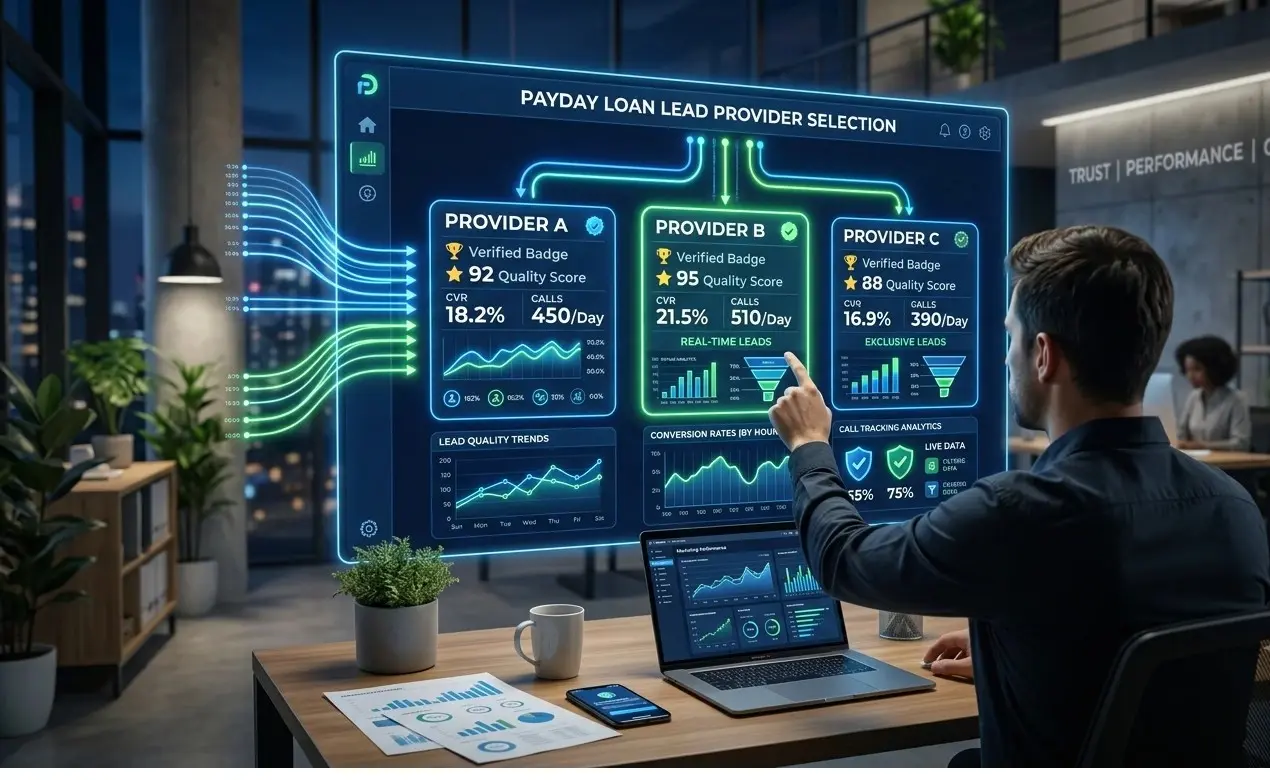
The right payday loan lead provider supports quality, control, and clear reporting. Customers should choose proof over flashy promises.
This problem happens when providers promise unlimited high-quality traffic. The company should ask for test results and delivery terms. Customers should start small and scale carefully.
Provider Experience With Consumer Financial Leads
Consumer financial lead experience matters because lender rules stay strict. Customers should ask about prior financial services campaigns.
The company should understand consent, routing, and lender filters. Customers should ask how the provider handles bad data. Real answers reveal real field experience.
Supported States and Eligible Loan Products
Supported states decide where the provider can send leads. Customers should compare provider coverage with lender approvals.
The company should not assume every state allows the same loan products. Customers should verify state rules and licensing before activating campaigns. State consumer-finance requirements differ across the country.
Publisher Sources and Lead Generation Methods
Publisher sources show how a provider creates borrower interest. Customers should ask about search, affiliate, email, and landing page traffic.
The company should avoid hidden traffic sources. Customers should ask whether the provider uses a payday loan leads affiliate network. Clear sourcing supports safer campaign decisions.
Lead Ownership, Data Sharing, and Approved Recipient Controls
Approved recipient controls limit who can receive borrower information. Customers should know every party handling lead data.
The company should request a data-sharing map from the provider. Customers should ask about affiliate access and storage periods. This step matters for trust and privacy.
Contract Terms, Pricing Minimums, and Volume Commitments
Contract terms explain pricing, minimums, and cancellation rights. Customers should read every delivery promise before signing.
The company should watch for hidden setup fees and volume locks. Customers should avoid large commitments before testing results. Strong providers allow clear campaign controls.
Trial Campaigns, Buyer Filters, and Campaign Controls
Trial campaigns let buyers test lead quality with lower risk. Customers should begin with narrow state and product filters.
The company should use trial data to refine buyer rules. Customers should test response times and application rates. This creates a safer path to scale.
Reporting for Applications, Approvals, and Funded Loans
Funded-loan reporting shows the true value of lead campaigns. Customers should track more than lead counts.
The company should connect lead IDs with application and funding outcomes. Customers should share postback data when possible. This improves payday loan lead generation decisions.
Calculate Payday Loan Lead and Call Costs
Lead and call costs matter only when measured against funded loan results. Customers should track every stage from inquiry to funding.
This problem happens when lenders celebrate cheap leads but lose money later. The company should calculate break-even targets before buying traffic. Customers should include agent time, software, and rejected leads.
Cost Per Lead
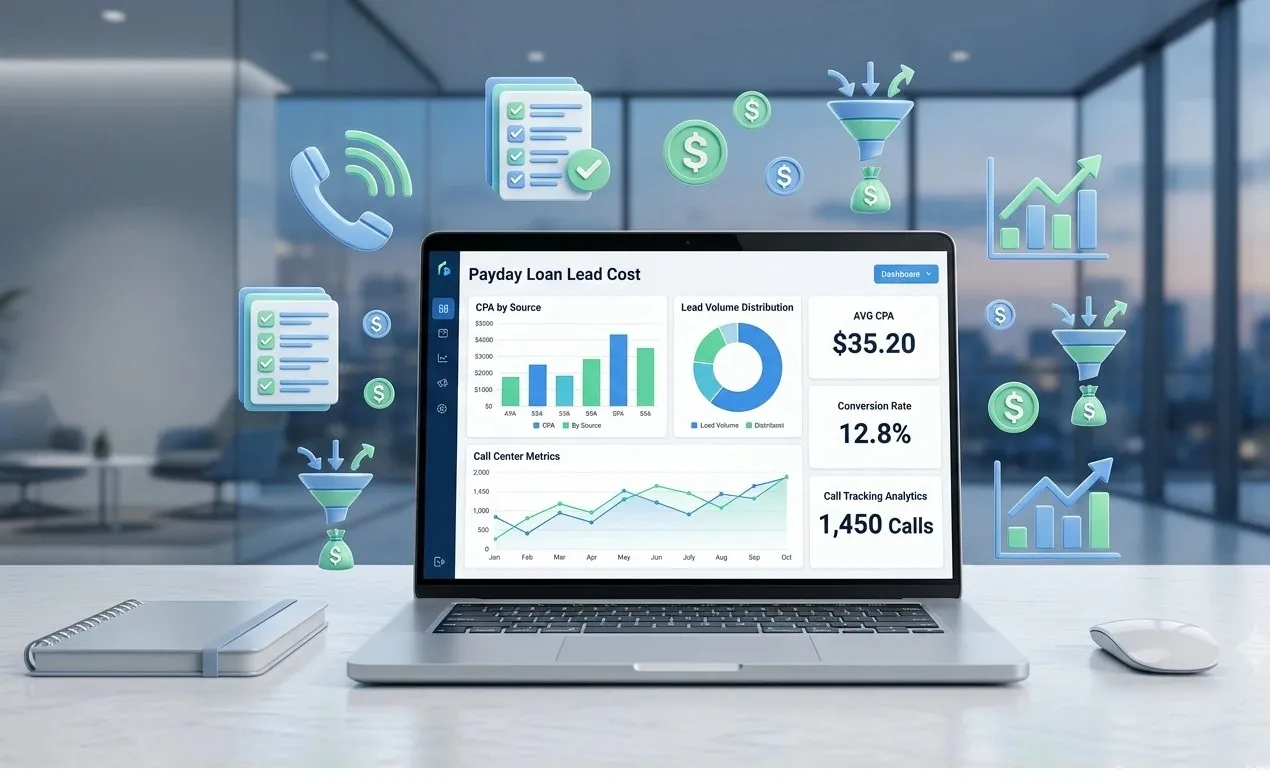
Cost per lead shows how much one submitted inquiry costs. Customers should divide total lead spend by accepted leads.
The company should remove invalid and duplicate records first. Customers should compare cost per lead by source. Cheap leads can still produce poor loan results.
Cost Per Qualified Call
Cost per qualified call shows the price of useful borrower conversations. Customers should exclude wrong numbers and unqualified transfers.
The company should review recordings before counting billable calls. Customers should track missed transfers separately. This reveals hidden call handling costs.
Cost Per Application
Cost per application shows what each completed loan application costs. Customers should divide total spend by completed applications.
The company should compare applications by state and traffic source. Customers should not treat partial forms as completed applications. Clean definitions create cleaner reports.
Cost Per Approval
Cost per approval measures how much each approved borrower costs. Customers should use lender approval data for this metric.
The company should compare approval rates across publishers. Customers should find sources with better borrower fit. This helps control acquisition costs.
Cost Per Funded Loan
Cost per funded loan shows the real campaign cost. Customers should use this metric for final decisions.
The company should include lead cost, call cost, agent cost, and software cost. Customers should compare this number with expected revenue. This supports healthier ROI.
Factors That Affect Payday Loan Lead Pricing
Lead pricing changes with buyer filters, state rules, and traffic quality. Customers should expect stronger filters to change prices.
The company should also consider call timing and borrower intent. Customers should ask about exclusivity, loan amount, and source type. These factors shape pricing.
Calculate a Break-Even Cost Per Lead
Break-even cost per lead shows the highest safe price for one lead. Customers can use this simple formula:
Break-Even CPL = Profit Per Funded Loan × Lead-to-Funding Rate
The company should use real funded-loan data in this formula. Customers should lower the target for uncertain traffic. This protects campaign cash flow.
Calculate a Break-Even Cost Per Qualified Call
Break-even cost per qualified call sets a safe price for transferred calls. Customers can use this formula:
Break-Even CPQC = Profit Per Funded Loan × Call-to-Funding Rate
The company should include no-show and missed-call losses. Customers should update this number every month. Agent performance can change call value.
Track Payday Loan Lead Performance and Return
Performance tracking helps lenders find leads that convert into funded loans. Customers should connect marketing data with lender outcomes.
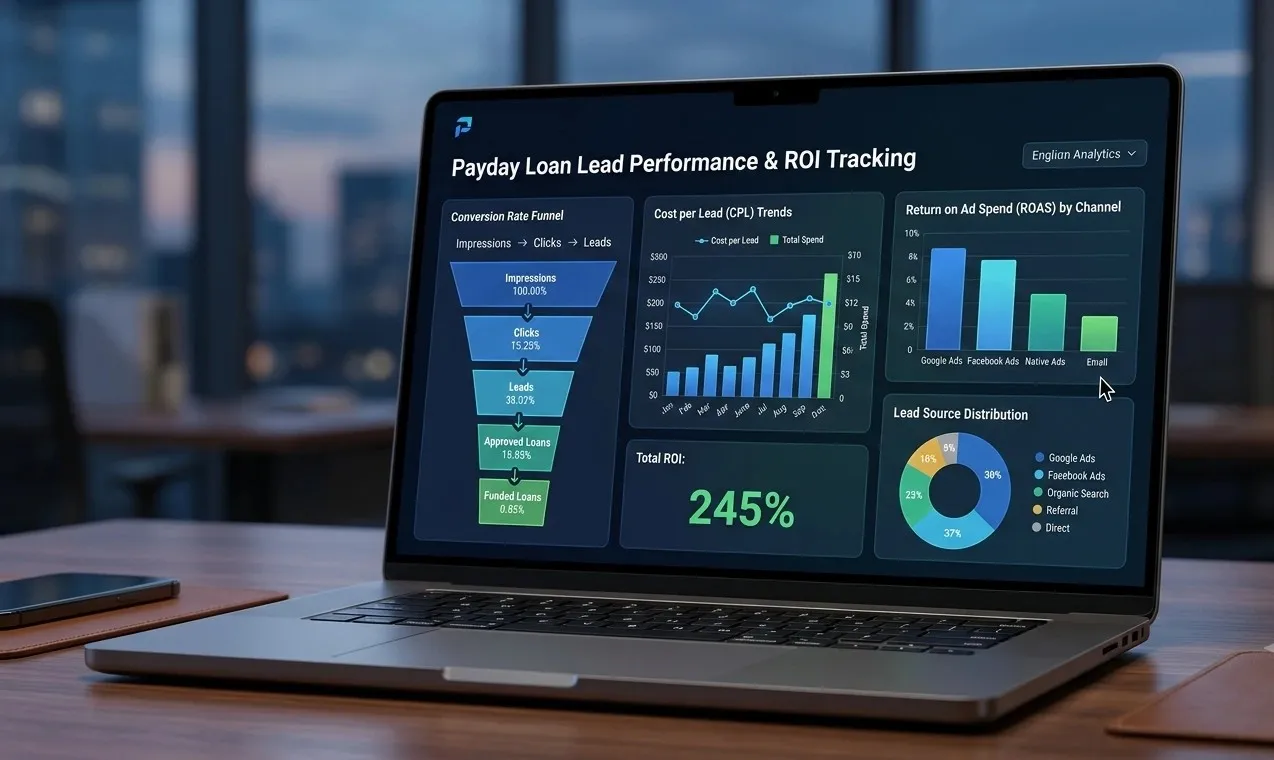
This system works by tracking each record from source to funding. The company should use one lead ID across platforms. Customers should avoid reports based only on clicks.
Application, Approval, and Funding Rates
Application, approval, and funding rates show where borrowers drop off. Customers should track each rate separately.
The company should compare rates by source and state. Customers should look for large gaps between application and approval. Those gaps may reveal poor targeting.
Call Disposition and Postback Tracking
Call disposition tracking records what happened during every borrower call. Customers should use simple outcomes like answered, qualified, declined, or funded.
The company should send final outcomes back into the dashboard. Customers should use postback tracking for automated reporting. This improves future campaign choices.
Cost Per Funded Loan by Lead Source
Cost per funded loan by source reveals the best traffic channels. Customers should compare sources using the same time period.
The company should separate search, affiliate, and email traffic. Customers should pause weak sources before increasing spend. This creates more cost-effective lead generation.
Performance by State, Publisher, and Campaign
State and publisher reports reveal hidden campaign differences. Customers should not mix all traffic into one report.
The company should compare each state against lender rules. Customers should also compare publishers within the same funnel. Small changes can create major result shifts.
Return on Lead Spend
Return on lead spend shows whether campaigns create more value than cost. Customers should track revenue after funded loans close.
The company should include lead costs, agent costs, and platform fees. Customers should not hide weak sources inside blended numbers. Clear reporting protects marketing efforts.
Manage United States Compliance for Payday Loan Lead Generation
USA compliance requires state checks, clear consent, honest claims, and secure data handling. Customers should get qualified legal advice before launching or scaling.
This problem happens when teams treat compliance as a final review. The company should build controls into ads, forms, calls, and CRM routing. Customers should document every campaign rule.
Important: This section offers general marketing information. It does not provide legal advice.
State Eligibility and Location Suppression Rules
State eligibility rules block marketing in restricted or unsuitable locations. Customers should suppress states before ads, forms, and calls.
The company should review state rules before changing targeting. Customers should use state-level filters in every funnel. Payday-lending status and consumer-finance laws differ by state.
State Licensing and Lender Verification
Lender verification confirms whether buyers can receive leads in each state. Customers should verify licenses before routing borrowers.
The company should review state regulator records and applicable NMLS information. Customers should save proof of each review. State licensing systems help oversee many consumer-finance providers.
Consumer Consent Records and Consent Provenance
Consent records show how and when a borrower agreed to contact. Customers should save form text, timestamps, URLs, and source details.
The company should keep proof of the exact consent language used. Customers should match consent records with every call or message. This helps support responsible contact practices.
Telemarketing Controls, Do Not Call Screening, and Opt Out Requests
Do Not Call controls reduce unlawful or unwanted telemarketing contact. Customers should scrub calling lists and honor opt-out requests quickly.
The company should maintain written procedures and train agents. Customers should not use copied lists without proper checks. The FTC states covered telemarketers must access and update Do Not Call data regularly.
Truth in Lending Act and Regulation Z Advertising Disclosures
Loan advertising should present terms honestly and clearly. Customers should avoid promises that lenders cannot actually offer.
The company should review APR, repayment, and fee statements with compliance teams. Customers should never hide key conditions in tiny text. Regulation Z bars ads from stating specific terms unavailable from the creditor.
UDAAP Risk in Lender Matching and Loan Offer Claims
UDAAP risk grows when lenders make unclear or misleading matching claims. Customers should explain whether they are lenders, marketers, or matching services.
The company should avoid steering borrowers based only on payment amounts. Customers should keep loan claims accurate and easy to understand. CFPB guidance warns that lead generators can create risks through compensation-based steering.
Consumer Data Minimization, Secure Transfer, and Record Retention
Data minimization reduces the amount of sensitive borrower information at risk. Customers should collect only data needed for the stated service.
The company should use secure transfers and limited staff access. Customers should set clear retention and deletion rules. FTC safeguards rules require covered financial institutions to protect customer information.
Fair Credit Reporting Act Considerations for Credit Data
Credit data needs careful handling under the Fair Credit Reporting Act. Customers should not treat credit data like ordinary lead fields.
The company should confirm lawful access and permitted uses before receiving reports. Customers should seek legal review for credit-based screening. Consumer reports cannot be shared without a purpose allowed under the Act.
Paid Media and Platform Restrictions for Payday Loan Campaigns
Paid media rules can limit payday loan advertising and targeting. Customers should review every platform policy before buying ads.
The company should not assume financial ads receive normal approval. Customers should verify location, disclosure, and product rules. Google restricts US personal-loan ads involving APRs of 36% or more.
Conclusion
Exclusive Payday Loan Leads and Calls can help lenders reach borrowers with more control. Customers should choose the right lead type first. They should track applications, approvals, and funded loans. The company should also protect call capacity and borrower data.
Top7seven helps lenders build clearer, safer lead generation systems. We focus on source tracking, delivery controls, and useful reporting. Visit us at 4878 Nickel Road, El Monte, CA 91731. Call (209)-655-3042 or email contact@top7seven.com. Contact us today, and we will help you build a smarter payday loan lead campaign.
FAQ
How Can I Get 100 Payday Loan Leads and Calls a Day?
To get 100 Payday Loan Leads and Calls daily, use several traffic sources. Try search ads, SEO pages, affiliate partners, and live call campaigns. Set state filters before launch. Add agents slowly, because missed calls and late replies can waste good leads.
How Can I Get More Payday Loan Leads Without Paying for Ads?
You can get more payday loan leads through SEO, helpful landing pages, email lists, and partner referrals. Create clear pages for borrower questions and loan needs. Share useful content that builds trust. Always collect clear consent before calling or texting people.
What Is the Best Way for Lenders to Get Payday Loan Leads?
The best way is to use exclusive Payday Loan Leads and Calls with strong filters. Choose leads that match your approved states, loan products, and team hours. Fast follow-up matters most. A lender that calls quickly often gets more completed applications.
Can ChatGPT Help Generate Payday Loan Leads?
ChatGPT can help plan payday loan lead generation content and campaigns. It can write landing page ideas, email drafts, call scripts, and FAQ topics. It cannot replace compliance checks or real traffic sources. Your team must review every claim before publishing.
Is Payday Loan Lead Generation Legal?
Payday loan lead generation can be legal when businesses follow federal, state, and platform rules. Lenders must use honest ads, clear consent, safe data handling, and proper licensing checks. Rules vary by state, so legal review helps protect your business.