
Get Exclusive Dentist Leads and Calls in the United States
Your dental office loses patients to shared leads; exclusive calls send each inquiry only to you. Many practices pay for forms that reach several nearby dentists. That creates slow replies, price shopping, and empty schedules.
The company, Top7seven, helps practices build better dentist lead generation systems. After 20+ years in lead generation, we have seen the same issue. Fast response, clear tracking, and exclusive routing usually beat cheap lead volume.
You can learn how to buy, track, and improve Dentist Leads and Calls. You can also learn which channels fit each dental service. Contact Top7seven for a practical growth plan.
- Address: 4878 Nickel Road, El Monte, CA 91731
- Phone: (209)-655-3042
- Email: contact@top7seven.com
Exclusive Dentist Leads and Calls by Cost Model
This section explains how exclusive dentist leads and calls work under different cost models. Customers should pay for outcomes they can track. A cheap lead is useless without a booked patient.
This problem happens when practices compare vendors using only lead price. They should compare calls, bookings, show rates, and treatment value. That shows the real cost of lead generation for dentists.
| Cost Model | What You Pay For | Best Use |
| Pay Per Call | A qualified inbound phone call | Emergency and urgent care |
| Pay Per Lead | A form, chat, or contact request | General dentistry campaigns |
| Pay Per Appointment | A booked consultation | Implants and cosmetic cases |
| Monthly Marketing Fee | Ongoing campaign management | Long-term dental marketing |
Exclusive Calls vs Shared Dental Leads
This model sends each call to one dental practice, not several competitors. Customers often contact the first office that answers. Shared leads create a race that hurts trust.
Pay Per Call vs Pay Per Lead vs Pay Per Appointment
This comparison shows which payment model matches your booking process. Customers should choose pay-per-call for urgent searches. They should use appointment pricing for higher-value treatments.
Cost Per Lead vs Cost Per Booked Patient
This metric compares inquiry cost with actual scheduled patient cost. Customers should track both numbers. A low-cost form can produce expensive bookings.
What Counts as a Qualified Dental Lead in the United States
This answer defines a qualified dental lead as a reachable patient seeking your service. Customers should require location, service interest, and valid contact details. Good vendors also remove spam and duplicates.
How Exclusivity Impacts Conversion Rate and ROI
This rule shows exclusivity can improve conversion by removing direct lead competition. Customers get more time to respond. They also avoid competing against three other dental offices.
Dental Lead Costs by Treatment Type
This section shows why dental lead cost changes by treatment type. Customers searching for urgent care behave differently than implant shoppers. Service value should guide your marketing budget.
The company should never use one target cost for every procedure. A cleaning patient and implant patient create different revenue paths. Your campaign should reflect that difference.
| Treatment Type | Search Intent | Typical Lead Value |
| Emergency dentistry | Very urgent | High |
| Dental implants | Research-heavy | Very high |
| Cosmetic dentistry | Visual and emotional | High |
| Clear aligners | Comparison-driven | Medium to high |
| General dentistry | Routine care | Medium |
Emergency Dentist Calls
This service needs fast calls from patients with urgent dental pain. Customers often choose the office that answers immediately. Missed calls can become lost same-day revenue.
Dental Implant Leads
This service needs patient leads who understand implant treatment and consultation steps. Customers need trust before booking. Financing details often improve implant appointment rates.
Cosmetic Dentistry Leads
This service attracts patients seeking smile changes and visible dental work. Customers respond well to before-and-after proof. Clear treatment pages also build confidence.
Clear Aligner and Orthodontic Leads
This service attracts patients comparing price, timing, and appearance options. Customers often need simple explanations. Online booking can reduce delays.
General Dentistry and New Patient Leads
This service brings new patients seeking cleanings, exams, and routine dental care. Customers often search near home or work. Strong local reviews help them choose faster.
High Value Case Leads vs Routine Care Leads
This comparison separates expensive treatment cases from routine care visits. Customers should track each group separately. High-value cases may justify a higher acquisition cost.
Set Your Dentist Lead Budget Before Buying Leads
This section helps you set a safe budget before buying dentist leads. Customers should start with capacity, service value, and booking rates. Spending without targets often creates waste.
You can solve this by using simple math. Start with your average treatment value. Then set a maximum cost per booked patient.
Identify Your Highest Value Dental Services
This step finds services that create the strongest revenue per patient. Customers should review implants, veneers, aligners, and restorative care. These services often support focused campaigns.
Define Your Target Patient and Service Area
This step identifies who you want and where they live. Customers should target realistic driving areas. Broad targeting often creates out-of-area calls.
Estimate Your Maximum Cost Per Booked Patient
This number shows the most you can spend for one booked patient. Customers should protect their margin. Use treatment profit, not gross revenue alone.
Calculate Break Even Cost Per New Patient
This formula shows when a new patient stops creating profit. Customers should include staff time and ad costs. They should also include missed appointment risk.
Set Monthly Call Appointment and Revenue Targets
This plan sets clear monthly goals for calls, bookings, and revenue. Customers should avoid vague targets. A goal like “more leads” hides real problems.
Simple planning example:
- Set a monthly revenue goal.
- Choose target services.
- Estimate booked appointments needed.
- Calculate calls needed for those bookings.
- Set a maximum spend.
Best Dentist Lead Generation Channels by Cost and Intent
This section compares the best channels for different dental patient needs. Customers should use urgent channels for urgent treatment. They should use trust-building channels for planned care.
This problem happens when practices expect one channel to do everything. Dental lead generation marketing works better with a balanced channel mix. Each source serves a different patient journey.

Pay Per Call for Ready to Book Dental Patients
This channel reaches patients who prefer calling before they book an appointment. Customers often use calls for urgent needs. Good routing keeps those calls from going unanswered.
Google Local Services Ads for Qualified Patient Contacts
This channel can bring local patient contacts from service-based searches. Customers should track booked appointments closely. Leads still need quick follow-up.
Google Ads for Immediate High Intent Calls
This channel reaches people actively searching for dental services now. Customers can target urgent keywords. They should avoid broad searches with weak intent.
Local SEO for Lower Long Term Lead Cost
This channel builds visibility in local search results over time. Customers gain steady website traffic. Strong local SEO can reduce dependence on paid ads.
Referral Programs for High Trust Low Cost Leads
This channel uses happy existing patients to bring trusted referrals. Customers often trust personal recommendations more. Referral rewards should remain simple and clear.
Social Ads for Cosmetic and Awareness Based Leads
This channel helps cosmetic services reach patients before they start searching. Customers respond to visual proof. Short videos can explain results and treatment options.
Pay Per Call Dental Lead Generation Cost
This section explains what changes the cost of pay-per-call dental leads. Customers should pay for valid conversations, not random dial attempts. Clear rules protect the budget.
The company should define every call rule before launch. That includes duration, location, service need, and exclusivity. Verbal promises are not enough.
Exclusive Inbound Call Pricing
This pricing gives one practice each approved inbound dental call. Customers should confirm the call never reaches another dentist. Exclusivity must appear in writing.
Call Duration and Qualification Rules
This rule sets the minimum call length for a billable dental lead. Customers should reject very short calls. Short calls often include wrong numbers or quick hang-ups.
Call Routing to One Dental Practice
This setup sends each qualified caller to one approved office. Customers should test call routing often. Broken routing can waste expensive demand.
Call Recording and Lead Validation
This process lets practices check call quality and dispute bad leads. Customers should review recordings weekly. Recordings also improve front desk training.
Refund Rules for Bad Duplicate or Out of Area Calls
This policy explains when a vendor replaces or credits invalid calls. Customers should ask before signing. Clear refund terms reduce arguments later.
Red Flags of Shared or Resold Dental Calls
This warning sign appears when callers mention other dentists or repeated outreach. Customers should investigate quickly. Resold calls often lower booking rates.
Google Local Services Ads Cost for Dentists
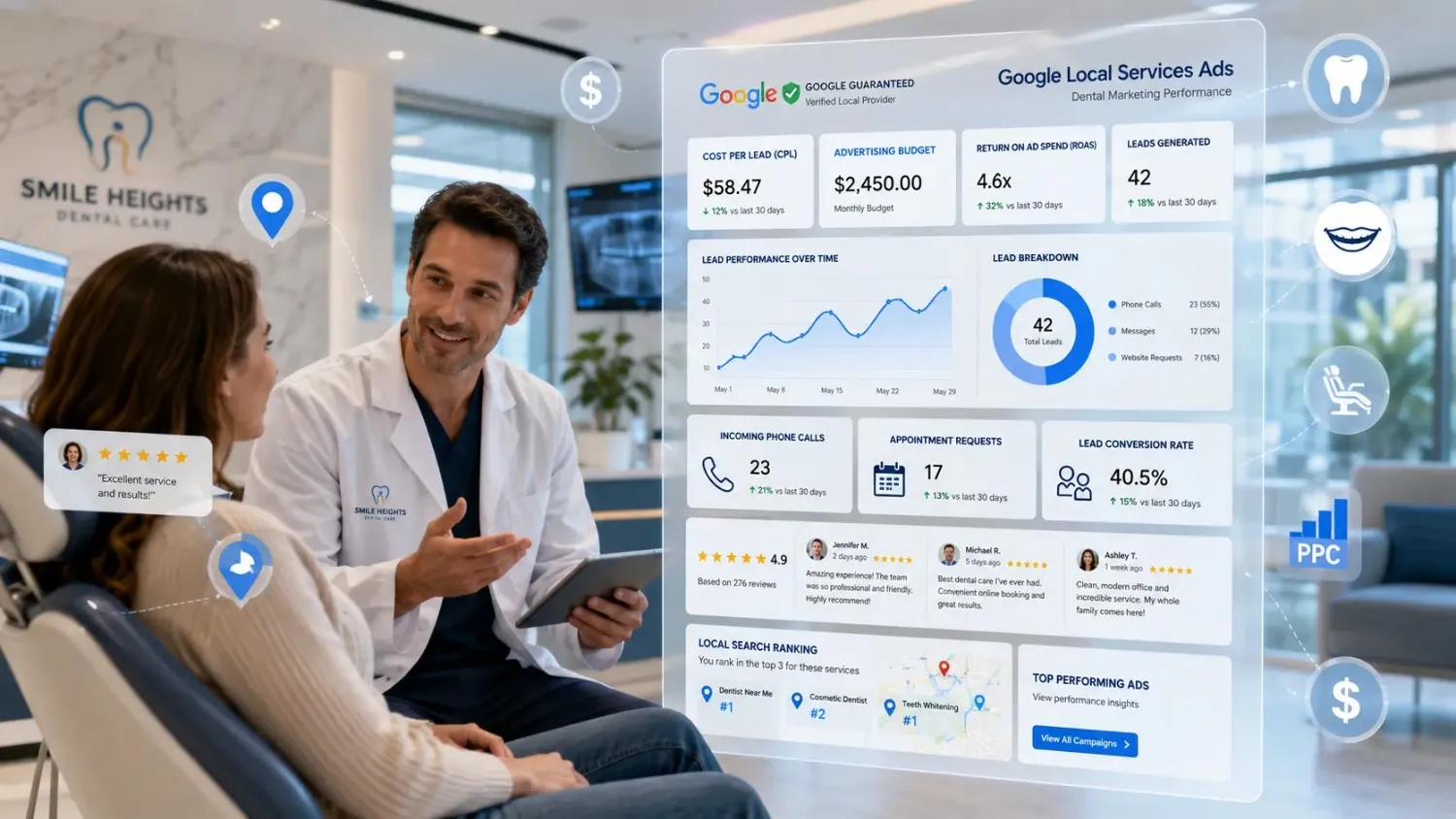
This section explains how Google Local Services Ads costs can change. Customers pay based on lead activity, not simple clicks. Market competition affects weekly spending.
Customers struggle when they ignore booking data after receiving leads. A lead can look valid yet never schedule. The front desk should record every outcome.
Pay Per Lead Pricing Model
This model charges when a patient contacts your dental office. Customers should define valid contact rules. They should track calls, messages, and booked appointments.
Weekly Budget and Market Competition
This factor controls how often your practice may appear in competitive areas. Customers should start with a controlled budget. They can scale after confirming quality.
Review Score and Verification Impact
This factor can affect patient trust before they contact your office. Customers often compare ratings first. Better reviews can improve response confidence.
Valid Lead Dispute Process
This process lets practices challenge leads that fail stated rules. Customers should save call notes. Quick disputes are easier to verify.
Tracking Booked Appointments From Local Services Ads
This process connects each local lead with actual appointment results. Customers should use source tags. Guessing creates false performance reports.
Google Ads Cost Factors for Dentist Calls
This section explains what raises or lowers Google Ads call costs. Customers pay more in crowded cities. Specialty keywords can also increase competition.
This problem happens when offices use broad campaigns without call tracking. They may receive traffic but not patients. Better targeting protects spend.
Dental Keyword Cost by Specialty
This factor changes when patients search different treatment types. Customers should separate implant, emergency, and cosmetic campaigns. Each group has different intent.
Metro Competition and Location Targeting
This factor increases cost when many practices target the same neighborhoods. Customers should avoid oversized service areas. Smaller zones can improve lead quality.
Call Ads for Urgent Dental Searches
This format helps urgent searchers call your office directly. Customers need someone ready to answer. Calls sent after hours need a backup process.
Landing Page Quality and Conversion Cost
This factor affects whether paid visitors call, book, or leave. Customers need clear service pages. Confusing pages make every click cost more.
Cost Per Call vs Cost Per Booked Appointment
This comparison shows whether calls become real patient visits. Customers should not stop at call volume. Booking rate reveals the true campaign result.
Budget Waste From Broad Match and Poor Call Tracking
This problem appears when ads match weak searches and calls remain untracked. Customers should review search terms weekly. They should block poor keywords quickly.
Local SEO Cost Factors for Exclusive Dentist Leads
This section explains what affects local SEO cost for dental practices. Customers invest in visibility, content, reviews, and local trust. Results often grow over time.
You can solve this by building strong local pages first. Then support those pages with review growth and helpful content. This creates a better online presence.
Google Business Profile Optimization Cost
This work improves how your dental office appears in local map results. Customers need accurate hours and services. Photos and review responses also matter.
Dental Service Page and Location Page Cost
This work creates pages for services and areas you serve. Customers need clear pages for implants, emergency care, and family dentistry. Thin pages rarely convert well.
Review Generation and Reputation Management Cost
This work helps your practice build trust through recent patient feedback. Customers often check reviews before calling. Consistent review requests support visibility.
Organic Lead Timeline and Cost Per Lead
This timeline shows that SEO usually needs steady work before producing leads. Customers should avoid instant-result promises. Long-term visibility can lower lead dependence.
Local Market SEO vs National Lead Generation Cost
This comparison separates local practice growth from broad national lead buying. Customers need local relevance. National traffic without local intent can waste money.
Social and Referral Lead Costs for Dental Practices
This section explains social and referral costs for dental patient acquisition. Customers should use these channels for trust and awareness. They work differently from urgent search ads.
The company should track source quality before adding more spend. A low-cost social form may need many follow-ups. A referral may book faster.

Dental Implant and Cosmetic Dentistry Social Campaign Costs
This campaign cost depends on audience targeting, visuals, and treatment value. Customers should show real practice proof. Generic stock images usually feel less trustworthy.
Facebook and Instagram Lead Form Costs
This format collects patient details inside social media platforms. Customers should call quickly. Form leads often cool down faster than inbound callers.
Retargeting Cost for Website Visitors
This campaign reaches visitors who viewed pages but did not book. Customers can remind them about consultations. Retargeting works best with helpful offers.
Patient Referral Program Cost
This program uses small rewards to encourage existing patient referrals. Customers should keep rewards simple. Complex rules reduce participation.
Local Business Referral Partnership Cost
This partnership connects your office with trusted nearby businesses. Customers can work with gyms, salons, or family services. Shared audiences can create warm referrals.
Referral Lead Tracking and Appointment Value
This tracking shows which referrals become booked and treated patients. Customers should track the referral source. Good partners deserve more attention.
Landing Page and Conversion Tool Costs
This section explains tools that turn website visits into dental appointments. Customers need simple pages with clear next steps. Traffic alone does not grow a practice.
This problem happens when ads send visitors to a general homepage. Patients need service-specific answers. A focused landing page makes decisions easier.
Service Specific Landing Page Cost
This page cost covers copy, design, forms, and service details. Customers should create pages for high-value services. Implant and emergency pages need different messages.
Click to Call and Short Form Setup
This setup gives patients quick ways to contact your dental office. Customers should use large mobile buttons. Short forms usually reduce friction.
Reviews Credentials and Trust Signals
This content shows patients why they should trust your dental professionals. Customers look for reviews and credentials. Clear insurance information also helps.
Insurance Financing and Appointment Information
This content answers common payment and booking questions before patients call. Customers want clear next steps. Hidden details can reduce conversion rate.
Online Booking Software Cost
This tool cost supports easy scheduling outside normal office hours. Customers should keep booking steps short. Complex calendars can reduce completed bookings.
Live Chat and AI Chatbot Cost
This tool cost covers fast website replies and lead capture. Customers should review chatbot answers often. Wrong answers can damage patient trust.
Speed to Lead and Missed Call Recovery Cost
This section shows why slow responses cost dental offices real patient opportunities. Customers often contact several practices quickly. The first helpful response usually wins attention.
I have watched strong campaigns fail because phones rang unanswered. The lead source was fine. The office process was the real problem.
Cost of Slow Response to Dental Leads
This cost appears when patients receive late calls after contacting your office. Customers may book elsewhere first. Fast callbacks protect expensive lead investment.
Missed Call Recovery System Cost
This system cost covers alerts, texts, and callback workflows. Customers should reply within minutes. A missed call should trigger immediate follow-up.
Automated First Contact Cost
This tool cost covers instant texts or emails after patient inquiries. Customers should use human-sounding messages. Automation should start conversations, not replace care.
Front Desk Call Training Cost
This training cost helps staff handle questions and guide patients toward appointments. Customers need confident answers. Unclear calls often end without bookings.
Revenue Lost From Unanswered Calls
This loss happens when ready patients cannot reach a live person. Customers should track missed calls daily. This number often reveals hidden waste.
Dental CRM and Follow Up System Cost
This section explains CRM costs for managing new dental patient leads. Customers need one place for calls, forms, texts, and bookings. Scattered data creates missed follow-ups.
You can solve this by using simple lead management steps. Assign each lead to one staff member. Then record every contact attempt.
CRM Setup for New Patient Leads
This setup organizes lead details, appointment status, and staff ownership. Customers should use simple stages. Too many stages confuse busy teams.
Automated Text and Email Follow Up Cost
This cost covers reminders for patients who did not book immediately. Customers should provide useful information. Repeated sales messages can push patients away.
Call Text Email and Booking Tracking Cost
This tracking connects every patient contact with a final booking result. Customers should use one source label. Mixed labels create unreliable reports.
Cold Lead Re Engagement Cost
This cost covers follow-up for older leads who never scheduled. Customers should use gentle reminders. Some patients need more time before booking.
HIPAA Safe Patient Communication Tools
This tool choice helps protect patient information during follow-up. Customers should confirm security needs before sharing health details. Dental practices may fall under HIPAA requirements in certain situations.
Lead Quality Checks Before Scaling Budget
This section shows how to verify lead quality before spending more money. Customers should check lead details every week. Scaling weak leads only increases waste.
The company should inspect calls, forms, chats, and bookings. One report cannot show everything. Quality checks reveal problems before budgets grow.
Confirm Every Lead Is Exclusive
This check confirms that one patient inquiry reaches only your practice. Customers should ask for written proof. Shared lead language should raise concern.
Verify Patient Location and Treatment Interest
This check confirms patients live nearby and need your dental service. Customers should review call notes. Wrong locations can drain budgets quickly.
Remove Duplicate Spam and Out of Area Leads
This process removes invalid contacts before they inflate performance reports. Customers should compare phone numbers and timestamps. Duplicate leads should receive credits.
Compare Call Leads With Form Leads
This comparison shows which contact type creates more booked patients. Customers should track both sources. Calls may book faster for urgent needs.
Review Vendor Refund and Replacement Policies
This review explains what happens when a lead fails agreed rules. Customers should read the policy early. Hidden exclusions can cause disputes later.
Lead Attribution and Budget Allocation
This section explains how to assign each patient outcome to its source. Customers need source tracking before moving budgets. Clear attribution stops guesswork.
This problem happens when every booked patient gets marked as “website.” That hides the real source. Calls, forms, chat, and referrals need separate labels.
Track Every Call Form Chat and Booking Source
This process records where every patient contact started. Customers should use tracking numbers and form tags. Staff notes should complete the record.
Compare Cost by Marketing Channel
This comparison shows what each channel costs before the appointment. Customers should compare similar services. Do not compare implant leads with cleaning leads.
Compare Booking Rate by Lead Source
This metric shows which source produces the most scheduled patients. Customers should review monthly trends. A source with fewer leads may book better.
Shift Budget Toward Lower Acquisition Cost Channels
This action moves spending toward channels that create better patient results. Customers should shift slowly. Sudden changes can hide useful patterns.
Stop Paying for Low Quality Lead Sources
This action removes sources that create weak calls or poor-fit patients. Customers should use evidence. One bad week does not prove failure.
Dental Lead Generation ROI Metrics
This section lists the numbers that show whether dental lead generation works. Customers should track patient outcomes, not vanity metrics. Clicks alone do not pay staff wages.
The company should review these numbers by service and source. A high-cost implant lead can still perform well. A cheap cleaning lead may not.
| Metric | What It Shows |
| Cost Per Dental Lead | Cost for each inquiry |
| Cost Per Qualified Call | Cost for valid phone conversations |
| Cost Per Booked Appointment | Cost for each scheduled patient |
| Patient Show Rate | Percentage of booked patients attending |
| Treatment Acceptance Rate | Percentage accepting recommended treatment |
| Return on Ad Spend | Revenue compared with ad cost |
Cost Per Dental Lead
This metric shows how much you spend for each patient inquiry. Customers should use it as a starting point. It does not prove lead quality.
Cost Per Qualified Call
This metric shows the price of calls meeting your stated lead rules. Customers should require call verification. Raw calls can include poor matches.
Cost Per Booked Appointment
This metric shows what it costs to create a scheduled patient visit. Customers should track it by service. This number guides better budget decisions.
Patient Show Rate
This metric shows how many booked patients actually arrive. Customers should confirm appointments early. Reminder texts can improve attendance.
Consultation to Treatment Acceptance Rate
This metric shows how often consultations become accepted dental work. Customers should review treatment presentation steps. Poor acceptance can hurt campaign returns.
Lifetime Value of a New Dental Patient
This metric estimates future value from a patient relationship. Customers should include recurring care. One patient may return for years.
Return on Ad Spend by Dental Service
This metric compares ad spend with revenue from each dental service. Customers should separate services. Blended reports can hide profitable treatments.
Revenue Quality of Dentist Leads
This section explains why lead revenue matters more than lead volume. Customers should measure treatment value after booking. Not all new patient leads create equal results.
This problem happens when practices celebrate form counts. A smaller number of qualified patients can create stronger revenue. Good dentist lead generation agency partners understand that difference.
General Dentistry Leads vs High Value Case Leads
This comparison separates routine care patients from larger treatment opportunities. Customers should value both groups. They simply need different budget expectations.
Revenue Per New Dental Patient
This metric shows average earned revenue from each new patient. Customers should use real treatment records. Estimates should stay conservative.
Profitability by Lead Source
This metric shows which source creates the strongest profit after costs. Customers should include staff time. Cheap leads can require costly follow-up.
Timeline to ROI by Marketing Channel
This timeline shows how quickly each channel may produce measurable returns. Customers should expect paid search faster. SEO and referral growth often take longer.
When Higher Cost Leads Are Worth Paying For
This answer shows higher costs can work when patients book and accept valuable treatment. Customers should check margins. High price alone does not mean bad quality.
Compliance Costs for Dental Lead Generation in the United States
This section covers the basic compliance work behind safe dental lead generation. Customers should protect patient data and use truthful claims. Compliance should begin before campaigns launch.
Dental offices need careful systems for calls, texts, forms, and reviews. HIPAA rules protect certain identifiable health information. Covered entities should limit information use to what is necessary.
HIPAA Safe Lead Handling
This process limits patient information shared through marketing and follow-up systems. Customers should collect only needed details. Vendors may need written safeguards and agreements.
Consent for Calls Texts and Follow Ups
This process records permission before automated calls or text follow-ups. Customers should review current federal and state rules. Consent language should clearly name the sender.
Truthful Dental Advertising Claims
This rule requires dental ads to present services and outcomes honestly. Customers should avoid guaranteed results. Claims need proof and proper context.
Patient Data Protection Across Lead Vendors
This step checks how vendors collect, store, and share patient information. Customers should ask direct questions. Unknown data practices create serious risk.
Compliance Questions to Ask Lead Sellers
This checklist helps practices review lead vendor safety before buying. Customers should ask about consent, storage, sharing, and deletion. They should also confirm security controls.
Important: This article provides marketing guidance, not legal advice. Ask qualified legal counsel about your specific compliance duties.
Choosing a Dental Lead Generation Partner
This section shows how to choose a reliable dental lead generation partner. Customers should choose proof over promises. Clear reporting matters more than polished sales calls.
The company should explain where leads come from. It should explain who receives them. It should also show how disputes work.

Lead Source Transparency
This standard means vendors explain where patient inquiries originate. Customers should know the channel. Hidden sources make quality hard to judge.
Proof of Lead Exclusivity
This proof shows that your practice receives each lead alone. Customers should request contract language. Verbal claims do not protect budgets.
Call Tracking and Reporting Access
This access lets practices review calls, outcomes, and campaign performance. Customers should own their data. Limited access creates dependence.
Service Area and Specialty Targeting
This targeting sends relevant patients within your preferred treatment area. Customers should define service zones. Specialty targeting improves fit.
Pricing Contracts and Cancellation Terms
This review explains fees, terms, and exit options before commitment. Customers should avoid vague pricing. Long contracts need clear value.
Refund Replacement and Lead Credit Policy
This policy explains how vendors handle invalid patient contacts. Customers should check deadlines. Late disputes may lose credit rights.
Costly Mistakes That Waste Dental Lead Budget
This section lists mistakes that cause practices to waste dental lead budgets. Customers can avoid most losses with better tracking. Small process fixes often create big improvements.
I have seen practices blame ads when staff caused the failure. The phones were unanswered. The forms sat untouched for hours.
Buying Cheap Shared Dental Leads
This mistake sends the same patient details to several dental offices. Customers face fast competition. Cheap shared leads often need aggressive follow-up.
Paying for Unqualified Calls
This mistake happens when call rules remain unclear or untested. Customers should define qualification first. Wrong service calls should not count.
Ignoring Call Duration Rules
This mistake allows short, weak calls to count as paid leads. Customers should set minimum duration. Call recording helps confirm quality.
Sending Paid Traffic to Weak Landing Pages
This mistake wastes ad clicks on confusing or generic website pages. Customers need clear service information. Every page needs one easy action.
Missing Calls After Paying for Leads
This mistake wastes ready patients after expensive campaigns create demand. Customers need backup coverage. Missed call alerts should trigger fast follow-up.
Scaling Before Fixing Conversion Rate
This mistake increases spend before booking problems get solved. Customers should test first. More leads cannot fix weak office processes.
Tracking Leads Without Tracking Booked Patients
This mistake counts contacts but ignores real patient outcomes. Customers should track every booking. Revenue data should guide future marketing strategies.
Conclusion
Exclusive Dentist Leads and Calls work best when one practice receives each verified patient inquiry. Customers should track calls, bookings, show rates, and treatment value. They should also protect response speed and lead quality.
The company, Top7seven, helps dental practices build practical dental lead generation systems across the United States. Reach us at 4878 Nickel Road, El Monte, CA 91731. Call (209)-655-3042 or email contact@top7seven.com.
We can help you turn qualified dental calls into more booked patients. Contact us today, and we will review your lead flow together.
FAQ
How can I get exclusive dentist leads and calls?
Exclusive Dentist Leads and Calls come from people who contact only your practice. Use local Google Ads, clear landing pages, call tracking, and fast follow-ups. Focus on high-demand services, such as emergency dental care, implants, cleanings, and new-patient exams.
Are paid dental leads worth the cost?
Paid dental leads can be worth the cost when you track every call and appointment. Set a clear budget and answer calls quickly. Measure which campaigns bring real patients. Stop spending on poor-fit callers and focus on leads that book visits.
How can a dental practice get leads quickly?
A dental practice can get leads quickly with Google Ads, local map ads, and pay-per-call campaigns. These options can bring calls soon after launch. Your team should answer fast, check patient needs, confirm details, and book the appointment right away.
What types of dental leads should I focus on?
Focus on emergency patients, new-patient exam requests, implant leads, cosmetic dentistry inquiries, family dentistry callers, orthodontic prospects, and referral leads. Check each lead’s treatment need, location, insurance, and urgency. This helps your team spend time on better opportunities.
How can a dental CRM help manage leads and calls?
A dental CRM keeps Dentist Leads and Calls in one place. It tracks calls, texts, forms, follow-ups, and appointments. Your team can see who needs a reply. This helps you respond faster, avoid missed leads, and turn more calls into patients.