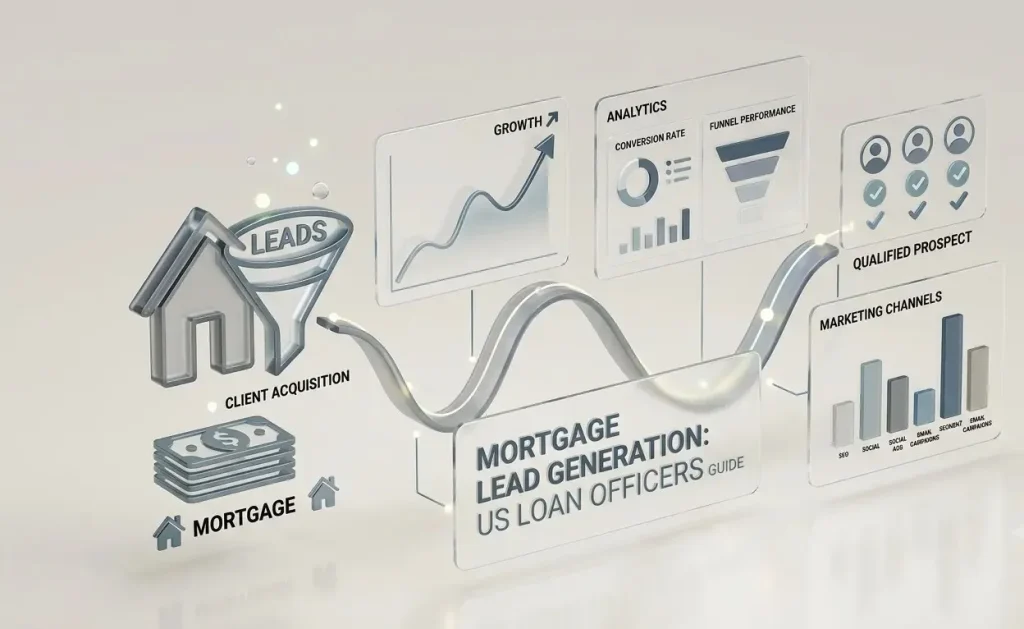
Finding a steady flow of Mortgage Lead Generation opportunities is one of the biggest challenges for US loan officers. The best way to solve this problem is by building a reliable system that attracts qualified borrowers instead of depending only on purchased leads. A balanced strategy helps you create a stronger pipeline and grow your mortgage business over time.
After working with lead generation campaigns for more than 20 years, I’ve seen one pattern repeat itself. Loan officers who rely on a single lead source often struggle when costs rise or competition increases. Those who build multiple lead channels enjoy better lead quality, lower marketing risk, and more referrals from happy clients.
This guide explains how to build a complete mortgage lead generation system. You’ll learn how to attract qualified borrowers, improve your conversion rate, choose the right marketing channels, and build a pipeline that supports long-term growth. Keep reading to discover practical strategies that work across today’s mortgage industry.
Quick Answer
Mortgage lead generation means attracting people who are actively looking for a home loan or refinancing solution. The best approach combines local SEO, paid advertising, referral partnerships, valuable educational content, and strong lead nurturing. A diversified system creates more qualified leads while reducing dependence on purchased mortgage leads.
What Is Mortgage Lead Generation
Mortgage lead generation is the process of attracting people who may need a home loan and turning them into qualified prospects. It helps loan officers connect with borrowers before they choose a lender.
A mortgage lead can come from many places. Some borrowers find your mortgage website through local search. Others respond to Google Ads, social media campaigns, referrals, or educational content. Every lead enters your sales pipeline at a different stage of the buying journey.
Not every inquiry becomes a funded loan. Some people simply compare mortgage rates, while others are ready for pre-approval today. That’s why successful mortgage professionals focus on attracting qualified leads instead of chasing large volumes of low-quality prospects.
Modern mortgage lead generation also goes beyond collecting contact information. It includes lead capture, lead scoring, lead management, and consistent follow-up until borrowers reach the closing table. The stronger your system becomes, the more predictable your mortgage business grows.
Understanding the Mortgage Lead Market
The mortgage lead market has become more competitive because many lenders pursue the same borrowers. This competition makes self-generated leads more valuable than ever.
Many lead generation companies sell the same prospect to multiple mortgage companies. These shared leads usually create bidding wars between lenders. The borrower often receives several calls within minutes, making it harder to build trust.
Industry changes have also reduced the effectiveness of some traditional lead sources. Restrictions on AI-powered trigger leads encourage more loan officers to build their own marketing systems instead of depending only on purchased data.
Today’s market rewards loan officers who invest in long-term assets. Local SEO, educational content, referral partnerships, and targeted advertising help generate mortgage leads that belong to your business rather than someone else’s database.
Exclusive self-sourced leads generally cost more upfront than shared leads. However, they often deliver stronger relationships, better referral opportunities, and greater lifetime value because you control the entire customer experience.
Define Your Ideal Mortgage Borrower Before Choosing a Channel
Choosing the right marketing channel starts with knowing your ideal borrower. Clear targeting improves lead quality while reducing wasted marketing dollars.
Many loan officers advertise to everyone. This broad approach usually lowers the conversion rate because every borrower has different financial needs. A focused strategy creates better messaging and stronger results.
Create an Ideal Borrower Profile
An ideal borrower profile defines the people you want to serve. It helps every marketing campaign speak directly to their needs.
Start with basic information like age, income, location, occupation, and family situation. Then consider financial goals, preferred loan programs, and expected purchase timelines.
For example, a first-time homebuyer usually needs education and down payment guidance. An experienced investor often cares more about financing speed and flexible loan options. Each audience deserves different marketing messages.
Identify High-Value Borrower Scenarios
High-value borrower scenarios help you prioritize the opportunities that match your expertise. They also make your marketing more relevant.
Some common scenarios include first-time buyers, military veterans, self-employed professionals, homeowners seeking refinancing, and property investors. Each group has unique concerns that deserve specialized content.
In my experience, loan officers who solve one specific borrower problem often earn more referrals than those offering generic mortgage services.
Match Geographic Targeting with Licensing Coverage
Geographic targeting ensures your marketing reaches borrowers you can legally serve. This creates a better experience for both you and your prospects.

Focus your campaigns on cities and states where you hold the required licenses. Build local content around neighborhood trends, housing inventory, property taxes, and available assistance programs.
Local relevance also strengthens your visibility in search engines. Borrowers often search for nearby loan officers because they want someone who understands the local market.
Develop a Clear Loan Officer Value Proposition
Your value proposition explains why borrowers should choose you instead of another mortgage broker or lender. It should answer that question within seconds.
Avoid broad claims like “best service” or “lowest rates.” Instead, highlight practical benefits. You might specialize in first-time buyers, VA loans, fast pre-approvals, or complex self-employed applications.
Customers respond to clear promises that solve real problems. A simple message builds confidence before the first conversation even begins.
Segment Mortgage Campaigns by Loan Product and Borrower Need
Segmenting campaigns allows you to match each borrower with the right message. Personalized marketing usually produces better-quality mortgage leads.
Instead of running one campaign for every loan program, create focused campaigns based on borrower goals. This approach improves engagement and increases lead capture.
First-Time Homebuyer Campaigns
First-time homebuyer campaigns should educate before selling. Many buyers need guidance throughout the purchasing process.
Create helpful resources explaining mortgage basics, budgeting, credit preparation, and closing costs. Offer downloadable checklists or homebuyer guides through dedicated landing pages.
Educational content builds trust early. Borrowers often remember the loan officer who helped them understand the process.
FHA, VA, and USDA Loan Campaigns
Government-backed loan campaigns should explain eligibility clearly. Borrowers often search for these programs because they need affordable financing.
Separate campaigns for FHA, VA, and USDA loans help answer specific questions. Explain benefits, basic requirements, and common misconceptions without overwhelming readers.
Simple educational pages also improve organic lead generation because borrowers frequently search for these loan programs online.
Conventional and Jumbo Mortgage Campaigns
Conventional and jumbo loan campaigns should focus on borrowers with different financing needs. These buyers usually compare loan options carefully.
Highlight flexible loan structures, financing limits, and available programs. Explain who benefits most from each option without using unnecessary industry jargon.
Clear comparisons help borrowers understand which loan type fits their goals before contacting your team.
Self-Employed and Non-QM Borrower Campaigns
Self-employed borrowers often face unique lending challenges. Dedicated campaigns show that you understand their situation.
Discuss alternative income documentation, business ownership considerations, and available loan programs. Address common concerns with practical language.
Many business owners choose lenders who demonstrate experience with complex income situations.
Refinance, Cash-Out, and HELOC Campaigns
Refinance campaigns should focus on homeowner goals rather than interest rates alone. Every homeowner has different financial priorities.
Some borrowers want lower monthly payments. Others need cash for renovations or debt consolidation. Separate messaging helps each audience understand available solutions.
Useful calculators and personalized estimates encourage more homeowners to request information.
Investor and Rental Property Financing Campaigns
Investor campaigns should speak directly to real estate investment goals. Experienced investors value speed, flexibility, and reliable communication.
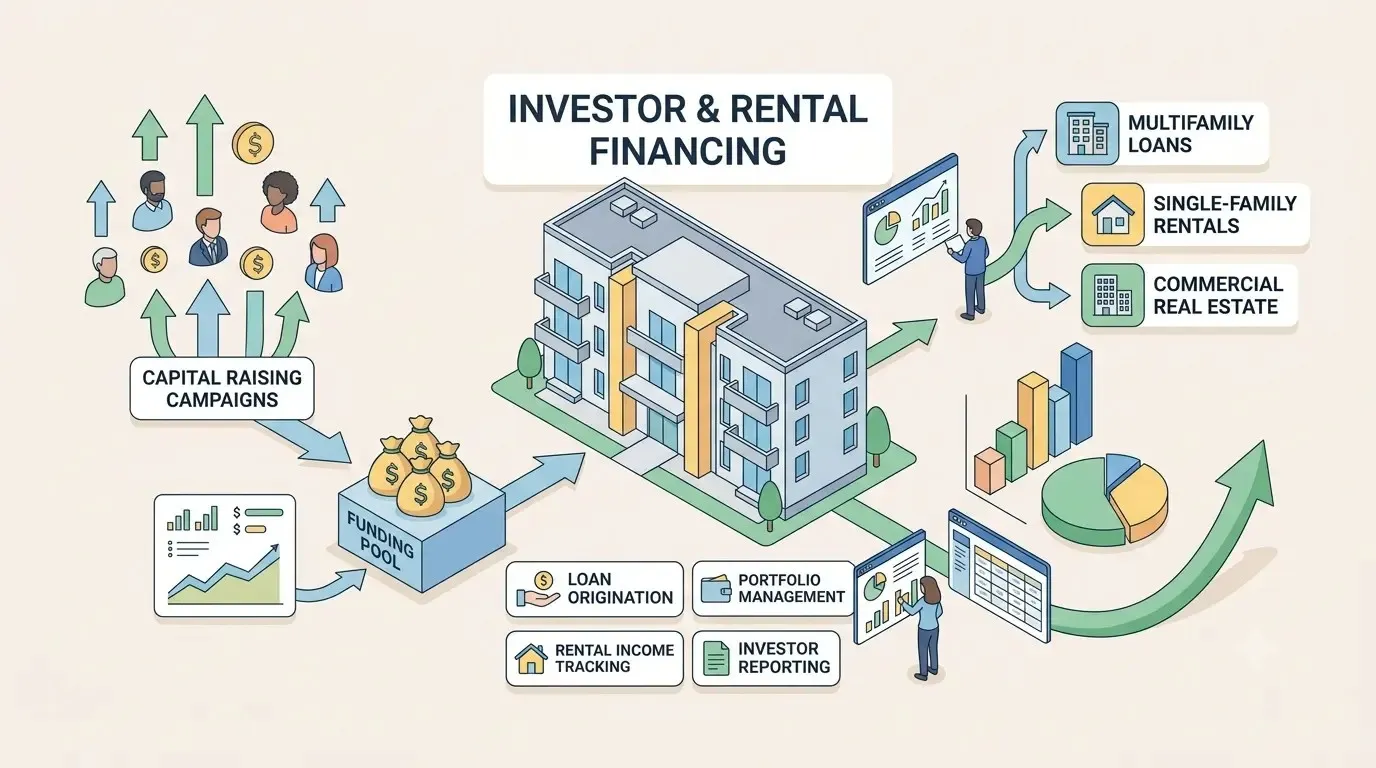
Explain financing options for rental properties, portfolio growth, and investment planning. Share educational content that supports long-term investing strategies.
A focused investor campaign also creates opportunities for repeat business because many investors purchase multiple properties over time.
Mortgage Lead Generation Channels and Methods
The best mortgage lead generation strategy uses several marketing channels together. This approach creates a steady flow of qualified borrowers while reducing your dependence on one lead source.
Every channel serves a different purpose. Some attract buyers who need help today. Others build trust with future borrowers who may not purchase for several months. A balanced mix keeps your pipeline healthy through changing market conditions.
The most successful loan officers combine paid advertising, local SEO, referral partnerships, community involvement, and content marketing. Each channel supports the others and creates more opportunities over time.
Native Paid Advertising (Self-Sourced Leads)
Native paid advertising helps you generate your own mortgage leads instead of buying shared leads. It gives you more control over lead quality and the customer experience.
Unlike purchased mortgage leads, self-sourced leads come directly to your business. That means borrowers contact you first instead of receiving calls from several competing lenders.
Google Search Ads
Google Search Ads reach borrowers who actively search for mortgage solutions. These users often have strong buying intent because they already need financing.
Target keywords with clear local intent, such as “mortgage lender near me,” “VA loan specialist in Dallas,” or “first-time homebuyer loan in Phoenix.” Pair every ad with a dedicated landing page that matches the searcher’s goal.
Avoid sending paid traffic to your homepage. A focused landing page usually converts better because it removes distractions and answers one specific need.
Use ad extensions to display your phone number, office location, reviews, and service areas. These details increase trust before someone clicks your ad.
Meta (Facebook/Instagram) Ads
Meta advertising helps you reach borrowers before they begin searching on Google. It works well for building awareness and generating future demand.
Promote first-time homebuyer workshops, down payment assistance programs, refinance opportunities, or educational mortgage guides. Helpful offers often outperform direct sales messages.
Short videos, local success stories, and simple educational graphics encourage more engagement than promotional ads alone. Build campaigns around solving borrower problems instead of selling loan products.
Retarget visitors who leave your website without completing a form. A reminder campaign often brings interested prospects back when they’re ready.
Lead Costs
Lead costs vary based on your market, competition, and borrower profile. Highly competitive cities usually require larger advertising budgets.
According to current market benchmarks, exclusive self-sourced digital mortgage leads generally cost between $80 and $300 per qualified lead. While this investment is higher than many shared leads, it often delivers stronger lead quality and fewer competing lenders.
Instead of focusing only on cost per lead, monitor cost per funded loan. A more expensive lead may produce greater profit if it converts consistently and creates future referral opportunities.
Localized Search Engine Optimization (SEO)
Localized SEO helps borrowers find your business through organic search. It builds a long-term source of qualified mortgage leads without paying for every click.
Unlike paid ads, strong local rankings continue generating traffic after your content is published. Consistent optimization creates lasting visibility in your service areas.
Hyper-Local Content
Hyper-local content answers questions about specific cities and neighborhoods. This content shows borrowers that you understand their local housing market.
Write guides covering local property taxes, school districts, housing inventory, neighborhood trends, and first-time buyer assistance programs. Include city-specific mortgage information wherever possible.
Many borrowers search for answers before contacting a loan officer. Helpful local content builds trust early and encourages future inquiries.
Create separate pages for every licensed market instead of one general service page. Local relevance strengthens both user experience and search visibility.
Interactive Calculators
Interactive calculators keep visitors engaged while helping them estimate financing options. They also improve lead capture when paired with valuable resources.
Offer mortgage payment calculators, refinance calculators, affordability estimators, and down payment tools. Simple calculators encourage borrowers to explore different loan scenarios.
Place optional lead forms beside each calculator instead of forcing users to register first. Giving value before requesting contact information usually improves conversion rates.
Google Business Profile
A well-managed Google Business Profile increases local visibility and builds credibility. It often becomes the first impression for nearby borrowers.
Complete every profile section, upload professional photos, respond to reviews, and publish regular updates. Positive reviews from past clients strengthen buyer confidence.
Accurate contact information and consistent business details also improve your chances of appearing in Google’s Local Pack for mortgage-related searches.
Modern Real Estate Agent Partnerships
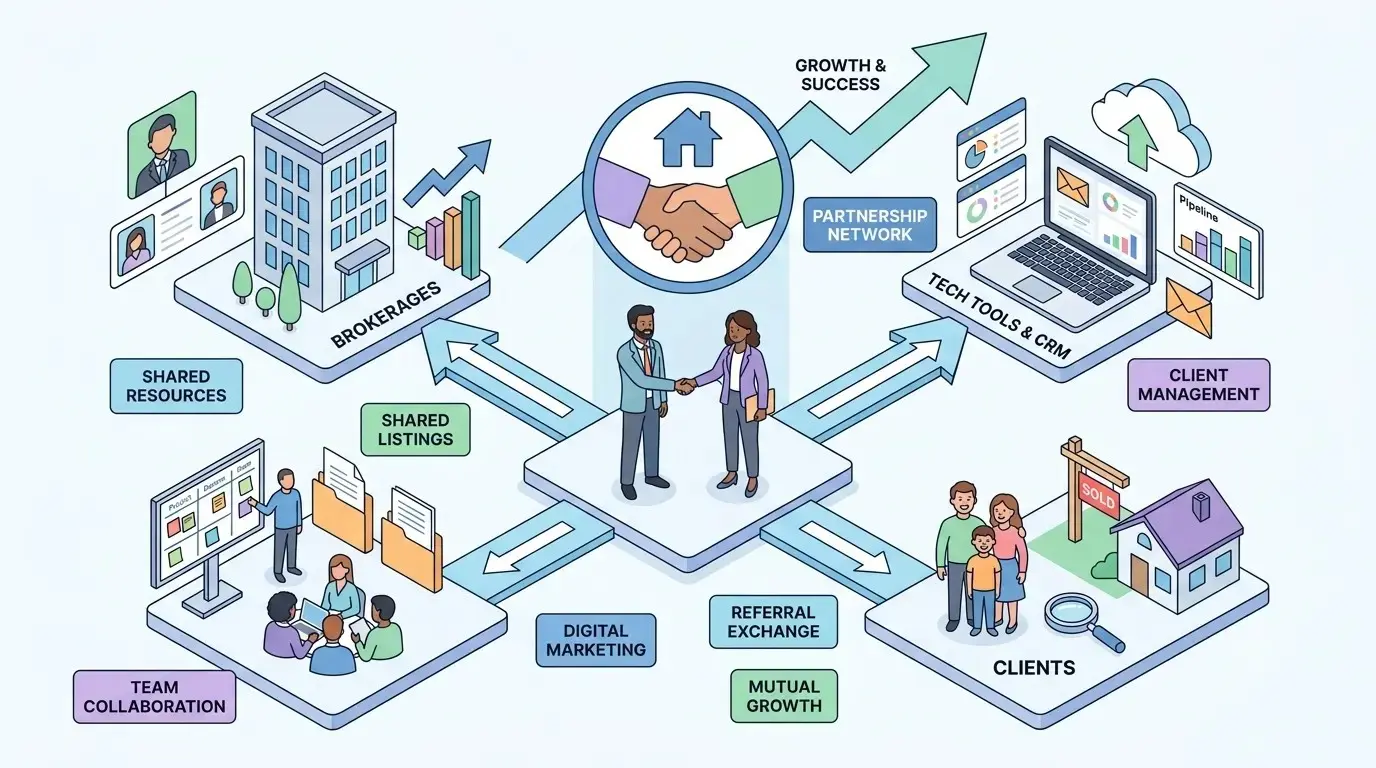
Strong real estate partnerships create consistent referral opportunities for both professionals. The best relationships provide value to everyone involved.
Many agents already have trusted lenders. Instead of asking only for referrals, look for ways to help agents grow their own business.
Co-Marketing Funnels
Co-marketing funnels allow loan officers and real estate agents to promote services together. Shared campaigns reduce advertising costs while expanding audience reach.
Create co-branded landing pages, educational webinars, homebuyer workshops, or neighborhood guides. Both partners contribute expertise while generating new leads.
Clear communication and compliance remain essential whenever both businesses participate in the same marketing campaign.
Database Reactivation
Database reactivation helps uncover opportunities from older client lists. Many past prospects become active buyers months or years later.
Work with referral partners to reconnect with previous inquiries using educational emails, housing updates, or financing check-ins. Timing often changes a prospect’s readiness.
One overlooked contact today may become a funded loan tomorrow. Consistent follow-up creates opportunities that many competitors miss.
Master the Art of Referral Marketing
Referral marketing remains one of the most trusted ways to generate mortgage leads. Happy clients naturally recommend professionals who made the home financing process easier.
Build referral relationships with past clients, financial advisors, attorneys, accountants, insurance agents, and local business owners. Every successful closing can lead to future introductions.
Stay connected after closing through helpful newsletters, homeownership tips, birthday messages, and market updates. Regular communication keeps your name fresh without becoming overly promotional.
In my experience, one satisfied borrower often introduces several future clients over the next few years. Long-term relationships usually outperform one-time transactions.
Develop Community Presence
Community involvement helps borrowers recognize and trust your name before they need a mortgage. Local visibility strengthens both online and offline marketing.
Sponsor neighborhood events, homebuyer seminars, school activities, charity programs, and local business organizations. These activities create genuine relationships within your service area.
Educational workshops often attract first-time buyers who appreciate honest guidance without sales pressure. Focus on helping people understand the home financing process.
Community engagement also supports your local SEO strategy. Local mentions, partnerships, and positive reviews strengthen your online authority over time.
Generate Mortgage Leads Through Organic Social Media and Video
Organic social media helps you build trust before asking for business. Educational content keeps your audience engaged while demonstrating your expertise.
You don’t need viral videos to generate leads. Consistent, helpful content usually produces stronger long-term results than occasional promotional posts.
Short-Form Educational Videos
Short videos answer common mortgage questions quickly. Simple explanations often receive more engagement than polished advertisements.
Create videos covering credit scores, pre-approval, closing costs, loan options, and homebuying tips. Keep each topic focused on one question.
Post consistently across multiple platforms to reach borrowers wherever they spend time online.
Local Housing Market Updates
Local market updates position you as a trusted resource. Buyers appreciate current information about their community.
Discuss inventory levels, pricing trends, seasonal activity, and financing opportunities using clear language. Avoid making predictions you can’t support.
Helpful updates encourage followers to return for reliable local insights.
First-Time Buyer Education Content
Educational content reduces fear for first-time buyers. Most borrowers simply want someone to explain the process clearly.
Create simple guides about saving for a down payment, preparing documents, understanding loan programs, and avoiding common mistakes.
Helpful content also generates organic mortgage leads through search engines and social sharing.
Live Q&A Sessions and Webinars
Live events allow borrowers to ask questions in real time. Direct conversations build trust faster than static content.
Host monthly webinars covering mortgage basics, refinancing, or local housing topics. Invite referral partners to provide additional expertise.
Record every session and reuse the content across your website, YouTube, and social channels.
YouTube Mortgage Content
YouTube supports long-form educational content that continues generating views over time. Well-optimized videos become valuable marketing assets.
Create playlists for different loan types, borrower situations, and local housing topics. Organize videos so viewers can easily continue learning.
Include links to relevant landing pages and lead magnets within your video descriptions.
LinkedIn Prospecting for Professional Borrowers
LinkedIn helps connect with professionals who may need specialized financing. Business owners, executives, physicians, and investors often use the platform regularly.
Share educational articles, market insights, and financing tips instead of direct sales messages. Professional content builds credibility with high-value audiences.
Engage with local business communities and industry groups. Meaningful conversations often develop into valuable referral relationships and qualified mortgage leads.
Build a Recognizable Loan Officer Personal Brand
A strong personal brand helps borrowers remember you before they need a mortgage. It builds trust, increases referrals, and makes your marketing more effective.
People choose loan officers they know and trust. Your brand should clearly show who you help, how you help them, and why they should work with you instead of another lender.
Choose a Mortgage Niche
Choosing a mortgage niche helps you stand out in a crowded market. It also makes your marketing more focused.
You might specialize in first-time homebuyers, VA loans, FHA financing, self-employed borrowers, luxury homes, or investment properties. Each niche has different challenges and opportunities.
In my 20+ years of experience, specialists often earn more referrals than generalists. People remember experts who solve one problem well.
Communicate a Consistent Value Proposition
Your value proposition should stay consistent across every marketing channel. Consistency builds recognition and confidence.
Explain your strengths in simple language. Focus on fast communication, local knowledge, flexible loan programs, or personalized service instead of broad marketing claims.
Borrowers should understand your value within seconds of visiting your website or social media profile.
Show Expertise Without Overusing Industry Jargon
Simple language builds trust faster than technical mortgage terms. Most borrowers appreciate clear explanations.
Replace complicated lending language with everyday words whenever possible. Explain unfamiliar terms only when necessary.
Customers often recommend loan officers who made the process easy to understand.
Use Borrower Success Stories Responsibly
Borrower success stories help future clients see real outcomes. They also provide social proof for your services.
Share testimonials only after receiving proper permission. Remove sensitive financial details and follow all advertising rules.
Focus on the customer’s experience instead of making unrealistic promises.
Maintain Consistency Across Digital Channels
Consistent branding strengthens your online presence. Every platform should tell the same story.
Use the same professional photo, business information, messaging, and contact details across your mortgage website, Google Business Profile, LinkedIn, Facebook, and YouTube.
Consistency helps borrowers recognize your business wherever they find you online.
Buying Mortgage Leads
Buying mortgage leads can provide immediate opportunities, but not every lead source delivers the same value. Understanding the differences helps you invest your marketing budget wisely.
Purchased leads work best when combined with self-generated marketing. Relying only on lead purchasing often creates unpredictable results.
| Lead Type | Typical Cost | Competition | Conversion Potential | Best For |
| Exclusive Self-Sourced Leads | $80–$300 per qualified lead | None | Higher | Long-term business growth |
| Shared Mortgage Leads | $30–$100 per lead | High | Moderate to Low | Fast lead volume |
| Aged Mortgage Leads | $1–$10 per lead | Low | Low | Database nurturing campaigns |
| Referral Leads | Low acquisition cost | None | High | Relationship-based growth |
Exclusive leads usually produce better conversations because borrowers contact your business directly. Shared leads require immediate follow-up since multiple lenders may call the same prospect.
A better approach is to balance purchased leads with SEO, referrals, paid advertising, and community marketing. This creates a healthier pipeline over time.
Fuel Your Mortgage Lead Pipeline with TOP7SEVEN
A reliable lead generation partner helps loan officers grow without depending on unpredictable lead sources. TOP7SEVEN focuses on building sustainable marketing systems.
Instead of delivering random inquiries, our approach develops multiple lead channels that continue producing qualified borrowers. This creates long-term business stability.
Our mortgage lead generation services include:
- Local SEO for mortgage professionals
- Google Ads management
- Facebook and Instagram advertising
- Landing page optimization
- Google Business Profile optimization
- Local content marketing
- Lead funnel development
- Conversion optimization
- CRM integration
- Marketing performance reporting
Rather than chasing one-time leads, we help build a complete marketing engine that supports continuous business growth.
Landing Page Mastery: The Art of Single-Purpose Lead Generation for Mortgage Professionals
A high-converting landing page focuses on one goal only. It removes distractions and encourages visitors to take the next step.
Many loan officers send paid traffic to their homepage. This often lowers conversions because visitors face too many choices.
An effective landing page includes:
- One clear headline
- One loan offer
- Simple contact form
- Strong call-to-action
- Trust-building reviews
- Licensing information
- Mobile-friendly design
Keep forms short. Ask only for information needed to begin the conversation. Long applications often reduce lead capture rates.
Every advertisement should connect to a matching landing page. Message consistency improves both user experience and conversion performance.
Anatomy of a High-Converting Mortgage Funnel
A successful mortgage funnel guides borrowers from first click to qualified lead. Each step removes friction and builds trust.
Most high-performing funnels follow a simple path:
Traffic Source → Landing Page → Lead Capture → CRM → Follow-Up → Consultation
Each stage should make the next step easy for the borrower.
The Lead Capture
Lead capture should collect only essential information. Short forms usually perform better than lengthy mortgage applications.
Instead of requesting every financial detail, ask basic questions such as:
- Purchase or refinance?
- Desired loan type
- Purchase timeline
- Estimated credit range
- Contact information
Multi-step quizzes often increase completion rates because they feel less overwhelming.
Once submitted, leads should automatically enter your CRM for immediate follow-up.
Trust Signals
Trust signals reduce hesitation before someone shares personal information. They reassure borrowers that they’re contacting a legitimate professional.
Include:
- NMLS licensing information
- Professional certifications
- Client testimonials
- Google reviews
- Security badges
- Privacy statement
- Years of experience
- Local office information
Place these trust elements near your call-to-action. Borrowers often decide within seconds whether they trust your business.
Create Lead Magnets for Every Stage of the Mortgage Journey
Lead magnets encourage borrowers to exchange their contact information for valuable resources. Good lead magnets educate first and sell later.
Different borrowers have different questions. Offering several resources helps attract prospects throughout the buying journey.
Homebuyer Readiness Checklists
A homebuyer checklist helps borrowers understand what they need before applying for a mortgage.
Include savings goals, required documents, budgeting tips, and important milestones. Simple checklists often become valuable planning tools.
Down Payment Assistance Guides
Many buyers don’t realize assistance programs exist. Educational guides explain available options in simple language.
Focus on local and state opportunities whenever possible. Regional information creates stronger engagement.
Mortgage Document Checklists
Borrowers often worry about paperwork. A document checklist removes uncertainty before the application begins.
Include common income documents, tax records, bank statements, employment information, and identification requirements.
Preparation reduces delays and creates a smoother lending process.
Rent-versus-Buy Reports
Rent-versus-buy reports help consumers compare long-term housing costs. They also encourage people to evaluate homeownership.
Include practical examples without making unrealistic financial promises.
Many renters become qualified buyers after understanding their options.
Credit Preparation Guides
Credit preparation guides explain simple ways to improve mortgage readiness.
Cover payment history, debt management, credit utilization, and common reporting mistakes. Clear education helps borrowers prepare before applying.
Local Home Financing Guides
Local financing guides answer city-specific mortgage questions. They support both SEO and borrower education.
Discuss regional market trends, available loan programs, local grants, and neighborhood considerations. Local content strengthens your authority while generating qualified organic traffic.
Qualify and Score Mortgage Leads Before Sales Follow-Up
Qualifying mortgage leads helps you focus on borrowers who are most likely to close. A structured process saves time and improves your conversion rate.
Not every lead enters your pipeline with the same level of intent. Some borrowers are ready to buy now, while others may need several months of education and follow-up. Lead scoring helps you prioritize the right conversations.
Demographic Data Versus Mortgage Intent Data
Demographic data tells you who the borrower is. Mortgage intent data tells you what the borrower plans to do.
Basic details like age, income, occupation, and location provide useful background. However, purchase timeline, loan purpose, and property interest often predict conversion more accurately.
Focus on borrower intent instead of demographics alone. A motivated buyer usually deserves immediate attention.
Purchase Timeline and Readiness
Purchase timing is one of the strongest indicators of lead quality. Buyers with shorter timelines often require faster follow-up.
Separate leads into simple categories such as:
- Ready within 30 days
- Buying in 2–6 months
- Buying in 6–12 months
- Researching only
This simple system helps your team prioritize daily outreach while continuing to nurture future borrowers.
Credit and Income Indicators
Credit and income information helps determine loan readiness. It also guides conversations toward the right loan program.
You don’t need every financial detail during the first interaction. Basic information about estimated credit range, employment status, and income stability is enough to begin qualification.
Keep questions simple and respectful. Borrowers appreciate conversations that feel helpful rather than intrusive.
Property and Loan-Type Fit
Understanding the property type helps recommend suitable financing options. Different properties often require different loan programs.
Ask whether the borrower plans to purchase a primary residence, second home, rental property, or refinance an existing loan.
Matching borrowers with the right loan type early creates smoother conversations and better customer experiences.
Lead Scoring Models
Lead scoring ranks prospects based on their likelihood of becoming customers. It helps sales teams spend time where it matters most.
A simple scoring model may include:
| Lead Factor | Suggested Priority |
| Buying within 30 days | High |
| Pre-approved borrower | High |
| Requested consultation | High |
| Downloaded a guide | Medium |
| Opened email campaigns | Medium |
| Website visitor only | Low |
Keep your scoring system easy to manage. A simple model often performs better than a complicated one.
Marketing-Qualified Versus Sales-Qualified Leads
Marketing-qualified leads (MQLs) have shown interest but may not be ready to speak with a loan officer. Sales-qualified leads (SQLs) have stronger buying intent.
Continue educating MQLs with helpful emails, videos, and mortgage resources. Route SQLs directly to your sales team for immediate follow-up.
This process keeps your pipeline organized and improves overall efficiency.
Inbound vs. Outbound Lead Economics
Inbound and outbound lead strategies both generate business, but they produce different costs and results. The right balance depends on your goals and available resources.
| Lead Source | Typical Lead Cost | Estimated Conversion | Estimated Cost Per Funded Loan | Main Advantage |
| Exclusive Self-Sourced Leads | $80–$300 | 5–10% | $1,200–$2,000 | No direct competition and stronger long-term referrals |
| Shared Aggregator Leads | $30–$100 | 2–3% | $1,500–$3,000+ | Lower upfront investment |
| Aged Lead Lists | $1–$10 | 0.5–1% | $1,000–$2,000 | Low-cost volume for nurturing campaigns |
Inbound marketing builds long-term business assets like SEO content, referrals, and educational resources. These assets continue producing leads over time.
Outbound methods, including purchased leads and direct outreach, can create immediate opportunities. However, they often require faster response times and higher follow-up efforts.
The strongest mortgage businesses combine both approaches instead of relying on one channel alone.
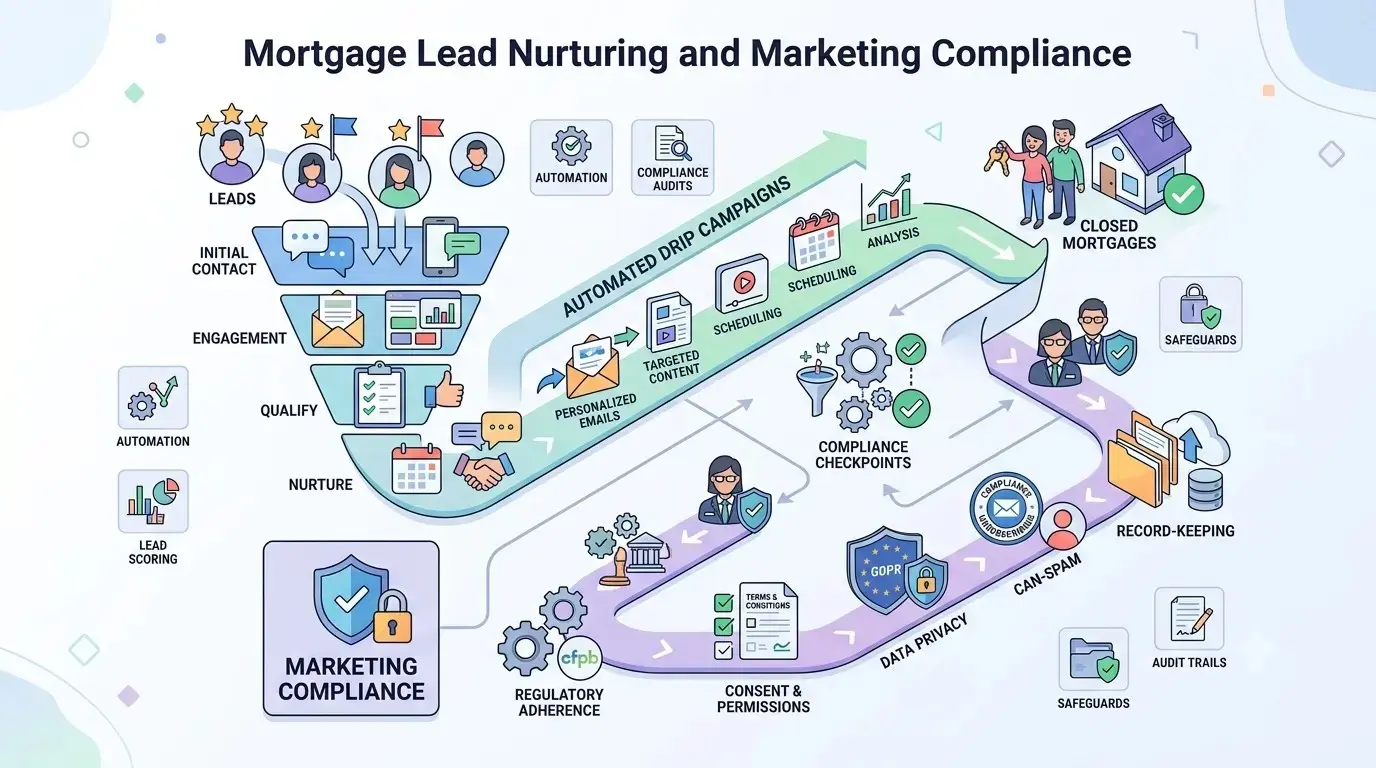
Mortgage Lead Nurturing and Marketing Compliance
Lead nurturing keeps borrowers engaged until they’re ready to move forward. Compliance ensures every marketing activity follows legal and ethical standards.
Many purchase borrowers take three to twelve months before closing a loan. Consistent communication keeps your business top of mind throughout that journey.
Speed to Lead
Responding quickly increases your chances of connecting with new borrowers. Early conversations often create stronger relationships.
Set up automated text messages, emails, or CRM notifications immediately after lead capture. Aim to contact inbound prospects within the first five minutes whenever possible.
Fast responses show professionalism and reduce the chance of losing leads to competitors.
Multi-Touch Sequences
Most borrowers need several interactions before making a decision. A structured follow-up plan keeps communication consistent.
Plan at least six to eight touchpoints during the first two weeks after lead capture. Mix phone calls, emails, text messages, educational resources, and market updates.
Every message should provide value instead of repeating the same sales pitch.
Regulatory Compliance
Mortgage marketing must follow all applicable regulations. Compliance protects both your business and your customers.
Review your marketing practices regularly to ensure they follow TCPA requirements, applicable state mortgage advertising laws, Federal Trade Commission guidance, and National Do Not Call Registry rules.
Always display required licensing information and obtain proper consent before sending automated communications. Good compliance builds long-term trust.
Key Takeaways
- Build multiple lead sources instead of depending only on purchased mortgage leads.
- Invest in local SEO, referrals, and educational content for long-term growth.
- Use dedicated landing pages to improve lead capture and conversion rates.
- Qualify and score leads before assigning them to your sales team.
- Follow up quickly and maintain full marketing compliance throughout every campaign.
Final Thoughts
Mortgage lead generation works best when you control your own pipeline instead of relying on a single lead source. Combining local SEO, paid advertising, referral partnerships, community engagement, and valuable content creates a stronger and more predictable business. This approach also improves lead quality and supports long-term growth.
Successful loan officers understand that every borrower follows a different journey. Some are ready to apply today, while others need months of education before making a decision. A well-planned marketing system helps you attract, qualify, nurture, and convert those opportunities into funded loans.
If you want expert help building a reliable mortgage lead generation system, TOP7SEVEN is ready to assist. Visit us at 4878 Nickel Road, El Monte, CA 91731, call (209) 655-3042, or email contact@top7seven.com to discuss your goals. We can help you build a sustainable lead generation strategy that grows your mortgage business. Contact us today to get started.
FAQ
1. What is the best way to start mortgage lead generation?
Start with your website, Google Business Profile, social media, referrals, and email marketing. Good Mortgage Lead Generation uses both free and paid methods to get steady, high-quality leads.
2. Can AI help with mortgage lead generation?
Yes. AI can find prospects, write emails, answer questions, and save time. It helps Mortgage Lead Generation, but people still build trust and close more loans.
3. How much does mortgage lead generation cost?
Costs vary by lead type and quality. Shared leads cost less, while exclusive and live transfer leads cost more but often bring better conversion rates.
4. Is mortgage loan officer still a good career?
Yes. Many buyers still need expert advice. Skilled loan officers who build strong relationships and use smart Mortgage Lead Generation can grow a successful business.
5. What do mortgage lenders check before approving a loan?
Lenders review your income, credit score, debt, assets, and job history. They also use the four C’s: credit, capacity, capital, and collateral to make decisions.